01
Biological age
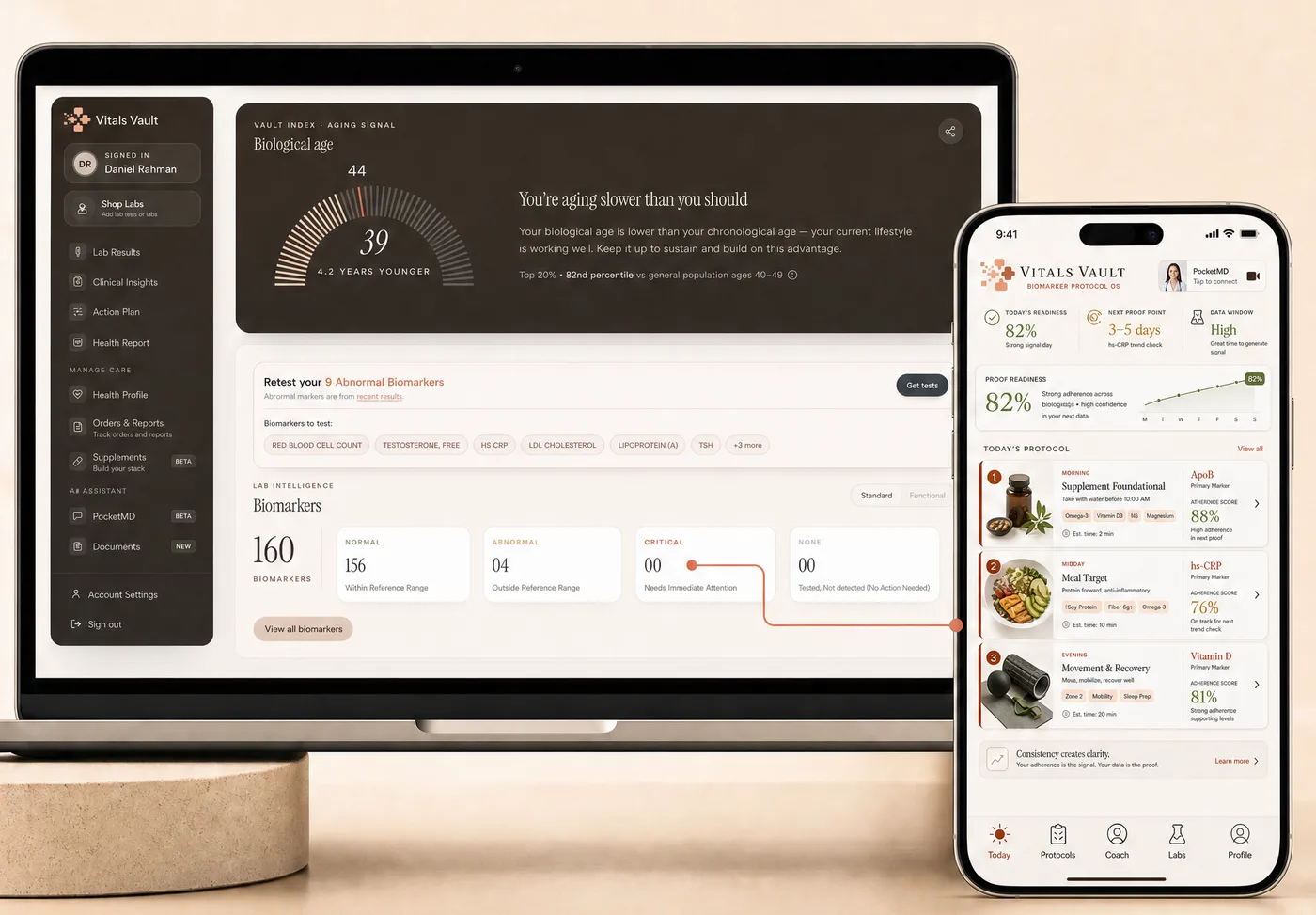
Find out if your body is aging faster or slower than your actual age — and see how you rank against the general population.
39
Biological age
44
Actual age
4.2
Years younger
UTI Panel (Urinalysis + Culture)
Results in about 3 days
UTI Panel With Reflex Tests: a urine lab panel that can reflex to culture and targeted identification. This UTI lab panel checks urine chemistry and microscopy and may reflex to culture/ID when needed, helping explain burning, urgency, and cloudy urine.
This is a urine-based lab panel, not a single marker. It combines a standard urinalysis (chemical dipstick + microscopy) with “reflex” steps that can automatically add a urine culture and more specific identification when your initial findings suggest a bacterial urinary tract infection (UTI). The goal is to move from “something looks off” to “here’s what’s most likely going on” with fewer delays and fewer repeat samples.
What to expect before and at your draw.
Sample Type
Blood
Collection Method
In person at a Quest Diagnostics location
Age
18+
This order includes the lab markers used for UTI Panel (Urinalysis + Culture).
Amorphous Sediment
Included in this Quest Diagnostics order and reported in your Vitals Vault account.
Appearance
Included in this Quest Diagnostics order and reported in your Vitals Vault account.
Bacteria
Included in this Quest Diagnostics order and reported in your Vitals Vault account.
Bilirubin
Included in this Quest Diagnostics order and reported in your Vitals Vault account.
Order UTI Panel (Urinalysis + Culture) online.
Visit a Quest Diagnostics location near you for your blood draw. Appointments can be scheduled after checkout.
View easy-to-read results in your Vitals Vault account, with trends and a personalized action plan.
Included with every package
Function Health shows you numbers. Vitals Vault connects them — ratios, patterns, and a personalized action plan grounded in functional medicine.
Find out if your body is aging faster or slower than your actual age — and see how you rank against the general population.
39
Biological age
44
Actual age
4.2
Years younger
Turn lab data into what to do next—clear guidance on follow-ups, lifestyle context, and add-on testing when you need to go deeper. Make the healthy choice the obvious one.
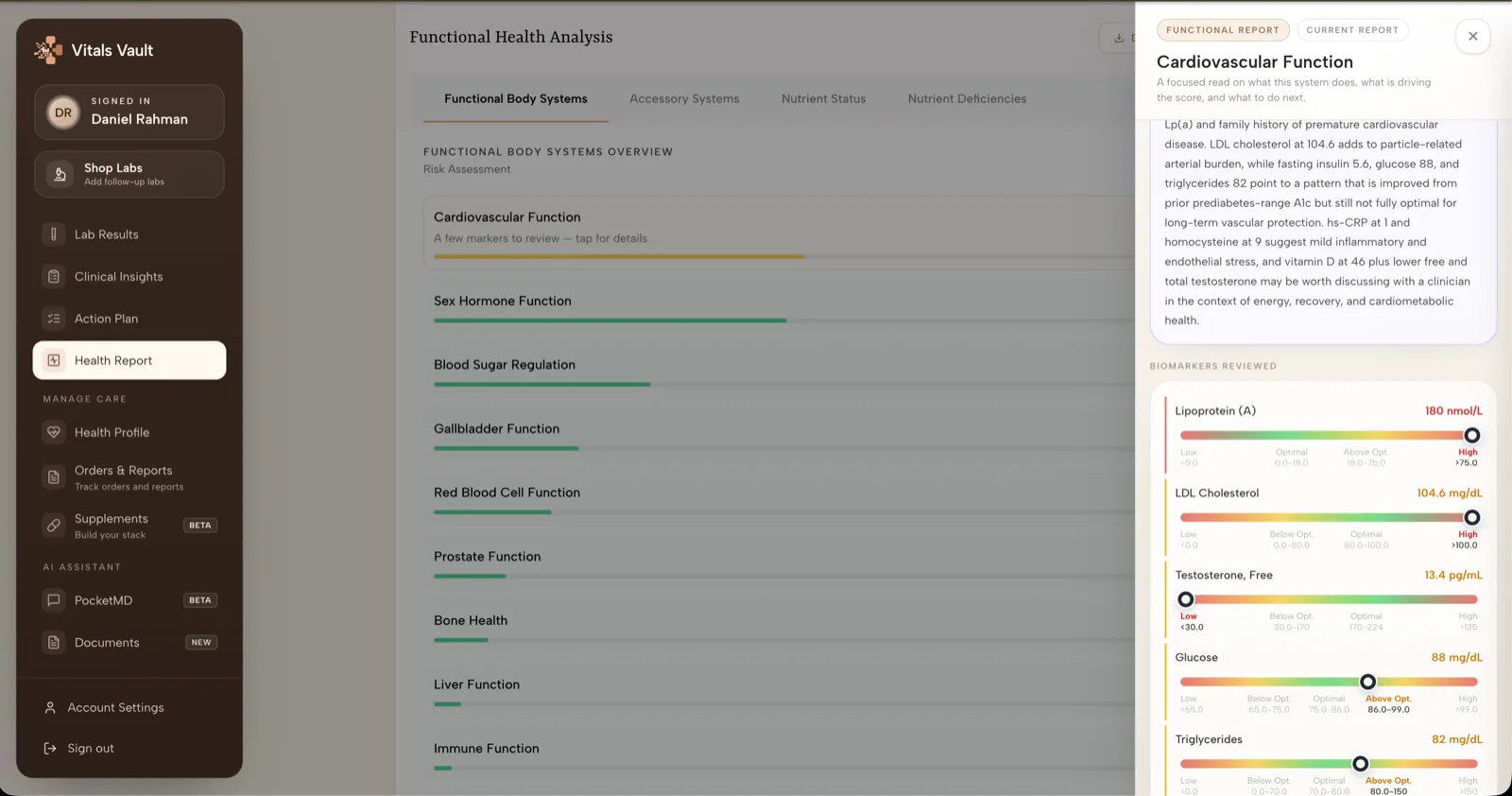
A personalized, plain-language walkthrough of your abnormal markers—reference ranges, pattern context, and what to watch next, grounded in your actual labs.
Personalized Insights
Clear Explanations
Actionable guidance
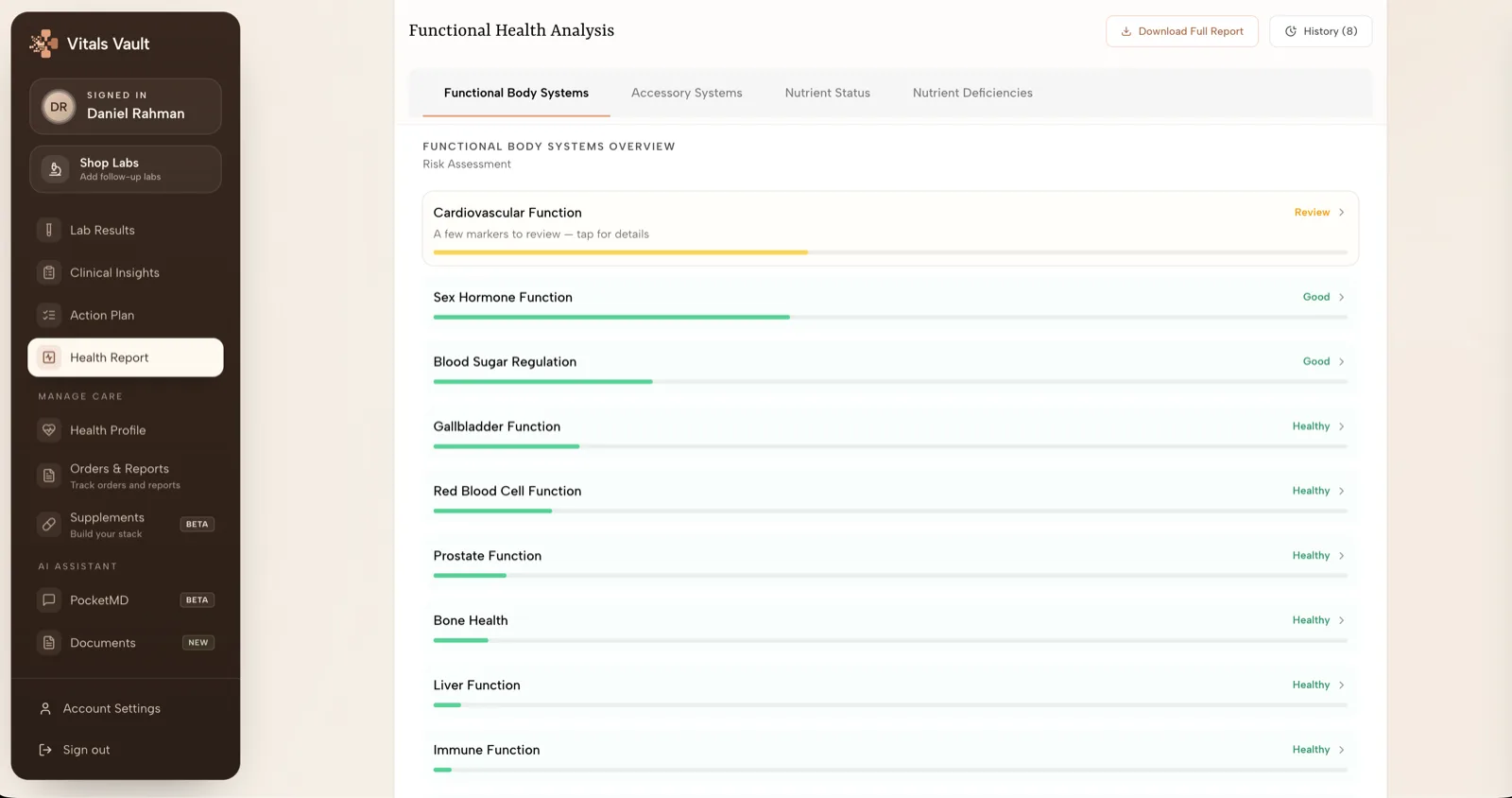
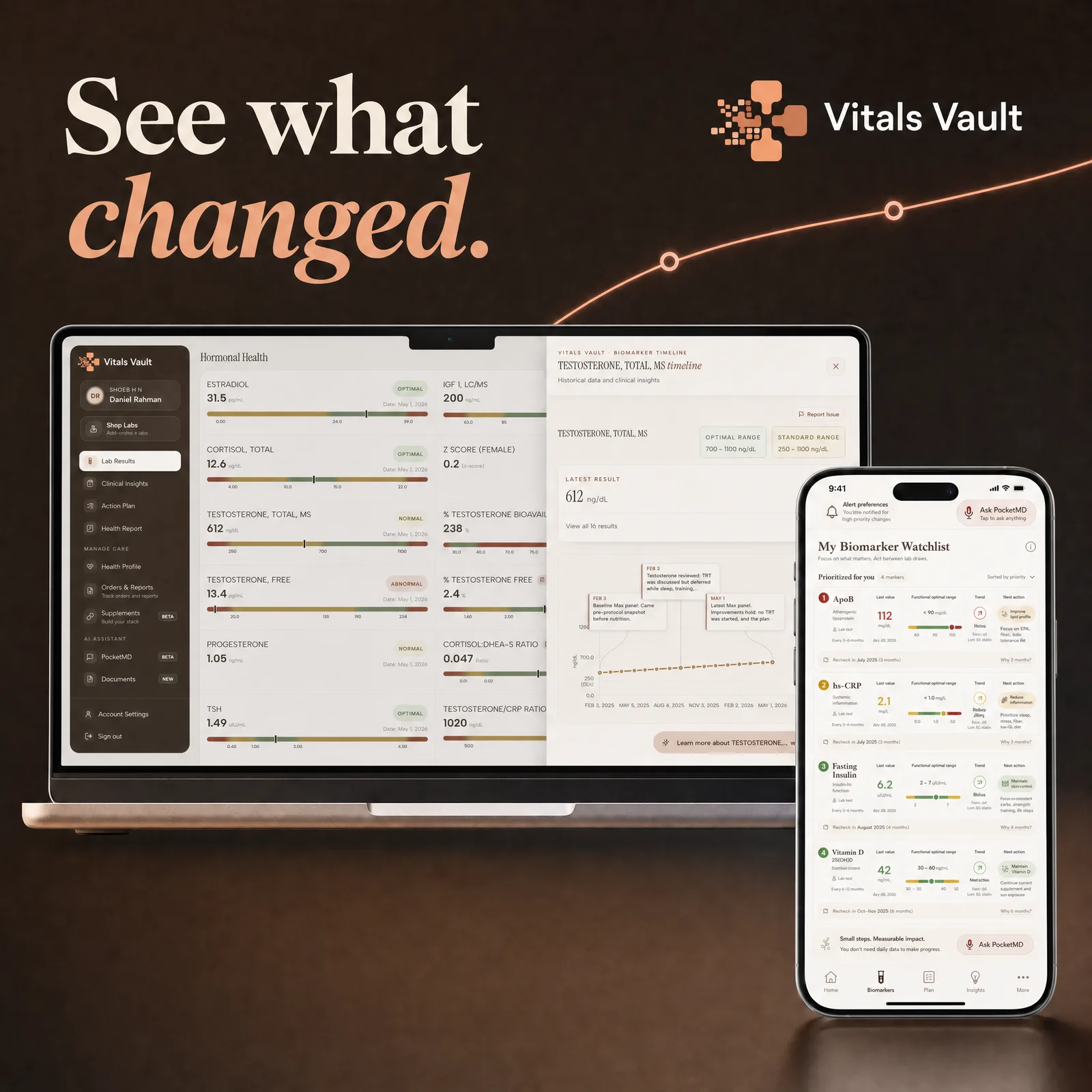
Explore your body systems with clear risk context — refresh your report, download the full PDF, and monitor hormones, heart, bone, and more in one place.
Explore hundreds of tests and panels, filter by concern, and manage your cart—member-exclusive pricing with quick checks and full-body options in one flow.
Wide test selection
300+ tests & panels available
Smart filtering
Find tests by symptoms or goals
Seamless ordering
Add to cart and manage easily
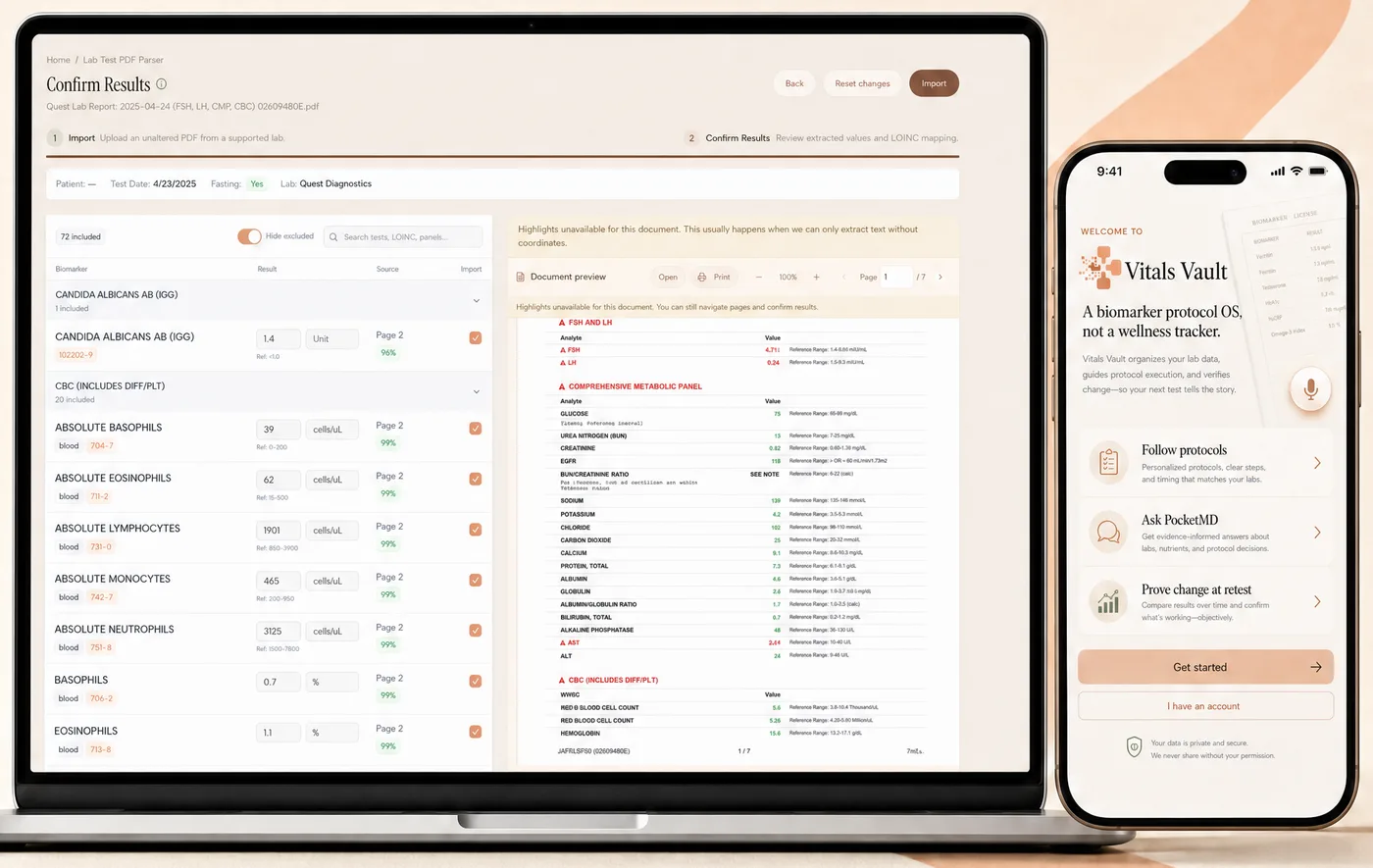
Upload past lab reports, search your documents, and keep appointments and results organized—our AI can extract biomarkers from PDFs so everything lives in one dashboard.
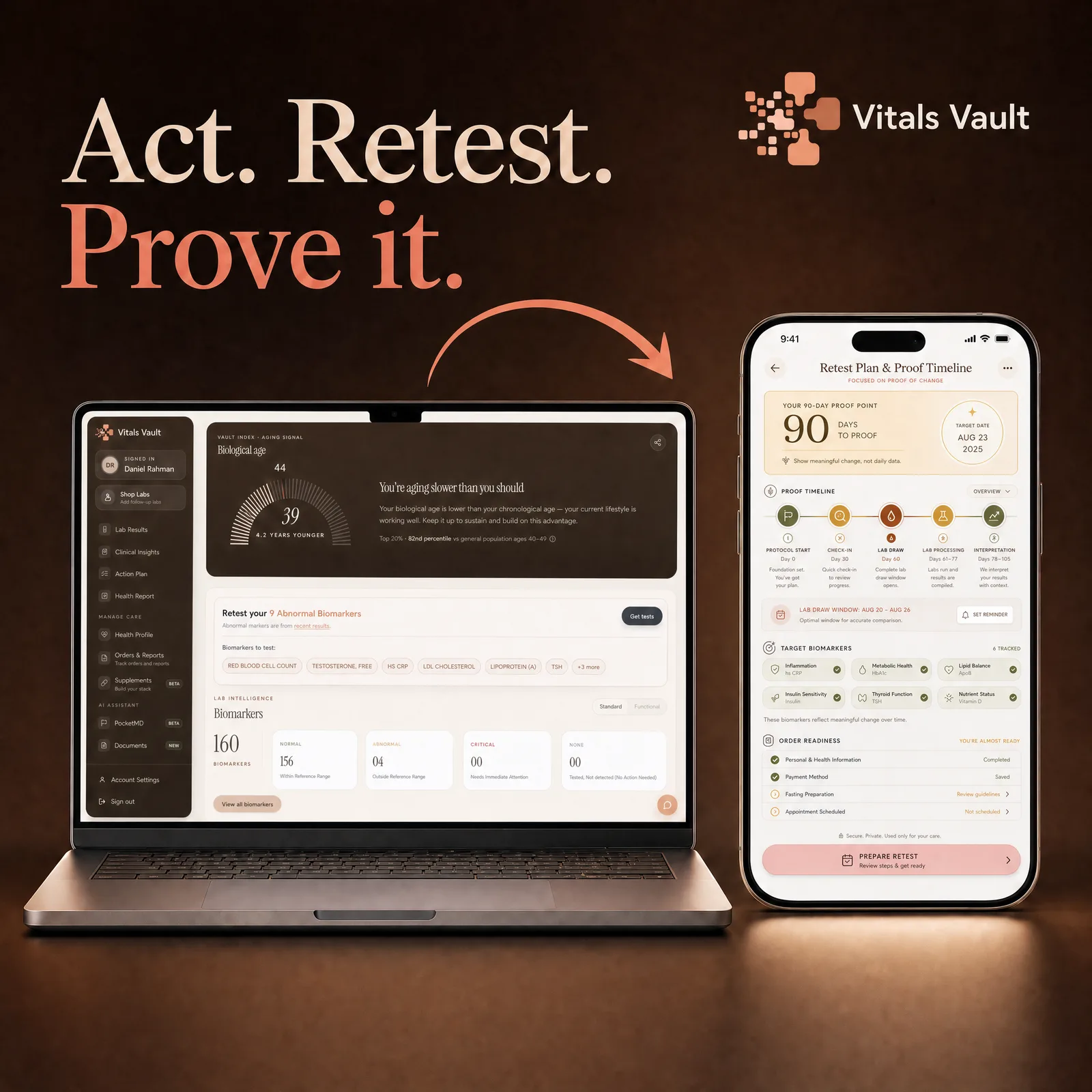
Browse longevity, nutrition, supplement, and movement protocols—structured plans you can follow with clear habits, labs, and targets tied to your profile.
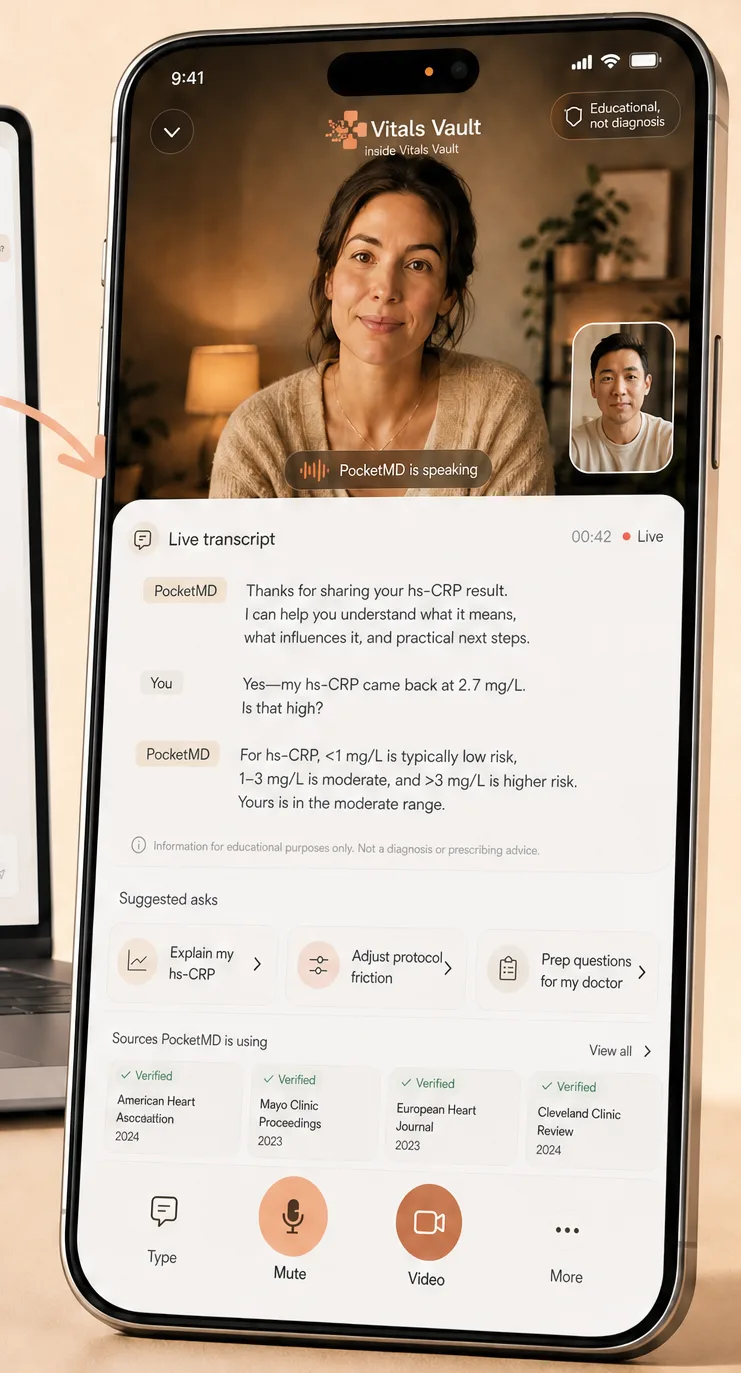
Ask for protocols, nutrition plans, supplement stacks, and education—context-aware suggestions powered by your labs and goals (beta experience).
Order online
Add UTI Panel (Urinalysis + Culture) to your cart and check out. No doctor referral is required.
Visit a Quest lab
Provide your blood sample at a Quest Diagnostics location. Appointments can be scheduled after checkout.
Review in Vitals Vault
Results in about 3 days. They stay in your Vitals Vault account for trends and follow-up.
No special preparation is usually needed unless noted at checkout.
This order includes the lab markers used for UTI Panel (Urinalysis + Culture) and reported in your Vitals Vault account.
Results
Results in about 3 days
HSA/FSA
Accepted
Who takes it
Must be taken by the purchaser
Preparation
No special preparation needed unless noted at checkout.
Calcium Oxalate Crystals
Included in this Quest Diagnostics order and reported in your Vitals Vault account.
Casts
Included in this Quest Diagnostics order and reported in your Vitals Vault account.
Color
Included in this Quest Diagnostics order and reported in your Vitals Vault account.
Crystals
Included in this Quest Diagnostics order and reported in your Vitals Vault account.
Culture, Urine, Routine
Included in this Quest Diagnostics order and reported in your Vitals Vault account.
Glucose
Included in this Quest Diagnostics order and reported in your Vitals Vault account.
Granular Cast
Included in this Quest Diagnostics order and reported in your Vitals Vault account.
Hyaline Cast
Included in this Quest Diagnostics order and reported in your Vitals Vault account.
This UTI lab panel checks urine chemistry and microscopy and may reflex to culture/ID when needed, helping explain burning, urgency, and cloudy urine.





This is a urine-based lab panel, not a single marker. It combines a standard urinalysis (chemical dipstick + microscopy) with “reflex” steps that can automatically add a urine culture and more specific identification when your initial findings suggest a bacterial urinary tract infection (UTI). The goal is to move from “something looks off” to “here’s what’s most likely going on” with fewer delays and fewer repeat samples.
You may want this UTI panel if you have symptoms that commonly overlap between dehydration, irritation, a yeast infection, a sexually transmitted infection (STI), and a bladder infection—such as burning with urination (dysuria), urgency, frequency, pelvic discomfort, foul-smelling urine, or cloudy urine.
This panel can also be useful when your symptoms are mild but persistent, when you have recurrent UTIs, or when you want clearer next steps after an at-home test strip or a prior “inconclusive” urinalysis. If you are pregnant, immunocompromised, have diabetes, have kidney disease, or have a urinary catheter, getting a more complete workup sooner is often important because complications can happen faster.
Seek urgent care instead of waiting for routine testing if you have fever, flank/back pain, vomiting, confusion, severe weakness, or you see significant blood in your urine—those can be signs of a kidney infection or another urgent condition.
Your results are most helpful when they are interpreted alongside your symptoms and medical history. This panel supports clinician-directed care and shared decision-making, not self-diagnosis.
Reflex testing means the lab may automatically run follow-up tests (such as culture or organism identification) when predefined urinalysis findings meet criteria; the exact reflex rules vary by lab.
from $26.49 at Quest Diagnostics
Results in days
Clear next steps
HSA / FSA
Vitals Vault makes it straightforward to order a UTI-focused lab panel when you want more clarity than a single urine dipstick. You can test through a national lab network and get a consolidated report that shows the urinalysis components together, which matters because UTI patterns are rarely captured by one number.
If reflex testing is triggered, your report may include additional results that help confirm whether bacteria are present and, in some cases, which organism is most likely responsible. That can reduce the “treat first, confirm later” cycle and can be especially helpful if you have recurrent symptoms or you are trying to avoid unnecessary antibiotics.
When you get your results, PocketMD can help you understand how the pieces fit together (for example, leukocyte esterase + nitrites + bacteria on microscopy) and what questions to ask next—such as whether STI co-testing, a repeat sample, or follow-up with your clinician makes sense.
The UTI Panel With Reflex Tests is a bundled urine lab panel that starts with a urinalysis and can automatically add follow-up testing (“reflex” testing) when the first results meet criteria that suggest a bacterial UTI.
A typical urinalysis includes two major parts:
• Chemical testing (often called a dipstick): This checks for markers like leukocyte esterase, nitrites, blood, protein, glucose, ketones, bilirubin, and urobilinogen, plus urine pH and specific gravity.
• Microscopy: This looks at the urine under a microscope for white blood cells (WBCs), red blood cells (RBCs), bacteria, yeast, epithelial cells, casts, crystals, and mucus.
Reflex testing is designed to answer a practical question: if the screening pattern looks like a real infection (rather than contamination), the lab can proceed to more specific testing without you needing to submit a second sample. Depending on the lab and the reflex rules, that follow-up may include a urine culture and/or organism identification. In some settings, susceptibility testing (which antibiotics the organism is sensitive to) may be performed when culture growth is significant.
Because this is a panel, you should expect multiple results that need to be read together. A single “abnormal” line item does not automatically mean you have a UTI; the overall pattern and your symptoms matter.
A lower-likelihood pattern usually means there is little evidence of infection or significant inflammation. Common examples include negative leukocyte esterase, negative nitrites, and few or no WBCs/bacteria on microscopy. If you still have symptoms, this pattern can point toward non-bacterial causes such as irritation, dehydration, recent sexual activity, vaginal/urethral inflammation, certain medications, or an STI that is not detected by urinalysis alone. In this situation, your next step is often symptom-guided follow-up (and sometimes STI testing), rather than assuming antibiotics are needed.
An “optimal” or reassuring panel is one where the chemical and microscopic pieces agree with each other and with how you feel. If you have no symptoms, a normal dipstick and a clean microscopy are generally reassuring. If you do have symptoms, the most useful “optimal” outcome is a clear, interpretable pattern—either strongly supportive of UTI (so treatment decisions are clearer) or clearly not supportive (so you can focus on other causes). The value of this panel is that it reduces gray-zone results by showing multiple related markers side by side.
A higher-likelihood UTI pattern often includes leukocyte esterase positivity and/or elevated WBCs on microscopy (pyuria), plus bacteria seen on microscopy, and sometimes nitrite positivity. Blood in the urine (hematuria) can appear with UTIs but can also occur with stones, strenuous exercise, trauma, or other conditions—so it is interpreted in context. If reflex culture/identification is performed and shows significant bacterial growth, that supports a true bacterial infection rather than contamination. If the urinalysis suggests infection but culture is negative, possibilities include a low-level infection, recent antibiotics, a fastidious organism, sample timing/handling issues, or a non-bacterial cause of inflammation.
Hydration status can dilute or concentrate urine and shift specific gravity, which can affect how “strong” certain dipstick signals appear. Sample collection matters: not using a clean-catch midstream sample can increase epithelial cells and bacteria from skin/vaginal flora, making contamination more likely. Timing matters too—nitrites are more likely to be positive when urine has been in the bladder long enough for certain bacteria to convert nitrates to nitrites. Menstruation, vaginal discharge, and recent sexual activity can introduce blood or cells that complicate interpretation. Medications and supplements (including some antibiotics, vitamin C, and phenazopyridine) can alter dipstick chemistry. Finally, symptoms that feel like a UTI can also come from STIs, prostatitis, interstitial cystitis/bladder pain syndrome, or kidney stones, which is why your full pattern and your clinical context should guide next steps.
No. Fasting is not required for a urine-based UTI panel. What matters more is collection quality (clean-catch midstream) and, when possible, not being overly hydrated right before the sample so the urine is not extremely diluted.
“Reflex” means the lab may automatically run follow-up testing if the initial urinalysis meets certain criteria. For example, if the urinalysis pattern suggests infection, the lab can reflex to a urine culture and sometimes organism identification. The exact triggers depend on the lab’s protocol.
Look for agreement across categories. A UTI pattern is more convincing when inflammation markers (leukocyte esterase and/or WBCs) align with bacterial signals (nitrites and/or bacteria on microscopy) and your symptoms. Isolated abnormalities—like trace protein, a few RBCs, or a slightly abnormal pH—can happen for many non-infectious reasons and often need context rather than immediate treatment.
Not reliably. Urinalysis can show inflammation that overlaps with urethritis from STIs, and it does not directly test for common STI organisms. If you have STI risk, new partners, discharge, pelvic pain, or symptoms after sexual exposure, STI co-testing may be appropriate even if the urinalysis suggests a UTI.
This can happen if you recently took antibiotics, the bacterial count is low, the organism is harder to grow, the sample was diluted, or the inflammation is from a non-bacterial cause (such as irritation, stones, or STI-related urethritis). Your symptoms and the full pattern help determine whether repeat testing or different testing is the best next step.
A panel is usually easier to interpret because it bundles the key urinalysis components and can add reflex steps without requiring you to predict ahead of time whether you will need a culture. Ordering single tests can be appropriate in narrow situations, but it can also increase the chance of incomplete information or needing a second visit.
Repeat testing can make sense if symptoms persist after treatment, if symptoms recur soon after improvement, if your first sample may have been contaminated, or if you are in a higher-risk group (for example, pregnancy or recurrent UTIs). If you feel significantly worse or develop fever or flank pain, seek urgent evaluation rather than waiting to retest.
Purchase online through Vitals Vault. A licensed clinician reviews and approves your order, then you receive a digital requisition for a Quest Diagnostics blood draw.
Samples are collected in person at Quest Diagnostics locations nationwide. After checkout you can schedule your visit at a convenient site.
Most results in 3–5 business days. You can view them securely in your Vitals Vault account.
No separate referral appointment is required. Clinician review is included in the online order flow.
Yes. Eligible HSA/FSA cards can be used at checkout for qualifying lab orders.
Results are available in your secure Vitals Vault account. You control who you share them with, subject to applicable law.
Blood glucose shows the amount of sugar in your blood at a single moment. A1c (hemoglobin A1c) estimates your average blood sugar over roughly the past 8–12 weeks. Comparing them helps explain whether your long-term average lines up with your fasting glucose on draw day.
It helps you understand how this marker fits into your broader metabolic picture, with results tracked in your Vitals Vault account.
Elevated values can signal higher metabolic risk. Many people start with nutrition, activity, sleep, and weight management, then retest and review results with a clinician. This test is educational and does not replace medical advice or diagnosis.
Your sample is processed at CLIA-certified Quest Diagnostics laboratories. Results should still be interpreted with a qualified clinician alongside your history, symptoms, and other labs.
Consumer-initiated testing through Vitals Vault is limited to adults 18+ so ordering and interpretation stay aligned with clinical best practices for this channel.