01
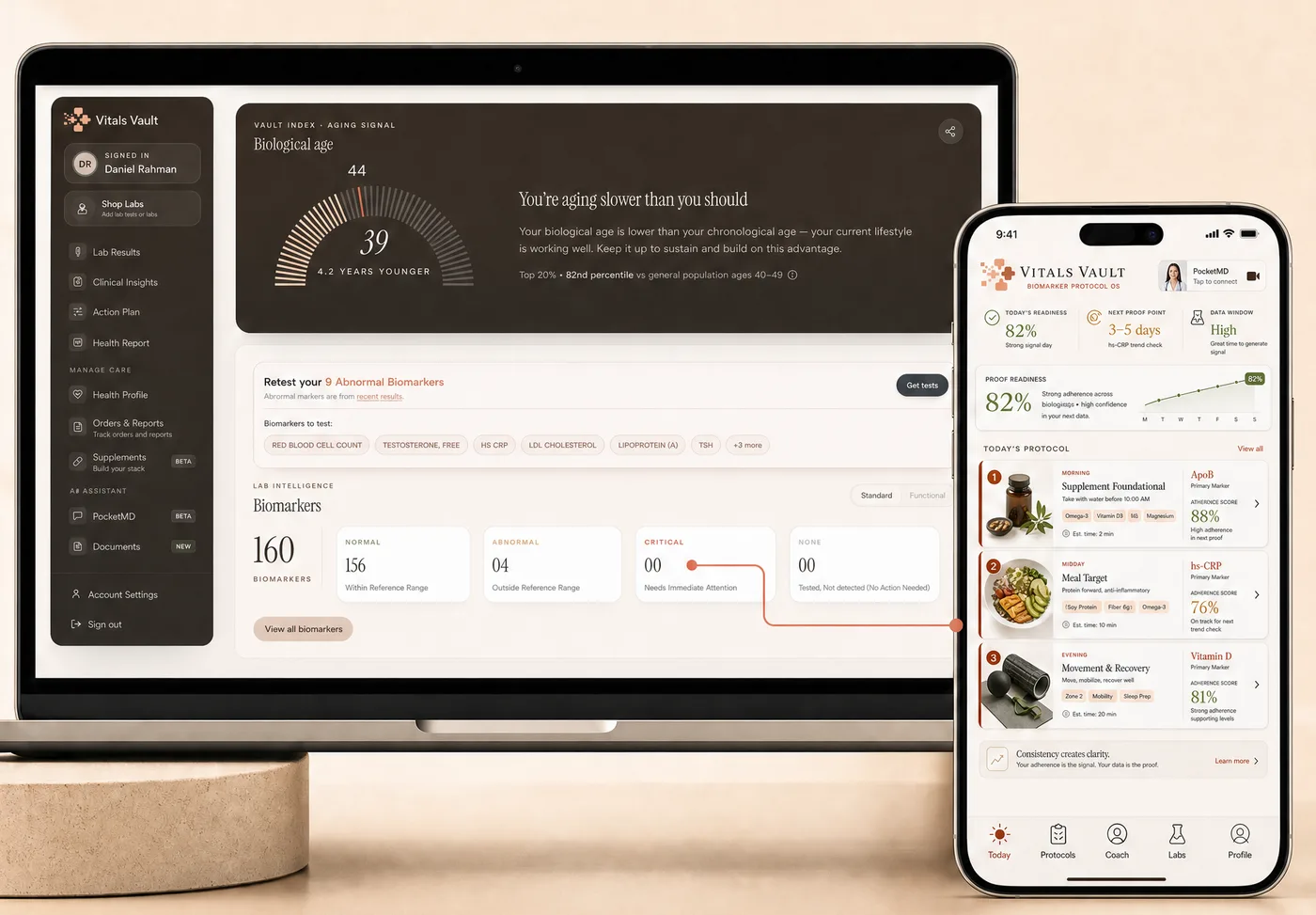
Biological age
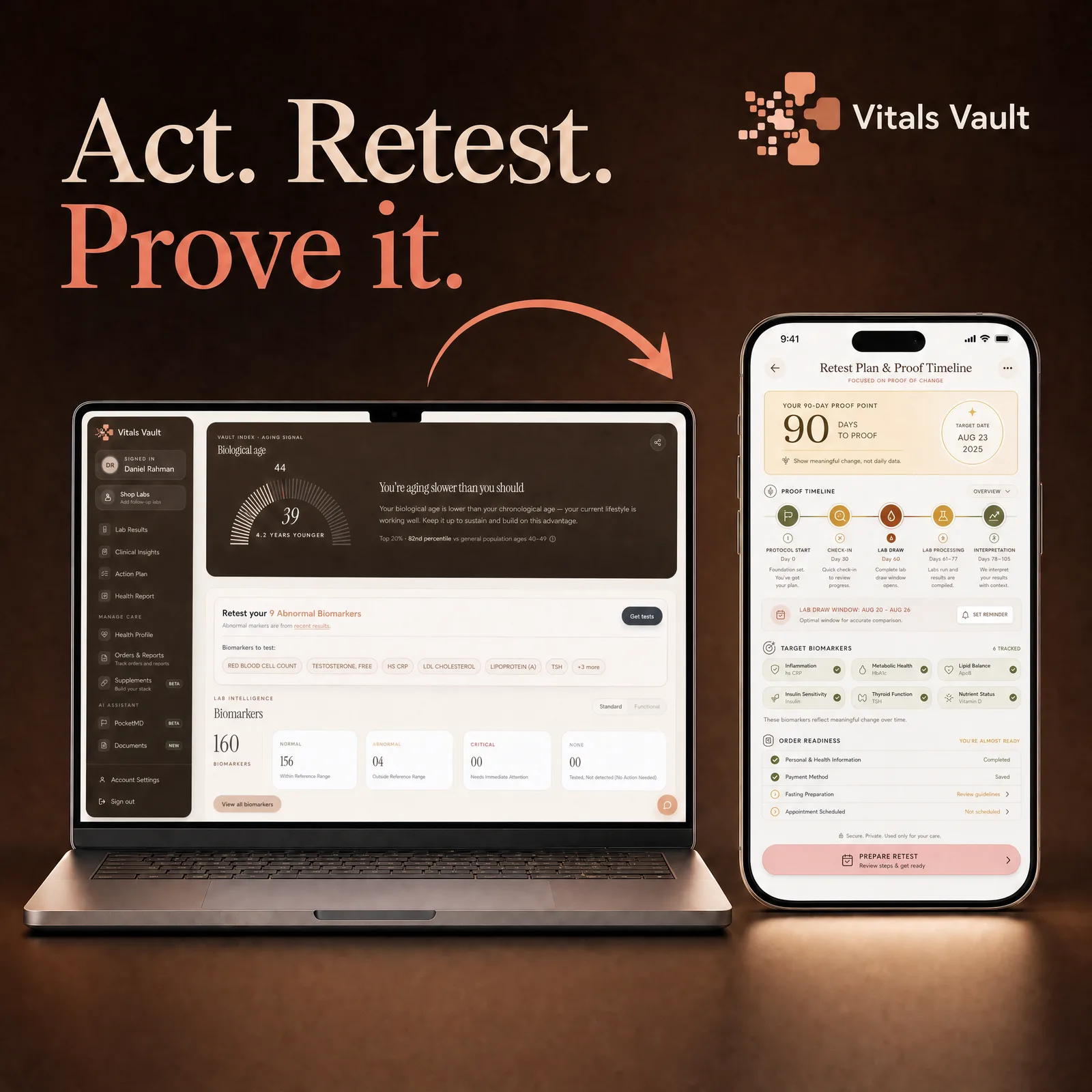
Find out if your body is aging faster or slower than your actual age — and see how you rank against the general population.
39
Biological age
44
Actual age
4.2
Years younger
Testosterone Panel (Free, Bioavailable & Total)
Results in about 7 days
Testosterone Free, Bioavailable & Total (MS): how to interpret your results. It measures total, free, and bioavailable testosterone to clarify hormone status; order through Vitals Vault and test at a Quest location.
This test gives you a more complete view of testosterone than “total testosterone” alone. It reports total testosterone measured by mass spectrometry (LC-MS/MS), and it also reports the portion that is free and the portion that is bioavailable. That distinction matters because most testosterone in your blood is bound to proteins, especially sex hormone–binding globulin (SHBG). If SHBG is unusually high or low, your total testosterone can look “fine” while the amount your tissues can actually use is not. Your result is most useful when you interpret it alongside your symptoms, medications, and timing of the blood draw. It can support clinician-directed care, but it is not a standalone diagnosis.
What to expect before and at your draw.
Sample Type
Blood
Collection Method
In person at a Quest Diagnostics location
Age
18+
This order includes the lab markers used for Testosterone Panel (Free, Bioavailable & Total).
Albumin
Included in this Quest Diagnostics order and reported in your Vitals Vault account.
Sex Hormone Binding Globulin
Included in this Quest Diagnostics order and reported in your Vitals Vault account.
Testosterone,Bioavailable
Included in this Quest Diagnostics order and reported in your Vitals Vault account.
Testosterone, Free
Included in this Quest Diagnostics order and reported in your Vitals Vault account.
Order Testosterone Panel (Free, Bioavailable & Total) online.
Visit a Quest Diagnostics location near you for your blood draw. Appointments can be scheduled after checkout.
View easy-to-read results in your Vitals Vault account, with trends and a personalized action plan.
Included with every package
Function Health shows you numbers. Vitals Vault connects them — ratios, patterns, and a personalized action plan grounded in functional medicine.
Find out if your body is aging faster or slower than your actual age — and see how you rank against the general population.
39
Biological age
44
Actual age
4.2
Years younger
Turn lab data into what to do next—clear guidance on follow-ups, lifestyle context, and add-on testing when you need to go deeper. Make the healthy choice the obvious one.
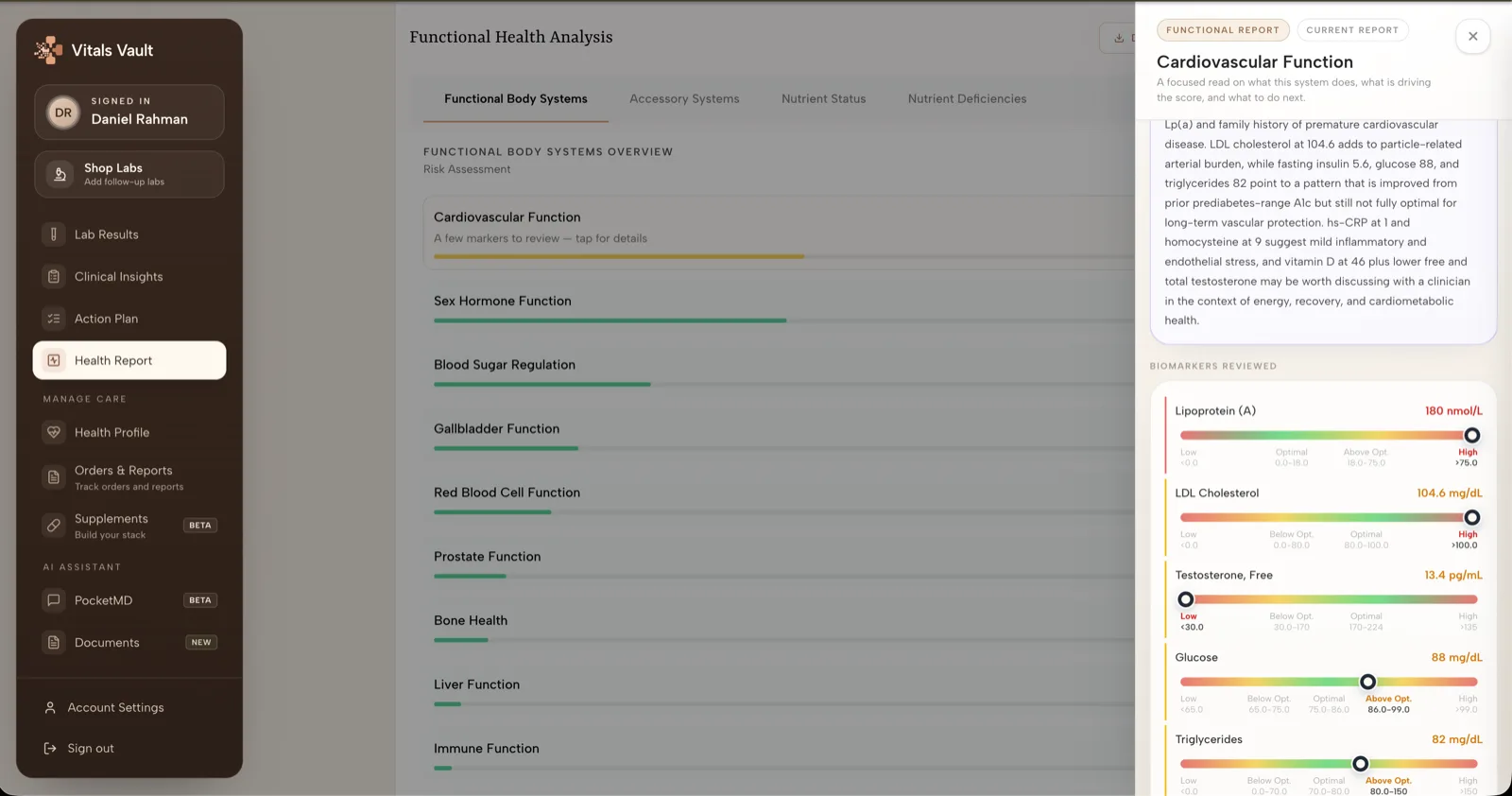
A personalized, plain-language walkthrough of your abnormal markers—reference ranges, pattern context, and what to watch next, grounded in your actual labs.
Personalized Insights
Clear Explanations
Actionable guidance
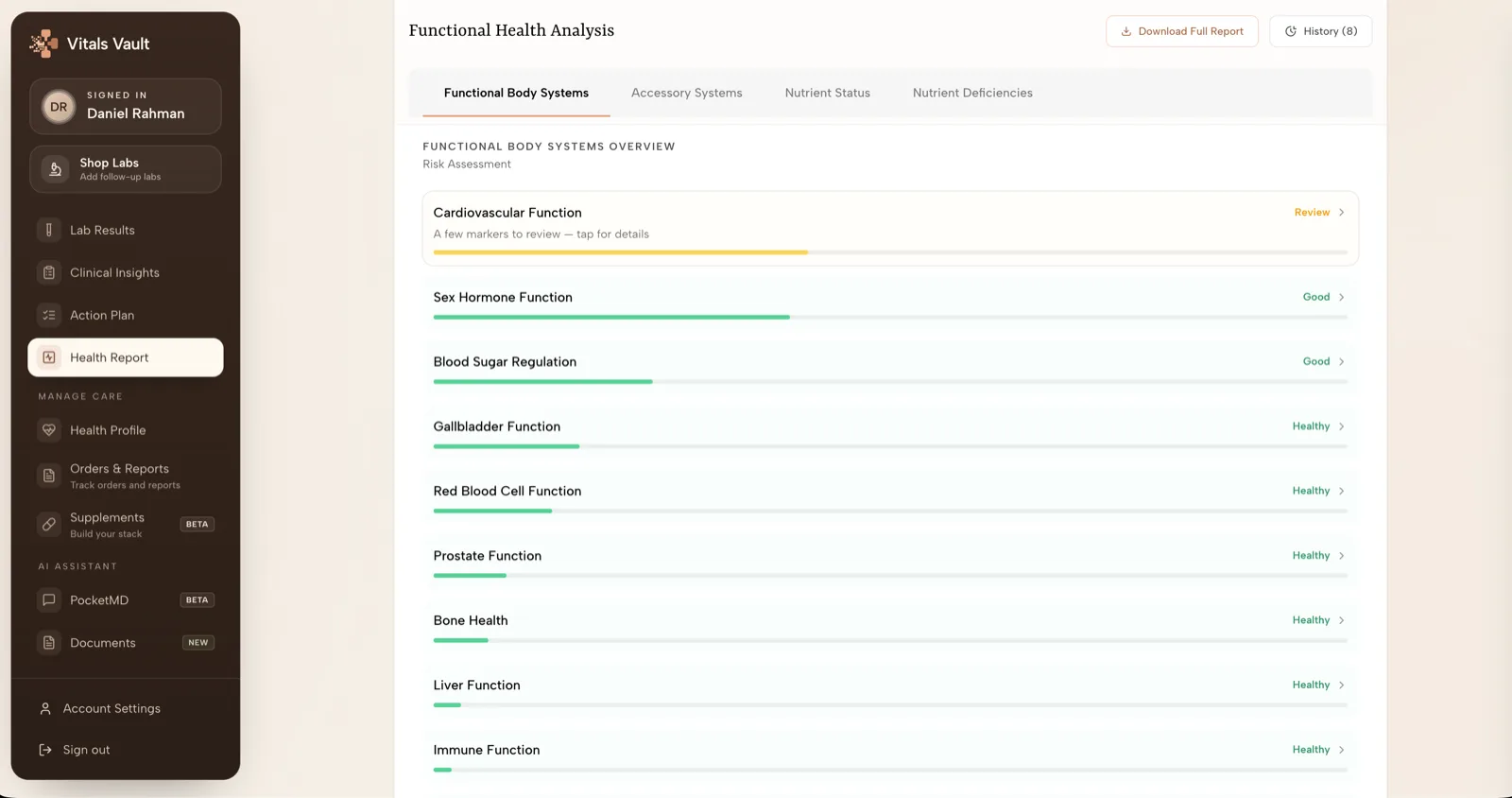
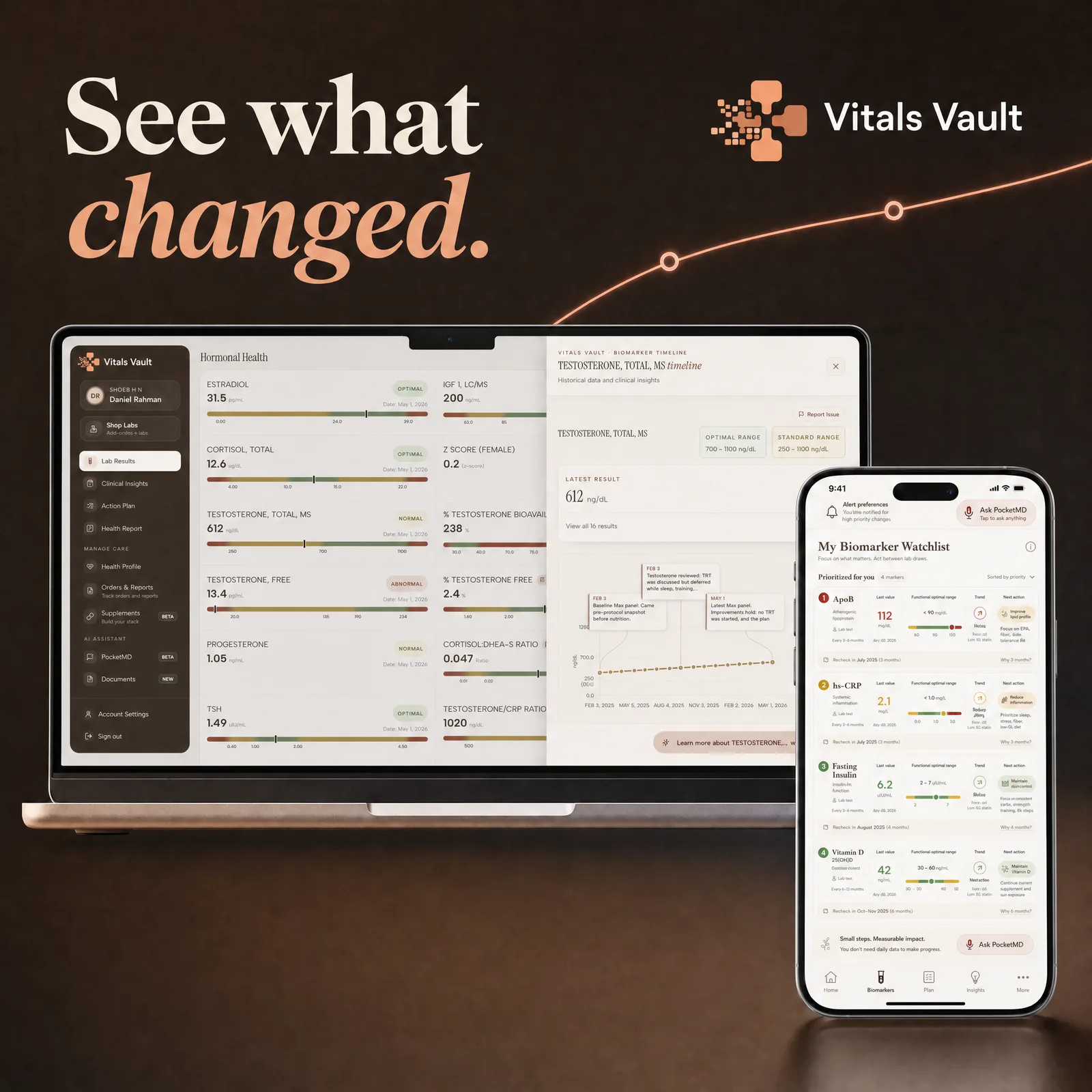
Explore your body systems with clear risk context — refresh your report, download the full PDF, and monitor hormones, heart, bone, and more in one place.
Explore hundreds of tests and panels, filter by concern, and manage your cart—member-exclusive pricing with quick checks and full-body options in one flow.
Wide test selection
300+ tests & panels available
Smart filtering
Find tests by symptoms or goals
Seamless ordering
Add to cart and manage easily
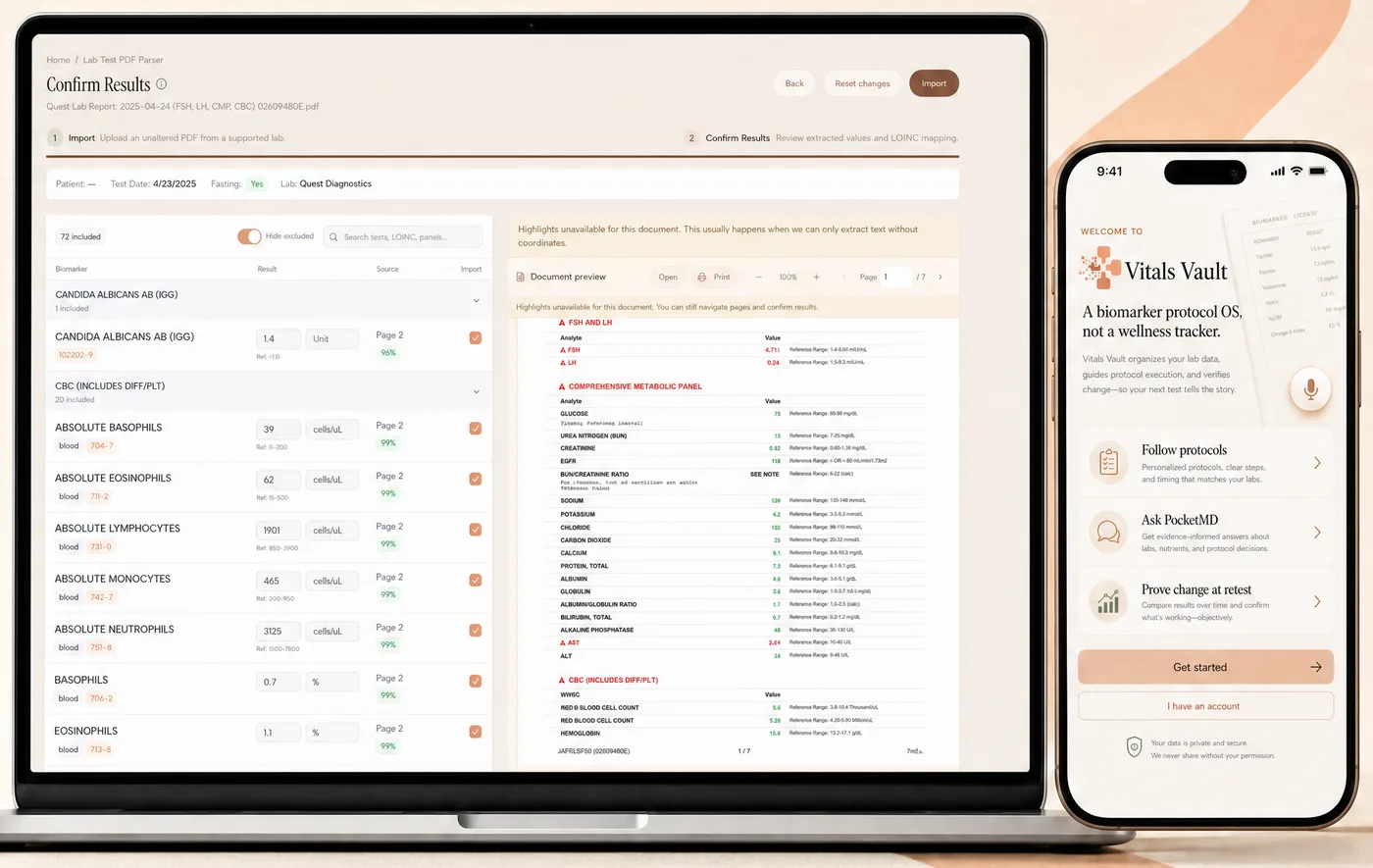
Upload past lab reports, search your documents, and keep appointments and results organized—our AI can extract biomarkers from PDFs so everything lives in one dashboard.
Browse longevity, nutrition, supplement, and movement protocols—structured plans you can follow with clear habits, labs, and targets tied to your profile.
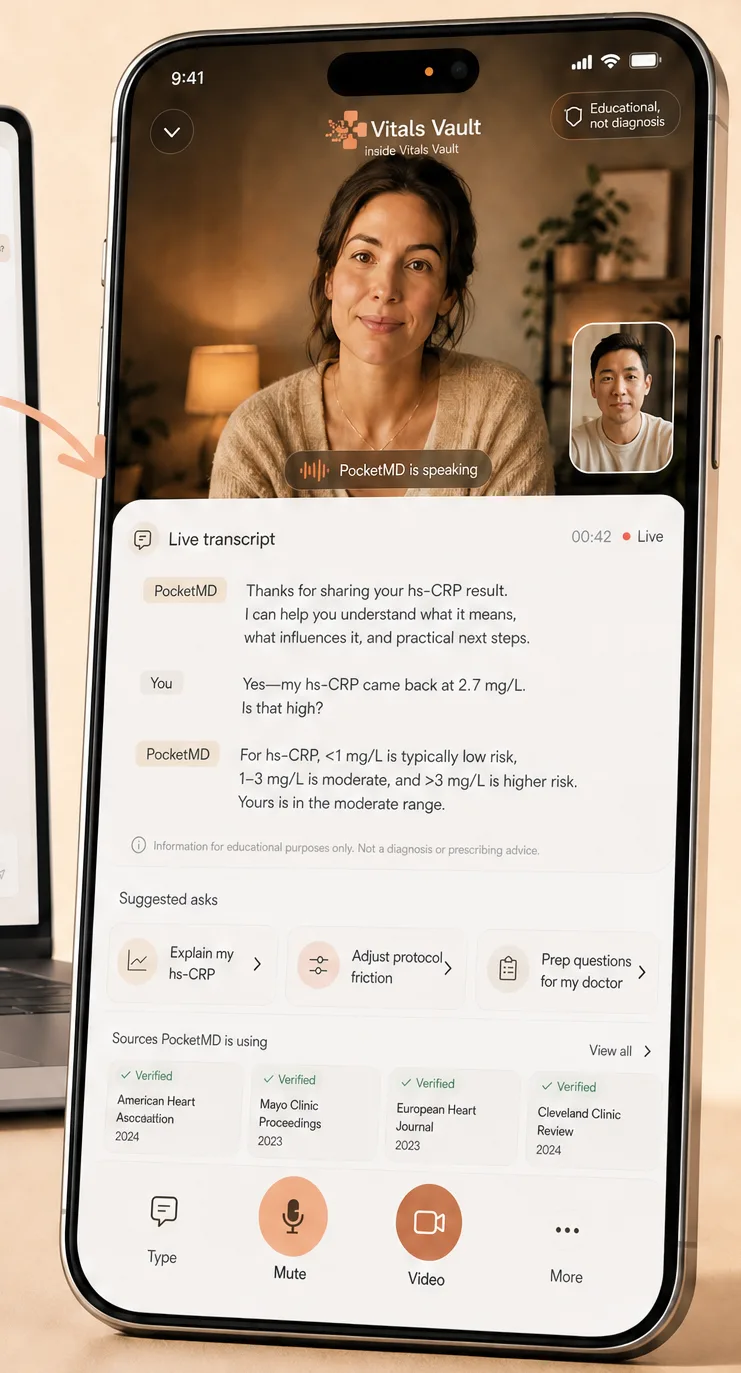
Ask for protocols, nutrition plans, supplement stacks, and education—context-aware suggestions powered by your labs and goals (beta experience).
Order online
Add Testosterone Panel (Free, Bioavailable & Total) to your cart and check out. No doctor referral is required.
Visit a Quest lab
Provide your blood sample at a Quest Diagnostics location. Appointments can be scheduled after checkout.
Review in Vitals Vault
Results in about 7 days. They stay in your Vitals Vault account for trends and follow-up.
No special preparation is usually needed unless noted at checkout.
This order includes the lab markers used for Testosterone Panel (Free, Bioavailable & Total) and reported in your Vitals Vault account.
Results
Results in about 7 days
HSA/FSA
Accepted
Who takes it
Must be taken by the purchaser
Preparation
No special preparation needed unless noted at checkout.
Testosterone, Total, Ms
Included in this Quest Diagnostics order and reported in your Vitals Vault account.
It measures total, free, and bioavailable testosterone to clarify hormone status; order through Vitals Vault and test at a Quest location.





This test gives you a more complete view of testosterone than “total testosterone” alone. It reports total testosterone measured by mass spectrometry (LC-MS/MS), and it also reports the portion that is free and the portion that is bioavailable.
That distinction matters because most testosterone in your blood is bound to proteins, especially sex hormone–binding globulin (SHBG). If SHBG is unusually high or low, your total testosterone can look “fine” while the amount your tissues can actually use is not.
Your result is most useful when you interpret it alongside your symptoms, medications, and timing of the blood draw. It can support clinician-directed care, but it is not a standalone diagnosis.
You may want this test if you are trying to make sense of symptoms that can overlap with many other conditions, such as lower libido, fewer morning erections, fatigue, reduced exercise performance, depressed mood, or difficulty gaining muscle despite training. In people with ovaries, it can also help evaluate signs of androgen excess such as acne, scalp hair thinning, or increased facial/body hair.
This specific “free + bioavailable + total” approach is especially helpful when total testosterone does not match how you feel, or when you have reasons for SHBG to be abnormal. Common scenarios include obesity or insulin resistance (often lower SHBG), thyroid disease, liver disease, aging, pregnancy, and use of estrogen-containing medications (often higher SHBG).
You may also need it if you are monitoring treatment that can change testosterone availability, such as testosterone therapy, selective estrogen receptor modulators, aromatase inhibitors, or changes in estrogen exposure. In those cases, trending the same method over time is usually more informative than a single number.
If you are deciding what to do next, your clinician will often pair these results with other hormones (like LH, FSH, estradiol, prolactin, and thyroid tests) to identify whether the issue is testicular/ovarian, pituitary, medication-related, or driven by binding proteins.
This is a laboratory blood test typically performed in a CLIA-certified lab; results should be interpreted in clinical context and are not diagnostic on their own.
from $66.99 at Quest Diagnostics
Results in days
Clear next steps
HSA / FSA
Vitals Vault lets you order Testosterone Free Bioavailable And Total MS directly, then complete your blood draw at a nearby Quest location. This is useful when you want a high-quality baseline, you are comparing options, or you need a consistent method for follow-up testing.
After your results post, you can use PocketMD to walk through what “free,” “bioavailable,” and “total” mean for your situation, what patterns are worth rechecking, and which companion labs can reduce guesswork (for example, SHBG, albumin, LH/FSH, estradiol, or prolactin).
If you are retesting, PocketMD can also help you plan timing so your trend is meaningful—such as drawing in the morning when appropriate, keeping medication timing consistent, and repeating an abnormal result before making big changes.
Testosterone is an androgen hormone that influences sexual function, fertility, muscle and bone maintenance, red blood cell production, and aspects of mood and energy. In blood, testosterone exists in three main forms: tightly bound to SHBG, loosely bound to albumin, and unbound (free).
Total testosterone is the sum of all forms. Free testosterone is the small fraction not bound to proteins. Bioavailable testosterone generally refers to free testosterone plus the albumin-bound portion, because albumin binding is weak and testosterone can dissociate and become available to tissues.
The “MS” in the name refers to mass spectrometry (often LC-MS/MS), a measurement method widely used for steroid hormones. Method matters because immunoassays can be less reliable at lower concentrations (a common issue in women and in men with low testosterone).
SHBG acts like a carrier that holds onto testosterone. When SHBG is high, more testosterone is bound and less may be free/bioavailable even if total looks acceptable. When SHBG is low, total testosterone can look low while free/bioavailable is normal or high. That is why a “free + bioavailable + total” report can be more actionable than a single total value.
Testosterone varies across the day and can be affected by sleep, illness, calorie restriction, heavy training, and medications. If you are trending results, try to keep the draw time and conditions similar each time, and discuss medication timing with your clinician so you are comparing like with like.
Low free or bioavailable testosterone can help explain symptoms like reduced libido, fewer spontaneous erections, low energy, or decreased strength—especially when the pattern repeats on a second morning draw. If total testosterone is low but free/bioavailable is not, low SHBG is often part of the explanation, and the next step is usually to look for drivers such as weight changes, insulin resistance, certain medications, or systemic illness. If both total and free/bioavailable are low, your clinician may evaluate whether the cause is testicular/ovarian versus pituitary by checking LH and FSH, and may add prolactin and thyroid testing depending on the picture.
An in-range total testosterone with in-range free and bioavailable fractions generally suggests that binding proteins and hormone production are in balance. If you still have symptoms, it does not mean “nothing is wrong,” but it makes testosterone a less likely primary driver. In that situation, clinicians often look at sleep, mood, thyroid function, iron status, medications, and other hormones (such as estradiol or cortisol patterns) depending on your history.
High free or bioavailable testosterone can occur with testosterone therapy, anabolic steroid exposure, or conditions that increase androgen production. In people with ovaries, elevated testosterone may support evaluation for androgen excess patterns, especially when paired with symptoms like acne or hirsutism and with related tests such as DHEA-S and 17-hydroxyprogesterone. If total is high but free is not, high SHBG (for example from estrogen exposure or hyperthyroidism) can raise total while keeping free closer to normal.
Time of day, recent sleep, acute illness, heavy endurance training, and calorie deficit can all lower testosterone transiently. SHBG shifts the relationship between total and free/bioavailable and is influenced by age, thyroid status, liver function, estrogen exposure, and metabolic health. Medications and hormones—including testosterone formulations, estrogen-containing contraceptives, anti-androgens, opioids, and glucocorticoids—can change results and should be reviewed before interpreting a single value. Because reference ranges and units vary by lab, your “low” or “high” should be judged against the range on your report and confirmed with repeat testing when decisions are significant.
Total testosterone is everything in your blood (bound + unbound). Free testosterone is the unbound fraction. Bioavailable testosterone is free testosterone plus the portion loosely bound to albumin, which can more readily enter tissues.
SHBG binds testosterone tightly. High SHBG can make total testosterone look normal or high while free/bioavailable is lower. Low SHBG can make total look low while free/bioavailable is normal or high, which changes what “low testosterone” means in practice.
Mass spectrometry is generally preferred for accuracy and specificity, especially at lower testosterone concentrations. That can be important for women, for men with suspected low testosterone, and for consistent monitoring over time.
Many clinicians prefer a morning draw (often before 10 a.m.) for men because testosterone can be higher earlier in the day. If you are monitoring therapy, the best timing depends on the formulation and dosing schedule, so keep timing consistent and follow your clinician’s guidance.
Fasting is not always required for testosterone itself, but you may be ordering companion labs (like lipids or glucose/insulin markers) that do require fasting. If you are unsure, follow the instructions on your lab order and aim for consistency between repeat tests.
A common approach is to repeat an abnormal or borderline result on a separate day under similar conditions, because sleep loss, illness, and stress can temporarily lower testosterone. Your clinician may recommend retesting in a few weeks to a few months depending on symptoms, how abnormal the value is, and whether you are making changes (weight, medications, or therapy).
Common companions include LH and FSH (to assess pituitary signaling), estradiol, prolactin, thyroid tests, and sometimes DHEA-S, 17-hydroxyprogesterone, or a metabolic panel depending on whether the concern is low testosterone, androgen excess, or treatment monitoring.
Purchase online through Vitals Vault. A licensed clinician reviews and approves your order, then you receive a digital requisition for a Quest Diagnostics blood draw.
Samples are collected in person at Quest Diagnostics locations nationwide. After checkout you can schedule your visit at a convenient site.
Most results in 3–5 business days. You can view them securely in your Vitals Vault account.
No separate referral appointment is required. Clinician review is included in the online order flow.
Yes. Eligible HSA/FSA cards can be used at checkout for qualifying lab orders.
Results are available in your secure Vitals Vault account. You control who you share them with, subject to applicable law.
Blood glucose shows the amount of sugar in your blood at a single moment. A1c (hemoglobin A1c) estimates your average blood sugar over roughly the past 8–12 weeks. Comparing them helps explain whether your long-term average lines up with your fasting glucose on draw day.
It helps you understand how this marker fits into your broader metabolic picture, with results tracked in your Vitals Vault account.
Elevated values can signal higher metabolic risk. Many people start with nutrition, activity, sleep, and weight management, then retest and review results with a clinician. This test is educational and does not replace medical advice or diagnosis.
Your sample is processed at CLIA-certified Quest Diagnostics laboratories. Results should still be interpreted with a qualified clinician alongside your history, symptoms, and other labs.
Consumer-initiated testing through Vitals Vault is limited to adults 18+ so ordering and interpretation stay aligned with clinical best practices for this channel.