01
Biological age
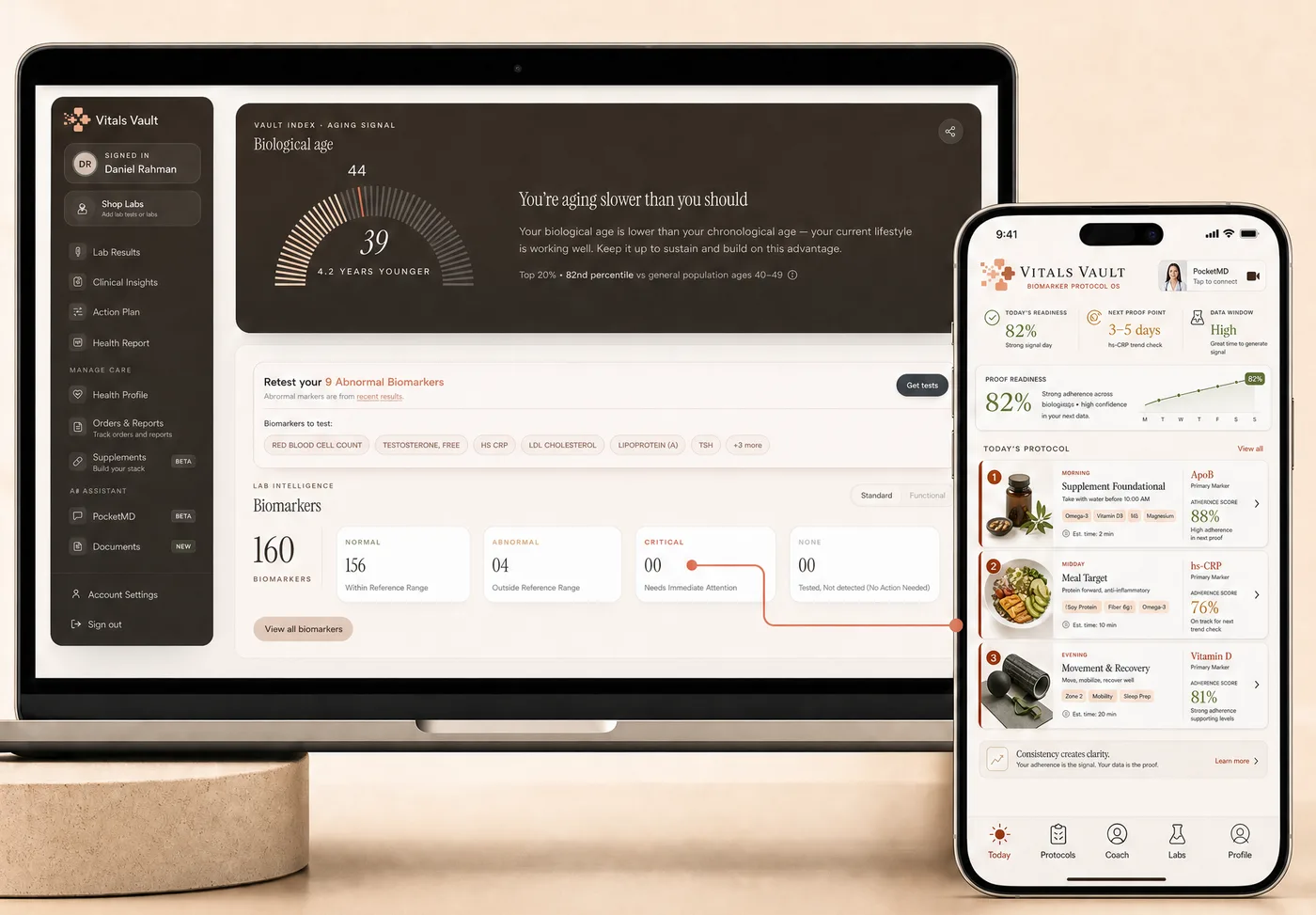
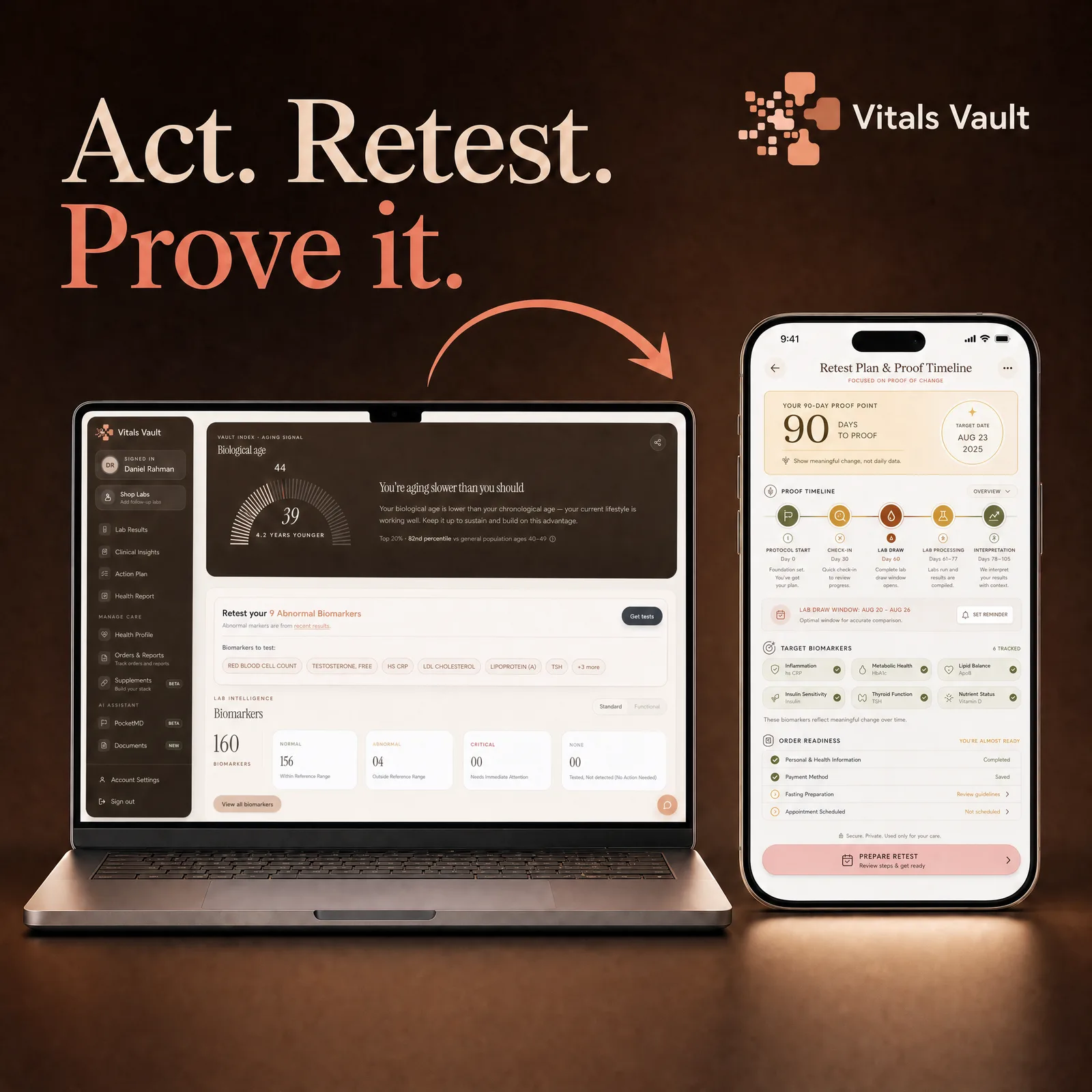
Find out if your body is aging faster or slower than your actual age — and see how you rank against the general population.
39
Biological age
44
Actual age
4.2
Years younger
Prolactin
Results in about 4 days
Prolactin test (PRL): what it measures and how to read your result. A prolactin test measures a pituitary hormone tied to lactation and reproductive signaling; order it with Vitals Vault and test at Quest locations.
Prolactin is a hormone made by your pituitary gland. It is best known for supporting breast milk production after pregnancy, but it also interacts with your reproductive hormones and can affect libido, menstrual cycles, and testosterone signaling. A prolactin blood test is usually ordered when symptoms suggest a hormone imbalance or when a clinician wants to rule out medication effects or pituitary causes. Because prolactin can rise temporarily from stress, sleep, or nipple stimulation, a single result often needs context before you draw conclusions. Your number is most useful when you pair it with your symptoms, your medication list, and a few related labs. Testing can support clinician-directed care, but it cannot diagnose a condition by itself.
What to expect before and at your draw.
Sample Type
Blood
Collection Method
In person at a Quest Diagnostics location
Age
18+
This order includes the lab markers used for Prolactin.
Prolactin
Included in this Quest Diagnostics order and reported in your Vitals Vault account.
Order Prolactin online.
Visit a Quest Diagnostics location near you for your blood draw. Appointments can be scheduled after checkout.
View easy-to-read results in your Vitals Vault account, with trends and a personalized action plan.
Included with every package
Function Health shows you numbers. Vitals Vault connects them — ratios, patterns, and a personalized action plan grounded in functional medicine.
Find out if your body is aging faster or slower than your actual age — and see how you rank against the general population.
39
Biological age
44
Actual age
4.2
Years younger
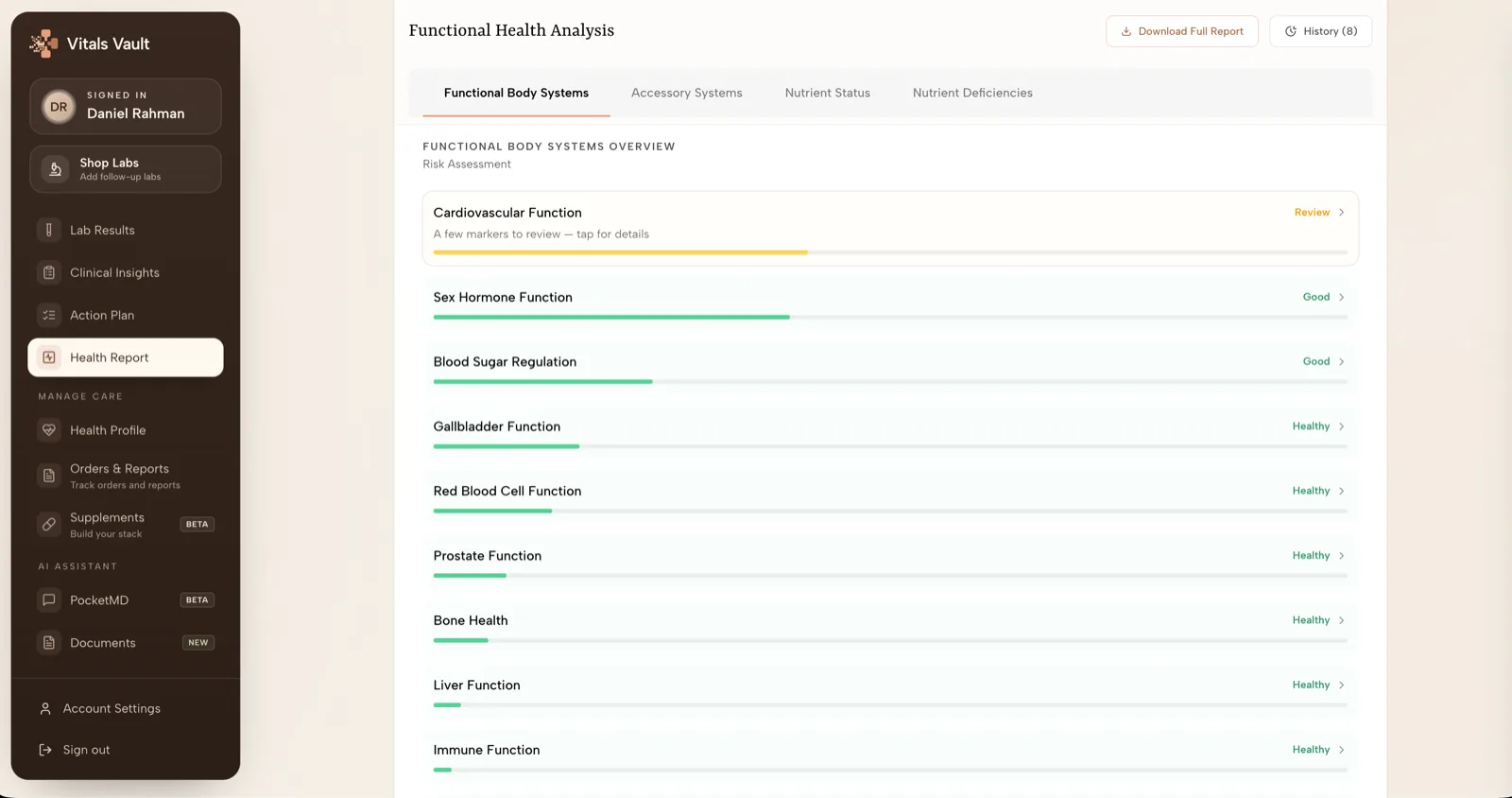
Turn lab data into what to do next—clear guidance on follow-ups, lifestyle context, and add-on testing when you need to go deeper. Make the healthy choice the obvious one.
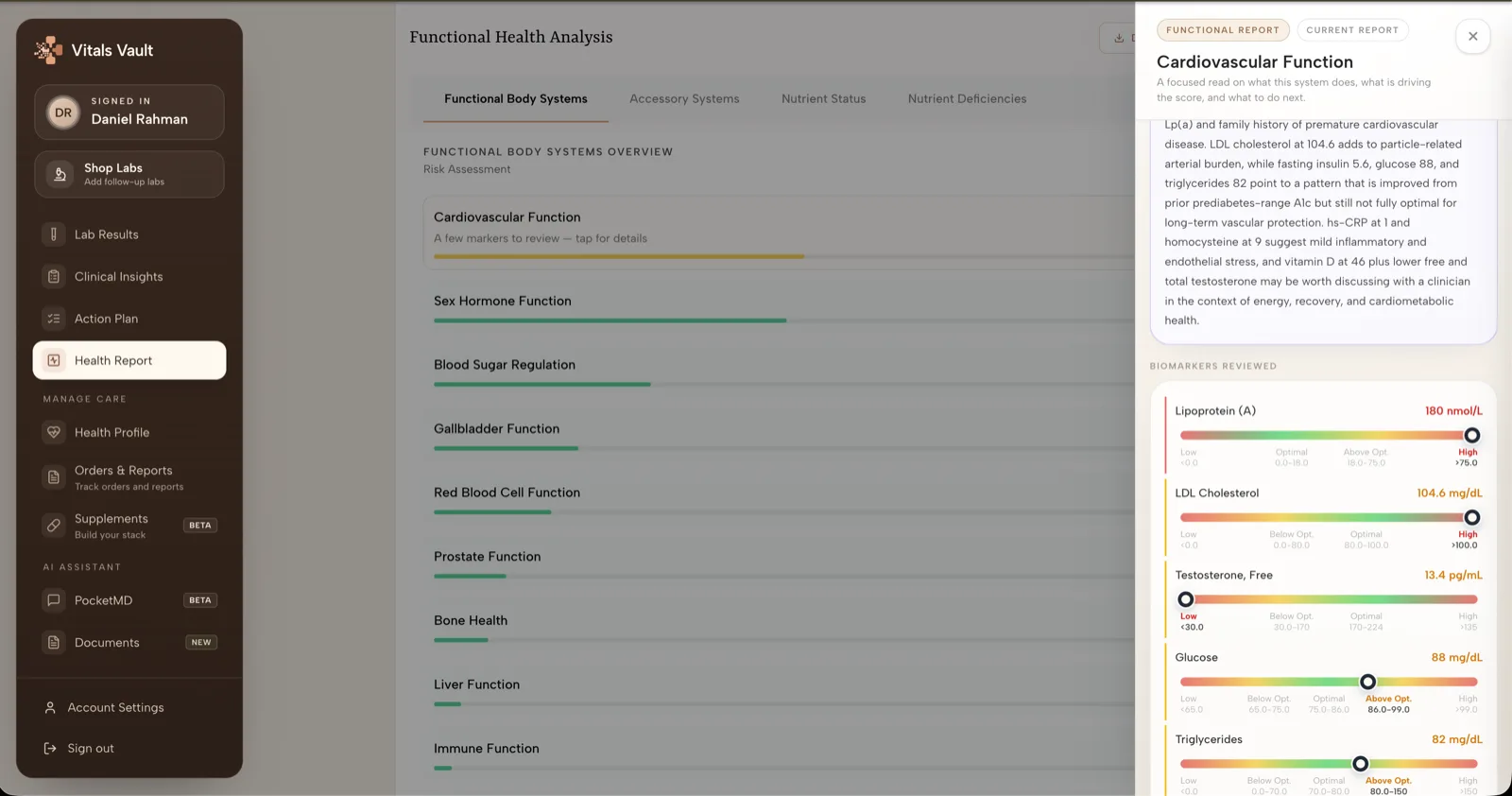
A personalized, plain-language walkthrough of your abnormal markers—reference ranges, pattern context, and what to watch next, grounded in your actual labs.
Personalized Insights
Clear Explanations
Actionable guidance
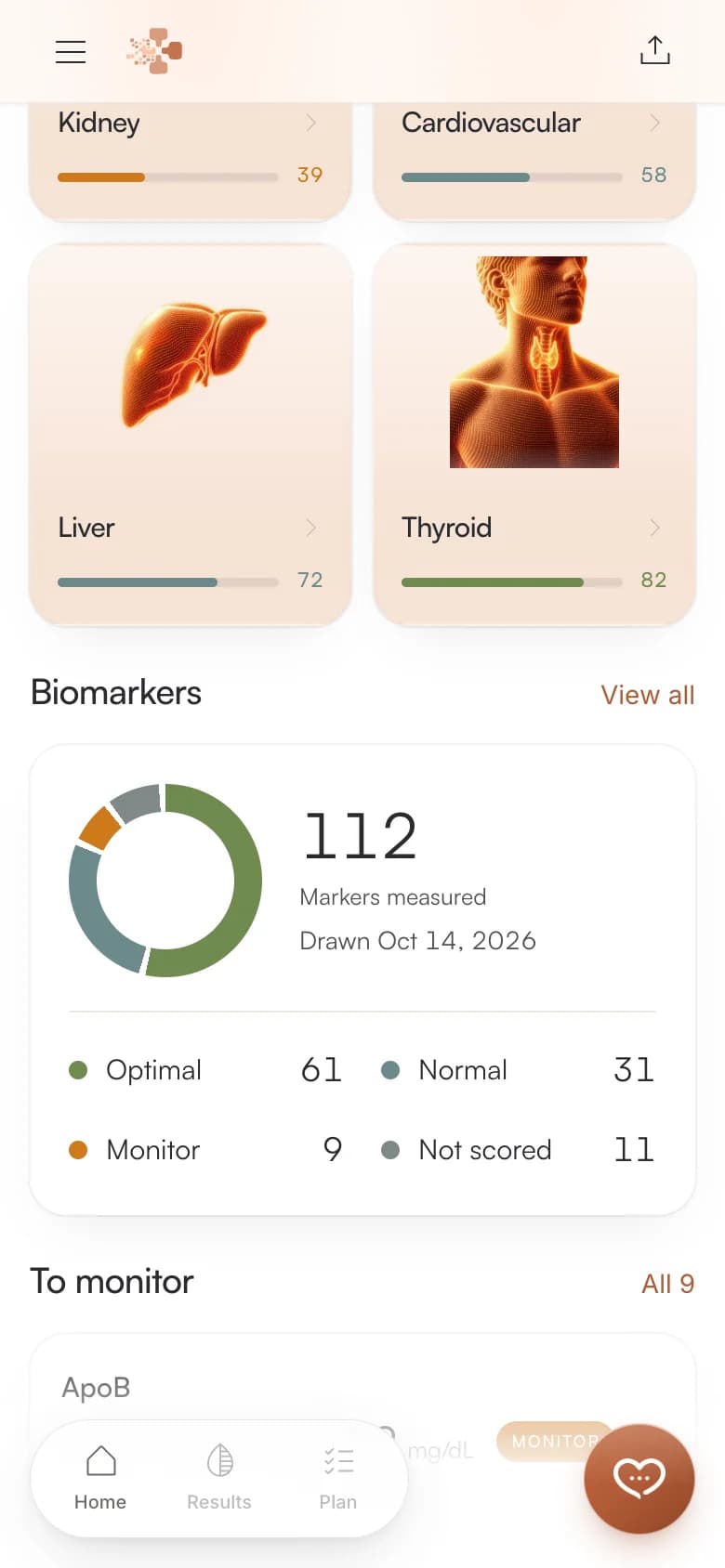
Explore your body systems with clear risk context — refresh your report, download the full PDF, and monitor hormones, heart, bone, and more in one place.
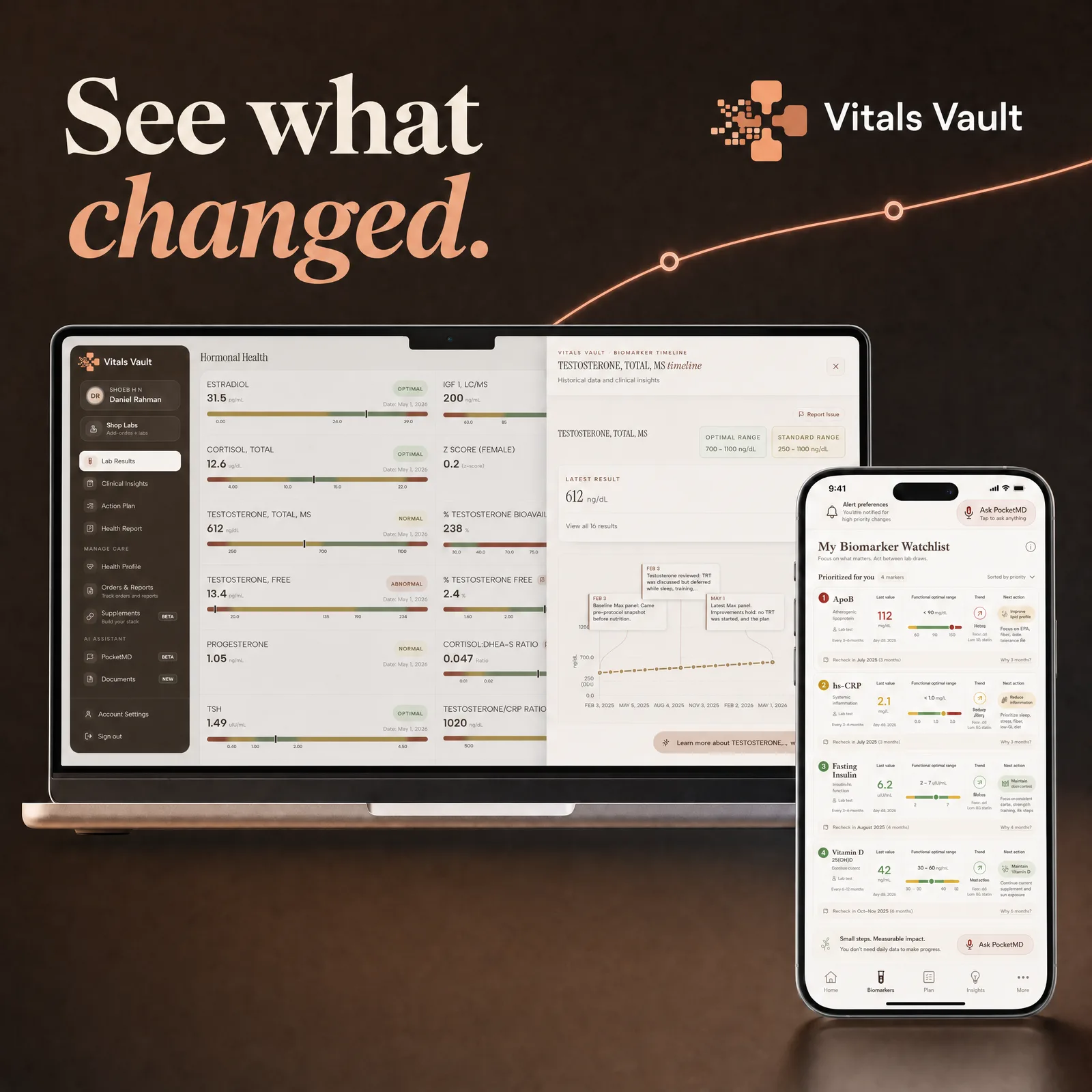
Explore hundreds of tests and panels, filter by concern, and manage your cart—member-exclusive pricing with quick checks and full-body options in one flow.
Wide test selection
300+ tests & panels available
Smart filtering
Find tests by symptoms or goals
Seamless ordering
Add to cart and manage easily
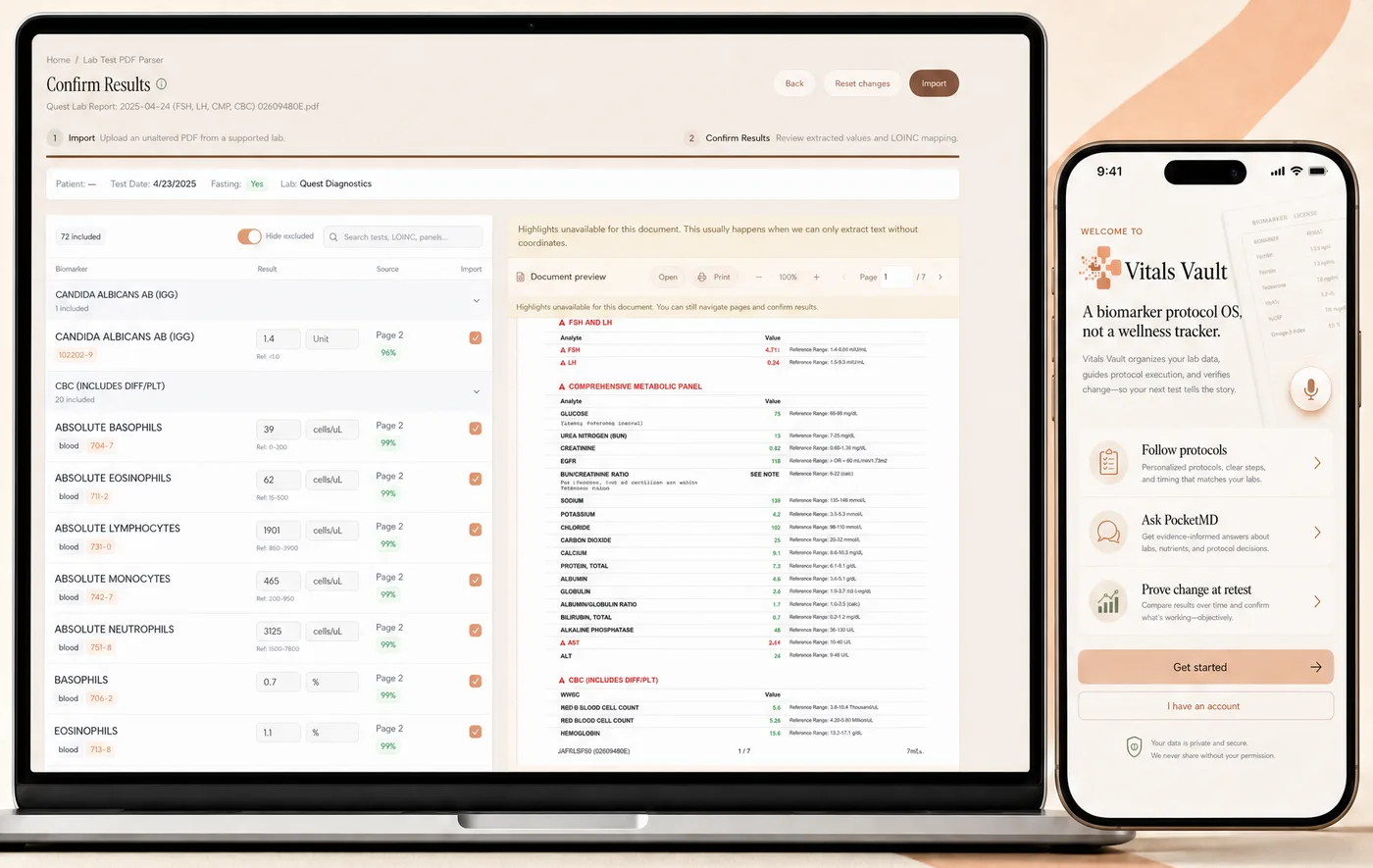
Upload past lab reports, search your documents, and keep appointments and results organized—our AI can extract biomarkers from PDFs so everything lives in one dashboard.
Browse longevity, nutrition, supplement, and movement protocols—structured plans you can follow with clear habits, labs, and targets tied to your profile.
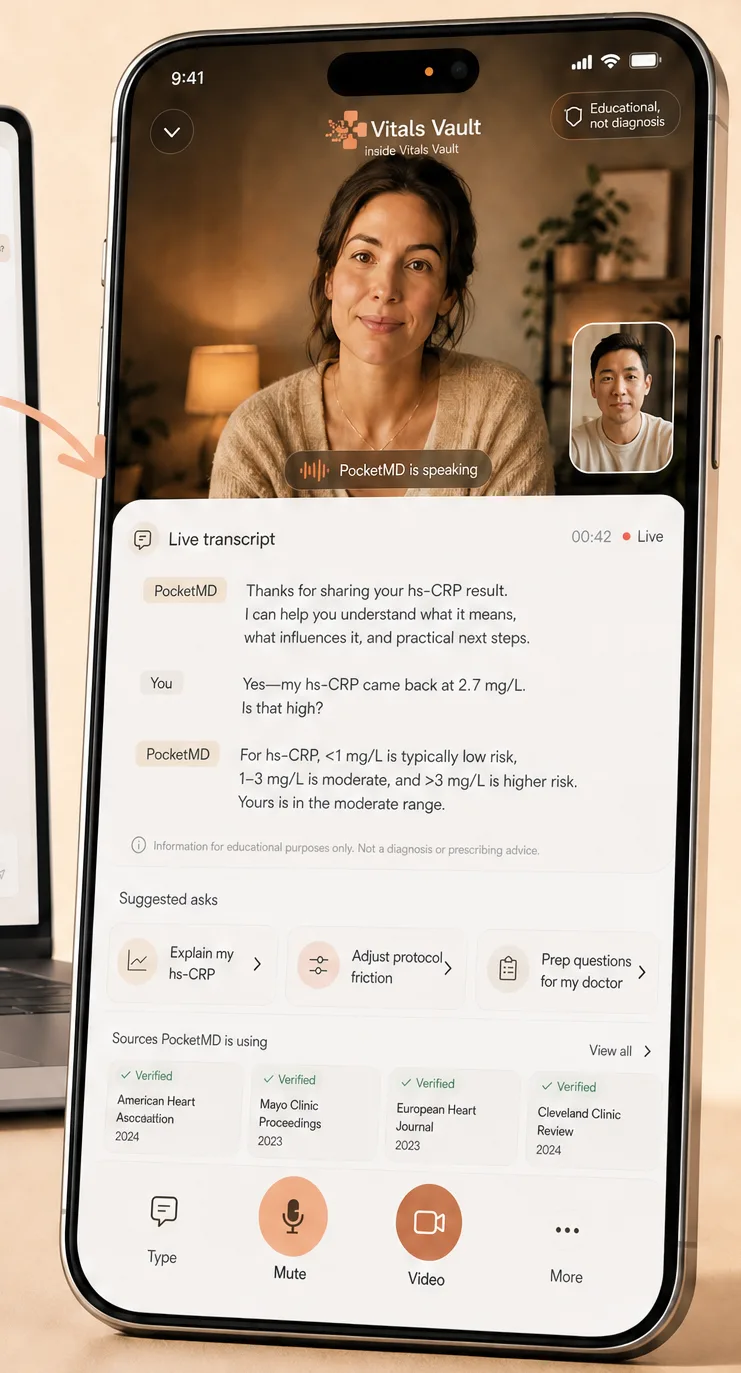
Ask for protocols, nutrition plans, supplement stacks, and education—context-aware suggestions powered by your labs and goals (beta experience).
Order online
Add Prolactin to your cart and check out. No doctor referral is required.
Visit a Quest lab
Provide your blood sample at a Quest Diagnostics location. Appointments can be scheduled after checkout.
Review in Vitals Vault
Results in about 4 days. They stay in your Vitals Vault account for trends and follow-up.
No special preparation is usually needed unless noted at checkout.
This order includes the lab markers used for Prolactin and reported in your Vitals Vault account.
Results
Results in about 4 days
HSA/FSA
Accepted
Who takes it
Must be taken by the purchaser
Preparation
No special preparation needed unless noted at checkout.
A prolactin test measures a pituitary hormone tied to lactation and reproductive signaling; order it with Vitals Vault and test at Quest locations.


Prolactin is a hormone made by your pituitary gland. It is best known for supporting breast milk production after pregnancy, but it also interacts with your reproductive hormones and can affect libido, menstrual cycles, and testosterone signaling.
A prolactin blood test is usually ordered when symptoms suggest a hormone imbalance or when a clinician wants to rule out medication effects or pituitary causes. Because prolactin can rise temporarily from stress, sleep, or nipple stimulation, a single result often needs context before you draw conclusions.
Your number is most useful when you pair it with your symptoms, your medication list, and a few related labs. Testing can support clinician-directed care, but it cannot diagnose a condition by itself.
You may want a prolactin test if you are trying to explain reproductive or sexual symptoms that do not have a clear cause. In people with ovaries, prolactin is commonly checked for irregular or absent periods, infertility, unexpected breast milk leakage (galactorrhea), or persistent low libido. In people with testes, it is often checked when testosterone is low, libido is low, erections are difficult to maintain, or fertility is a concern.
A prolactin test can also be helpful if you have symptoms that raise concern for a pituitary issue, such as new headaches or changes in vision, especially peripheral vision. Clinicians may order it when other hormone tests are abnormal, because the pituitary coordinates several hormone systems.
You may not need this test if you feel well and have no symptoms, because mild elevations can be temporary and clinically insignificant. If you do test and the result is abnormal, the next step is usually to confirm it and look for a cause rather than treating a number in isolation.
This is a standard blood test performed in CLIA-certified labs; results should be interpreted with your clinician and are not a standalone diagnosis.
from $36.99 at Quest Diagnostics
Results in days
Clear next steps
HSA / FSA
If you want a clear, documented baseline for prolactin, Vitals Vault lets you order the lab test directly and complete your blood draw at a nearby Quest location. This can be useful when you are preparing for a clinician visit, comparing repeat results over time, or monitoring a known issue.
After your result posts, you can use PocketMD to talk through what the number may mean for you, what common follow-up tests are worth discussing, and when a repeat draw is reasonable. Prolactin is a marker where timing and context matter, so having a plan for confirmation testing can prevent unnecessary worry.
If your prolactin is meaningfully elevated, you can use Vitals Vault to recheck it under more controlled conditions (for example, a morning draw after avoiding triggers) and to add companion hormone tests that help explain the “why.”
Prolactin (often abbreviated PRL) is a hormone produced by your pituitary gland, a small gland at the base of your brain that helps regulate many endocrine systems. Prolactin’s most recognized role is supporting breast development and milk production after childbirth, but it also interacts with the hypothalamus and reproductive hormones.
In general, higher prolactin levels can reduce the release of gonadotropin-releasing hormone (GnRH), which can lower luteinizing hormone (LH) and follicle-stimulating hormone (FSH). That downstream effect can contribute to irregular ovulation, reduced estrogen or testosterone signaling, and fertility challenges.
Prolactin is naturally dynamic. It tends to rise during sleep, can increase with physical or emotional stress, and may increase with nipple or chest wall stimulation. Because of that, clinicians often prefer a morning blood draw and may repeat the test if the first result is only mildly abnormal.
A high result does not automatically mean a prolactinoma (a prolactin-secreting pituitary adenoma). Hypothyroidism, pregnancy, breastfeeding, kidney disease, and several medications can raise prolactin. Even a difficult blood draw or acute stress can cause a temporary bump, which is why confirmation testing is common.
Some people have higher measured prolactin because of macroprolactin, a larger prolactin complex that can show up on certain assays but is often less biologically active. If your prolactin is elevated but you have few or no symptoms, your clinician may consider a macroprolactin evaluation depending on the lab and clinical picture.
Low prolactin is less commonly a clinical problem than high prolactin. It can be seen with certain pituitary disorders, after pituitary surgery or radiation, or with medications that increase dopamine activity. If you are postpartum and having difficulty producing milk, low prolactin may be one piece of the puzzle, but it is not the only factor. Your clinician usually interprets low prolactin alongside other pituitary hormones and your symptoms.
An in-range prolactin result generally suggests your pituitary is not overproducing prolactin at the time of the draw. If you still have symptoms like irregular periods, infertility, or low libido, your clinician may look at other drivers such as thyroid function, ovarian/testicular hormones, or medication effects. Because prolactin fluctuates, “normal” does not rule out every pituitary issue, but it makes significant prolactin excess less likely. Trend and context matter more than a single data point.
High prolactin (hyperprolactinemia) can contribute to menstrual changes, infertility, reduced libido, and low testosterone or estrogen signaling. Mild elevations are often due to stress, recent sleep, nipple stimulation, or medications, and they are frequently confirmed with a repeat morning test. More marked or persistent elevations raise concern for endocrine causes such as hypothyroidism or, less commonly, a prolactin-secreting pituitary adenoma. If your level is very high or you have headaches or vision changes, your clinician may discuss additional pituitary evaluation.
Timing and conditions of the blood draw can change your result, since prolactin rises during sleep and can increase with stress or pain. Pregnancy and breastfeeding raise prolactin physiologically, and chest wall stimulation or injury can also increase it. Medications are a major confounder, including some antipsychotics, antidepressants, anti-nausea drugs, and opioids, so bring a complete list to your review. Thyroid status matters too, because untreated hypothyroidism can elevate prolactin through increased TRH signaling.
Fasting is not usually required for prolactin. What matters more is timing and conditions, since prolactin can rise with sleep and stress. If you are repeating an abnormal result, your clinician may suggest a morning draw and avoiding triggers like intense exercise beforehand.
Prolactin follows a daily rhythm and is often higher during and shortly after sleep. Many clinicians prefer a morning blood draw, ideally after you have been awake for a bit and are relatively relaxed. If your first result is mildly high, repeating it under consistent morning conditions can improve interpretability.
Yes. Physical stress, emotional stress, pain, and vigorous exercise can temporarily increase prolactin. Even anxiety about the blood draw can contribute, which is one reason mild elevations are commonly rechecked.
Several medications can raise prolactin, especially drugs that block dopamine signaling. Examples include some antipsychotics, certain antidepressants, anti-nausea medications, and opioids. Do not stop a prescription medication on your own, but do bring a complete list to your clinician so the result is interpreted correctly.
There is no single cutoff that diagnoses a prolactinoma from labs alone, and reference ranges vary by lab. In general, higher and persistent elevations are more concerning than mild, one-time increases, especially when symptoms are present. Your clinician may repeat the test, review medications and thyroid status, and consider imaging if the pattern suggests a pituitary source.
Follow-up depends on your symptoms, but common companions include TSH (and sometimes free T4) to assess thyroid status, LH and FSH to evaluate pituitary-gonadal signaling, and estradiol or testosterone with SHBG. If an elevation seems inconsistent with symptoms, a macroprolactin evaluation may be considered. Your clinician may also review kidney function and pregnancy status when relevant.
Often, yes. Mild elevations are frequently due to temporary factors, so clinicians commonly confirm with a repeat morning test under calmer, more standardized conditions. Retesting is especially useful if you had a stressful draw, you were sleep-deprived, or you recently exercised.
Purchase online through Vitals Vault. A licensed clinician reviews and approves your order, then you receive a digital requisition for a Quest Diagnostics blood draw.
Samples are collected in person at Quest Diagnostics locations nationwide. After checkout you can schedule your visit at a convenient site.
Most results in 3–5 business days. You can view them securely in your Vitals Vault account.
No separate referral appointment is required. Clinician review is included in the online order flow.
Yes. Eligible HSA/FSA cards can be used at checkout for qualifying lab orders.
Results are available in your secure Vitals Vault account. You control who you share them with, subject to applicable law.
Blood glucose shows the amount of sugar in your blood at a single moment. A1c (hemoglobin A1c) estimates your average blood sugar over roughly the past 8–12 weeks. Comparing them helps explain whether your long-term average lines up with your fasting glucose on draw day.
It helps you understand how this marker fits into your broader metabolic picture, with results tracked in your Vitals Vault account.
Elevated values can signal higher metabolic risk. Many people start with nutrition, activity, sleep, and weight management, then retest and review results with a clinician. This test is educational and does not replace medical advice or diagnosis.
Your sample is processed at CLIA-certified Quest Diagnostics laboratories. Results should still be interpreted with a qualified clinician alongside your history, symptoms, and other labs.
Consumer-initiated testing through Vitals Vault is limited to adults 18+ so ordering and interpretation stay aligned with clinical best practices for this channel.