01
Biological age
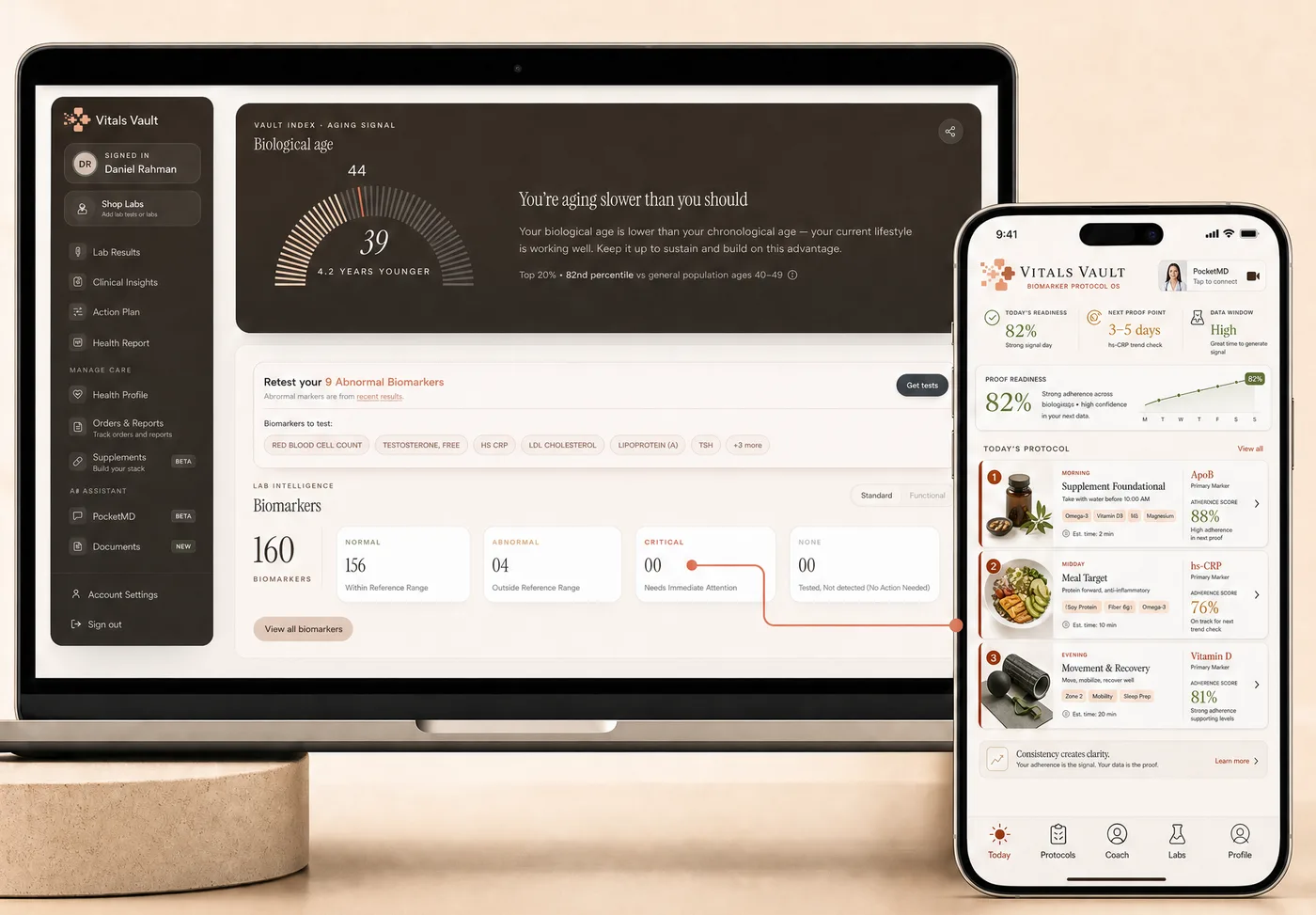
Find out if your body is aging faster or slower than your actual age — and see how you rank against the general population.
39
Biological age
44
Actual age
4.2
Years younger
Magnesium (Red Blood Cell)
Results in about 5–10 days
Magnesium RBC (Red Blood Cell Magnesium) Test. It measures magnesium inside red blood cells to assess longer-term status; order through Vitals Vault and draw at Quest with clear, clinician-ready results.
Magnesium supports nerve signaling, muscle relaxation, heart rhythm stability, and energy production. Because most magnesium lives inside cells (not floating in your blood), a standard serum magnesium result can look “normal” even when your tissues are running low. A Magnesium RBC test measures magnesium inside red blood cells. It is often used when you have symptoms that could fit magnesium imbalance, when you are trying to understand a borderline serum magnesium result, or when you want a steadier view of magnesium status over time. Your number is only one piece of the picture. The most useful interpretation considers your kidney function, medications, hydration status, and related electrolytes like potassium and calcium.
What to expect before and at your draw.
Sample Type
Blood
Collection Method
In person at a Quest Diagnostics location
Age
18+
This order includes the lab markers used for Magnesium (Red Blood Cell).
Magnesium, RBC
Included in this Quest Diagnostics order and reported in your Vitals Vault account.
Order Magnesium (Red Blood Cell) online.
Visit a Quest Diagnostics location near you for your blood draw. Appointments can be scheduled after checkout.
View easy-to-read results in your Vitals Vault account, with trends and a personalized action plan.
Included with every package
Function Health shows you numbers. Vitals Vault connects them — ratios, patterns, and a personalized action plan grounded in functional medicine.
Find out if your body is aging faster or slower than your actual age — and see how you rank against the general population.
39
Biological age
44
Actual age
4.2
Years younger
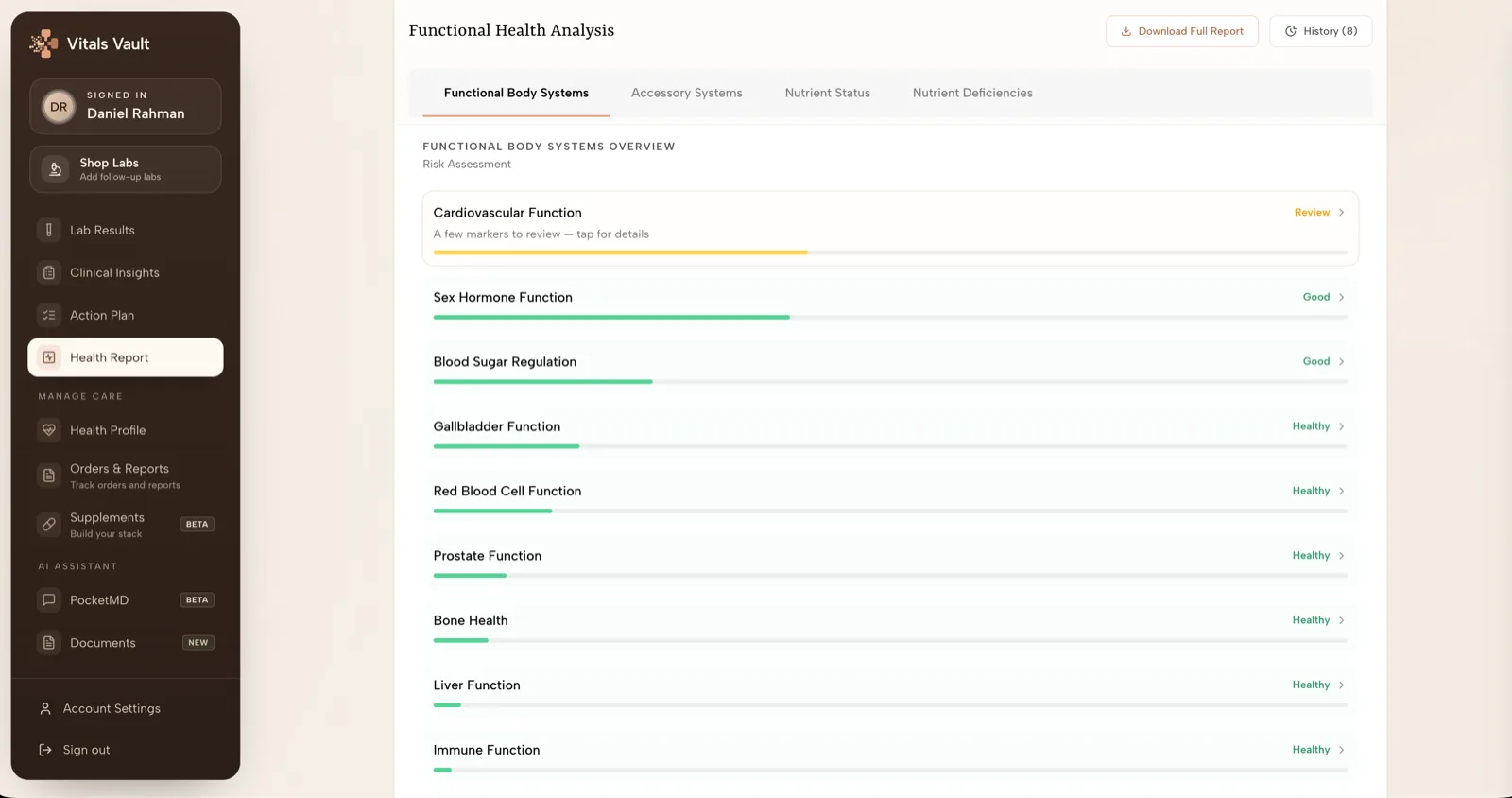
Turn lab data into what to do next—clear guidance on follow-ups, lifestyle context, and add-on testing when you need to go deeper. Make the healthy choice the obvious one.
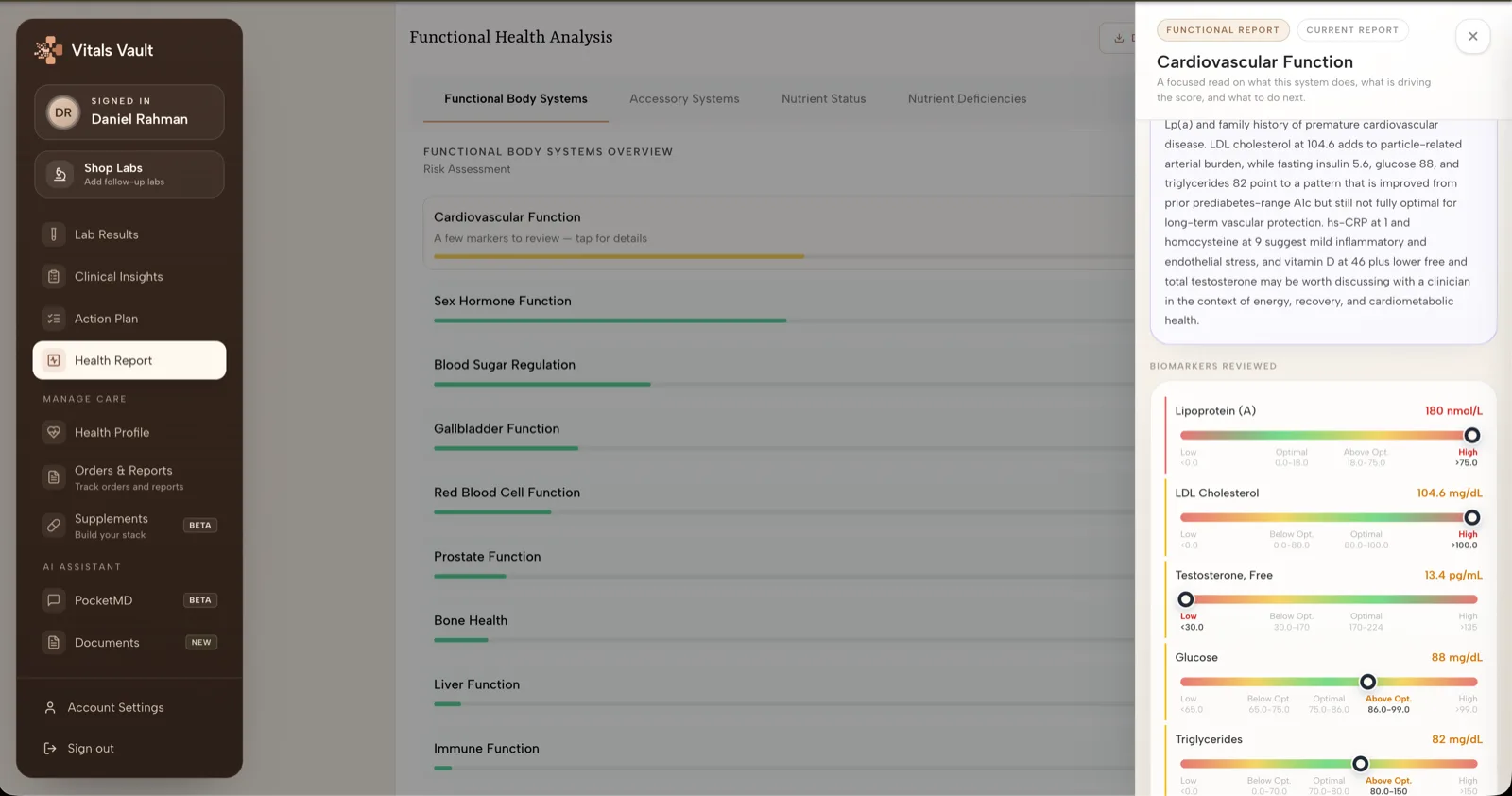
A personalized, plain-language walkthrough of your abnormal markers—reference ranges, pattern context, and what to watch next, grounded in your actual labs.
Personalized Insights
Clear Explanations
Actionable guidance
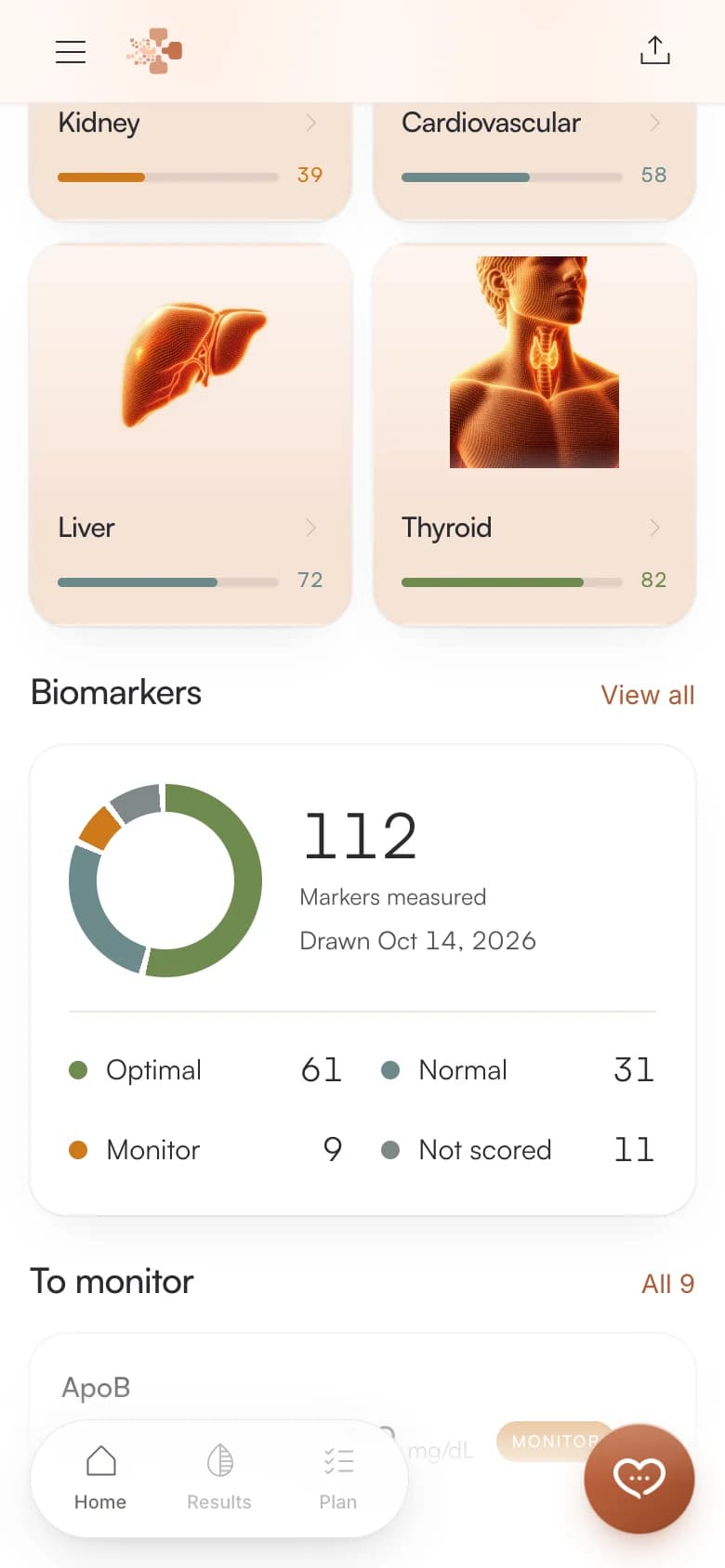
Explore your body systems with clear risk context — refresh your report, download the full PDF, and monitor hormones, heart, bone, and more in one place.
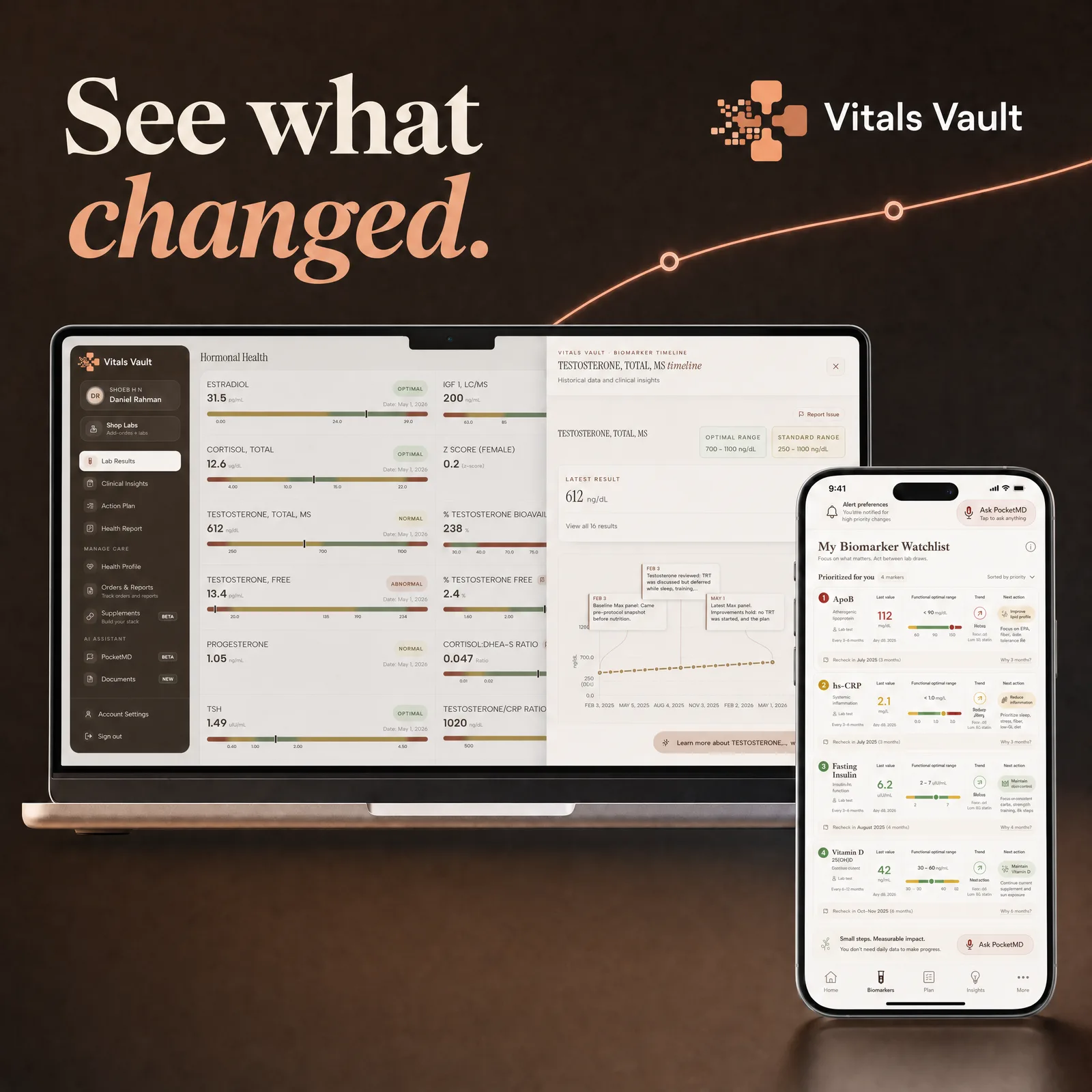
Explore hundreds of tests and panels, filter by concern, and manage your cart—member-exclusive pricing with quick checks and full-body options in one flow.
Wide test selection
300+ tests & panels available
Smart filtering
Find tests by symptoms or goals
Seamless ordering
Add to cart and manage easily
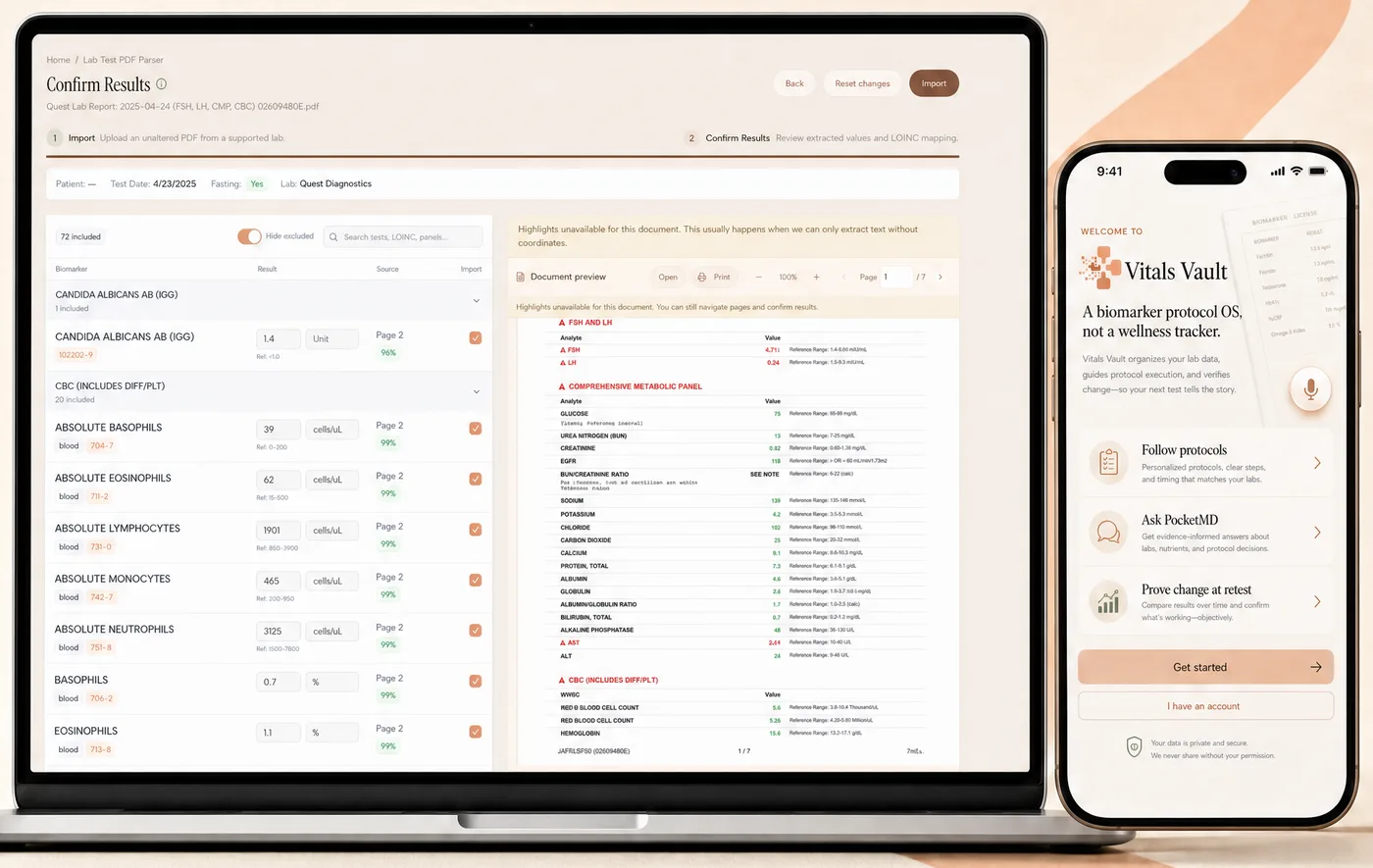
Upload past lab reports, search your documents, and keep appointments and results organized—our AI can extract biomarkers from PDFs so everything lives in one dashboard.
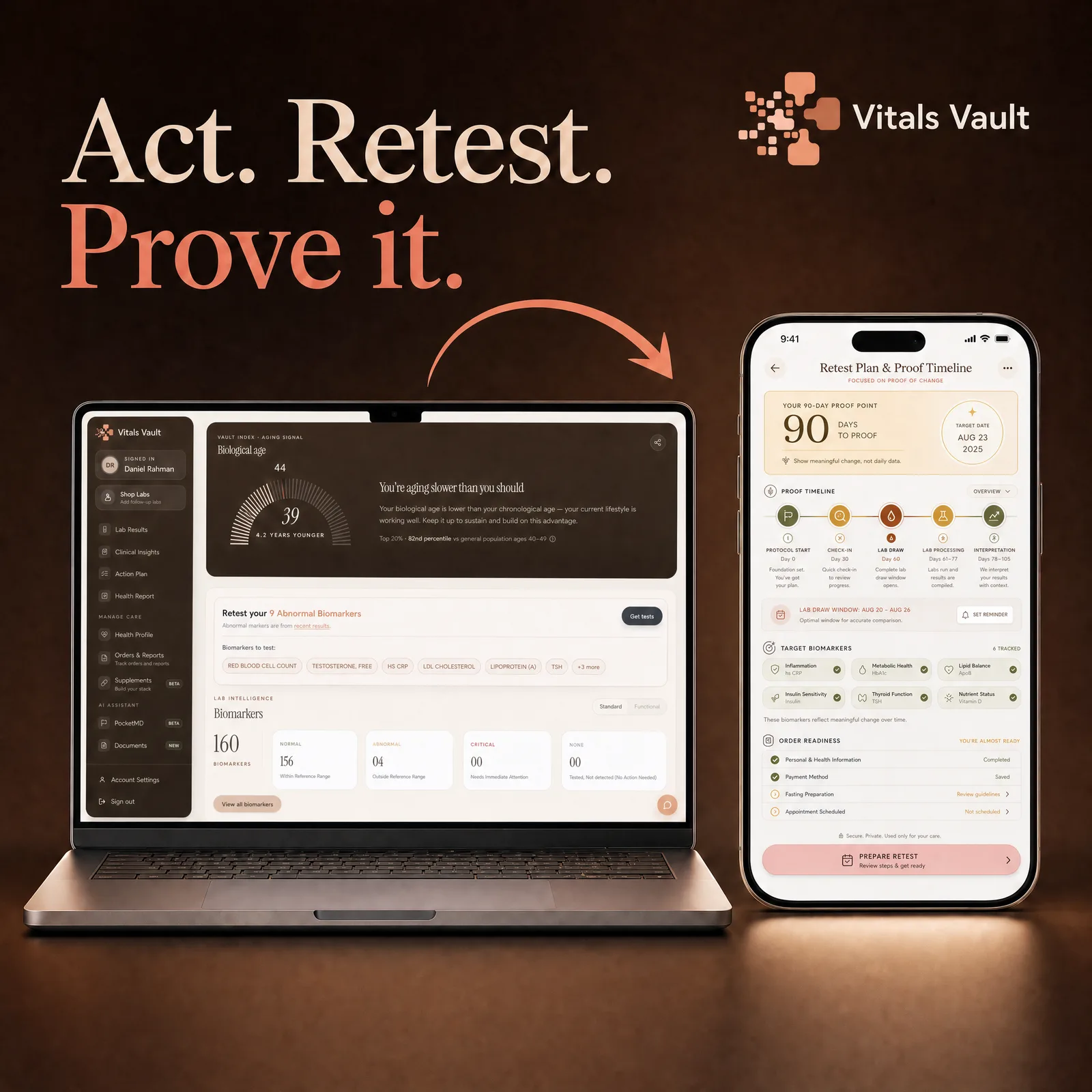
Browse longevity, nutrition, supplement, and movement protocols—structured plans you can follow with clear habits, labs, and targets tied to your profile.

Ask for protocols, nutrition plans, supplement stacks, and education—context-aware suggestions powered by your labs and goals (beta experience).
Order online
Add Magnesium (Red Blood Cell) to your cart and check out. No doctor referral is required.
Visit a Quest lab
Provide your blood sample at a Quest Diagnostics location. Appointments can be scheduled after checkout.
Review in Vitals Vault
Results in about 5–10 days. They stay in your Vitals Vault account for trends and follow-up.
No special preparation is usually needed unless noted at checkout.
This order includes the lab markers used for Magnesium (Red Blood Cell) and reported in your Vitals Vault account.
Results
Results in about 5–10 days
HSA/FSA
Accepted
Who takes it
Must be taken by the purchaser
Preparation
No special preparation needed unless noted at checkout.
It measures magnesium inside red blood cells to assess longer-term status; order through Vitals Vault and draw at Quest with clear, clinician-ready results.





Magnesium supports nerve signaling, muscle relaxation, heart rhythm stability, and energy production. Because most magnesium lives inside cells (not floating in your blood), a standard serum magnesium result can look “normal” even when your tissues are running low.
A Magnesium RBC test measures magnesium inside red blood cells. It is often used when you have symptoms that could fit magnesium imbalance, when you are trying to understand a borderline serum magnesium result, or when you want a steadier view of magnesium status over time.
Your number is only one piece of the picture. The most useful interpretation considers your kidney function, medications, hydration status, and related electrolytes like potassium and calcium.
You might consider Magnesium RBC testing if you have symptoms that can be linked to magnesium imbalance, especially when they are persistent or unexplained. Common examples include frequent muscle cramps or twitching, restless sleep, headaches, palpitations, constipation, or feeling unusually “wired but tired.” These symptoms are not specific to magnesium, but they are common reasons people want a deeper look.
This test can also be helpful if you have higher risk of magnesium loss. That includes chronic diarrhea or malabsorption, heavy sweating with endurance training, higher alcohol intake, or use of medications that can lower magnesium (for example certain diuretics or long-term acid-suppressing therapy). If you have diabetes or are under significant physiologic stress, magnesium balance can also shift.
If your serum magnesium is low, Magnesium RBC can help confirm that low magnesium is not just a transient blood finding. If your serum magnesium is “normal” but your symptoms and risk factors persist, RBC magnesium may provide additional context, although it still cannot diagnose a condition by itself.
Testing is most useful when it supports clinician-directed care. Use your result to guide a conversation about causes, safety (especially kidney health), and whether follow-up testing or related electrolytes should be checked.
This is a laboratory-developed test performed in a CLIA-certified lab; results are for education and clinical decision support and are not a standalone diagnosis.
from $29.99 at Quest Diagnostics
Results in days
Clear next steps
HSA / FSA
Vitals Vault lets you order Magnesium RBC testing without a separate doctor visit and complete your blood draw at a Quest location. Your report is delivered in a clear format so you can compare results over time and bring them to your clinician.
If you want help interpreting your number in context, PocketMD can walk you through what “low,” “in range,” or “high” may mean for you based on symptoms, medications, and related labs. That is especially useful for magnesium because kidney function, hydration, and other electrolytes can change how your result should be read.
Many people use this test as a baseline, then retest after a targeted change (for example, addressing a likely source of magnesium loss or adjusting a plan with their clinician). If your situation suggests broader electrolyte or kidney evaluation, you can add companion labs through Vitals Vault so you are not guessing.
Magnesium RBC (red blood cell magnesium) measures the amount of magnesium contained within your red blood cells. Because magnesium is primarily an intracellular mineral, RBC magnesium is often described as a closer proxy for tissue magnesium than serum magnesium, which reflects only a small fraction of total body magnesium.
Magnesium is required for hundreds of enzyme reactions. It helps regulate muscle contraction and relaxation, supports nerve transmission, participates in ATP (cellular energy) production, and influences electrical stability in the heart. It also interacts closely with other electrolytes, particularly potassium and calcium, which is one reason magnesium problems can show up as cramps, abnormal heart sensations, or fatigue.
RBC magnesium is not a perfect “whole-body magnesium” measurement. Red blood cells are only one cell type, and results can vary by lab method and reference range. Still, it can be a practical tool when your symptoms, diet, GI health, medications, and other labs suggest magnesium may be part of the story.
Serum magnesium measures magnesium in the liquid portion of blood. Your body can keep serum levels in range by shifting magnesium between compartments, so serum may look normal even when intracellular stores are strained. RBC magnesium looks inside cells, which can be helpful when you want a steadier signal, but it should still be interpreted alongside serum electrolytes and kidney function.
Your kidneys play a major role in magnesium regulation by adjusting how much is excreted in urine. The gut also matters because absorption can drop with chronic diarrhea, malabsorption, or certain medications. That is why a “low” result often leads to questions about losses and kidney handling, not just intake.
A low Magnesium RBC result suggests lower intracellular magnesium availability and may fit with magnesium depletion, especially if you also have low or low-normal serum magnesium or symptoms such as cramps, twitching, constipation, headaches, or palpitations. Common contributors include GI losses (diarrhea, malabsorption), higher urinary losses (some diuretics), and inadequate intake over time. Because magnesium interacts with potassium and calcium, your clinician may also look for low potassium or calcium changes that can accompany magnesium depletion. If you have kidney disease, interpretation and any correction plan should be cautious and clinician-guided.
An in-range result generally suggests your red blood cells contain magnesium within the lab’s expected range. If you still have symptoms, it does not rule out other electrolyte issues, thyroid problems, anemia, sleep disorders, medication effects, or stress-related contributors. In this situation, the most helpful next step is often to review risk factors for magnesium loss and check companion labs that influence neuromuscular and cardiac symptoms. Trending over time can be valuable if your diet, training load, or medications change.
Clinical graph note: the optimal range is narrower than the standard lab range. Standard range: 4.00 - 6.80 mg/dL. Optimal range: 6.00 - 6.80 mg/dL.
A high Magnesium RBC result is less common and can occur if magnesium intake is high relative to excretion, or if kidney function is reduced and magnesium is retained. It can also be influenced by recent magnesium-containing medications or bowel preparations, depending on timing. Symptoms of excess magnesium are nonspecific at mild elevations but can include nausea, weakness, or low blood pressure at higher levels, and severe cases are medical emergencies. If your result is high, it is reasonable to confirm kidney function and review all medications and products with your clinician.
Hydration status, recent illness, and the timing of magnesium-containing medications can shift results. Kidney function is a major determinant because the kidneys control magnesium excretion, so creatinine and eGFR often matter for interpretation. GI absorption and losses also play a large role, including chronic diarrhea, inflammatory bowel disease, or bariatric surgery. Finally, lab methods and reference ranges vary, so compare your result to the range on your specific report and try to trend using the same lab when possible.
Serum magnesium measures magnesium in the liquid portion of blood, which your body can keep stable by shifting magnesium between compartments. Magnesium RBC measures magnesium inside red blood cells and is often used as a more “intracellular” view. Neither test is perfect on its own, so clinicians often interpret them with kidney function and other electrolytes.
Fasting is not typically required for Magnesium RBC. However, if you are getting other labs at the same visit (like glucose or lipids), fasting instructions may come from those tests. If you take magnesium-containing medications, ask your clinician whether timing matters for your situation.
Low intracellular magnesium can be associated with muscle cramps, twitching, restless sleep, headaches, constipation, fatigue, and palpitations. These symptoms are common and can have many causes, so a low result is best used to guide a broader evaluation rather than self-diagnosis.
Retesting depends on why you tested and what changed. Many people recheck in about 6–12 weeks after a clinician-guided plan to address likely causes of magnesium loss or imbalance, because intracellular measures may shift more gradually. If you have kidney disease or significant symptoms, your clinician may recommend a different timeline.
Yes. The kidneys regulate magnesium excretion, so reduced kidney function can lead to magnesium retention and higher levels, especially if intake is high. If your result is high or you have known kidney disease, it is important to interpret magnesium results alongside creatinine and eGFR.
Common companion tests include serum magnesium, potassium, calcium, and sometimes sodium and chloride, because these electrolytes interact. Kidney function tests (creatinine and eGFR) are also important for safety and interpretation. Depending on symptoms, your clinician may also consider thyroid tests, iron studies, or vitamin D.
Purchase online through Vitals Vault. A licensed clinician reviews and approves your order, then you receive a digital requisition for a Quest Diagnostics blood draw.
Samples are collected in person at Quest Diagnostics locations nationwide. After checkout you can schedule your visit at a convenient site.
Most results in 3–5 business days. You can view them securely in your Vitals Vault account.
No separate referral appointment is required. Clinician review is included in the online order flow.
Yes. Eligible HSA/FSA cards can be used at checkout for qualifying lab orders.
Results are available in your secure Vitals Vault account. You control who you share them with, subject to applicable law.
Blood glucose shows the amount of sugar in your blood at a single moment. A1c (hemoglobin A1c) estimates your average blood sugar over roughly the past 8–12 weeks. Comparing them helps explain whether your long-term average lines up with your fasting glucose on draw day.
It helps you understand how this marker fits into your broader metabolic picture, with results tracked in your Vitals Vault account.
Elevated values can signal higher metabolic risk. Many people start with nutrition, activity, sleep, and weight management, then retest and review results with a clinician. This test is educational and does not replace medical advice or diagnosis.
Your sample is processed at CLIA-certified Quest Diagnostics laboratories. Results should still be interpreted with a qualified clinician alongside your history, symptoms, and other labs.
Consumer-initiated testing through Vitals Vault is limited to adults 18+ so ordering and interpretation stay aligned with clinical best practices for this channel.