01
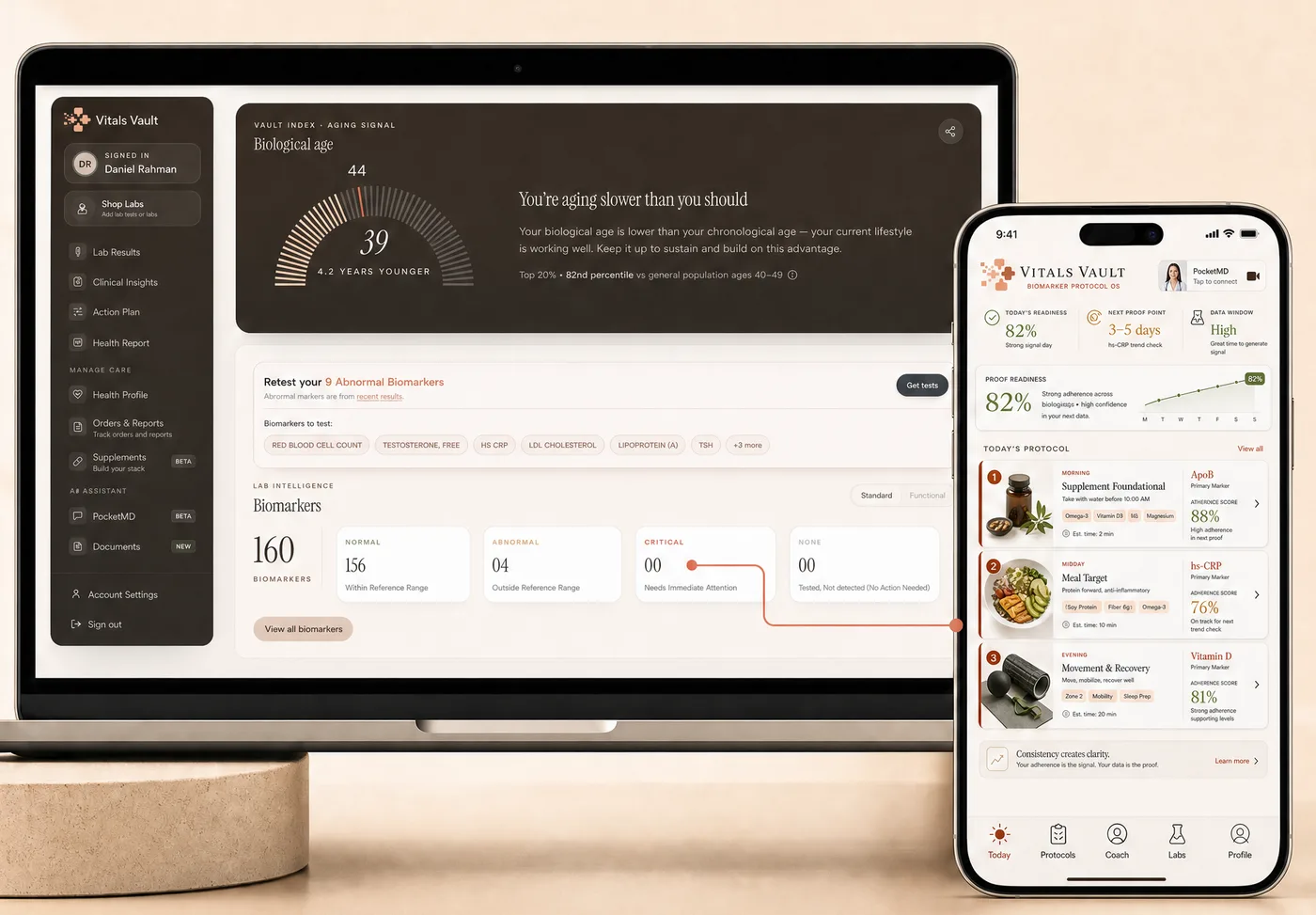
Biological age
Find out if your body is aging faster or slower than your actual age — and see how you rank against the general population.
39
Biological age
44
Actual age
4.2
Years younger
Lipase
Results in about 3–5 days
Lipase test (blood): what it measures and how to interpret your result. A lipase test measures a pancreatic digestive enzyme to help evaluate pancreatitis and abdominal pain, with easy ordering through Vitals Vault labs.
Lipase is a digestive enzyme your pancreas releases to help break down fats. A lipase blood test measures how much of that enzyme is circulating in your bloodstream. Most of the time, lipase is ordered when you have symptoms that could involve the pancreas, such as upper abdominal pain, nausea, vomiting, or pain that radiates to your back. It can also be used to follow known pancreatic conditions over time. Your number matters, but so does the pattern: how high it is, whether it is rising or falling, and what other labs and imaging show. This article helps you understand what lipase can and cannot tell you so you can review results with your clinician more confidently.
What to expect before and at your draw.
Sample Type
Blood
Collection Method
In person at a Quest Diagnostics location
Age
18+
This order includes the lab markers used for Lipase.
Lipase
Included in this Quest Diagnostics order and reported in your Vitals Vault account.
Order Lipase online.
Visit a Quest Diagnostics location near you for your blood draw. Appointments can be scheduled after checkout.
View easy-to-read results in your Vitals Vault account, with trends and a personalized action plan.
Included with every package
Function Health shows you numbers. Vitals Vault connects them — ratios, patterns, and a personalized action plan grounded in functional medicine.
Find out if your body is aging faster or slower than your actual age — and see how you rank against the general population.
39
Biological age
44
Actual age
4.2
Years younger
Turn lab data into what to do next—clear guidance on follow-ups, lifestyle context, and add-on testing when you need to go deeper. Make the healthy choice the obvious one.
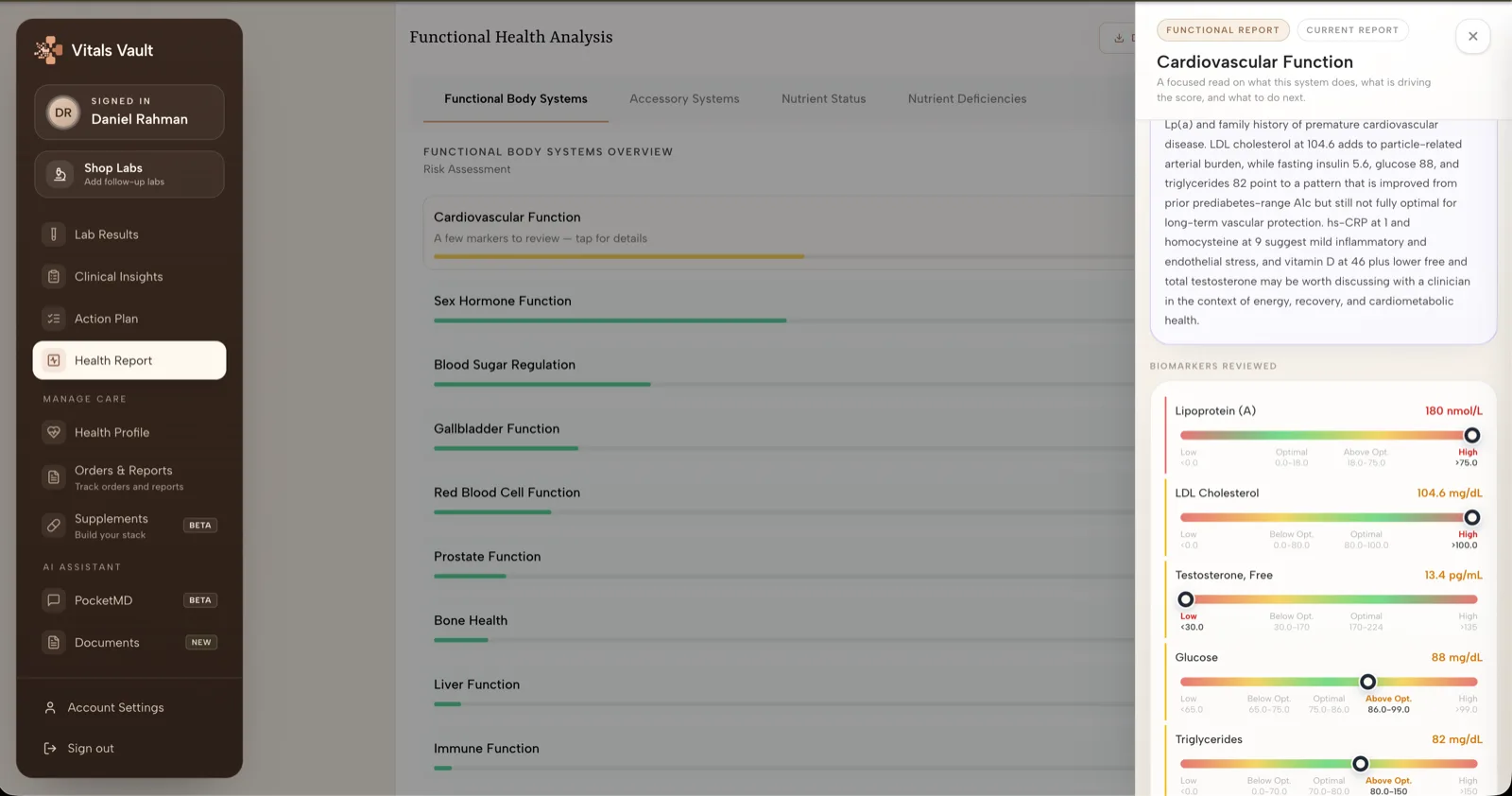
A personalized, plain-language walkthrough of your abnormal markers—reference ranges, pattern context, and what to watch next, grounded in your actual labs.
Personalized Insights
Clear Explanations
Actionable guidance
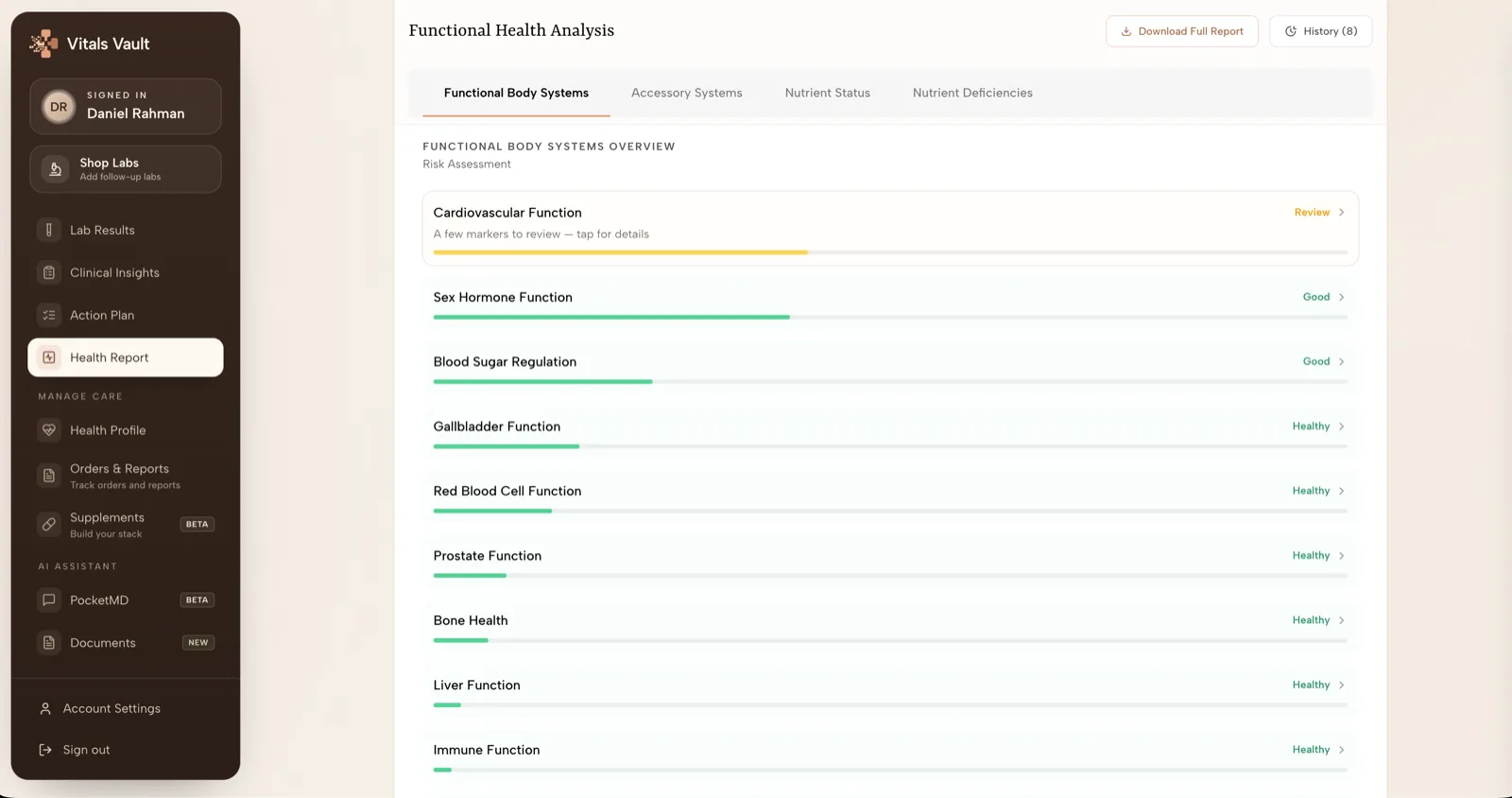
Explore your body systems with clear risk context — refresh your report, download the full PDF, and monitor hormones, heart, bone, and more in one place.

Explore hundreds of tests and panels, filter by concern, and manage your cart—member-exclusive pricing with quick checks and full-body options in one flow.
Wide test selection
300+ tests & panels available
Smart filtering
Find tests by symptoms or goals
Seamless ordering
Add to cart and manage easily
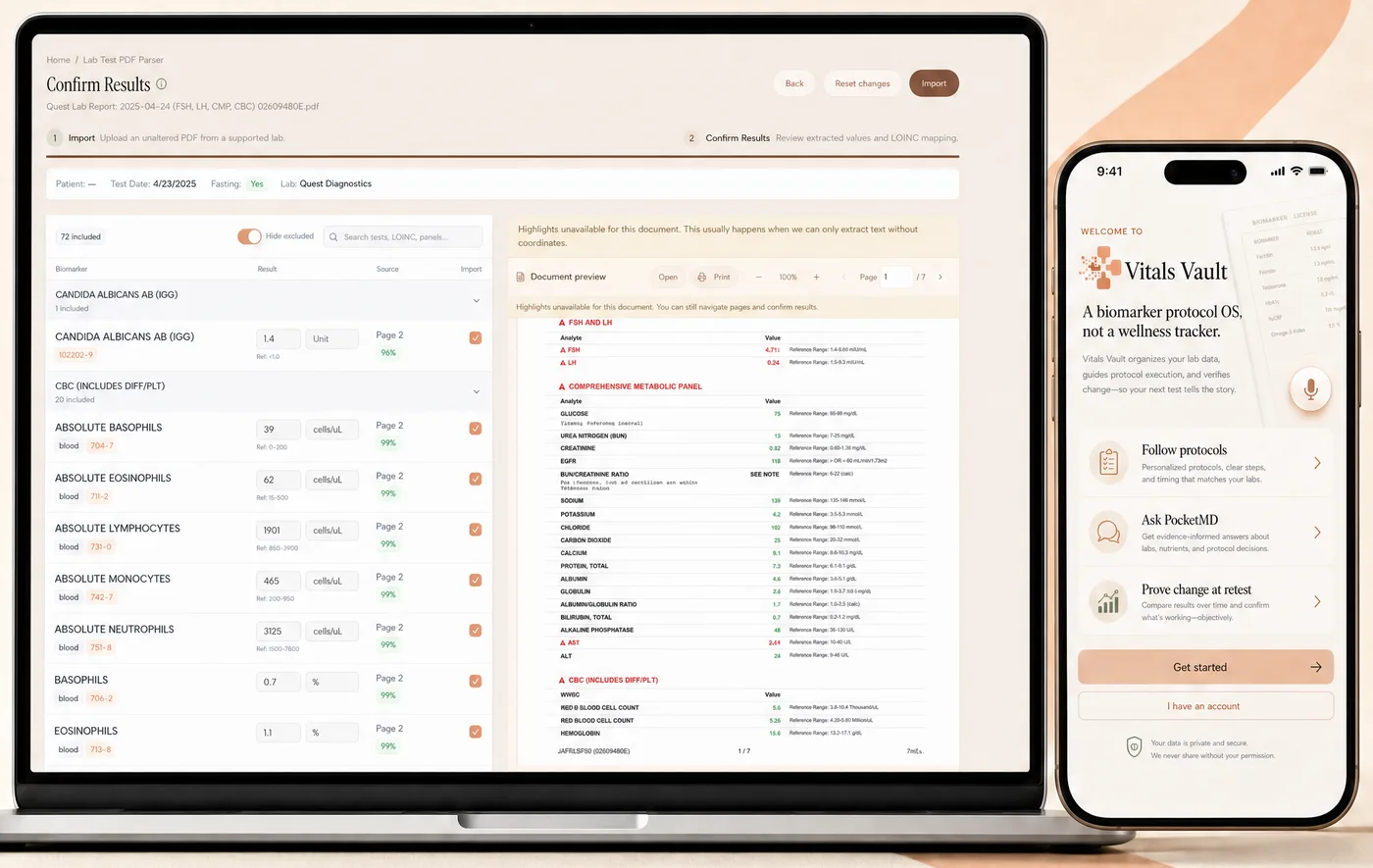
Upload past lab reports, search your documents, and keep appointments and results organized—our AI can extract biomarkers from PDFs so everything lives in one dashboard.

Browse longevity, nutrition, supplement, and movement protocols—structured plans you can follow with clear habits, labs, and targets tied to your profile.
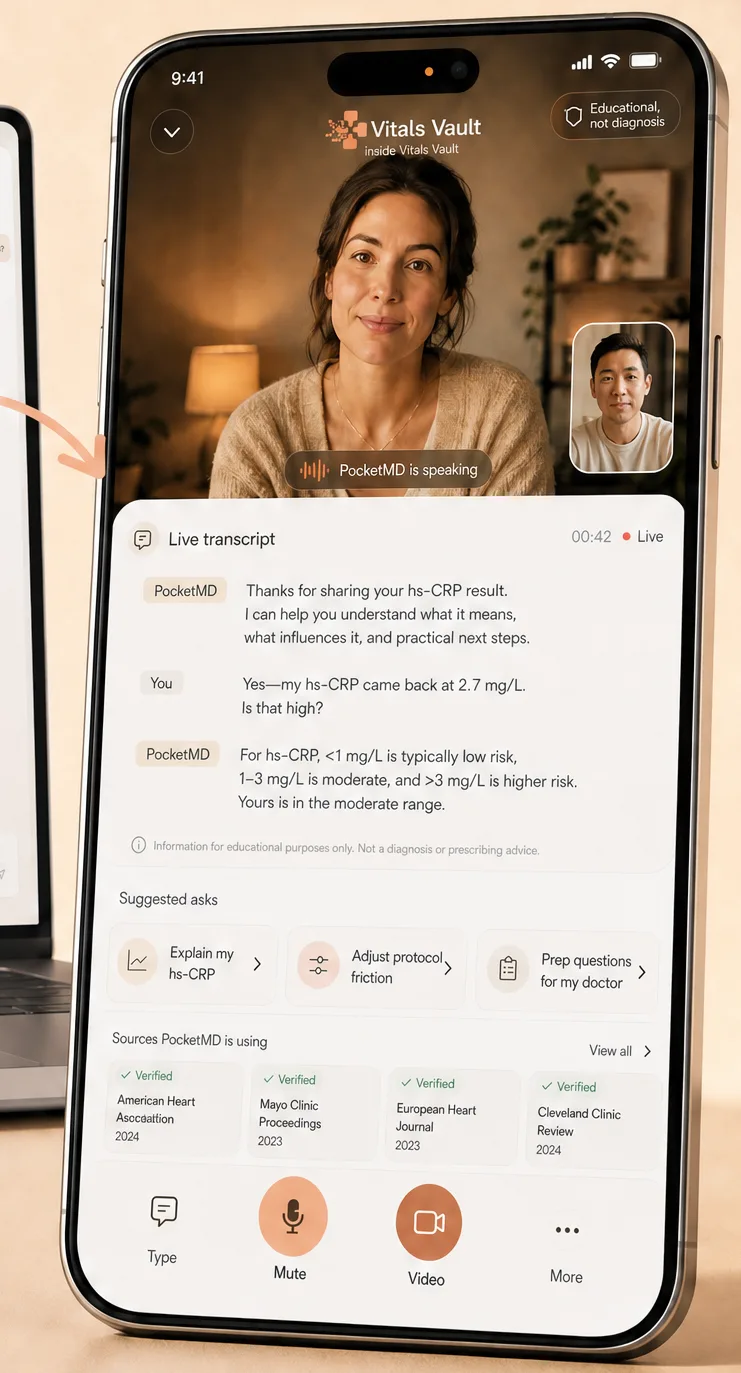
Ask for protocols, nutrition plans, supplement stacks, and education—context-aware suggestions powered by your labs and goals (beta experience).
Order online
Add Lipase to your cart and check out. No doctor referral is required.
Visit a Quest lab
Provide your blood sample at a Quest Diagnostics location. Appointments can be scheduled after checkout.
Review in Vitals Vault
Results in about 3–5 days. They stay in your Vitals Vault account for trends and follow-up.
No special preparation is usually needed unless noted at checkout.
This order includes the lab markers used for Lipase and reported in your Vitals Vault account.
Results
Results in about 3–5 days
HSA/FSA
Accepted
Who takes it
Must be taken by the purchaser
Preparation
No special preparation needed unless noted at checkout.
A lipase test measures a pancreatic digestive enzyme to help evaluate pancreatitis and abdominal pain, with easy ordering through Vitals Vault labs.





Lipase is a digestive enzyme your pancreas releases to help break down fats. A lipase blood test measures how much of that enzyme is circulating in your bloodstream.
Most of the time, lipase is ordered when you have symptoms that could involve the pancreas, such as upper abdominal pain, nausea, vomiting, or pain that radiates to your back. It can also be used to follow known pancreatic conditions over time.
Your number matters, but so does the pattern: how high it is, whether it is rising or falling, and what other labs and imaging show. This article helps you understand what lipase can and cannot tell you so you can review results with your clinician more confidently.
You may benefit from a lipase test if you have new or severe upper abdominal pain, especially if it comes with nausea, vomiting, fever, a tender abdomen, or pain that feels worse after eating. Lipase is one of the most common blood tests used to evaluate suspected pancreatitis (inflammation of the pancreas).
A lipase test can also make sense if you have a history of pancreatitis, gallstones, heavy alcohol use, very high triglycerides, or pancreatic disease and you and your clinician are checking for recurrence or monitoring recovery. In some cases it is ordered when symptoms are less specific, such as unexplained abdominal discomfort, because it can help narrow down whether the pancreas is involved.
You usually do not need lipase as a routine screening test when you feel well. Lipase is best used to answer a focused clinical question, and your result should be interpreted alongside your symptoms, exam, and related tests rather than used for self-diagnosis.
Lipase is measured on automated clinical chemistry analyzers in CLIA-certified labs; results support medical decision-making but do not diagnose a condition on their own.
from $23.99 at Quest Diagnostics
Results in days
Clear next steps
HSA / FSA
If you and your clinician decide lipase testing is appropriate, Vitals Vault lets you order the lab work directly and complete your blood draw at a participating lab location. This can be helpful when you want a clear, documented result to bring into a visit or to compare against a prior value.
After your results post, you can use PocketMD to put the number into context—what “high” typically suggests, what follow-up tests are commonly paired with lipase, and when a repeat test is reasonable. That guidance is most useful when you also share your symptoms, timing (when the pain started), and any recent procedures or medications.
If your result is significantly elevated or you feel acutely ill, do not wait on online interpretation. Severe abdominal pain, persistent vomiting, fainting, confusion, or signs of dehydration warrant urgent in-person care.
Lipase is an enzyme that helps your body digest dietary fat. Most lipase in the blood comes from the pancreas, an organ behind your stomach that releases digestive enzymes into the small intestine.
When the pancreas is inflamed or injured, lipase can leak into the bloodstream and rise above the lab’s reference range. That is why lipase is commonly used to evaluate pancreatitis. However, lipase is not perfectly specific: some non-pancreatic conditions and certain medications can also raise it, and the degree of elevation does not always match how severe your symptoms feel.
Because labs use different instruments and units, your report’s reference range is the best “in-range” guide for that specific test. Your clinician will interpret your result in context, including how long it has been since symptoms started and whether the value is trending up or down.
In acute pancreatitis, lipase often rises within hours of symptom onset and can remain elevated for several days. Many clinicians consider a value several times above the upper limit of normal to be more suggestive of pancreatitis, especially when symptoms and exam findings fit. Imaging and other labs may still be needed to confirm the diagnosis and assess severity.
Amylase is another digestive enzyme that can rise with pancreatitis, but lipase is often preferred because it tends to stay elevated longer and may be more specific for pancreatic injury. Some clinicians order both, while others rely on lipase plus clinical findings. If one is normal and the other is abnormal, timing and other causes become especially important.
A low lipase result is usually not a problem by itself and is often considered clinically insignificant when you feel well. In certain contexts, very low levels can be seen with reduced pancreatic enzyme production, such as advanced chronic pancreatitis or pancreatic insufficiency, but those conditions are typically evaluated with symptoms (greasy stools, weight loss) and other tests. If you have digestive symptoms and a low or low-normal lipase, your clinician may consider stool-based pancreatic elastase or other assessments rather than relying on lipase alone.
An in-range lipase level makes significant pancreatic enzyme leakage less likely at the time of the blood draw. If your symptoms started very recently, lipase can still be normal early on, so timing matters. If you have ongoing or severe symptoms despite a normal lipase, your clinician may look at other causes of abdominal pain and may order additional labs or imaging based on your exam.
Clinical graph note: the optimal range is narrower than the standard lab range. Standard range: 13.00 - 60.00 U/L. Optimal range: 22.00 - 51.00 U/L.
A high lipase result suggests increased release of lipase into the bloodstream, which can occur with acute pancreatitis and other pancreatic conditions. The higher the value—especially when it is several times above the upper limit of normal—the more pancreatitis becomes a leading consideration, but it is not the only possibility. Kidney disease, gallbladder and bile duct problems, intestinal conditions, and certain medications can also raise lipase, so your clinician will interpret the number alongside your symptoms, other labs, and sometimes imaging.
Timing is a major factor: lipase may be normal early in symptoms and can stay elevated for days after an acute event. Reduced kidney function can increase lipase because the body clears enzymes differently. Alcohol use, gallstones, very high triglycerides, abdominal trauma, and recent procedures involving the bile ducts or pancreas can all affect results. Some medications have been associated with pancreatitis or elevated lipase, so it helps to review your medication list (including new prescriptions) with your clinician.
A lipase blood test is most often used to help evaluate pancreatitis when you have symptoms like upper abdominal pain, nausea, or vomiting. It can also be used to monitor known pancreatic conditions or to help clarify whether the pancreas may be involved in abdominal symptoms.
Many labs do not require fasting for lipase alone, but your clinician may ask you to fast if lipase is ordered with other tests (such as a lipid panel or triglycerides). If you are not sure, follow the instructions on your lab order or ask your ordering clinician.
Clinicians often become more concerned about pancreatitis when lipase is several times above the upper limit of normal, especially when your symptoms fit. There is no single cutoff that diagnoses pancreatitis by itself, and imaging plus clinical findings may still be needed.
Yes. Lipase can be elevated with reduced kidney function, gallbladder or bile duct disease, some intestinal conditions, and after certain procedures. Some medications are also associated with elevated lipase or pancreatitis, so your full clinical picture matters.
Lipase can rise within hours of symptom onset and may remain elevated for several days. The exact timeline varies by person and by the underlying cause. If your clinician repeats the test, they are often looking for the direction of change rather than a single value.
Sometimes. Lipase is commonly used on its own because it is often more specific for pancreatic injury and may stay elevated longer than amylase. Your clinician may order both depending on your symptoms, timing, and local practice.
Retesting depends on why it was ordered. If you are being monitored for an acute episode, repeat testing may be done to assess trends along with symptoms and other labs. If you feel worse or develop severe symptoms, seek urgent care rather than relying on a scheduled retest.
Purchase online through Vitals Vault. A licensed clinician reviews and approves your order, then you receive a digital requisition for a Quest Diagnostics blood draw.
Samples are collected in person at Quest Diagnostics locations nationwide. After checkout you can schedule your visit at a convenient site.
Most results in 3–5 business days. You can view them securely in your Vitals Vault account.
No separate referral appointment is required. Clinician review is included in the online order flow.
Yes. Eligible HSA/FSA cards can be used at checkout for qualifying lab orders.
Results are available in your secure Vitals Vault account. You control who you share them with, subject to applicable law.
Blood glucose shows the amount of sugar in your blood at a single moment. A1c (hemoglobin A1c) estimates your average blood sugar over roughly the past 8–12 weeks. Comparing them helps explain whether your long-term average lines up with your fasting glucose on draw day.
It helps you understand how this marker fits into your broader metabolic picture, with results tracked in your Vitals Vault account.
Elevated values can signal higher metabolic risk. Many people start with nutrition, activity, sleep, and weight management, then retest and review results with a clinician. This test is educational and does not replace medical advice or diagnosis.
Your sample is processed at CLIA-certified Quest Diagnostics laboratories. Results should still be interpreted with a qualified clinician alongside your history, symptoms, and other labs.
Consumer-initiated testing through Vitals Vault is limited to adults 18+ so ordering and interpretation stay aligned with clinical best practices for this channel.