01
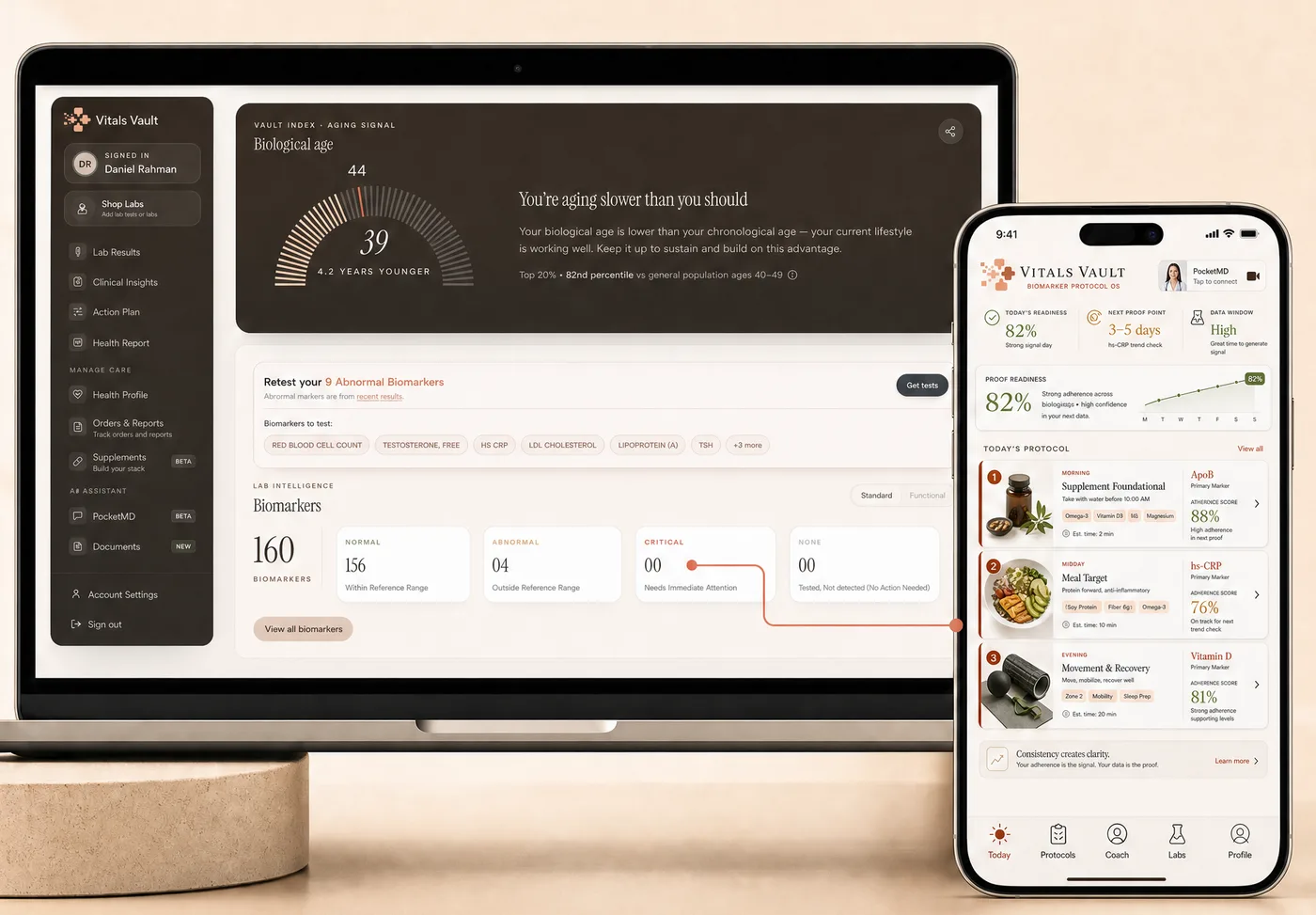
Biological age
Find out if your body is aging faster or slower than your actual age — and see how you rank against the general population.
39
Biological age
44
Actual age
4.2
Years younger
IGF-1 (Growth Hormone Marker)
Results in about 7 days
IGF-1 (LC/MS) blood test (Insulin-Like Growth Factor 1): what it measures and how to read your result. It measures IGF-1, a stable marker of growth hormone activity, and Vitals Vault lets you order through Quest and review results in PocketMD.
IGF-1 (insulin-like growth factor 1) is one of the most useful blood markers for understanding your average growth hormone (GH) activity over time. Because GH itself is released in pulses, a single GH blood draw can be misleading, while IGF-1 tends to be steadier. An IGF-1 LC/MS test measures IGF-1 using liquid chromatography–mass spectrometry (LC/MS), a method designed to improve analytical specificity. Your result is usually interpreted using age- and sex-adjusted reference ranges, because “normal” IGF-1 changes a lot across the lifespan. This test is often used to help evaluate unexplained changes in body composition, energy, and recovery, and it is also a core lab used when a clinician is assessing possible growth hormone deficiency or excess. Your number is not a diagnosis by itself, but it can be a strong clue when paired with symptoms and follow-up testing.
What to expect before and at your draw.
Sample Type
Blood
Collection Method
In person at a Quest Diagnostics location
Age
18+
This order includes the lab markers used for IGF-1 (Growth Hormone Marker).
Igf 1, Lc/Ms
Included in this Quest Diagnostics order and reported in your Vitals Vault account.
Order IGF-1 (Growth Hormone Marker) online.
Visit a Quest Diagnostics location near you for your blood draw. Appointments can be scheduled after checkout.
View easy-to-read results in your Vitals Vault account, with trends and a personalized action plan.
Included with every package
Function Health shows you numbers. Vitals Vault connects them — ratios, patterns, and a personalized action plan grounded in functional medicine.
Find out if your body is aging faster or slower than your actual age — and see how you rank against the general population.
39
Biological age
44
Actual age
4.2
Years younger
Turn lab data into what to do next—clear guidance on follow-ups, lifestyle context, and add-on testing when you need to go deeper. Make the healthy choice the obvious one.
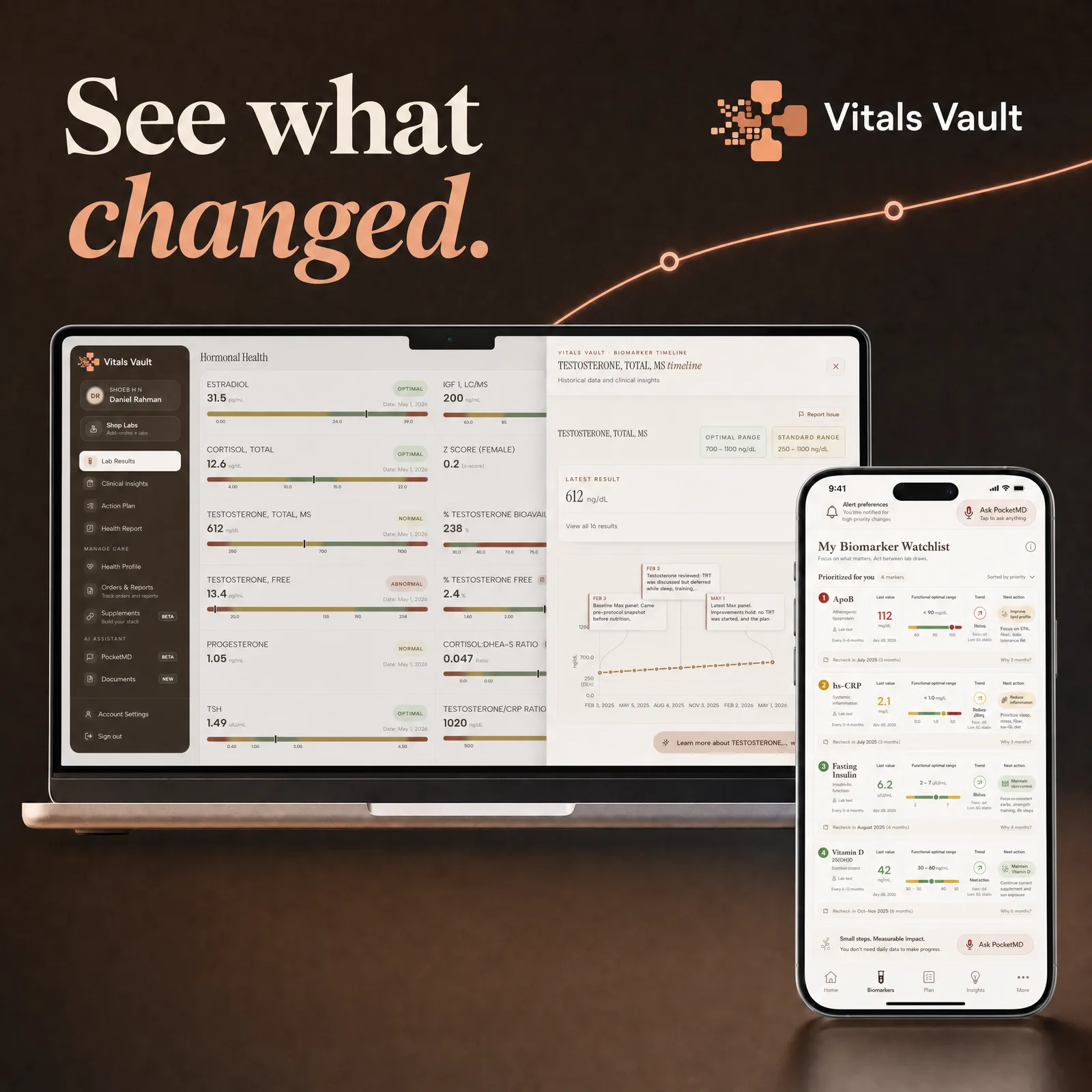
A personalized, plain-language walkthrough of your abnormal markers—reference ranges, pattern context, and what to watch next, grounded in your actual labs.
Personalized Insights
Clear Explanations
Actionable guidance
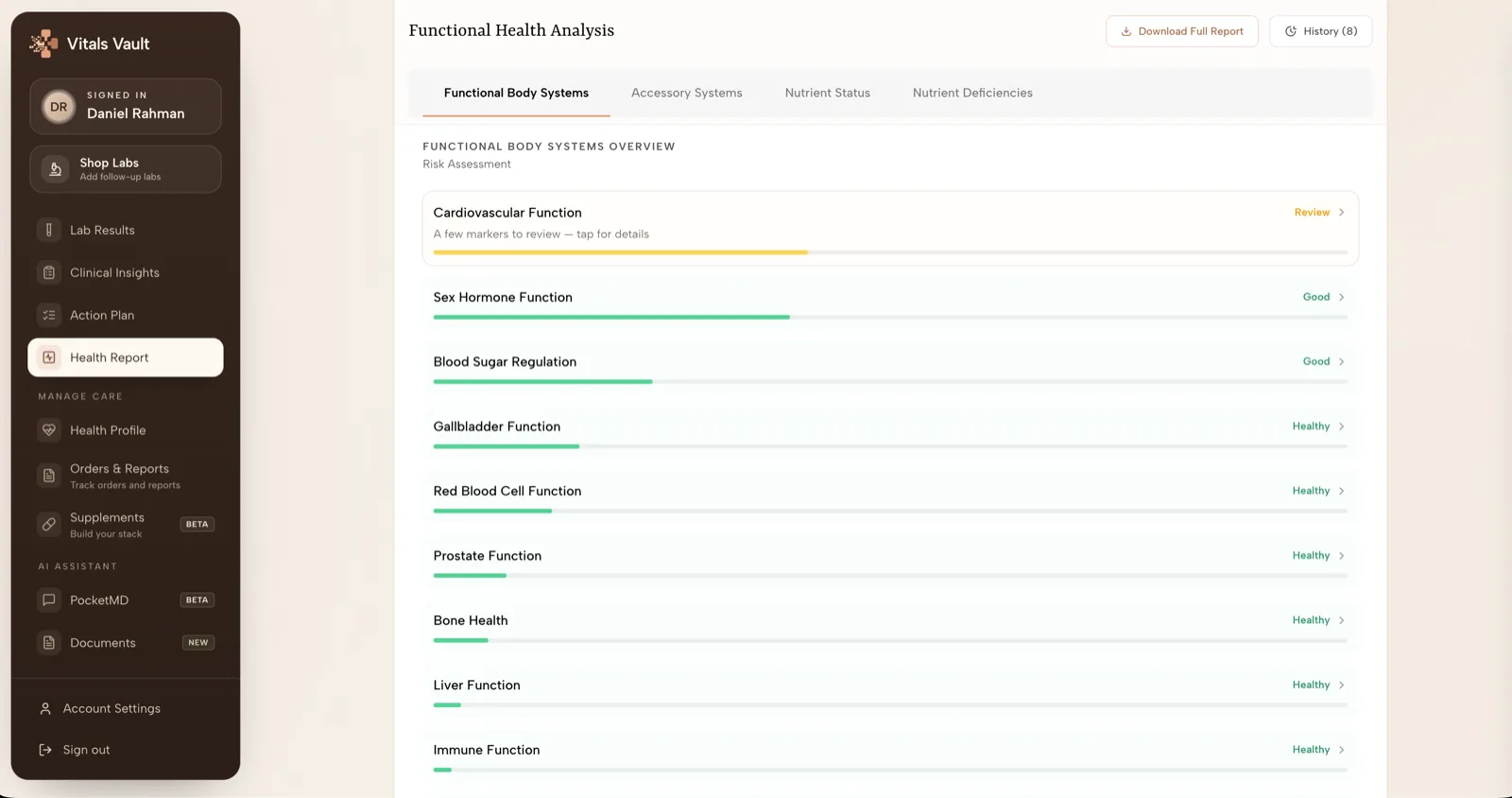
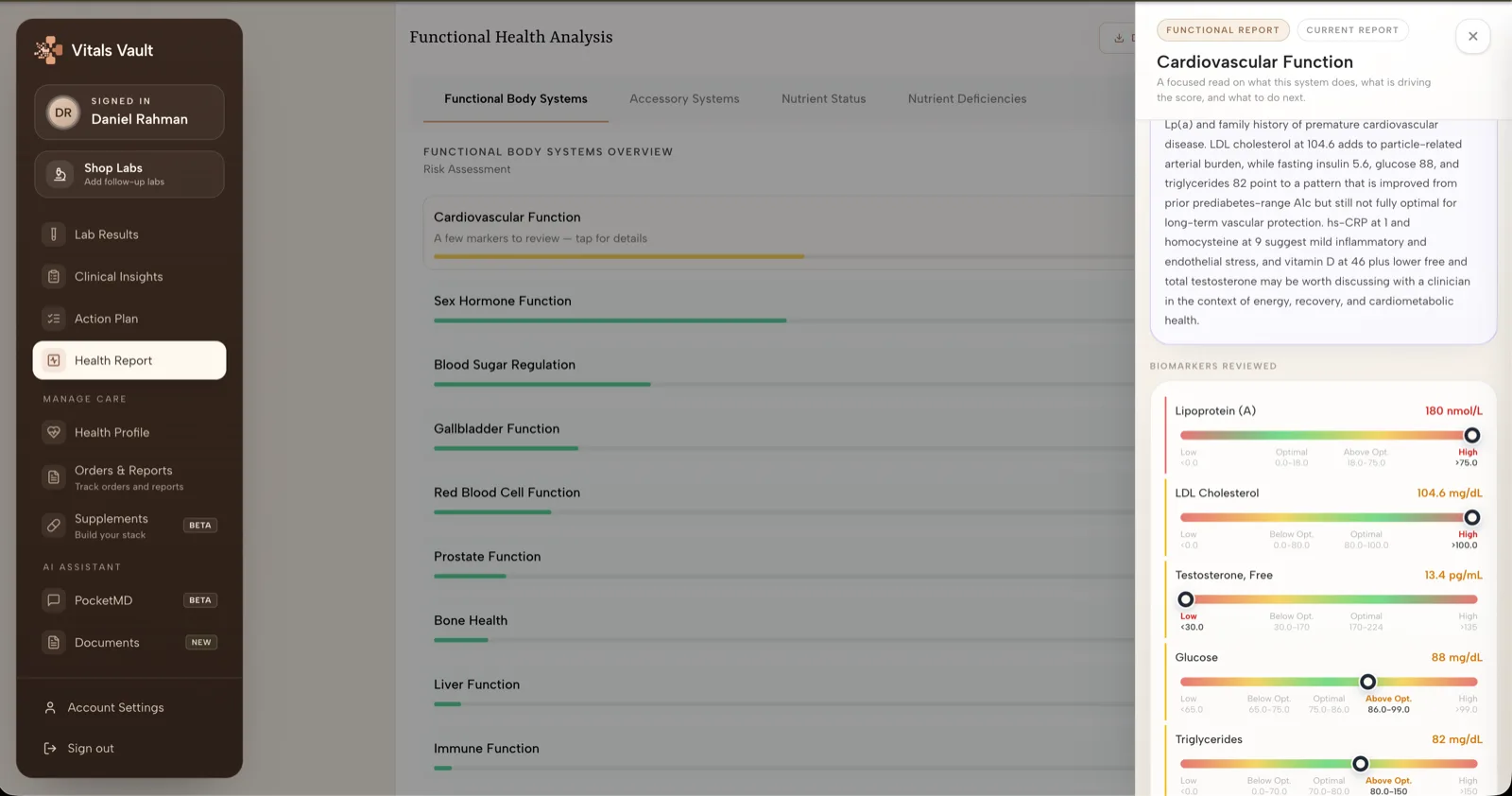
Explore your body systems with clear risk context — refresh your report, download the full PDF, and monitor hormones, heart, bone, and more in one place.
Explore hundreds of tests and panels, filter by concern, and manage your cart—member-exclusive pricing with quick checks and full-body options in one flow.
Wide test selection
300+ tests & panels available
Smart filtering
Find tests by symptoms or goals
Seamless ordering
Add to cart and manage easily
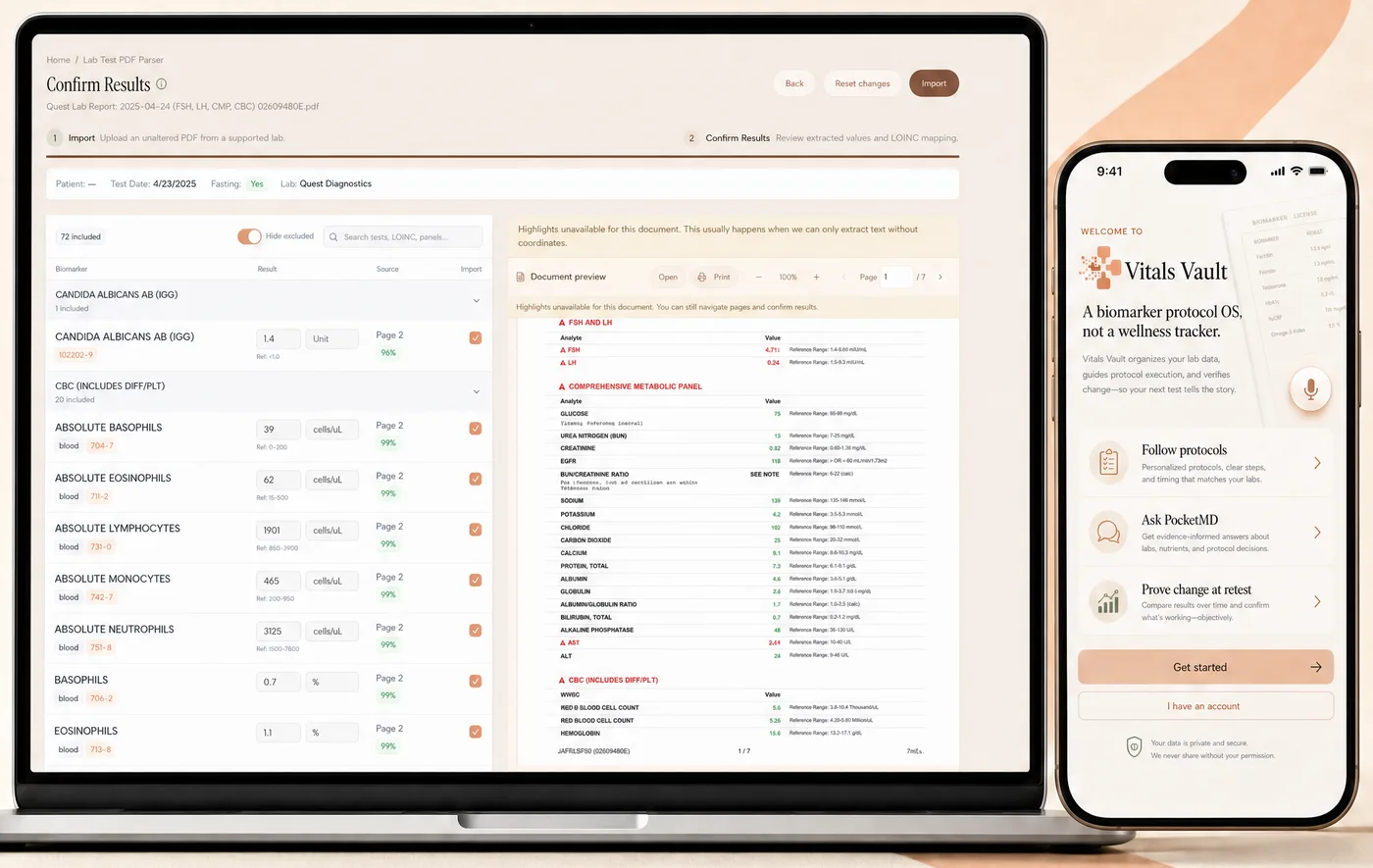
Upload past lab reports, search your documents, and keep appointments and results organized—our AI can extract biomarkers from PDFs so everything lives in one dashboard.
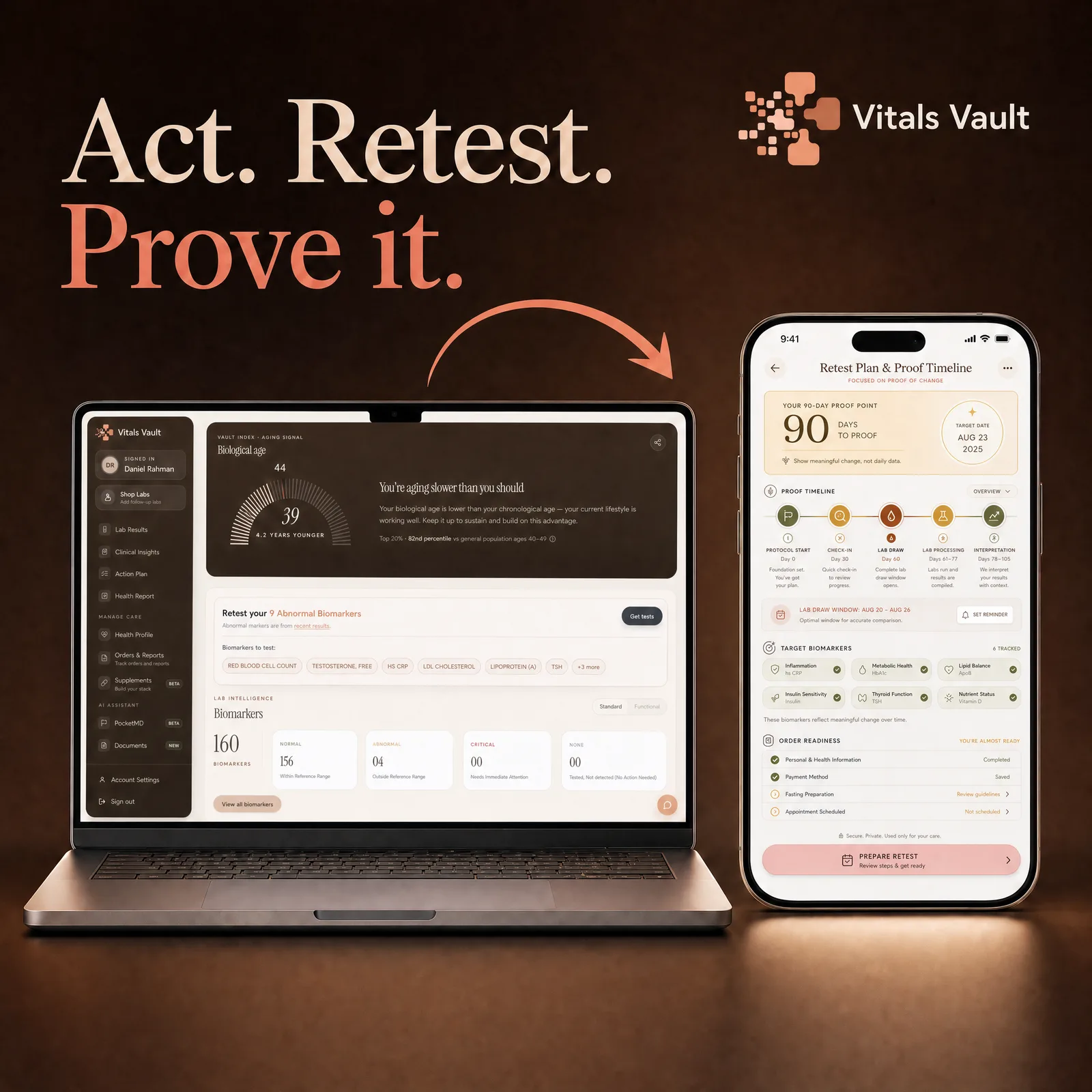
Browse longevity, nutrition, supplement, and movement protocols—structured plans you can follow with clear habits, labs, and targets tied to your profile.
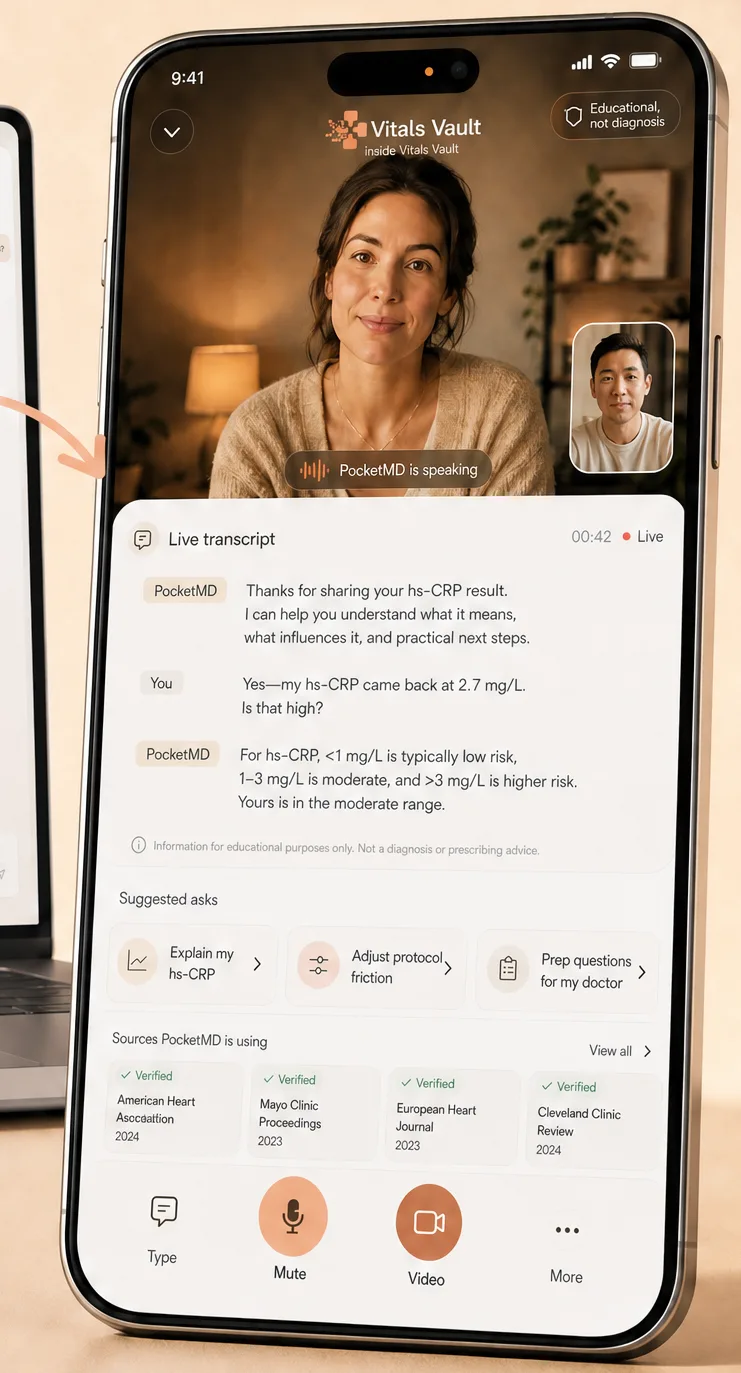
Ask for protocols, nutrition plans, supplement stacks, and education—context-aware suggestions powered by your labs and goals (beta experience).
Order online
Add IGF-1 (Growth Hormone Marker) to your cart and check out. No doctor referral is required.
Visit a Quest lab
Provide your blood sample at a Quest Diagnostics location. Appointments can be scheduled after checkout.
Review in Vitals Vault
Results in about 7 days. They stay in your Vitals Vault account for trends and follow-up.
No special preparation is usually needed unless noted at checkout.
This order includes the lab markers used for IGF-1 (Growth Hormone Marker) and reported in your Vitals Vault account.
Results
Results in about 7 days
HSA/FSA
Accepted
Who takes it
Must be taken by the purchaser
Preparation
No special preparation needed unless noted at checkout.
It measures IGF-1, a stable marker of growth hormone activity, and Vitals Vault lets you order through Quest and review results in PocketMD.





IGF-1 (insulin-like growth factor 1) is one of the most useful blood markers for understanding your average growth hormone (GH) activity over time. Because GH itself is released in pulses, a single GH blood draw can be misleading, while IGF-1 tends to be steadier.
An IGF-1 LC/MS test measures IGF-1 using liquid chromatography–mass spectrometry (LC/MS), a method designed to improve analytical specificity. Your result is usually interpreted using age- and sex-adjusted reference ranges, because “normal” IGF-1 changes a lot across the lifespan.
This test is often used to help evaluate unexplained changes in body composition, energy, and recovery, and it is also a core lab used when a clinician is assessing possible growth hormone deficiency or excess. Your number is not a diagnosis by itself, but it can be a strong clue when paired with symptoms and follow-up testing.
You may want an IGF-1 (LC/MS) test if you are trying to make sense of symptoms that could fit with altered growth hormone signaling, such as persistent fatigue, reduced exercise capacity, loss of lean mass, increased abdominal fat, slower recovery from training, or unexplained changes in skin and soft tissue. These symptoms are common and non-specific, so the value of IGF-1 is that it can help you and your clinician decide whether the “growth hormone axis” is worth a closer look.
This test is also commonly used when there is concern for growth hormone excess (for example, progressive changes in facial features, enlarging hands/feet, new snoring or sleep apnea, headaches, or elevated blood sugar), because IGF-1 is a recommended screening marker for acromegaly in many clinical pathways. If IGF-1 is clearly elevated for your age and sex, your clinician may order confirmatory testing rather than relying on a single lab.
If you are already on treatment that can affect growth hormone or IGF-1 (such as prescribed growth hormone, certain pituitary treatments, or some diabetes medications), IGF-1 can be used to monitor whether therapy is pushing levels too low or too high. Testing supports clinician-directed care and follow-up planning; it is not meant for self-diagnosis.
This is a CLIA laboratory blood test; results should be interpreted with your clinician because IGF-1 varies by age, physiologic state, and medical conditions.
from $66.99 at Quest Diagnostics
Results in days
Clear next steps
HSA / FSA
Vitals Vault lets you order an IGF-1 (LC/MS) blood test directly, then complete your draw at a participating Quest location. You get a clear lab report plus an easy way to keep results organized for trend tracking over time.
If your result is low, in range, or high, PocketMD can help you translate the number into practical next steps to discuss with your clinician, including which companion labs often add context (like thyroid markers, liver and kidney function, glucose/insulin markers, or pituitary-related testing when appropriate).
Because IGF-1 is sensitive to age, nutrition, and health status, a single result is often the start of a conversation rather than the end. Vitals Vault makes it straightforward to retest at a sensible interval after a change in training, weight, medication, or a clinician-guided treatment plan.
IGF-1 (insulin-like growth factor 1) is a hormone-like protein made mostly by your liver in response to growth hormone (GH) released from the pituitary gland. IGF-1 helps mediate many of GH’s longer-term effects, including support of lean tissue maintenance, bone remodeling, and metabolic signaling.
Unlike GH, which rises and falls in pulses throughout the day and night, IGF-1 tends to be more stable from hour to hour. That stability is why IGF-1 is commonly used as a practical blood marker of average GH activity.
“LC/MS” refers to liquid chromatography–mass spectrometry, an analytical technique that separates and measures molecules based on their mass. In clinical labs, LC/MS methods are often chosen to improve specificity and reduce interference compared with some antibody-based tests.
Your lab will typically compare your IGF-1 value to an age- and sex-adjusted reference range. A result that is “normal” for a 25-year-old may be high for a 70-year-old, so the reference interval matters as much as the raw number.
Growth hormone stimulates IGF-1 production, and IGF-1 feeds back to help regulate GH release. Because of this relationship, IGF-1 is often used as the first-line blood marker when clinicians are evaluating possible GH deficiency or GH excess.
IGF-1 is highest during childhood and puberty, then gradually declines with age. That natural decline means interpretation should focus on whether your value is appropriate for your age and sex, not whether it matches someone else’s number.
A low IGF-1 result can happen when growth hormone signaling is reduced, but it can also reflect non-hormonal factors such as inadequate calorie or protein intake, significant recent weight loss, chronic illness, or liver disease. In some people, low IGF-1 is part of broader pituitary dysfunction, especially if other pituitary hormones are also abnormal. If your symptoms fit and your clinician is concerned, the next step is usually not “more IGF-1,” but targeted evaluation, which may include repeat testing and specialized stimulation tests for growth hormone.
An in-range IGF-1 generally suggests your average growth hormone activity is appropriate for your age and sex. If you still have symptoms, it does not mean “nothing is wrong,” but it makes a GH/IGF-driven explanation less likely and points toward other common contributors such as sleep quality, thyroid status, iron deficiency, inflammation, medication effects, or training load. Many people use an in-range result as a baseline for future comparison if their health status changes.
A high IGF-1 result raises the possibility of growth hormone excess, particularly if it is clearly above the reference range and you have compatible clinical features. However, interpretation still depends on context, because lab variation, physiologic states, and certain medications can shift IGF-1. When IGF-1 is persistently elevated, clinicians often confirm with additional testing (commonly an oral glucose suppression test for GH) and may evaluate the pituitary.
IGF-1 is affected by age, puberty status, pregnancy, and overall nutritional status, and it can drop during acute illness or significant caloric restriction. Liver function matters because the liver is a major source of circulating IGF-1, and kidney disease can also alter hormone handling. Medications and hormones can shift IGF-1 as well, including prescribed growth hormone, estrogen therapy (route and dose can matter), and some diabetes treatments. Because of these influences, repeating the test under stable conditions is often the most useful way to confirm a borderline result.
Fasting is not always required for IGF-1, but your ordering instructions may depend on whether IGF-1 is bundled with other labs (like glucose or lipids). If you are only testing IGF-1, many people schedule a morning draw under typical conditions and keep diet and training consistent beforehand for better comparability.
Both aim to measure IGF-1, but they use different measurement techniques. LC/MS is an instrument-based method that can improve analytical specificity and reduce certain interferences. Your clinician will still interpret the result using the lab’s reference range, and you should try to trend results using the same method and lab when possible.
IGF-1 naturally peaks during childhood and puberty and then declines over adulthood. Because of that, labs provide age- (and usually sex-) adjusted reference intervals. A value that is normal for a younger adult may be above range for an older adult, so the age-adjusted range is essential for interpretation.
Not by itself. A persistently high IGF-1 can be a screening clue for growth hormone excess, but diagnosis typically requires confirmatory testing and clinical evaluation. If your result is elevated, it is reasonable to discuss repeat testing and next-step evaluation with your clinician rather than assuming a diagnosis.
No. Low IGF-1 can occur with undernutrition, recent weight loss, acute or chronic illness, liver disease, and other conditions. When growth hormone deficiency is a concern, clinicians often use IGF-1 as a starting point and then decide whether specialized stimulation testing is appropriate.
Retesting depends on why you tested in the first place. If you are confirming a borderline result, many clinicians repeat after several weeks under stable conditions. If you are monitoring a treatment or a major change in weight, training, or medications, a common approach is to recheck after about 8–12 weeks, since IGF-1 reflects longer-term signaling rather than hour-to-hour changes.
Yes. Significant calorie restriction, rapid weight loss, and heavy training loads (especially with inadequate recovery) can lower IGF-1 in some people. On the other hand, improved nutrition and recovery can raise IGF-1 toward your personal baseline. For the cleanest trend, try to test during a relatively typical week for you.
Purchase online through Vitals Vault. A licensed clinician reviews and approves your order, then you receive a digital requisition for a Quest Diagnostics blood draw.
Samples are collected in person at Quest Diagnostics locations nationwide. After checkout you can schedule your visit at a convenient site.
Most results in 3–5 business days. You can view them securely in your Vitals Vault account.
No separate referral appointment is required. Clinician review is included in the online order flow.
Yes. Eligible HSA/FSA cards can be used at checkout for qualifying lab orders.
Results are available in your secure Vitals Vault account. You control who you share them with, subject to applicable law.
Blood glucose shows the amount of sugar in your blood at a single moment. A1c (hemoglobin A1c) estimates your average blood sugar over roughly the past 8–12 weeks. Comparing them helps explain whether your long-term average lines up with your fasting glucose on draw day.
It helps you understand how this marker fits into your broader metabolic picture, with results tracked in your Vitals Vault account.
Elevated values can signal higher metabolic risk. Many people start with nutrition, activity, sleep, and weight management, then retest and review results with a clinician. This test is educational and does not replace medical advice or diagnosis.
Your sample is processed at CLIA-certified Quest Diagnostics laboratories. Results should still be interpreted with a qualified clinician alongside your history, symptoms, and other labs.
Consumer-initiated testing through Vitals Vault is limited to adults 18+ so ordering and interpretation stay aligned with clinical best practices for this channel.