
01
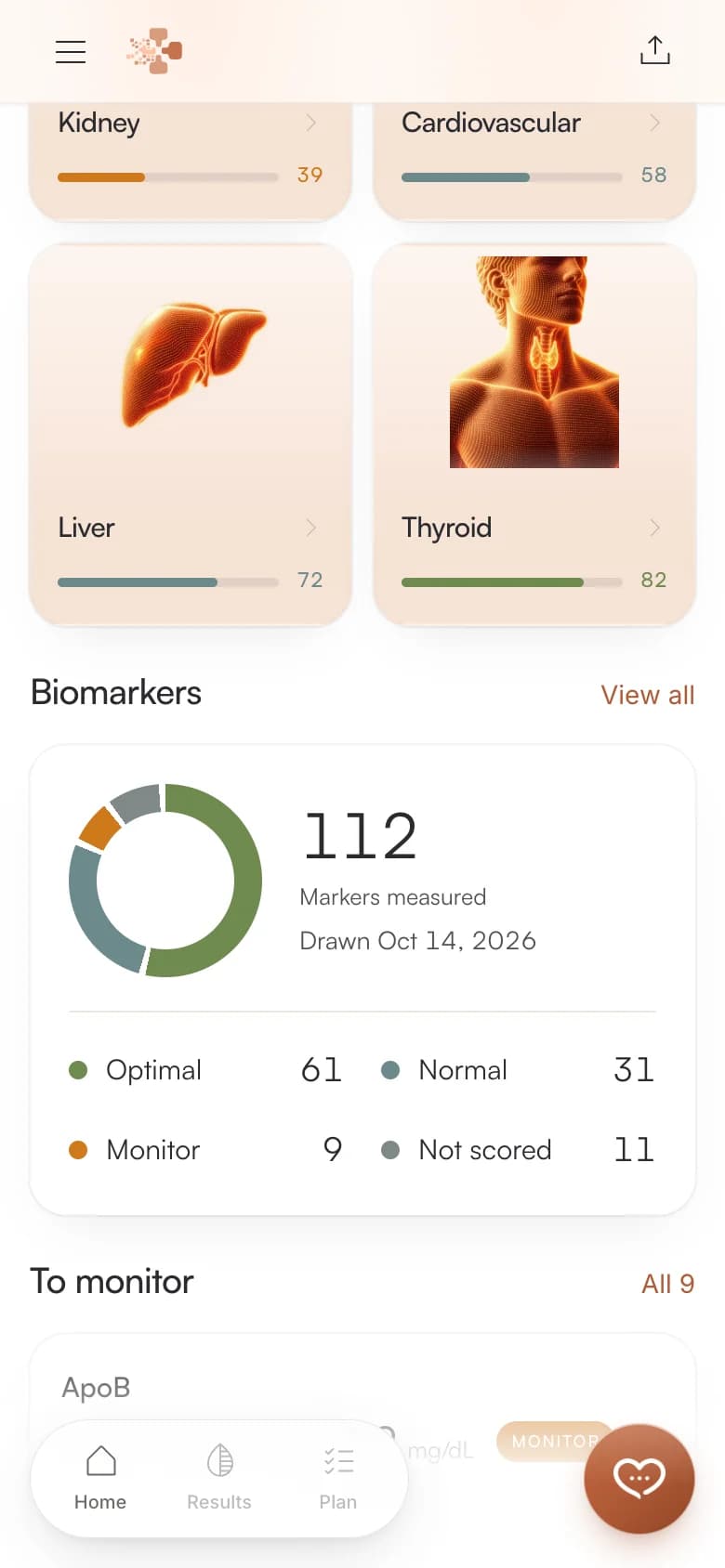
Biological age
Find out if your body is aging faster or slower than your actual age — and see how you rank against the general population.
39
Biological age
44
Actual age
4.2
Years younger
HOMA2-IR (Insulin Resistance) — What It Means and How to Interpret It
Most results in 3–5 business days
Find out how your Glucose and Insulin — Fasting (Insulin Resistance Screening) results line up with this lab test. HOMA2-IR estimates insulin resistance from fasting glucose and insulin to flag early metabolic risk, with Quest lab ordering and PocketMD support.
HOMA2-IR is a calculated marker that estimates how resistant your body is to insulin. It uses your fasting glucose and fasting insulin to model how hard your pancreas has to work to keep blood sugar steady. You can have “normal” glucose while insulin is already running high to compensate. That is why HOMA2-IR is often used to spot early metabolic strain before diabetes shows up on standard screening. Because it is a model-based estimate, your result is most useful when you interpret it alongside the underlying inputs (fasting glucose and fasting insulin) and your overall health context.
What to expect before and at your draw.
Sample Type
Blood
Collection Method
In person at a Quest Diagnostics location
Age
18+
This order includes the lab markers used for HOMA2-IR (Insulin Resistance) — What It Means and How to Interpret It.
Glucose
Included in this Quest Diagnostics order and reported in your Vitals Vault account.
Insulin
Included in this Quest Diagnostics order and reported in your Vitals Vault account.
Order HOMA2-IR (Insulin Resistance) — What It Means and How to Interpret It online.
Visit a Quest Diagnostics location near you for your blood draw. Appointments can be scheduled after checkout.
View easy-to-read results in your Vitals Vault account, with trends and a personalized action plan.
Included with every package
Function Health shows you numbers. Vitals Vault connects them — ratios, patterns, and a personalized action plan grounded in functional medicine.
Find out if your body is aging faster or slower than your actual age — and see how you rank against the general population.
39
Biological age
44
Actual age
4.2
Years younger
Turn lab data into what to do next—clear guidance on follow-ups, lifestyle context, and add-on testing when you need to go deeper. Make the healthy choice the obvious one.
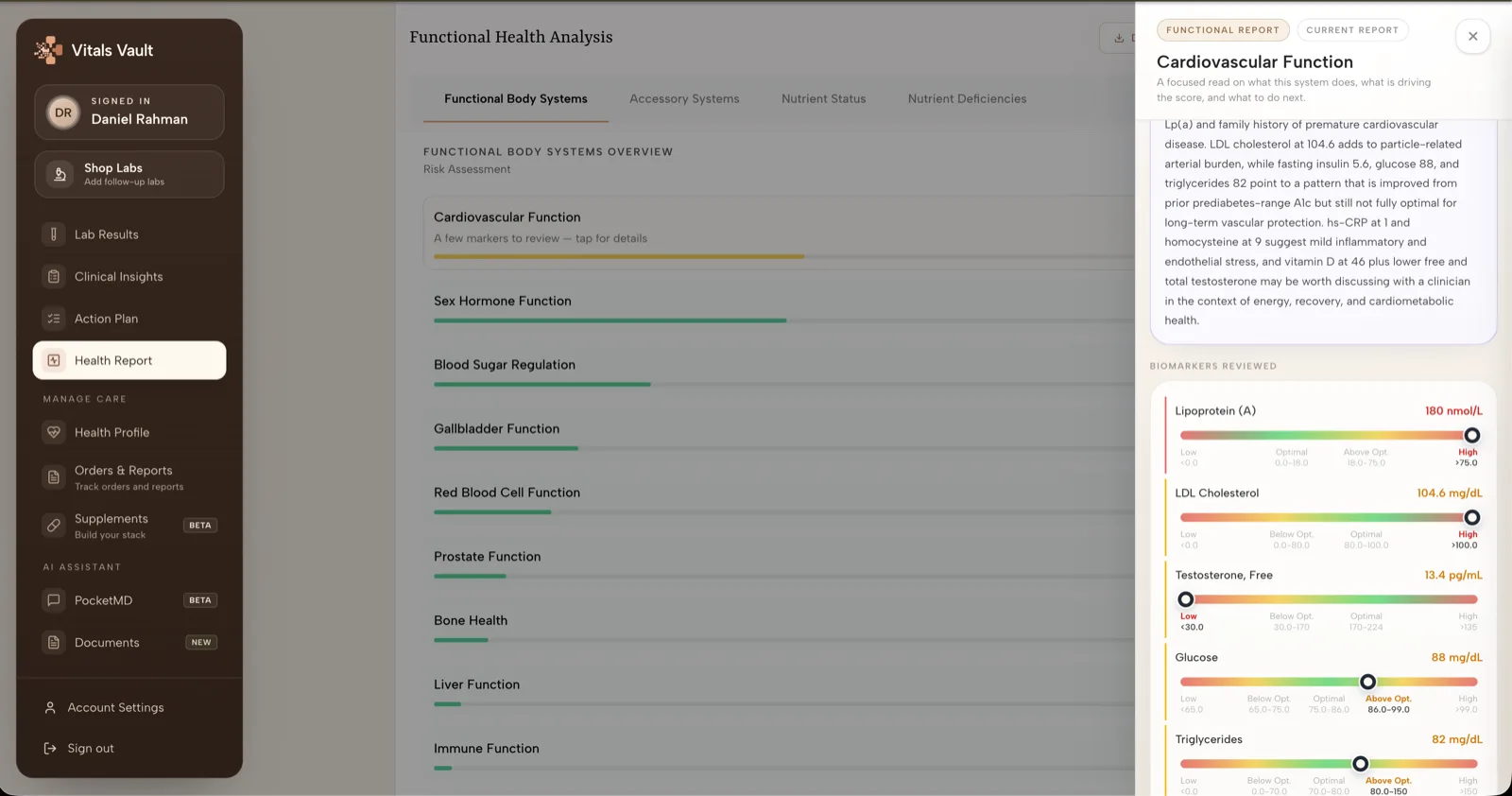
A personalized, plain-language walkthrough of your abnormal markers—reference ranges, pattern context, and what to watch next, grounded in your actual labs.
Personalized Insights
Clear Explanations
Actionable guidance
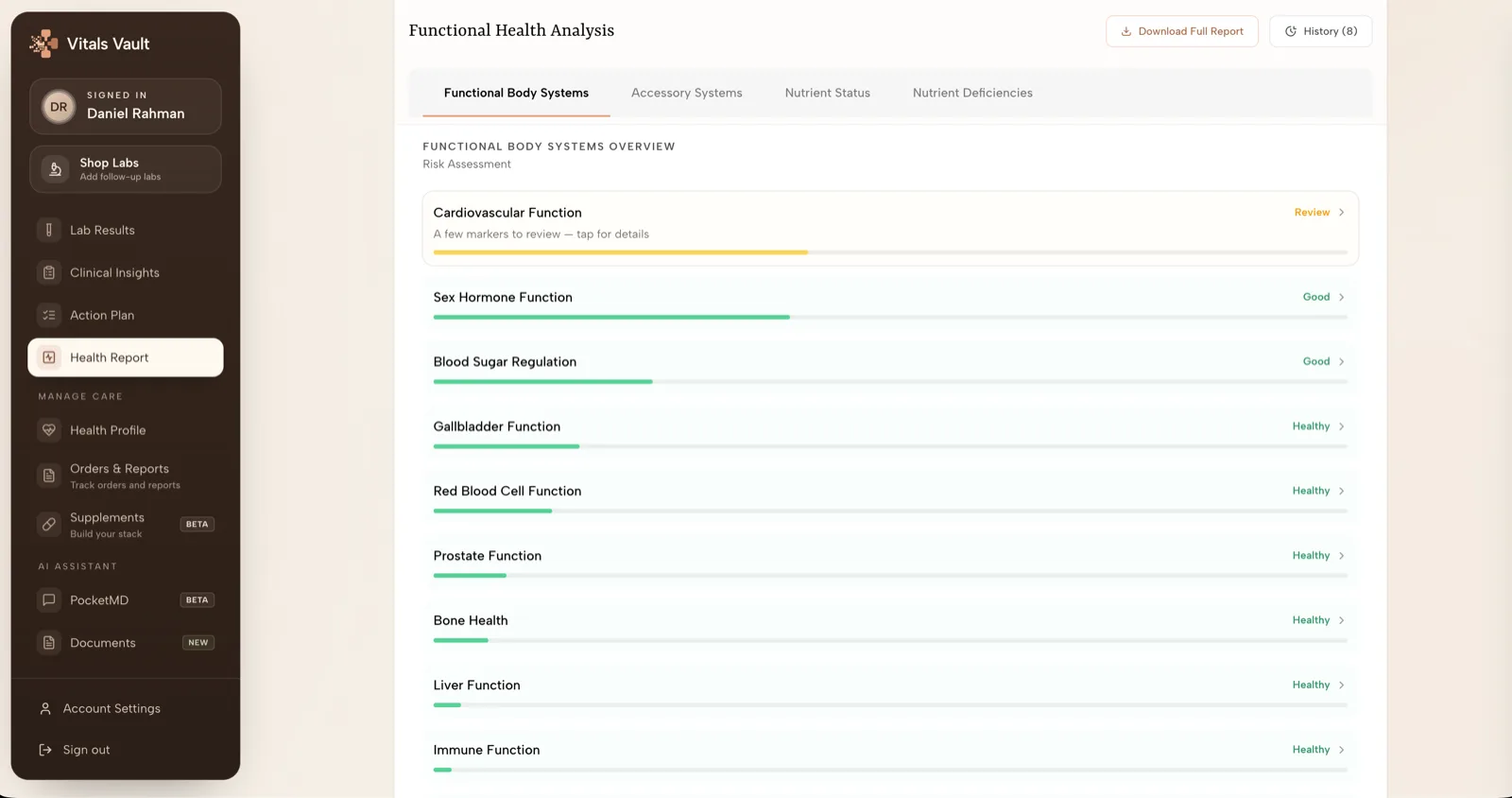
Explore your body systems with clear risk context — refresh your report, download the full PDF, and monitor hormones, heart, bone, and more in one place.

Explore hundreds of tests and panels, filter by concern, and manage your cart—member-exclusive pricing with quick checks and full-body options in one flow.
Wide test selection
300+ tests & panels available
Smart filtering
Find tests by symptoms or goals
Seamless ordering
Add to cart and manage easily
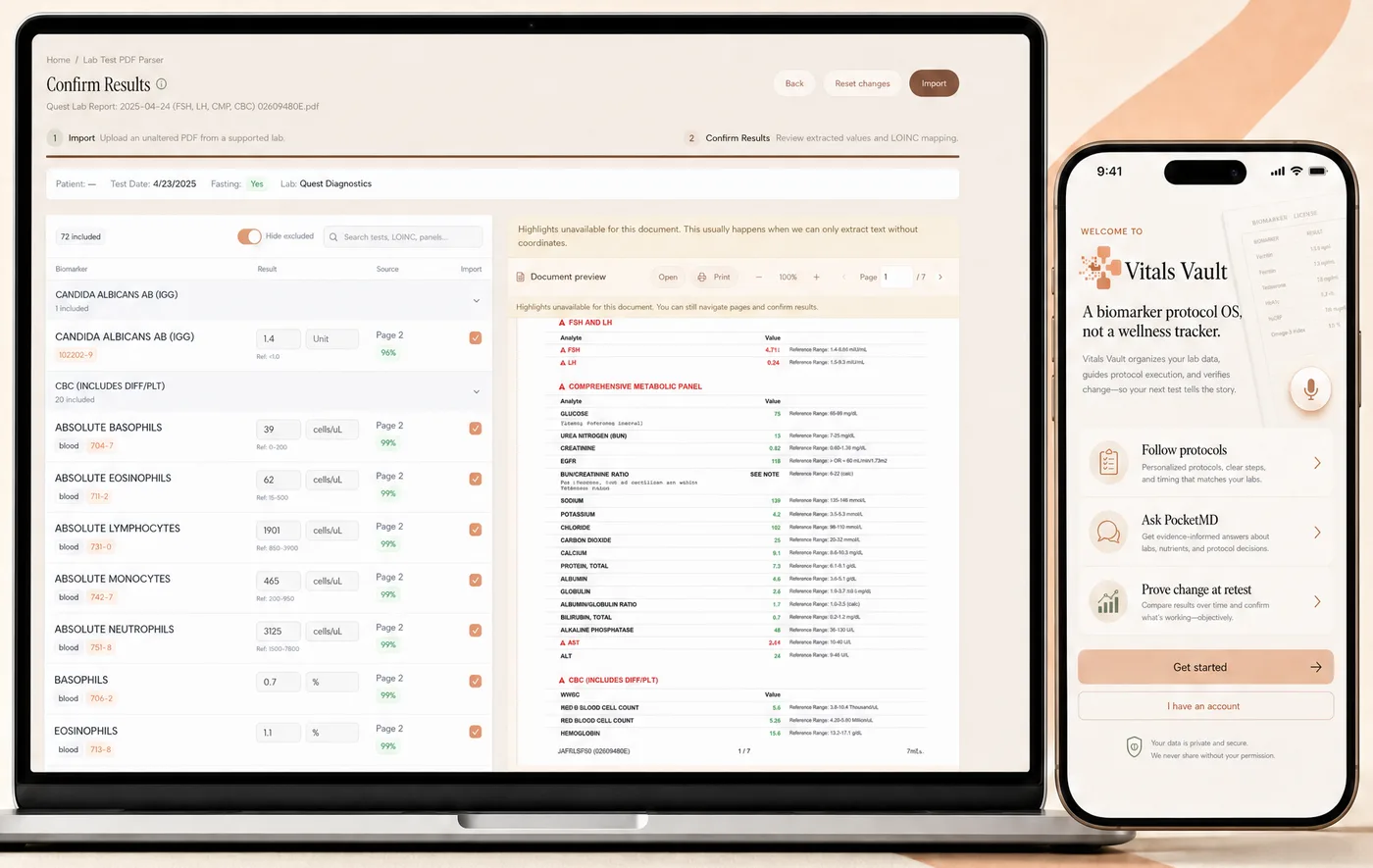
Upload past lab reports, search your documents, and keep appointments and results organized—our AI can extract biomarkers from PDFs so everything lives in one dashboard.
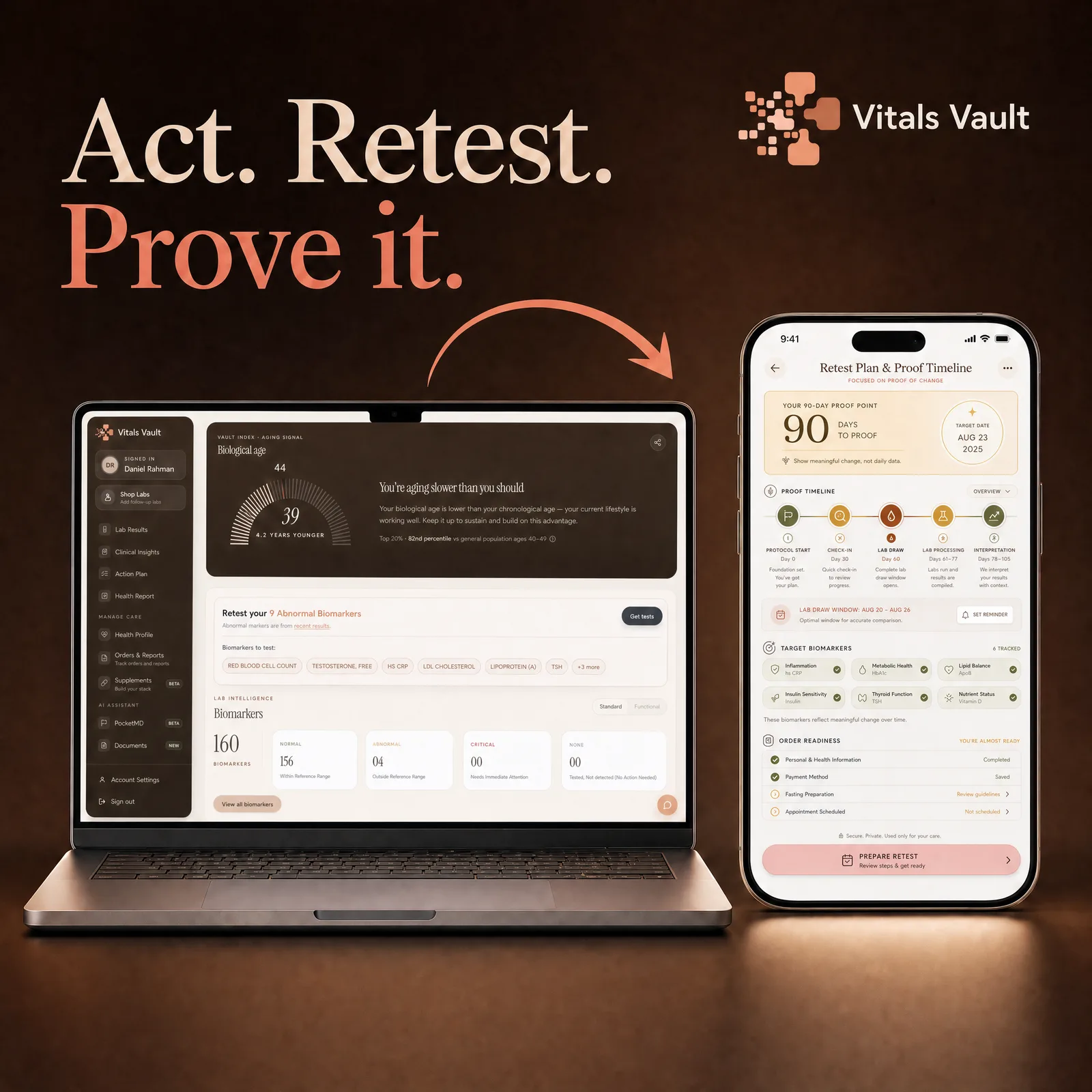
Browse longevity, nutrition, supplement, and movement protocols—structured plans you can follow with clear habits, labs, and targets tied to your profile.

Ask for protocols, nutrition plans, supplement stacks, and education—context-aware suggestions powered by your labs and goals (beta experience).
Order online
Add HOMA2-IR (Insulin Resistance) — What It Means and How to Interpret It to your cart and check out. No doctor referral is required.
Visit a Quest lab
Provide your blood sample at a Quest Diagnostics location. Appointments can be scheduled after checkout.
Review in Vitals Vault
Most results in 3–5 business days. They stay in your Vitals Vault account for trends and follow-up.
Fast 10–12 hours before your draw (water is fine), unless your requisition says otherwise.
This order includes the lab markers used for HOMA2-IR (Insulin Resistance) — What It Means and How to Interpret It and reported in your Vitals Vault account.
Results
Most results in 3–5 business days
HSA/FSA
Accepted
Who takes it
Must be taken by the purchaser
Preparation
Fast for 8 hours (no food or drink, except water) before sample collection.
HOMA2-IR estimates insulin resistance from fasting glucose and insulin to flag early metabolic risk, with Quest lab ordering and PocketMD support.


HOMA2-IR is a calculated marker that estimates how resistant your body is to insulin. It uses your fasting glucose and fasting insulin to model how hard your pancreas has to work to keep blood sugar steady.
You can have “normal” glucose while insulin is already running high to compensate. That is why HOMA2-IR is often used to spot early metabolic strain before diabetes shows up on standard screening.
Because it is a model-based estimate, your result is most useful when you interpret it alongside the underlying inputs (fasting glucose and fasting insulin) and your overall health context.
You may consider HOMA2-IR if you are trying to understand possible insulin resistance, especially when your fasting glucose or A1c looks “fine” but you still have symptoms that can track with blood sugar swings. Common examples include fatigue after meals, difficulty losing weight, increasing waist circumference, or skin changes such as skin tags or darkened patches (acanthosis nigricans).
HOMA2-IR can also be helpful if you have risk factors such as a sedentary lifestyle, a higher body weight, a strong family history of type 2 diabetes, sleep problems, or conditions linked to insulin resistance such as polycystic ovary syndrome (PCOS).
If you are already working on metabolic health, repeating HOMA2-IR over time can help you see whether changes in nutrition, activity, sleep, or medication are improving the underlying insulin signal—not just the glucose number.
This test supports clinician-directed care and shared decision-making. It does not diagnose diabetes or any single condition by itself.
HOMA2-IR is a derived index calculated from fasting glucose and fasting insulin using a computer model; it is not a standalone diagnosis.
Fasting (Insulin Resistance Screening)
from $34.98 at Quest Diagnostics
Results in days
Clear next steps
HSA / FSA
With Vitals Vault, you can order the labs needed to generate HOMA2-IR without waiting for an office visit. You complete a simple checkout, visit a nearby Quest draw site, and then review your results when they are ready.
Because HOMA2-IR is calculated, the most helpful next step is interpretation in context: what your fasting insulin is doing, whether your glucose is truly fasting, and how your result fits with other metabolic markers. PocketMD can help you translate your numbers into practical questions to bring to your clinician and a plan for what to recheck.
If you are tracking progress, Vitals Vault makes it straightforward to repeat testing under similar conditions so your trend is easier to trust.
HOMA2-IR stands for Homeostatic Model Assessment 2 — Insulin Resistance. It is an updated model that estimates insulin resistance using two inputs: your fasting glucose and your fasting insulin.
In simple terms, insulin resistance means your cells do not respond to insulin as efficiently, so your body often compensates by making more insulin. For a while, that extra insulin can keep glucose in range, which is why glucose alone can miss early insulin resistance.
HOMA2-IR is widely used in research and clinical practice because it provides a standardized way to summarize the relationship between fasting glucose and fasting insulin. It is considered more accurate than the original HOMA-IR calculation, but it is still an estimate rather than a direct measurement of insulin sensitivity.
Your result is best interpreted as a signal of “how much insulin is needed to maintain fasting glucose,” not as a diagnosis. A higher value generally suggests more insulin resistance, while a lower value generally suggests better insulin sensitivity—assuming the blood draw was truly fasting and the underlying labs are reliable.
Formula
HOMA2 Model (Fasting Glucose, Fasting Insulin)
HOMA2-IR is generated by a computer model that uses your fasting glucose and fasting insulin values to estimate insulin resistance. Because it is model-based, you may see small differences in results depending on the lab system or reporting conventions.
To make your result as meaningful as possible, your blood draw should be done in a true fasting state (commonly 8–12 hours with only water). Recent illness, intense exercise, or medications that affect glucose or insulin can shift the inputs and therefore the calculated index.
A lower HOMA2-IR generally suggests higher insulin sensitivity, meaning your body needs less insulin to keep fasting glucose stable. This can be a reassuring sign when it matches your overall picture, including a healthy A1c and triglycerides.
However, an unusually low value can also happen if fasting insulin is very low due to factors like prolonged fasting, very low carbohydrate intake, or certain medications. If you have symptoms of low blood sugar, unintentional weight loss, or other concerns, it is worth reviewing the underlying fasting insulin and glucose numbers with your clinician.
An in-range HOMA2-IR typically indicates that your fasting insulin and fasting glucose are in a relationship consistent with good insulin sensitivity. Many clinicians use HOMA2-IR as an early metabolic “check engine light,” so an optimal result can support that your current habits are working.
Even with an optimal index, you can still have post-meal glucose spikes or other metabolic issues that HOMA2-IR does not capture. If you have persistent symptoms, pairing this with A1c, lipids, and (when appropriate) post-meal glucose data can provide a fuller view.
Clinical graph note: the optimal range is narrower than the standard lab range. Standard range: 0.50 - 1.75 Index. Optimal range: 0.75 - 1.25 Index.
A higher HOMA2-IR suggests insulin resistance, meaning your body is likely producing more insulin than expected to maintain fasting glucose. In many settings, values above roughly 1.0–1.7 are considered suggestive of insulin resistance, although cutoffs can vary by lab, population, and clinical context.
A high result can align with symptoms such as fatigue after meals, difficulty losing weight, increased waist circumference, elevated blood pressure, skin tags, or acanthosis nigricans. It can also be a prompt to check related markers (such as A1c, triglycerides, HDL cholesterol, and liver enzymes) and to discuss a targeted plan with your clinician.
Because HOMA2-IR is calculated from fasting glucose and fasting insulin, anything that changes either input can move the index. Not truly fasting, recent high-carbohydrate intake, acute stress, poor sleep, and recent illness can raise glucose and/or insulin and make insulin resistance look worse than your baseline.
Body weight, physical activity, and genetics can strongly influence insulin sensitivity over time. Certain medications can also affect glucose or insulin dynamics, so your medication list matters when you interpret changes.
Finally, conditions associated with insulin resistance—such as PCOS and sleep disorders—can elevate HOMA2-IR even when you are making healthy choices, which is why trends and context are often more useful than a single number.
There is no single universal “normal” range because cutoffs can vary by lab and population. In many clinical and research contexts, HOMA2-IR values above about 1.0–1.7 are considered suggestive of insulin resistance. Your best next step is to interpret the index alongside your fasting insulin, fasting glucose, A1c, and your risk factors.
Yes. HOMA2-IR is based on fasting glucose and fasting insulin, so fasting is essential for a meaningful result. A common approach is 8–12 hours of fasting with water only, and avoiding heavy exercise and alcohol the day before when possible.
HOMA-IR is the original, simpler calculation, while HOMA2-IR uses an updated computer model intended to better reflect real physiology across a wider range of glucose and insulin values. Both aim to estimate insulin resistance from fasting labs, but HOMA2-IR is generally considered more accurate.
Yes. A1c reflects average blood sugar over roughly 2–3 months, while HOMA2-IR reflects the fasting relationship between insulin and glucose. Early insulin resistance can show up as higher fasting insulin (and a higher HOMA2-IR) before glucose averages rise enough to change A1c.
Not truly fasting is a common reason, especially if you had calories, coffee with additives, or a late meal. Poor sleep, acute stress, recent illness, and some medications can also raise glucose and/or insulin temporarily. If your result does not match your overall health picture, repeating the test under consistent fasting conditions can help.
No. HOMA2-IR is an estimate of insulin resistance and is not a diagnostic test for diabetes. Diabetes diagnosis typically relies on fasting plasma glucose, A1c, and/or an oral glucose tolerance test, interpreted by a clinician.
It depends on your goals and what you are changing. If you are making a focused lifestyle change or starting a medication that affects glucose or insulin, many people recheck in about 8–12 weeks to see a trend. The key is to repeat testing under similar fasting conditions so results are comparable.
Purchase online through Vitals Vault. A licensed clinician reviews and approves your order, then you receive a digital requisition for a Quest Diagnostics blood draw.
Samples are collected in person at Quest Diagnostics locations nationwide. After checkout you can schedule your visit at a convenient site.
Most results in 3–5 business days. You can view them securely in your Vitals Vault account.
No separate referral appointment is required. Clinician review is included in the online order flow.
Yes. Eligible HSA/FSA cards can be used at checkout for qualifying lab orders.
Results are available in your secure Vitals Vault account. You control who you share them with, subject to applicable law.
Blood glucose shows the amount of sugar in your blood at a single moment. A1c (hemoglobin A1c) estimates your average blood sugar over roughly the past 8–12 weeks. Comparing them helps explain whether your long-term average lines up with your fasting glucose on draw day.
It compares Glucose and Insulin — Fasting (Insulin Resistance Screening) to show whether your long-term average glucose signal matches your fasting glucose on test day — useful context for clinician-guided follow-up.
Elevated values can signal higher metabolic risk. Many people start with nutrition, activity, sleep, and weight management, then retest and review results with a clinician. This test is educational and does not replace medical advice or diagnosis.
Your sample is processed at CLIA-certified Quest Diagnostics laboratories. Results should still be interpreted with a qualified clinician alongside your history, symptoms, and other labs.
Consumer-initiated testing through Vitals Vault is limited to adults 18+ so ordering and interpretation stay aligned with clinical best practices for this channel.