01
Biological age
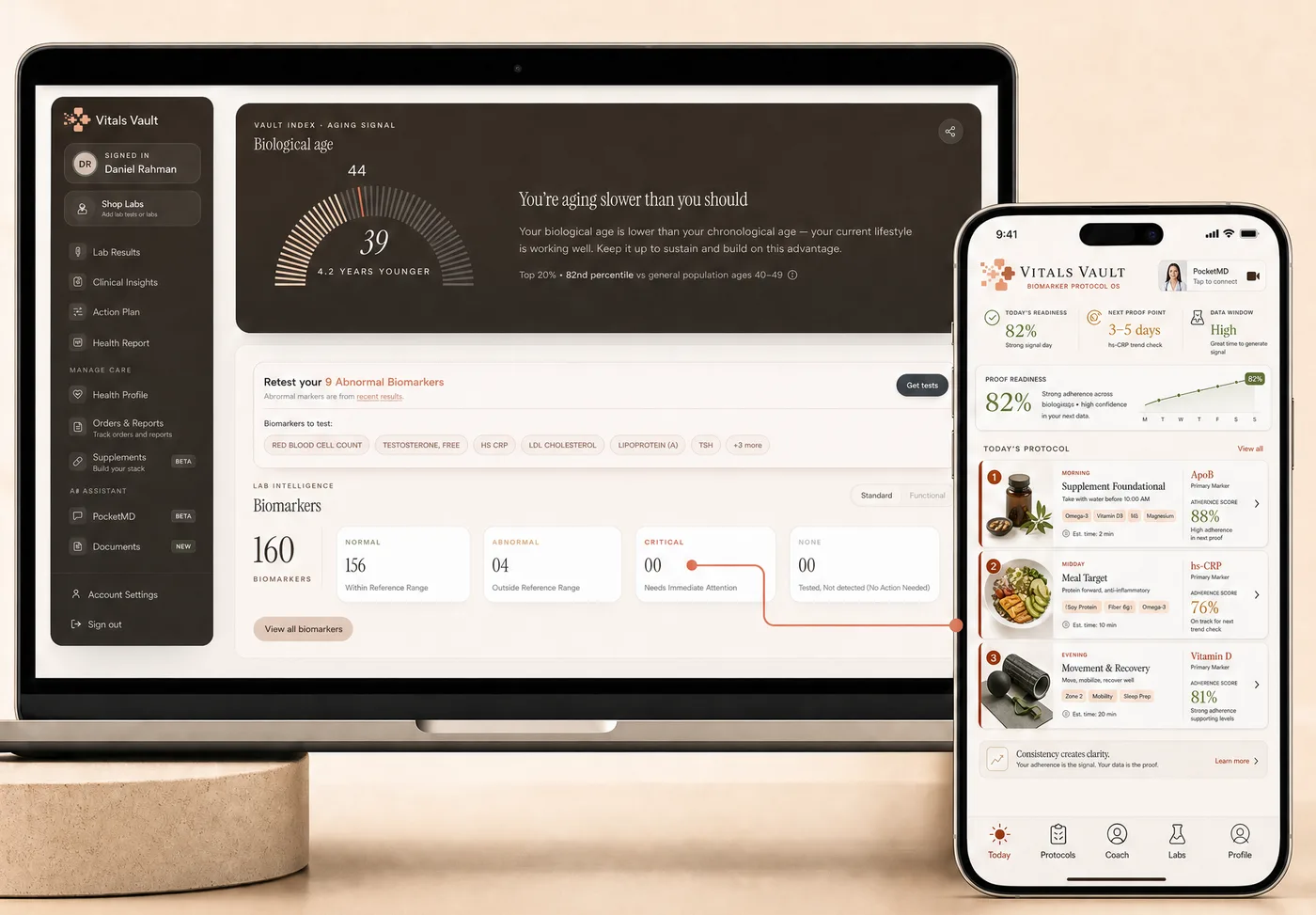
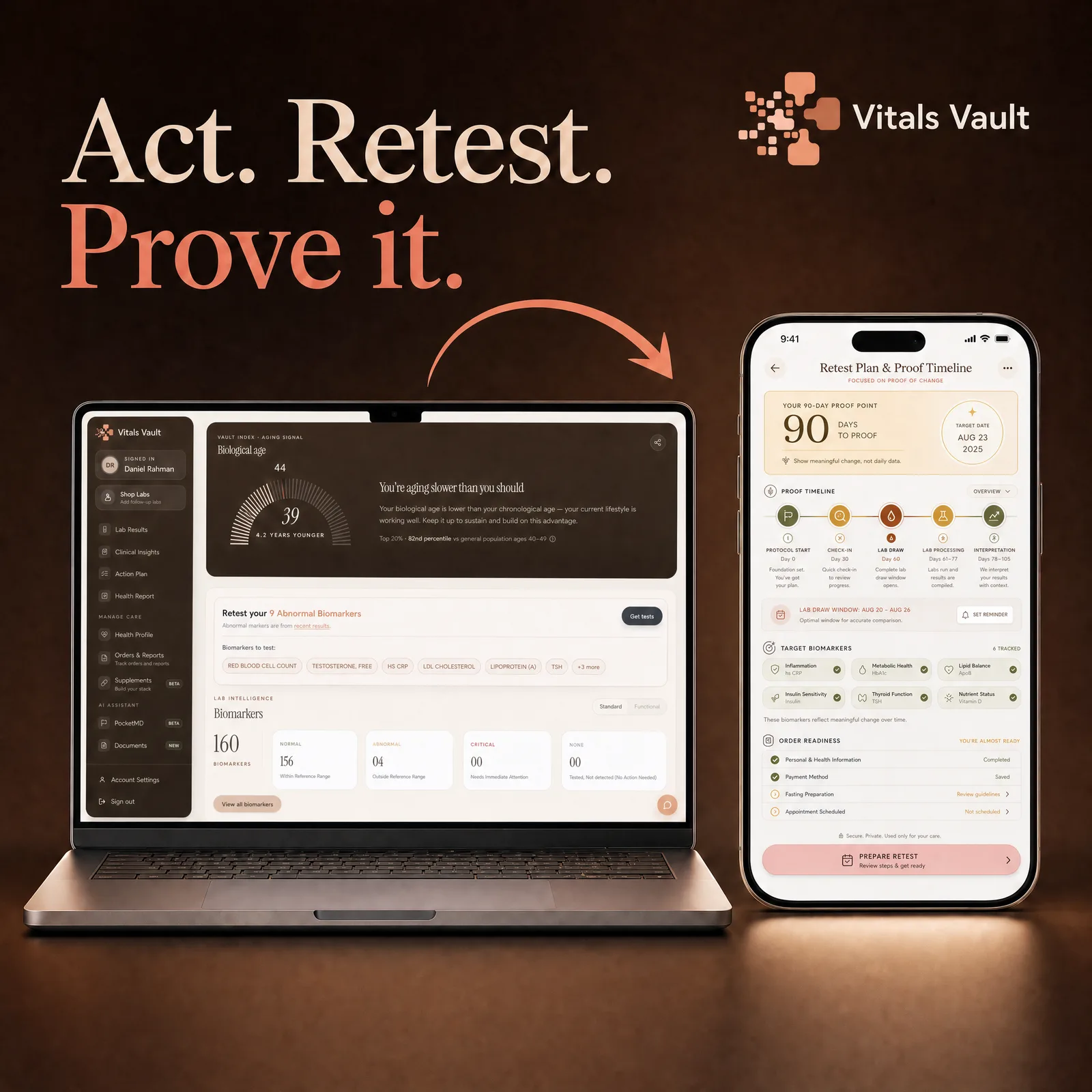
Find out if your body is aging faster or slower than your actual age — and see how you rank against the general population.
39
Biological age
44
Actual age
4.2
Years younger
HbA1c (Blood Sugar Average)
Results in about 3 days
Hemoglobin A1c (HbA1c) With eAG: how to read your 3‑month blood sugar average. It estimates your average blood sugar over ~3 months and converts it to eAG; order through Vitals Vault and test at a nearby Quest location.
Hemoglobin A1c (HbA1c) with eAG is a blood test that summarizes your average blood sugar over the last couple of months, not just what your glucose happened to be at one moment. It is commonly used to screen for prediabetes and diabetes, and it is also one of the main ways to track how well a treatment plan is working over time. The “eAG” part stands for estimated average glucose. It converts your A1c percentage into a number that looks like a typical glucose reading (mg/dL), which can make the result easier to relate to day-to-day patterns.
What to expect before and at your draw.
Sample Type
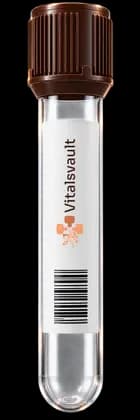
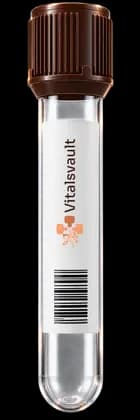
Blood
Collection Method
In person at a Quest Diagnostics location
Age
18+
This order includes the lab markers used for HbA1c (Blood Sugar Average).
Eag (Mg/Dl)
Included in this Quest Diagnostics order and reported in your Vitals Vault account.
Hemoglobin A1C
Included in this Quest Diagnostics order and reported in your Vitals Vault account.
Order HbA1c (Blood Sugar Average) online.
Visit a Quest Diagnostics location near you for your blood draw. Appointments can be scheduled after checkout.
View easy-to-read results in your Vitals Vault account, with trends and a personalized action plan.
Included with every package
Function Health shows you numbers. Vitals Vault connects them — ratios, patterns, and a personalized action plan grounded in functional medicine.
Find out if your body is aging faster or slower than your actual age — and see how you rank against the general population.
39
Biological age
44
Actual age
4.2
Years younger
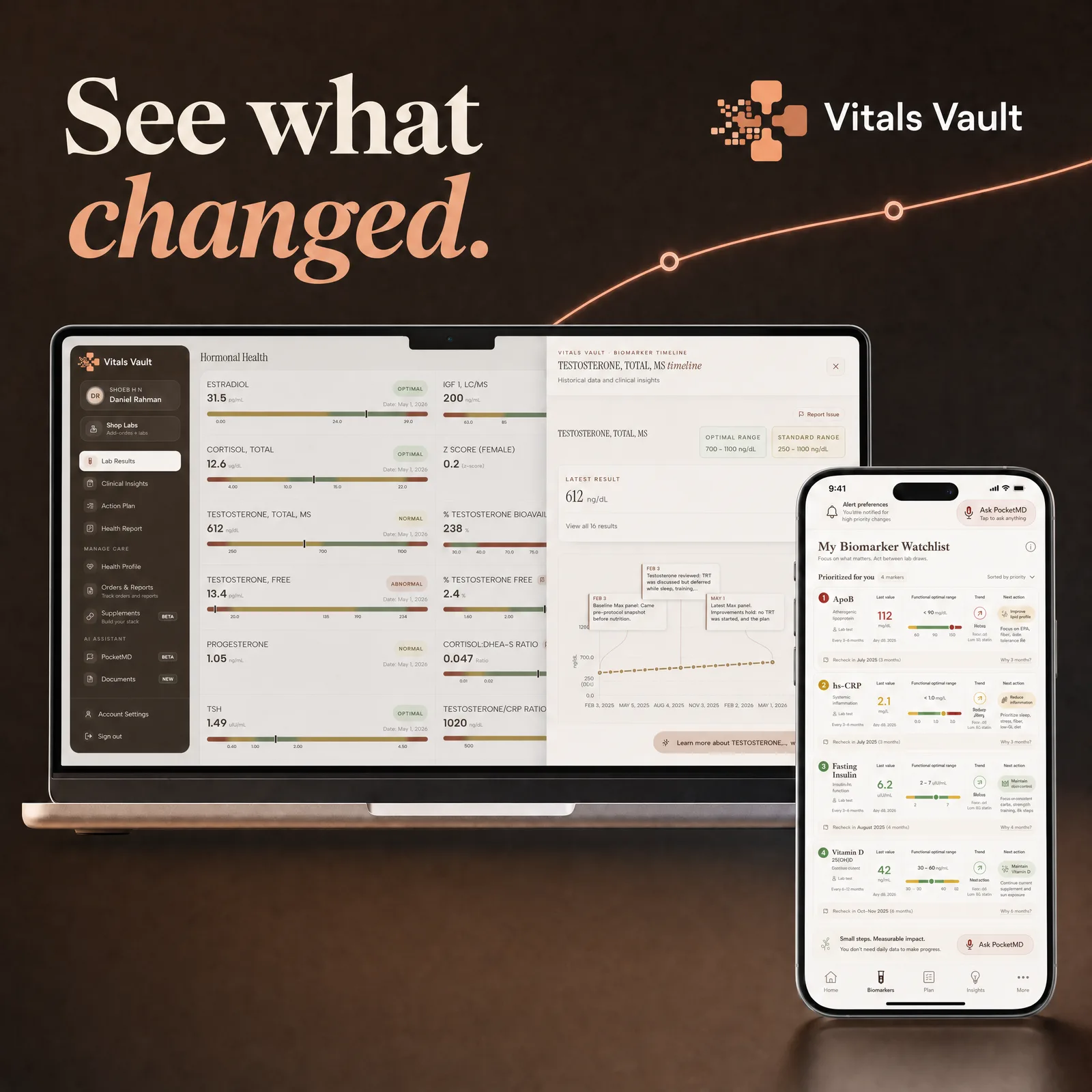
Turn lab data into what to do next—clear guidance on follow-ups, lifestyle context, and add-on testing when you need to go deeper. Make the healthy choice the obvious one.
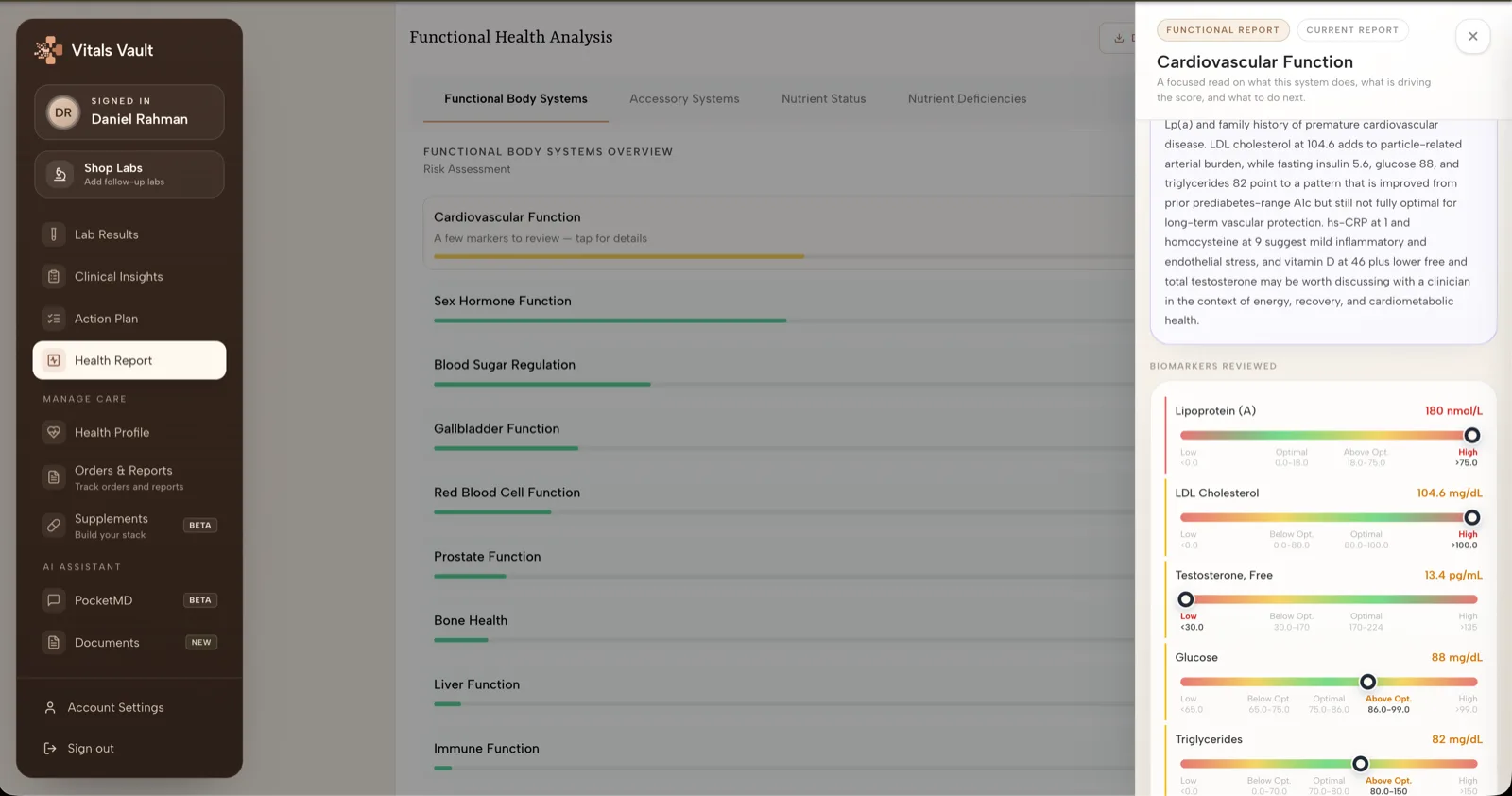
A personalized, plain-language walkthrough of your abnormal markers—reference ranges, pattern context, and what to watch next, grounded in your actual labs.
Personalized Insights
Clear Explanations
Actionable guidance
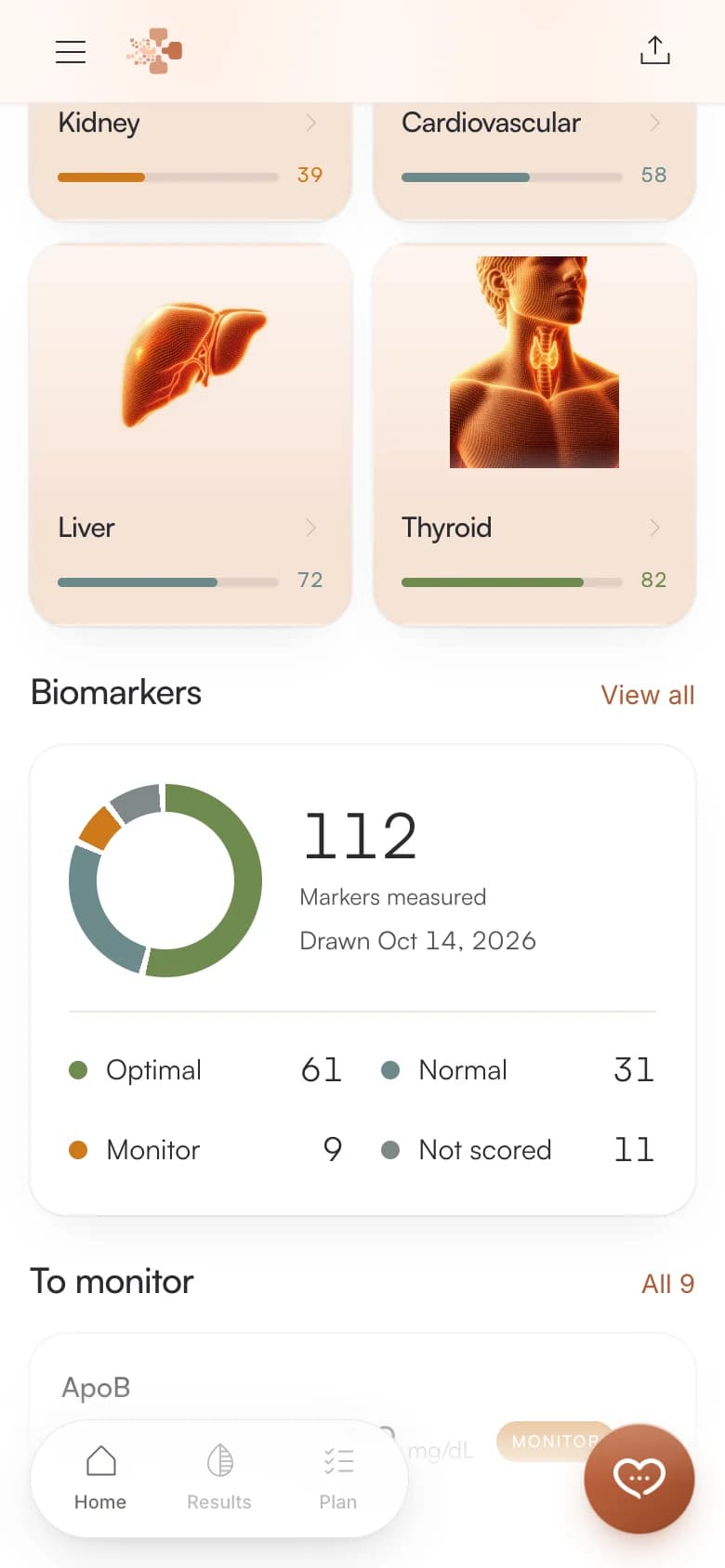
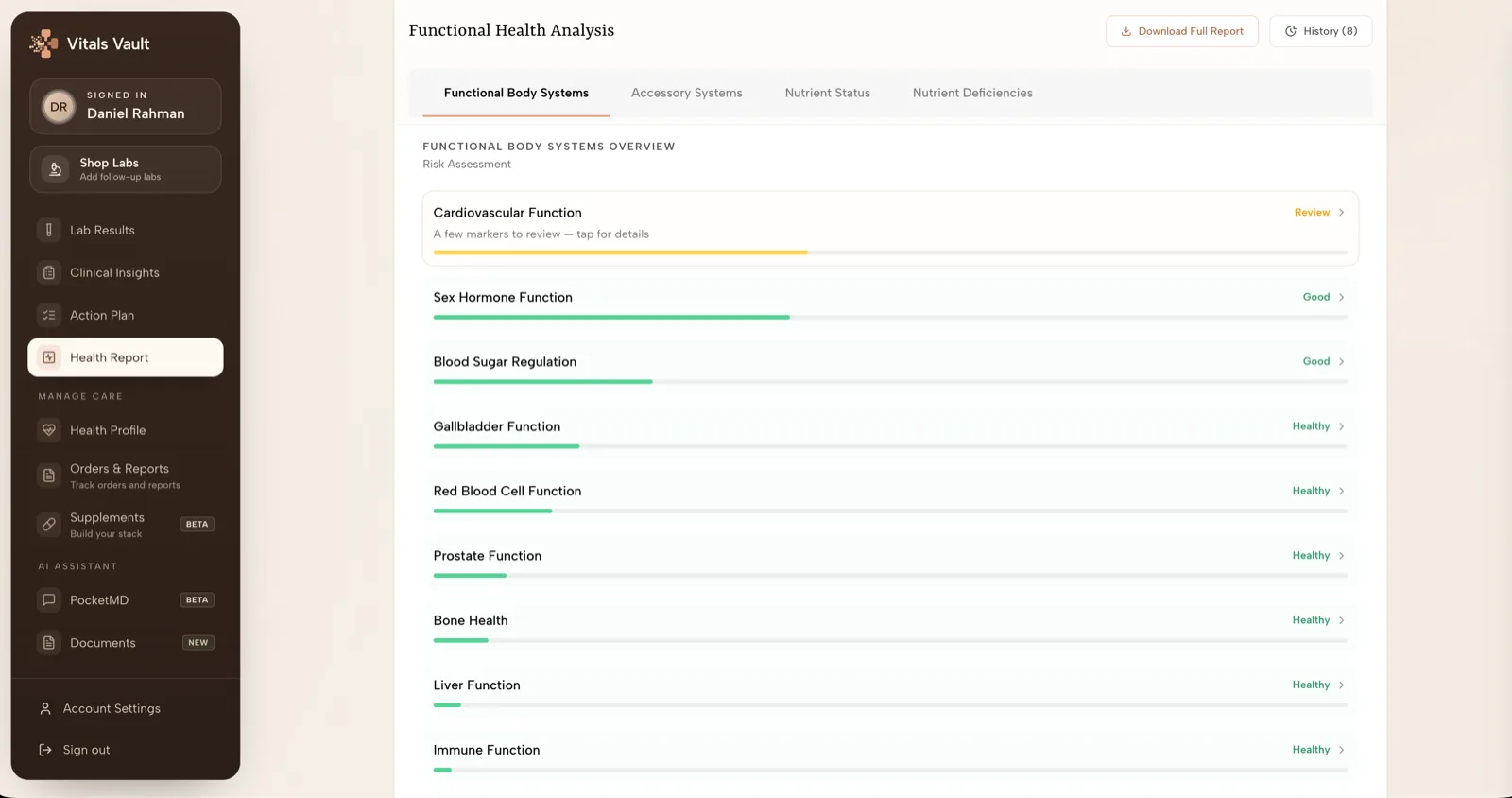
Explore your body systems with clear risk context — refresh your report, download the full PDF, and monitor hormones, heart, bone, and more in one place.
Explore hundreds of tests and panels, filter by concern, and manage your cart—member-exclusive pricing with quick checks and full-body options in one flow.
Wide test selection
300+ tests & panels available
Smart filtering
Find tests by symptoms or goals
Seamless ordering
Add to cart and manage easily
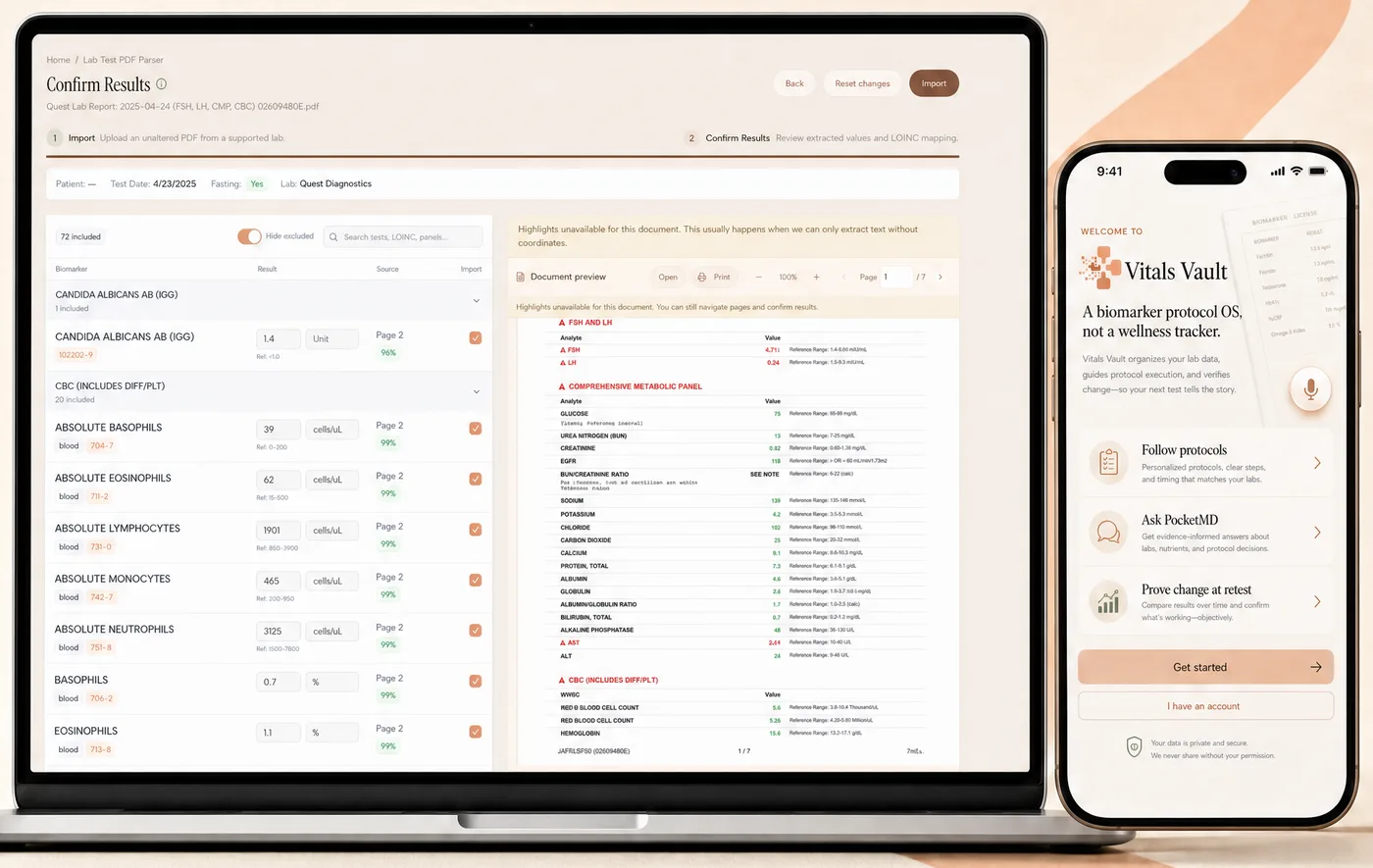
Upload past lab reports, search your documents, and keep appointments and results organized—our AI can extract biomarkers from PDFs so everything lives in one dashboard.
Browse longevity, nutrition, supplement, and movement protocols—structured plans you can follow with clear habits, labs, and targets tied to your profile.
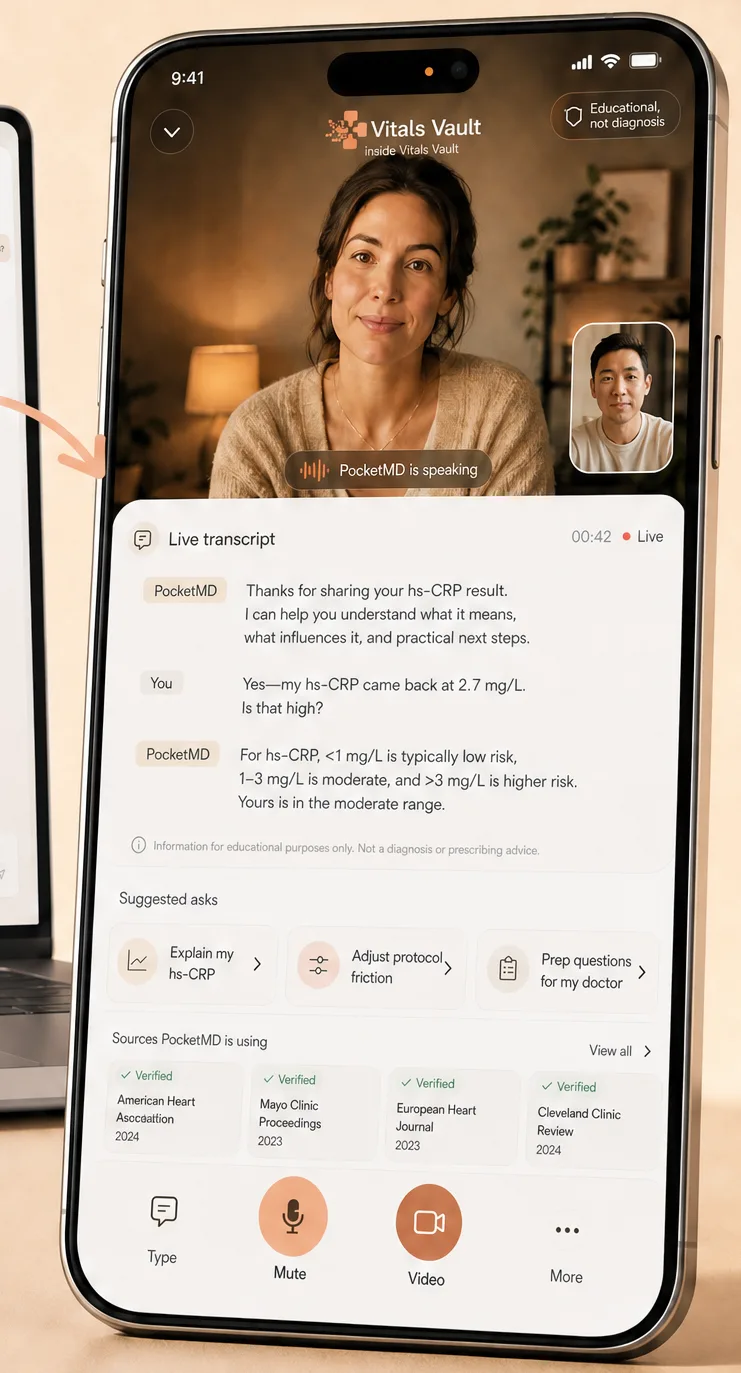
Ask for protocols, nutrition plans, supplement stacks, and education—context-aware suggestions powered by your labs and goals (beta experience).
Order online
Add HbA1c (Blood Sugar Average) to your cart and check out. No doctor referral is required.
Visit a Quest lab
Provide your blood sample at a Quest Diagnostics location. Appointments can be scheduled after checkout.
Review in Vitals Vault
Results in about 3 days. They stay in your Vitals Vault account for trends and follow-up.
No special preparation is usually needed unless noted at checkout.
This order includes the lab markers used for HbA1c (Blood Sugar Average) and reported in your Vitals Vault account.
Results
Results in about 3 days
HSA/FSA
Accepted
Who takes it
Must be taken by the purchaser
Preparation
No special preparation needed unless noted at checkout.
It estimates your average blood sugar over ~3 months and converts it to eAG; order through Vitals Vault and test at a nearby Quest location.





Hemoglobin A1c (HbA1c) with eAG is a blood test that summarizes your average blood sugar over the last couple of months, not just what your glucose happened to be at one moment.
It is commonly used to screen for prediabetes and diabetes, and it is also one of the main ways to track how well a treatment plan is working over time.
The “eAG” part stands for estimated average glucose. It converts your A1c percentage into a number that looks like a typical glucose reading (mg/dL), which can make the result easier to relate to day-to-day patterns.
You may want an HbA1c with eAG test if you are trying to understand whether your blood sugar has been running high over time, especially if you have risk factors like a family history of type 2 diabetes, a history of gestational diabetes, polycystic ovary syndrome (PCOS), higher waist circumference, high blood pressure, abnormal cholesterol, or a more sedentary routine.
Testing can also be useful when you have symptoms that could fit blood sugar problems but are not specific, such as increased thirst, frequent urination, blurry vision, slow-healing cuts, recurrent yeast infections, or unexplained fatigue. Because these symptoms overlap with many other issues, the value of A1c is that it adds an objective, longer-term view.
If you already have diabetes or prediabetes, A1c is a practical way to monitor whether your current plan is working. It can help you and your clinician decide whether to adjust nutrition, activity, weight-loss strategies, or medications.
This test supports clinician-directed care and shared decision-making, but it cannot diagnose the cause of abnormal blood sugar by itself.
HbA1c is measured in a CLIA-certified lab; eAG is a calculated value based on your HbA1c and should be interpreted alongside your overall clinical picture.
from $19.99 at Quest Diagnostics
Results in days
Clear next steps
HSA / FSA
Vitals Vault lets you order an HbA1c with eAG test directly, then complete your blood draw at a nearby Quest location. It is a straightforward option when you want a clear baseline, you are checking progress after lifestyle changes, or you are confirming whether a prior result is trending in the right direction.
After your results post, you can use PocketMD to ask practical questions like what your number suggests, how soon retesting makes sense, and which companion labs can clarify the “why” behind a change. That is especially helpful when your A1c and your fingerstick or CGM readings do not seem to match.
If you are building a broader plan, you can also add related tests through Vitals Vault so your next step is based on data rather than guesswork.
Hemoglobin A1c (HbA1c) is a measure of how much glucose has attached to hemoglobin inside your red blood cells. Because red blood cells circulate for about 3 months, HbA1c reflects your average blood sugar over that time window, weighted a bit more toward the most recent few weeks.
The “with eAG” version includes estimated average glucose (eAG), which is calculated from your A1c result. eAG translates your A1c percentage into a glucose number (often reported in mg/dL in the U.S.) that resembles the readings you might see from a glucose meter or continuous glucose monitor.
HbA1c is not the same as fasting glucose. Fasting glucose is a point-in-time measurement, while A1c is a longer-term summary. Both can be useful, and sometimes they disagree—especially when something affects red blood cell turnover or hemoglobin.
A1c is influenced by how long your red blood cells live and how much glucose they are exposed to. If your red blood cells live longer than average, A1c can read higher than your true average glucose. If they turn over faster, A1c can read lower. That is why your clinician may compare A1c with glucose readings and, in some cases, use alternative markers.
Many people find it easier to think in glucose numbers than percentages. eAG is a convenience conversion, not a separate measurement, but it can help you connect your lab result to everyday patterns like post-meal spikes, overnight highs, or improved fasting readings.
A lower A1c generally means lower average glucose, which can be a good sign if it matches how you feel and what your day-to-day readings show. However, an unexpectedly low A1c can also happen when red blood cells are replaced more quickly than usual, which lowers the time available for glucose to attach to hemoglobin. If you have symptoms of low blood sugar, frequent lows on a meter/CGM, or a condition that affects blood counts, it is worth reviewing the result with your clinician rather than assuming it is “better.”
An in-range A1c suggests your average glucose over the past few months is within the expected range for the lab’s reference interval and your clinical situation. If you are screening, this can be reassuring, but it does not rule out short-term spikes after meals or early insulin resistance. If you are monitoring diabetes, “optimal” depends on individualized goals, including your age, medications, hypoglycemia risk, and other health conditions.
A higher A1c means your blood sugar has been elevated on average over recent weeks to months. Depending on the level, it can be consistent with prediabetes or diabetes, or it can signal that a current plan is not adequately controlling glucose. A high result is a prompt to look for drivers such as diet patterns, weight changes, sleep and stress, medication effects, or missed doses, and to confirm with follow-up testing when appropriate.
Anything that changes red blood cell lifespan can shift A1c up or down without a true change in average glucose. Examples include iron deficiency anemia, recent blood loss, hemolytic anemia, pregnancy-related changes, kidney disease, and recent transfusion. Certain hemoglobin variants can also interfere with some assay methods. If your A1c does not match your home glucose data, ask your clinician whether a repeat A1c, a fasting glucose, an oral glucose tolerance test, or a short-term marker like fructosamine could better reflect your current control.
No. HbA1c is not significantly affected by what you ate that day, so fasting is not usually required. If you are combining it with other labs (like fasting glucose or lipids), your order instructions may still recommend fasting.
Many labs use commonly accepted cutoffs: A1c below 5.7% is typically considered normal, 5.7% to 6.4% is often labeled prediabetes, and 6.5% or higher on repeat testing can support a diabetes diagnosis. Your clinician may interpret your number differently based on your history, pregnancy status, and any conditions that affect red blood cells.
eAG stands for estimated average glucose. It is calculated from your A1c and reported in glucose units (often mg/dL). It is meant to help you translate an A1c percentage into a number that resembles everyday glucose readings.
A common approach is every 3 months when you are making changes or adjusting medications, because that is enough time to see a meaningful shift. If your results are stable and you are screening rather than treating diabetes, your clinician may recommend less frequent testing, such as every 6–12 months, depending on risk.
A1c reflects an average over time, while fingersticks and CGM show moment-to-moment values and may miss highs or lows depending on when you check. Differences can also happen when red blood cell lifespan is altered (for example, iron deficiency anemia or recent blood loss) or when there is assay interference from certain hemoglobin variants. If the mismatch is large, it is reasonable to discuss confirmatory testing.
A1c can be helpful early in pregnancy to identify previously unrecognized diabetes, but it is not the preferred test for diagnosing gestational diabetes later in pregnancy. Because blood volume and red blood cell turnover change during pregnancy, your clinician may rely more on glucose testing (including an oral glucose tolerance test) for diagnosis and management.
Purchase online through Vitals Vault. A licensed clinician reviews and approves your order, then you receive a digital requisition for a Quest Diagnostics blood draw.
Samples are collected in person at Quest Diagnostics locations nationwide. After checkout you can schedule your visit at a convenient site.
Most results in 3–5 business days. You can view them securely in your Vitals Vault account.
No separate referral appointment is required. Clinician review is included in the online order flow.
Yes. Eligible HSA/FSA cards can be used at checkout for qualifying lab orders.
Results are available in your secure Vitals Vault account. You control who you share them with, subject to applicable law.
Blood glucose shows the amount of sugar in your blood at a single moment. A1c (hemoglobin A1c) estimates your average blood sugar over roughly the past 8–12 weeks. Comparing them helps explain whether your long-term average lines up with your fasting glucose on draw day.
It helps you understand how this marker fits into your broader metabolic picture, with results tracked in your Vitals Vault account.
Elevated values can signal higher metabolic risk. Many people start with nutrition, activity, sleep, and weight management, then retest and review results with a clinician. This test is educational and does not replace medical advice or diagnosis.
Your sample is processed at CLIA-certified Quest Diagnostics laboratories. Results should still be interpreted with a qualified clinician alongside your history, symptoms, and other labs.
Consumer-initiated testing through Vitals Vault is limited to adults 18+ so ordering and interpretation stay aligned with clinical best practices for this channel.