01
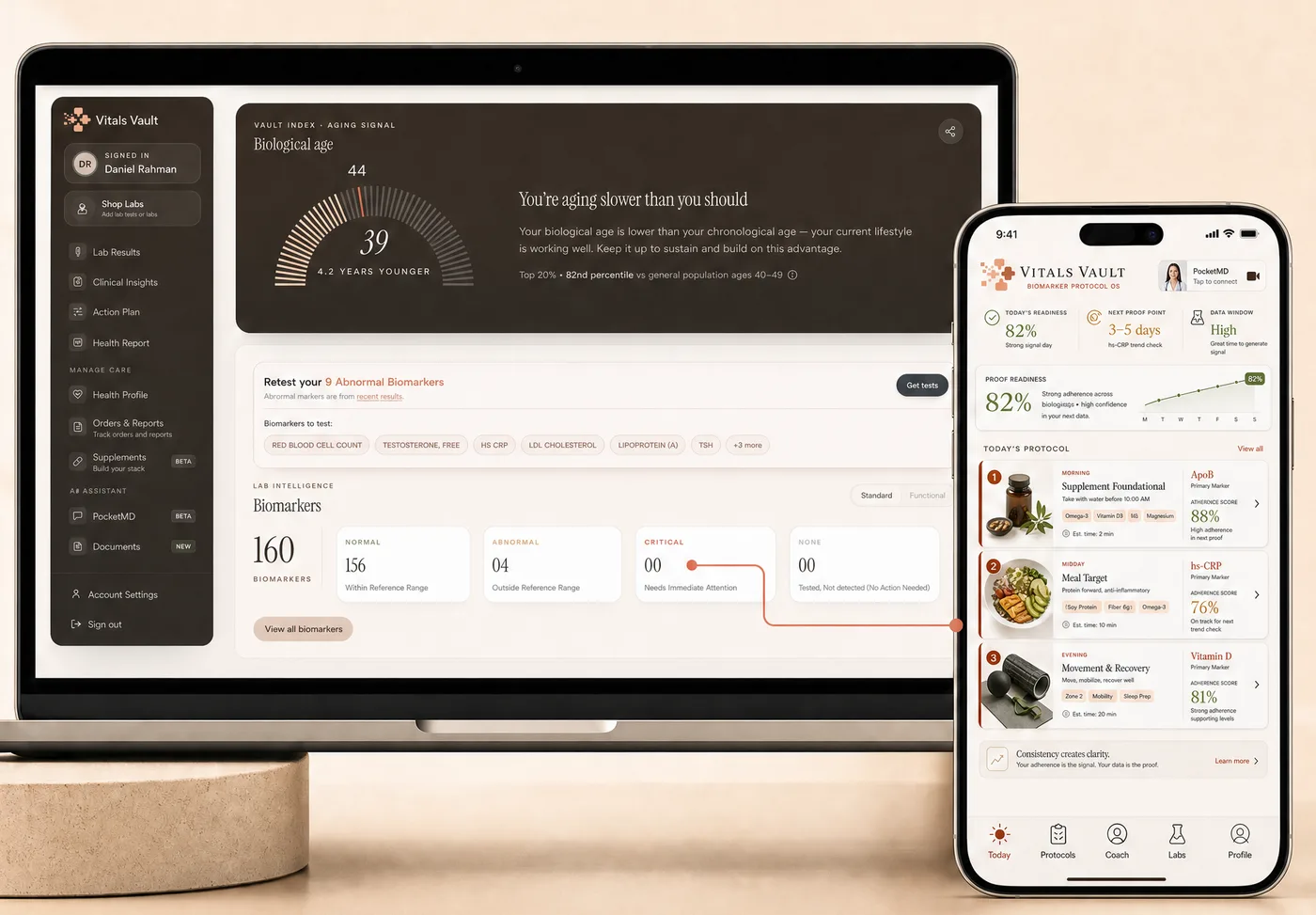
Biological age
Find out if your body is aging faster or slower than your actual age — and see how you rank against the general population.
39
Biological age
44
Actual age
4.2
Years younger
Ferritin (Iron Stores)
Results in about 4 days
Ferritin test (iron stores): what it measures and how to read your result. A ferritin test estimates your iron stores and helps explain fatigue or anemia risk, with convenient ordering and Quest lab access via Vitals Vault.
Ferritin is one of the most useful labs for understanding your body’s iron reserves. While “iron” gets a lot of attention, ferritin often tells the more practical story: whether you have enough stored iron to keep up with daily needs. A ferritin test can help explain symptoms like fatigue, reduced exercise tolerance, hair shedding, restless legs, or frequent headaches, especially when your complete blood count (CBC) looks “normal.” It is also commonly used to evaluate anemia, monitor iron repletion, or investigate unexpectedly high iron-related markers. Your ferritin result is easiest to interpret alongside a few companion tests (like serum iron, transferrin/TIBC, and transferrin saturation) and your personal context, including inflammation, infection, liver health, and recent iron supplementation.
What to expect before and at your draw.
Sample Type
Blood
Collection Method
In person at a Quest Diagnostics location
Age
18+
This order includes the lab markers used for Ferritin (Iron Stores).
Ferritin
Included in this Quest Diagnostics order and reported in your Vitals Vault account.
Order Ferritin (Iron Stores) online.
Visit a Quest Diagnostics location near you for your blood draw. Appointments can be scheduled after checkout.
View easy-to-read results in your Vitals Vault account, with trends and a personalized action plan.
Included with every package
Function Health shows you numbers. Vitals Vault connects them — ratios, patterns, and a personalized action plan grounded in functional medicine.
Find out if your body is aging faster or slower than your actual age — and see how you rank against the general population.
39
Biological age
44
Actual age
4.2
Years younger
Turn lab data into what to do next—clear guidance on follow-ups, lifestyle context, and add-on testing when you need to go deeper. Make the healthy choice the obvious one.
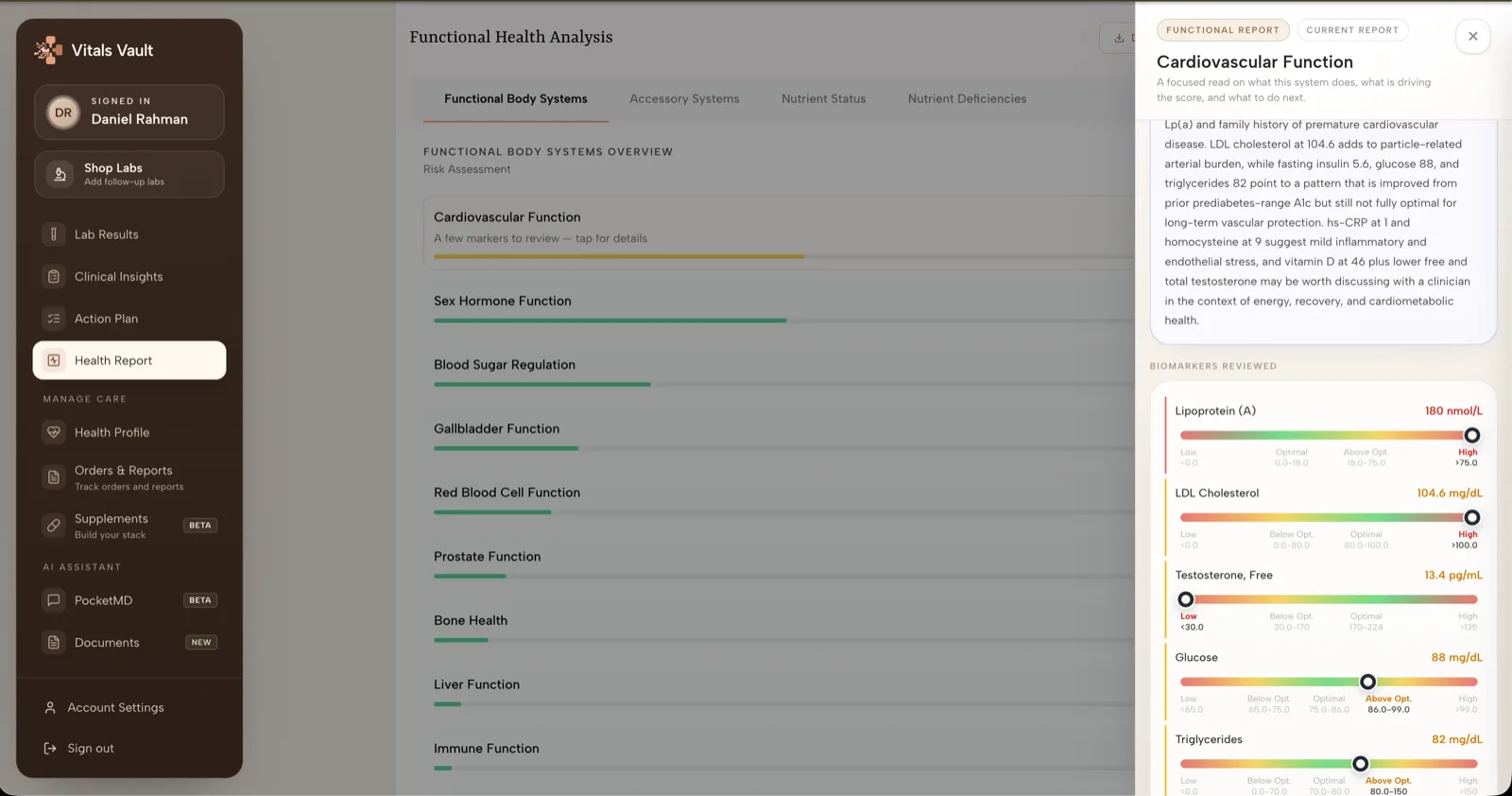
A personalized, plain-language walkthrough of your abnormal markers—reference ranges, pattern context, and what to watch next, grounded in your actual labs.
Personalized Insights
Clear Explanations
Actionable guidance
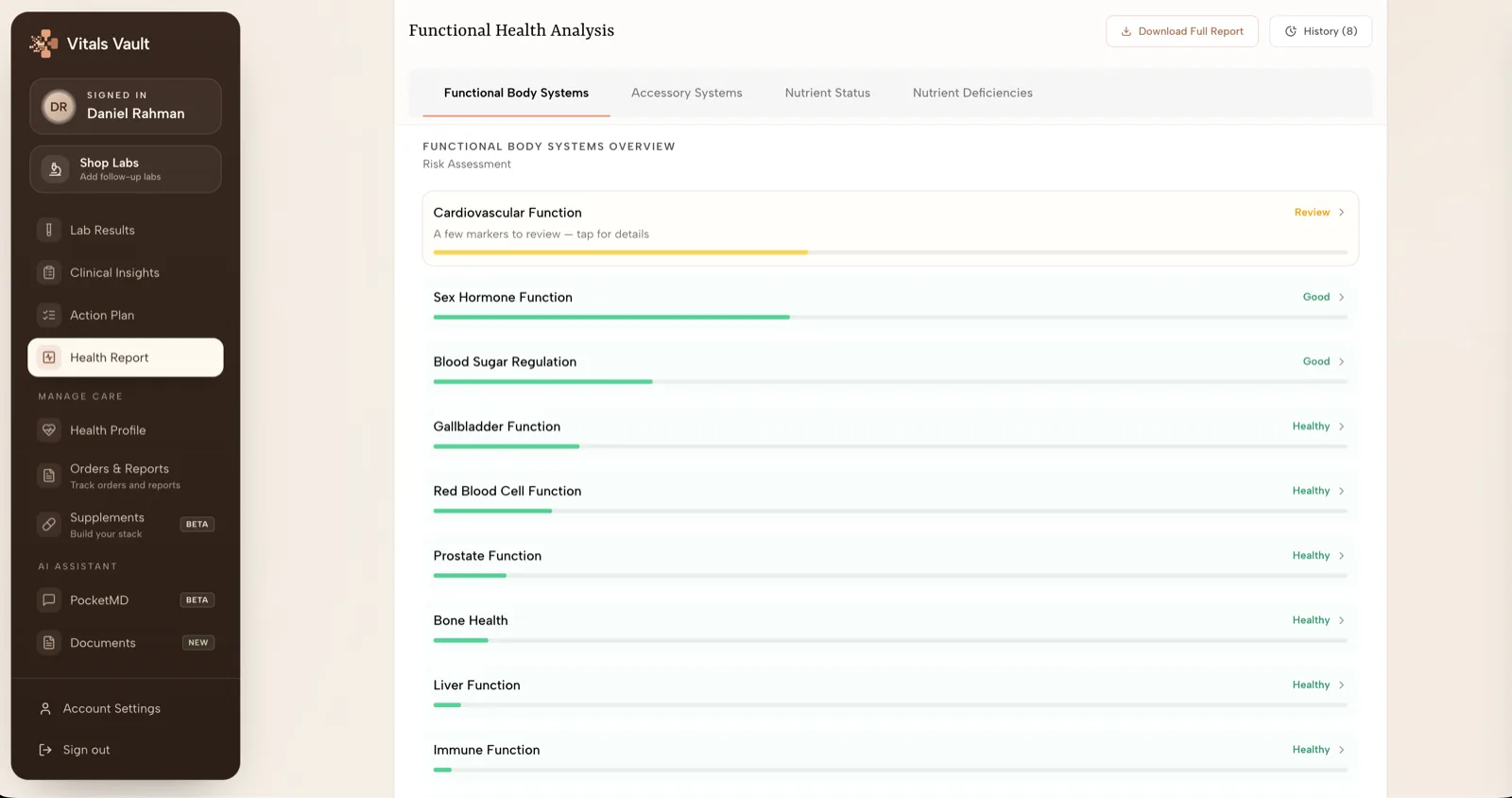
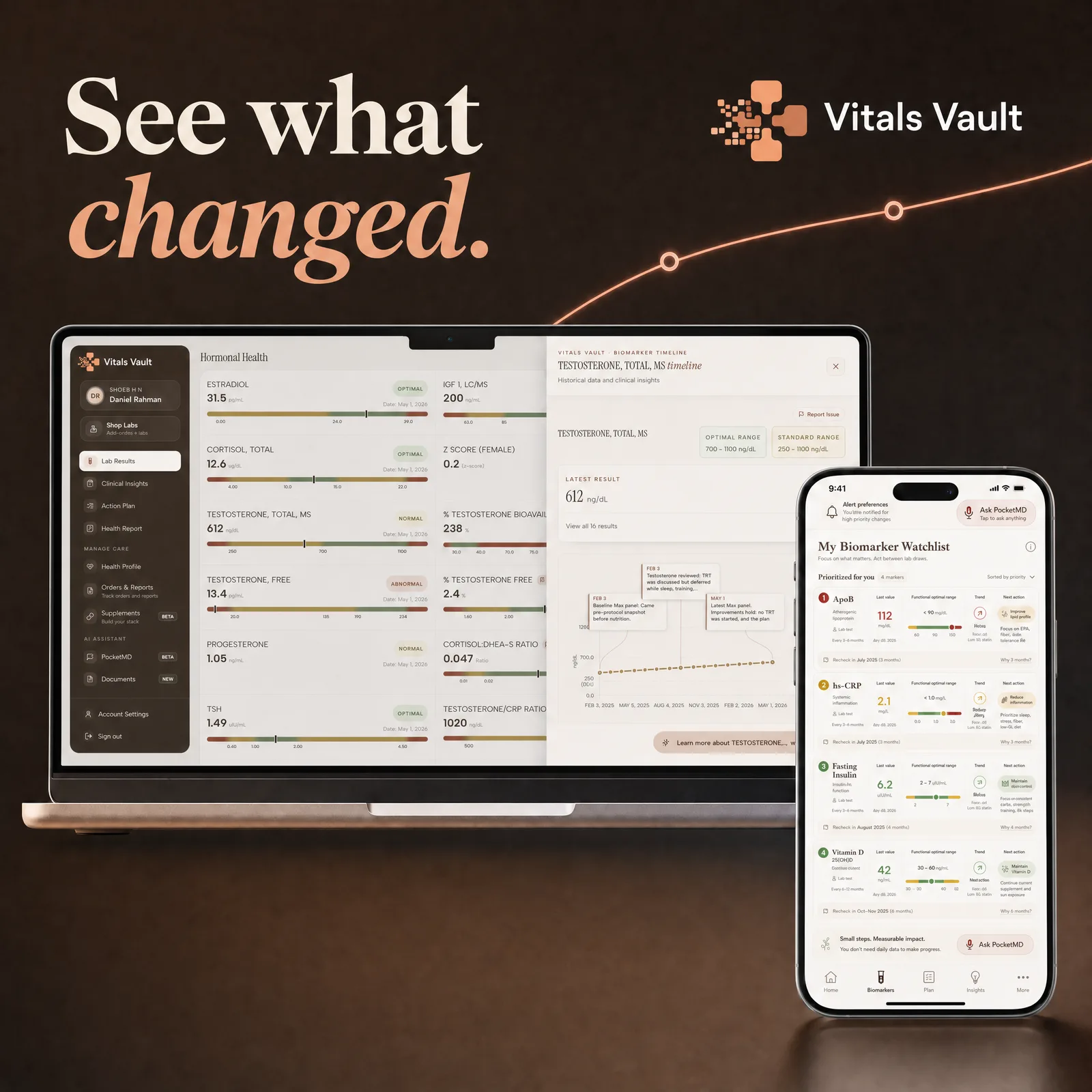
Explore your body systems with clear risk context — refresh your report, download the full PDF, and monitor hormones, heart, bone, and more in one place.
Explore hundreds of tests and panels, filter by concern, and manage your cart—member-exclusive pricing with quick checks and full-body options in one flow.
Wide test selection
300+ tests & panels available
Smart filtering
Find tests by symptoms or goals
Seamless ordering
Add to cart and manage easily
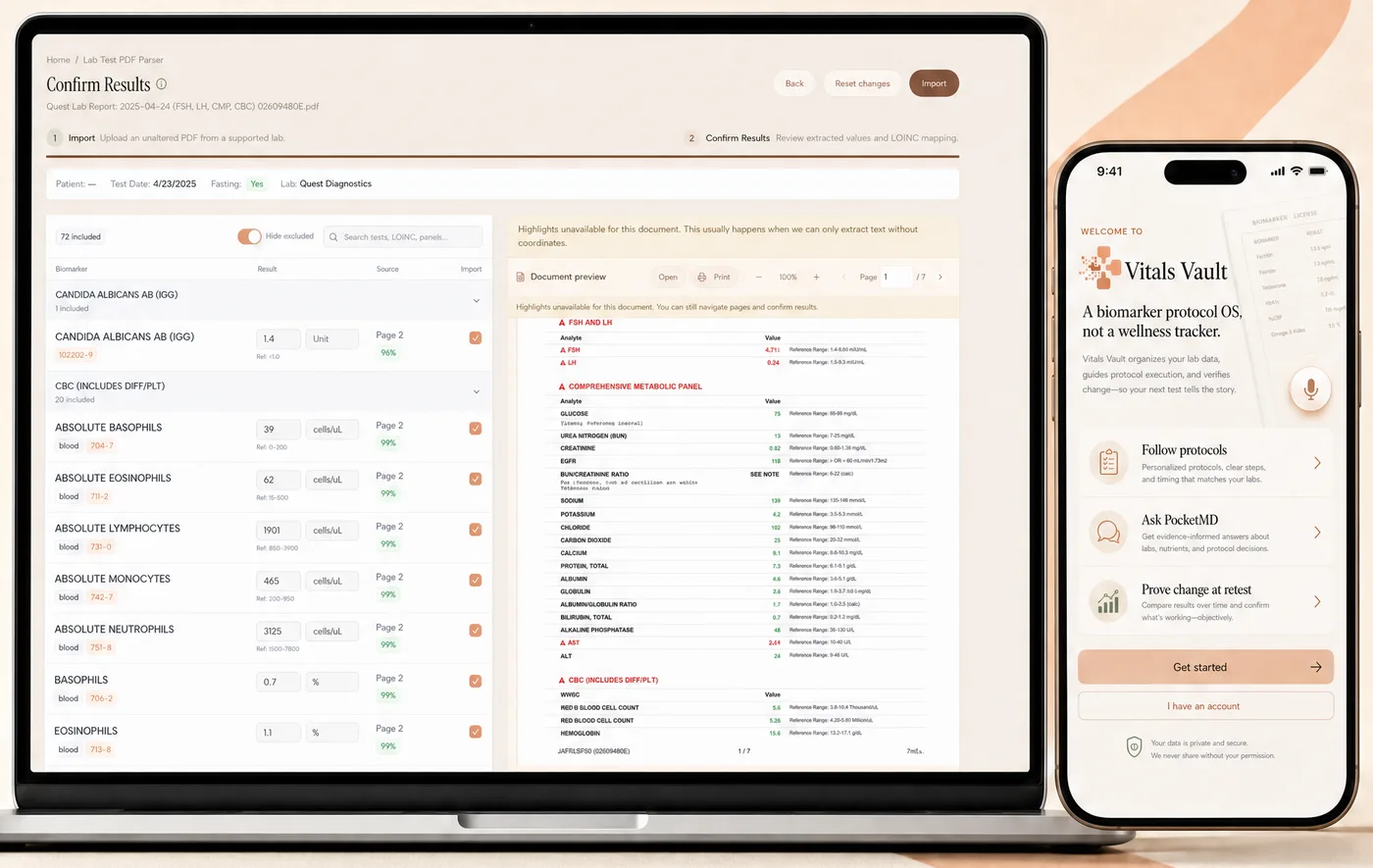
Upload past lab reports, search your documents, and keep appointments and results organized—our AI can extract biomarkers from PDFs so everything lives in one dashboard.
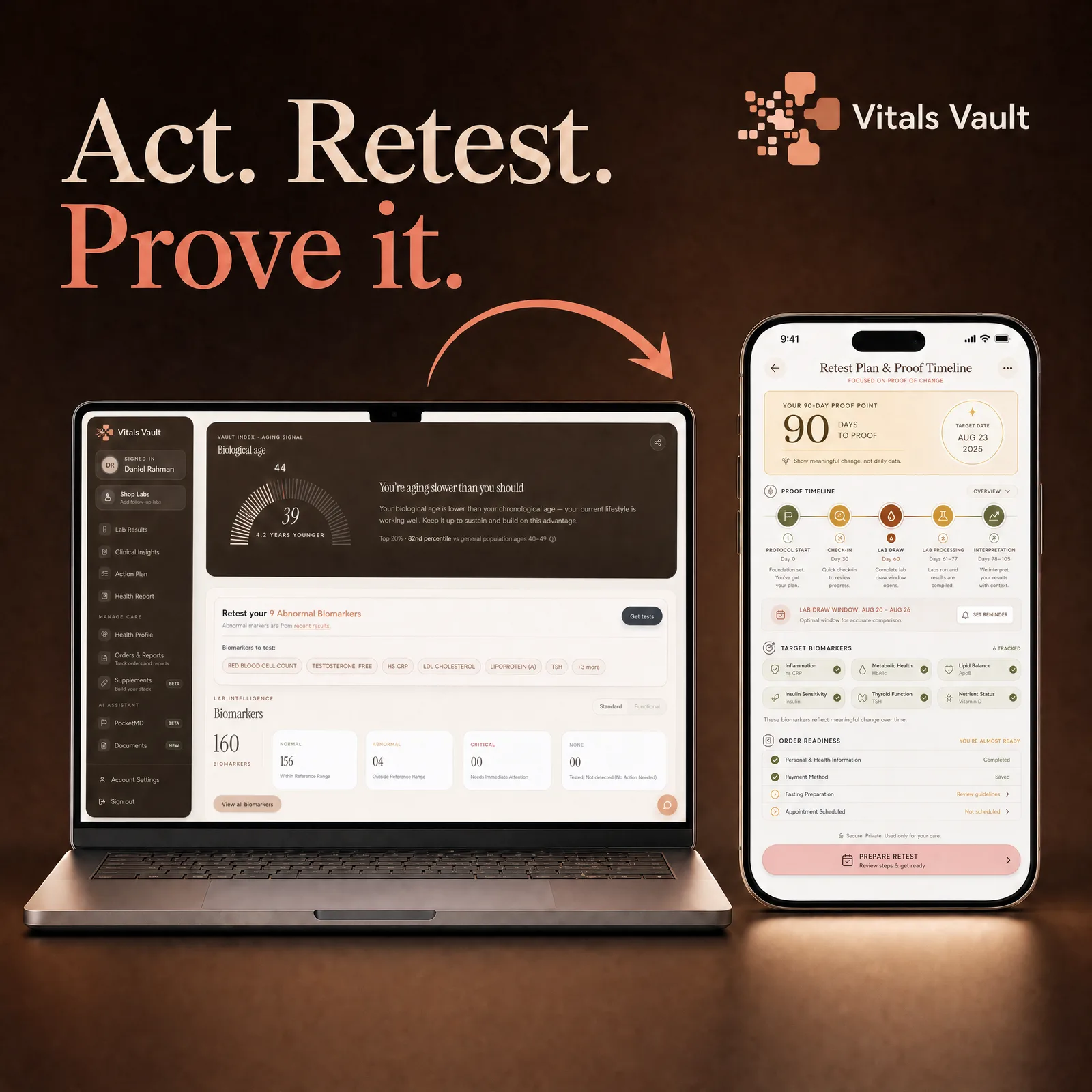
Browse longevity, nutrition, supplement, and movement protocols—structured plans you can follow with clear habits, labs, and targets tied to your profile.
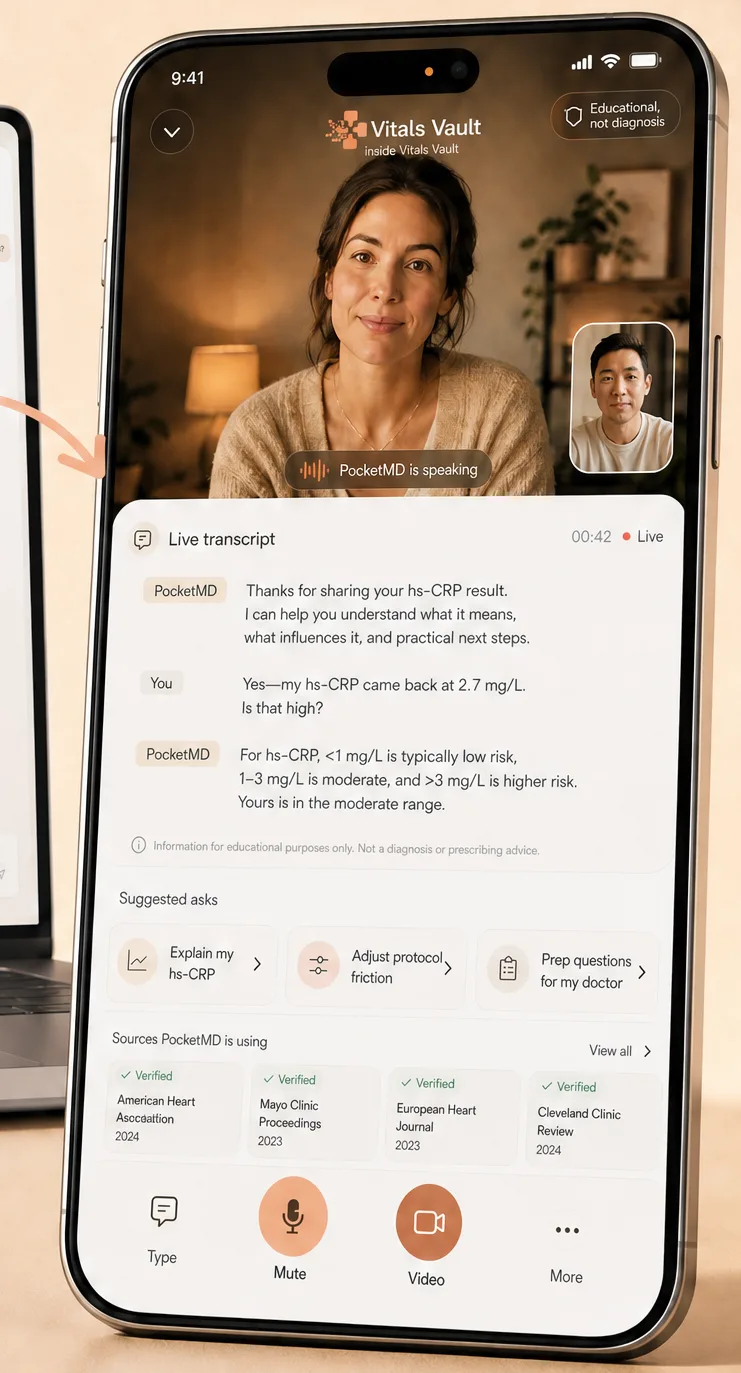
Ask for protocols, nutrition plans, supplement stacks, and education—context-aware suggestions powered by your labs and goals (beta experience).
Order online
Add Ferritin (Iron Stores) to your cart and check out. No doctor referral is required.
Visit a Quest lab
Provide your blood sample at a Quest Diagnostics location. Appointments can be scheduled after checkout.
Review in Vitals Vault
Results in about 4 days. They stay in your Vitals Vault account for trends and follow-up.
No special preparation is usually needed unless noted at checkout.
This order includes the lab markers used for Ferritin (Iron Stores) and reported in your Vitals Vault account.
Results
Results in about 4 days
HSA/FSA
Accepted
Who takes it
Must be taken by the purchaser
Preparation
No special preparation needed unless noted at checkout.
A ferritin test estimates your iron stores and helps explain fatigue or anemia risk, with convenient ordering and Quest lab access via Vitals Vault.


Ferritin is one of the most useful labs for understanding your body’s iron reserves. While “iron” gets a lot of attention, ferritin often tells the more practical story: whether you have enough stored iron to keep up with daily needs.
A ferritin test can help explain symptoms like fatigue, reduced exercise tolerance, hair shedding, restless legs, or frequent headaches, especially when your complete blood count (CBC) looks “normal.” It is also commonly used to evaluate anemia, monitor iron repletion, or investigate unexpectedly high iron-related markers.
Your ferritin result is easiest to interpret alongside a few companion tests (like serum iron, transferrin/TIBC, and transferrin saturation) and your personal context, including inflammation, infection, liver health, and recent iron supplementation.
You may benefit from a ferritin test if you have symptoms that could reflect low iron stores, such as persistent fatigue, shortness of breath with exertion, reduced stamina, dizziness, brittle nails, hair shedding, or restless legs—especially if these symptoms have lingered despite adequate sleep and nutrition.
Ferritin is also commonly ordered when you have anemia (or borderline anemia) on a CBC, heavy menstrual bleeding, a history of frequent blood donation, a vegetarian/vegan diet without careful iron planning, gastrointestinal symptoms that could affect absorption, or pregnancy/postpartum concerns. In these situations, ferritin helps distinguish true iron deficiency from other causes of low hemoglobin.
On the other side, a ferritin test can be useful if prior labs show high iron indices, if you have unexplained elevations in liver enzymes, or if you have chronic inflammatory conditions. Ferritin can rise as part of an inflammatory response, so a high value does not automatically mean “too much iron.”
Testing supports clinician-directed care and shared decision-making. Your result should be interpreted with your symptoms, medical history, and related labs rather than used as a standalone diagnosis.
Ferritin is measured from a blood sample in a CLIA-certified laboratory; results can vary by method and should be interpreted in clinical context rather than as a diagnosis on their own.
from $18.99 at Quest Diagnostics
Results in days
Clear next steps
HSA / FSA
If you are trying to make sense of fatigue, anemia risk, or iron supplementation, Vitals Vault makes it straightforward to order ferritin and related labs without waiting for a separate appointment just to get the requisition.
After your blood draw, you can review your ferritin result in a clear, biomarker-focused format and use PocketMD to ask practical follow-up questions—like what companion tests matter most, what patterns suggest low iron stores versus inflammation, and when a retest is reasonable.
If your ferritin result raises new questions, you can expand to a broader iron workup or trend the marker over time so you are not making decisions from a single snapshot.
Ferritin is a protein that stores iron inside your cells. A ferritin blood test measures the amount of ferritin circulating in your blood, which usually reflects how much iron your body has in reserve.
Iron is essential for making hemoglobin (the oxygen-carrying protein in red blood cells), supporting muscle function, and fueling many cellular processes. When your intake or absorption does not keep up with losses, your body typically draws down stored iron first. That is why ferritin can be low even when your hemoglobin is still within range.
Ferritin is also an “acute phase reactant,” meaning it can rise during inflammation, infection, or tissue injury. In those settings, ferritin may look normal or high even if your usable iron is not optimal. This is one reason ferritin is best interpreted with other iron studies and, when relevant, inflammation markers.
Serum iron is the amount of iron circulating in your blood at that moment, and it can swing with recent meals, supplements, and time of day. Ferritin is more about reserves. It is common to see normal serum iron with low ferritin (early depletion), or low serum iron with normal/high ferritin when inflammation is limiting iron availability.
Transferrin is the main iron-transport protein, and transferrin saturation (TSAT) estimates how full that transport system is. Ferritin tells you about storage, while TSAT tells you about supply. Together, they help your clinician tell the difference between low stores, poor availability due to inflammation, and less common overload patterns.
Low ferritin usually means your iron stores are depleted or trending that way, even if your hemoglobin is still normal. This pattern is common with heavy menstrual bleeding, frequent blood donation, low dietary iron intake, or reduced absorption (for example, from gastrointestinal conditions). If ferritin is low, your clinician may look for the cause of iron loss and may pair ferritin with a CBC and iron studies to confirm the pattern and severity.
A ferritin value in the lab’s reference range often suggests you have adequate iron reserves, but “in range” is not always the same as “optimal for you.” If you have symptoms consistent with iron depletion, your clinician may still consider your ferritin alongside TSAT, hemoglobin, red blood cell indices, and inflammation markers. Trends matter: a steady decline over time can be more informative than a single mid-range result.
Clinical graph note: the optimal range is narrower than the standard lab range. Standard range: 16.00 - 232.00 ng/mL. Optimal range: 45.00 - 79.00 ng/mL.
High ferritin can reflect increased iron stores, but it is more commonly elevated due to inflammation, infection, liver disease, metabolic conditions, or heavy alcohol use. Because ferritin rises as part of the body’s inflammatory response, a high result does not automatically mean iron overload. Your clinician may check transferrin saturation, serum iron, TIBC, and sometimes liver-related labs to determine whether the pattern fits inflammation versus true excess iron.
Recent iron supplements or iron infusions can raise ferritin, and timing matters when you are monitoring treatment response. Acute illness, chronic inflammatory conditions, and liver injury can elevate ferritin independent of iron stores. Pregnancy, heavy menstrual bleeding, endurance training, and frequent blood donation can lower ferritin over time. Because labs use different methods and reference ranges, it helps to compare results from the same lab when you are trending.
A ferritin test is used to estimate your body’s stored iron. It is commonly ordered to evaluate fatigue, suspected iron deficiency, anemia, heavy menstrual bleeding, or to monitor how iron stores change after dietary changes or iron therapy.
Fasting is not always required for ferritin alone, but many clinicians prefer morning testing and may pair ferritin with other iron studies that can be affected by recent intake. If you are also checking serum iron and transferrin saturation, follow the collection instructions provided with your order.
Yes. Ferritin can drop before hemoglobin falls, because your body uses stored iron first. This is sometimes called iron deficiency without anemia, and it can still be associated with symptoms like fatigue, reduced exercise tolerance, or restless legs.
Ferritin can rise during inflammation, infection, or liver stress even when circulating iron is not elevated. In that situation, your clinician often looks at transferrin saturation, TIBC/transferrin, and sometimes inflammation markers to clarify whether the pattern suggests inflammation versus true iron overload.
Ferritin often changes over weeks to months, depending on how low your stores were, how well you absorb iron, and whether ongoing blood loss continues. Your clinician may recommend retesting on a schedule that matches your situation, rather than checking too soon when the trend may be hard to interpret.
Common companion tests include a CBC (to look at hemoglobin and red blood cell indices), serum iron, TIBC or transferrin, and transferrin saturation. If inflammation is a concern, your clinician may also consider an inflammation marker and liver-related labs to interpret ferritin more accurately.
Purchase online through Vitals Vault. A licensed clinician reviews and approves your order, then you receive a digital requisition for a Quest Diagnostics blood draw.
Samples are collected in person at Quest Diagnostics locations nationwide. After checkout you can schedule your visit at a convenient site.
Most results in 3–5 business days. You can view them securely in your Vitals Vault account.
No separate referral appointment is required. Clinician review is included in the online order flow.
Yes. Eligible HSA/FSA cards can be used at checkout for qualifying lab orders.
Results are available in your secure Vitals Vault account. You control who you share them with, subject to applicable law.
Blood glucose shows the amount of sugar in your blood at a single moment. A1c (hemoglobin A1c) estimates your average blood sugar over roughly the past 8–12 weeks. Comparing them helps explain whether your long-term average lines up with your fasting glucose on draw day.
It helps you understand how this marker fits into your broader metabolic picture, with results tracked in your Vitals Vault account.
Elevated values can signal higher metabolic risk. Many people start with nutrition, activity, sleep, and weight management, then retest and review results with a clinician. This test is educational and does not replace medical advice or diagnosis.
Your sample is processed at CLIA-certified Quest Diagnostics laboratories. Results should still be interpreted with a qualified clinician alongside your history, symptoms, and other labs.
Consumer-initiated testing through Vitals Vault is limited to adults 18+ so ordering and interpretation stay aligned with clinical best practices for this channel.