01
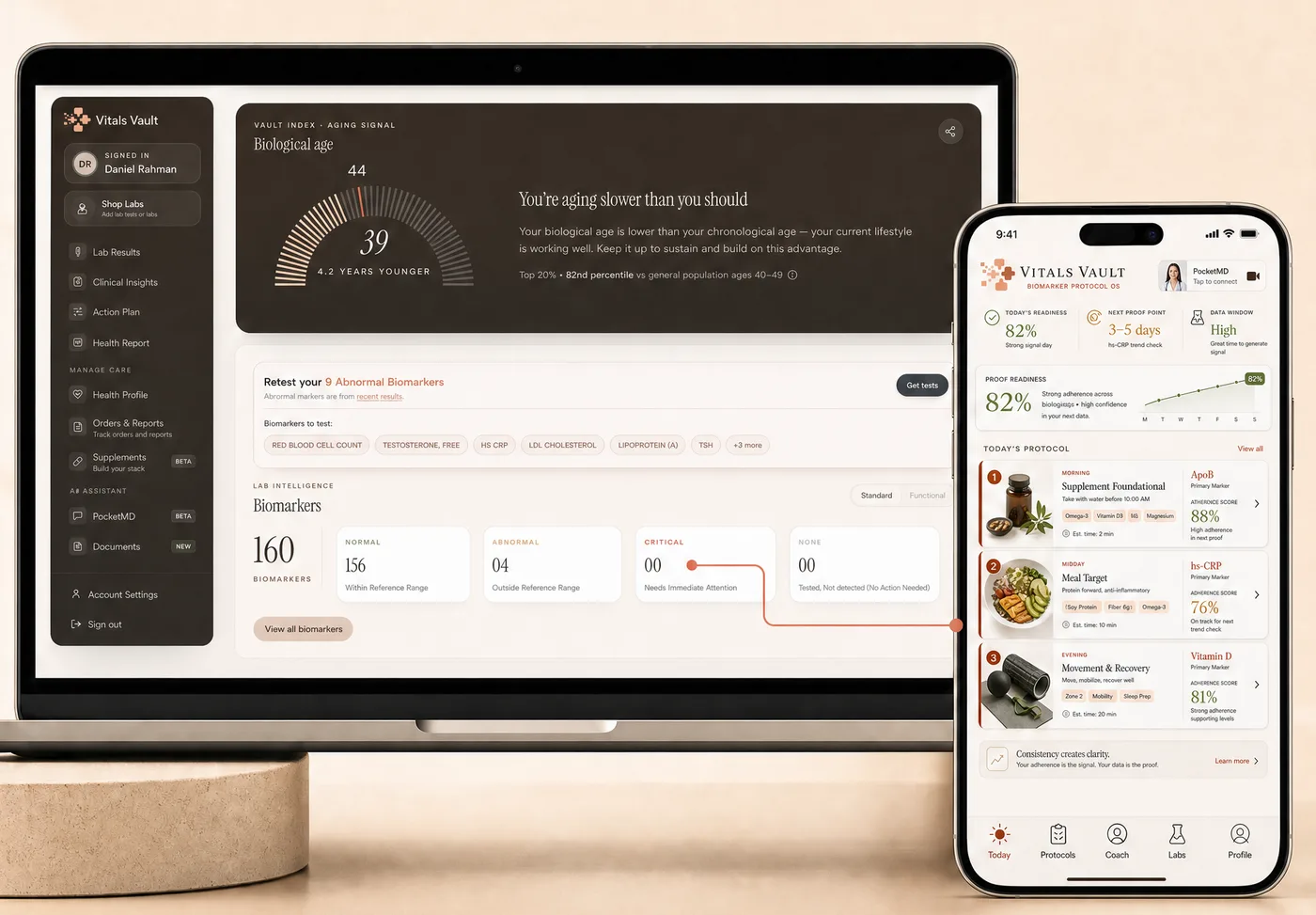
Biological age
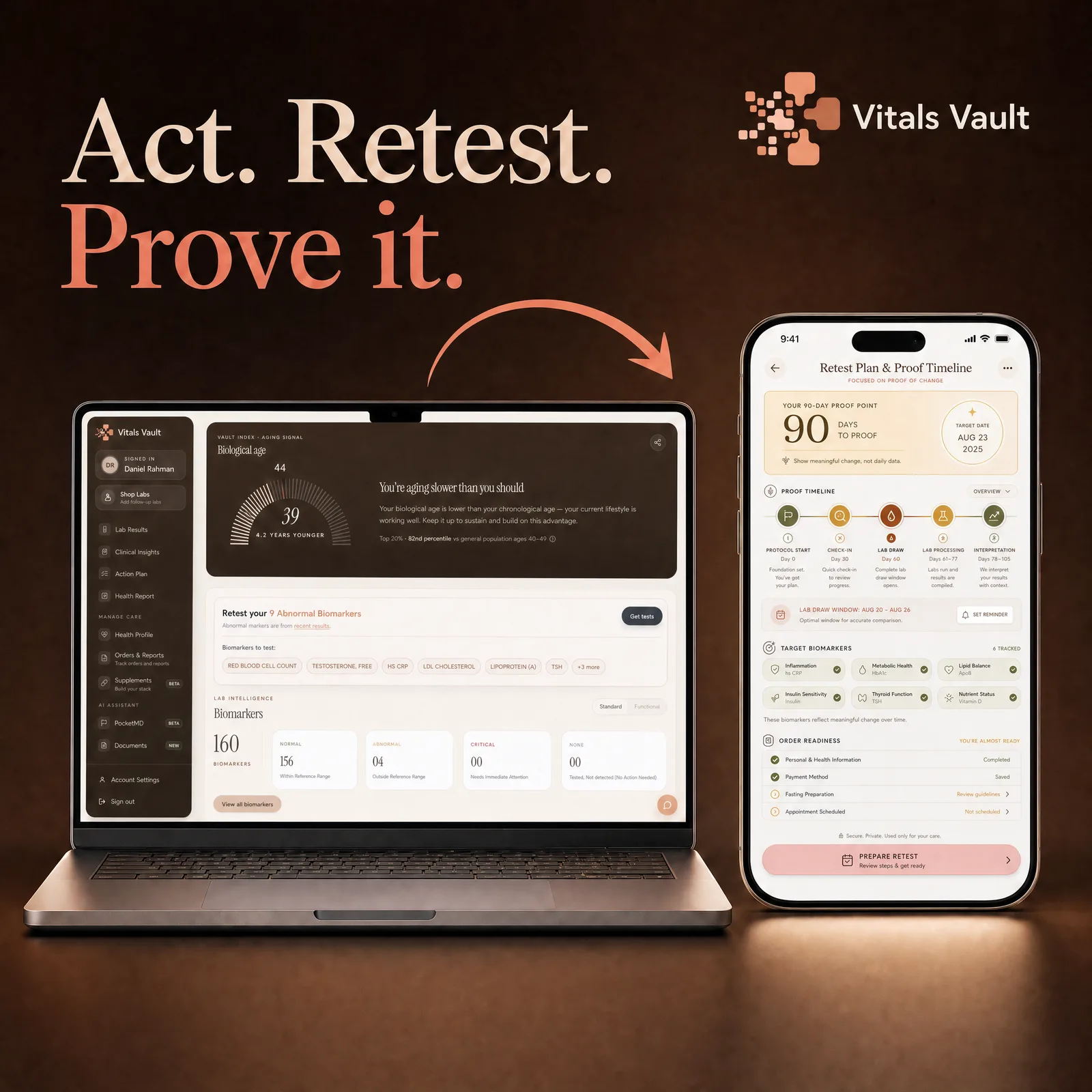
Find out if your body is aging faster or slower than your actual age — and see how you rank against the general population.
39
Biological age
44
Actual age
4.2
Years younger
Cystatin C with eGFR
Results in about 5 days
Cystatin C with estimated GFR (eGFR): what it tells you about kidney function. It estimates kidney filtration using cystatin C to refine eGFR when creatinine is unclear, with easy ordering and Quest lab access via Vitals Vault.
This test pairs a cystatin C blood level with an estimated glomerular filtration rate (eGFR) calculation to describe how well your kidneys are filtering. It is most useful when a creatinine-based eGFR may be misleading, such as if you have unusually high or low muscle mass, are older, or have results that do not match how you feel. Your number is not a diagnosis by itself, but it can help you and your clinician decide whether you need follow-up testing, medication adjustments, or a plan to protect kidney function over time.
What to expect before and at your draw.
Sample Type
Blood
Collection Method
In person at a Quest Diagnostics location
Age
18+
This order includes the lab markers used for Cystatin C with eGFR.
Cystatin C
Included in this Quest Diagnostics order and reported in your Vitals Vault account.
Egfr
Included in this Quest Diagnostics order and reported in your Vitals Vault account.
Order Cystatin C with eGFR online.
Visit a Quest Diagnostics location near you for your blood draw. Appointments can be scheduled after checkout.
View easy-to-read results in your Vitals Vault account, with trends and a personalized action plan.
Included with every package
Function Health shows you numbers. Vitals Vault connects them — ratios, patterns, and a personalized action plan grounded in functional medicine.
Find out if your body is aging faster or slower than your actual age — and see how you rank against the general population.
39
Biological age
44
Actual age
4.2
Years younger
Turn lab data into what to do next—clear guidance on follow-ups, lifestyle context, and add-on testing when you need to go deeper. Make the healthy choice the obvious one.
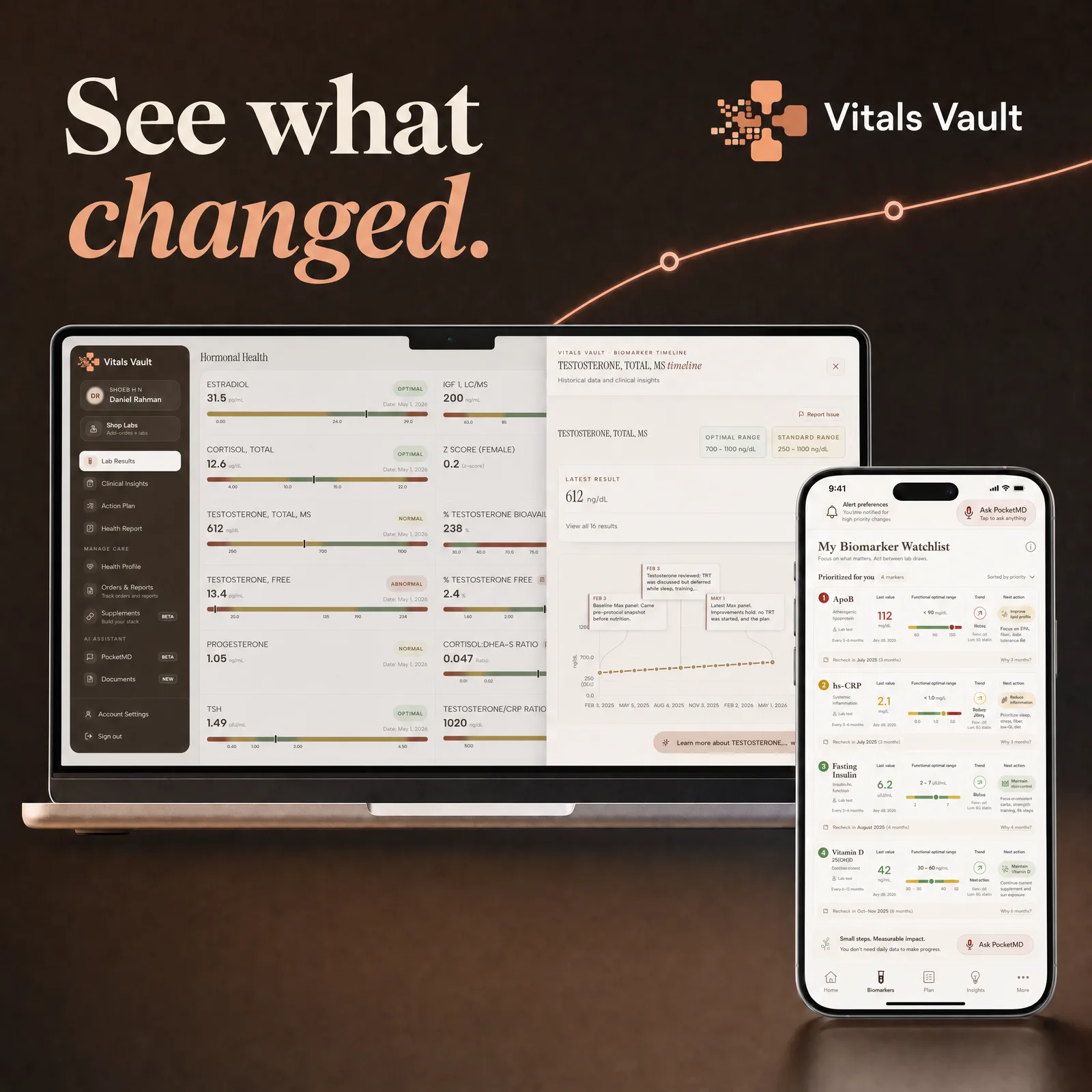
A personalized, plain-language walkthrough of your abnormal markers—reference ranges, pattern context, and what to watch next, grounded in your actual labs.
Personalized Insights
Clear Explanations
Actionable guidance
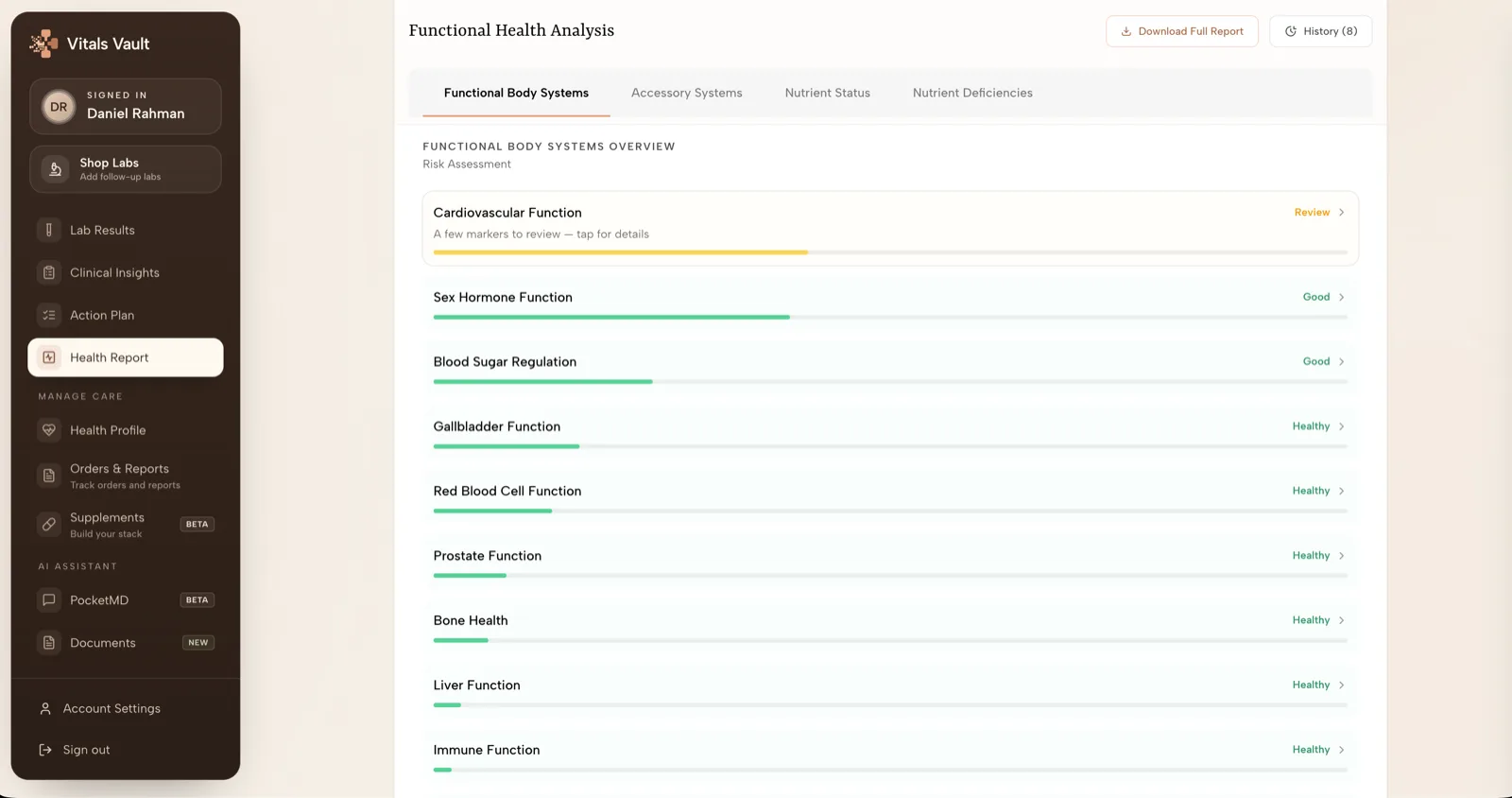
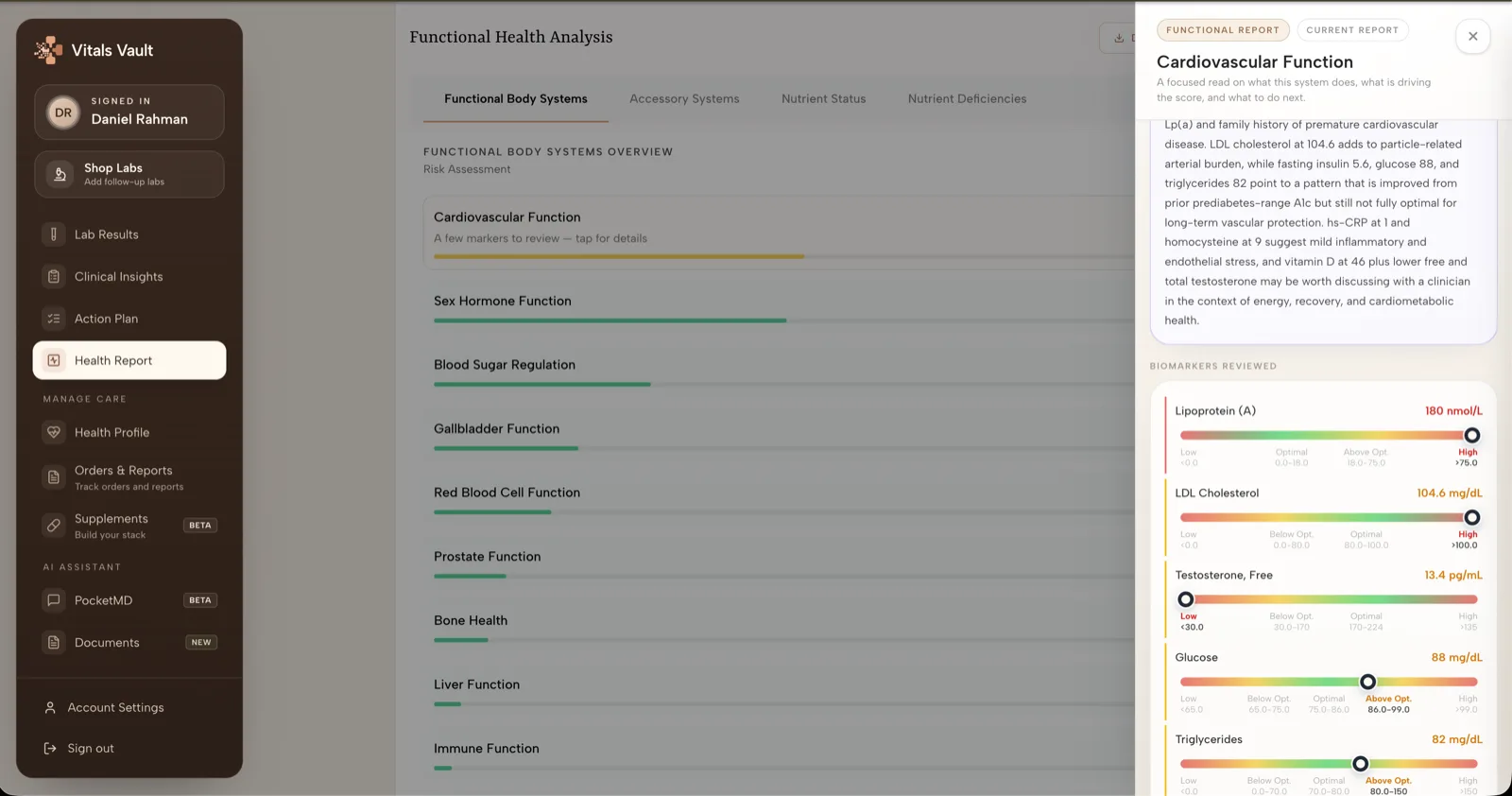
Explore your body systems with clear risk context — refresh your report, download the full PDF, and monitor hormones, heart, bone, and more in one place.
Explore hundreds of tests and panels, filter by concern, and manage your cart—member-exclusive pricing with quick checks and full-body options in one flow.
Wide test selection
300+ tests & panels available
Smart filtering
Find tests by symptoms or goals
Seamless ordering
Add to cart and manage easily
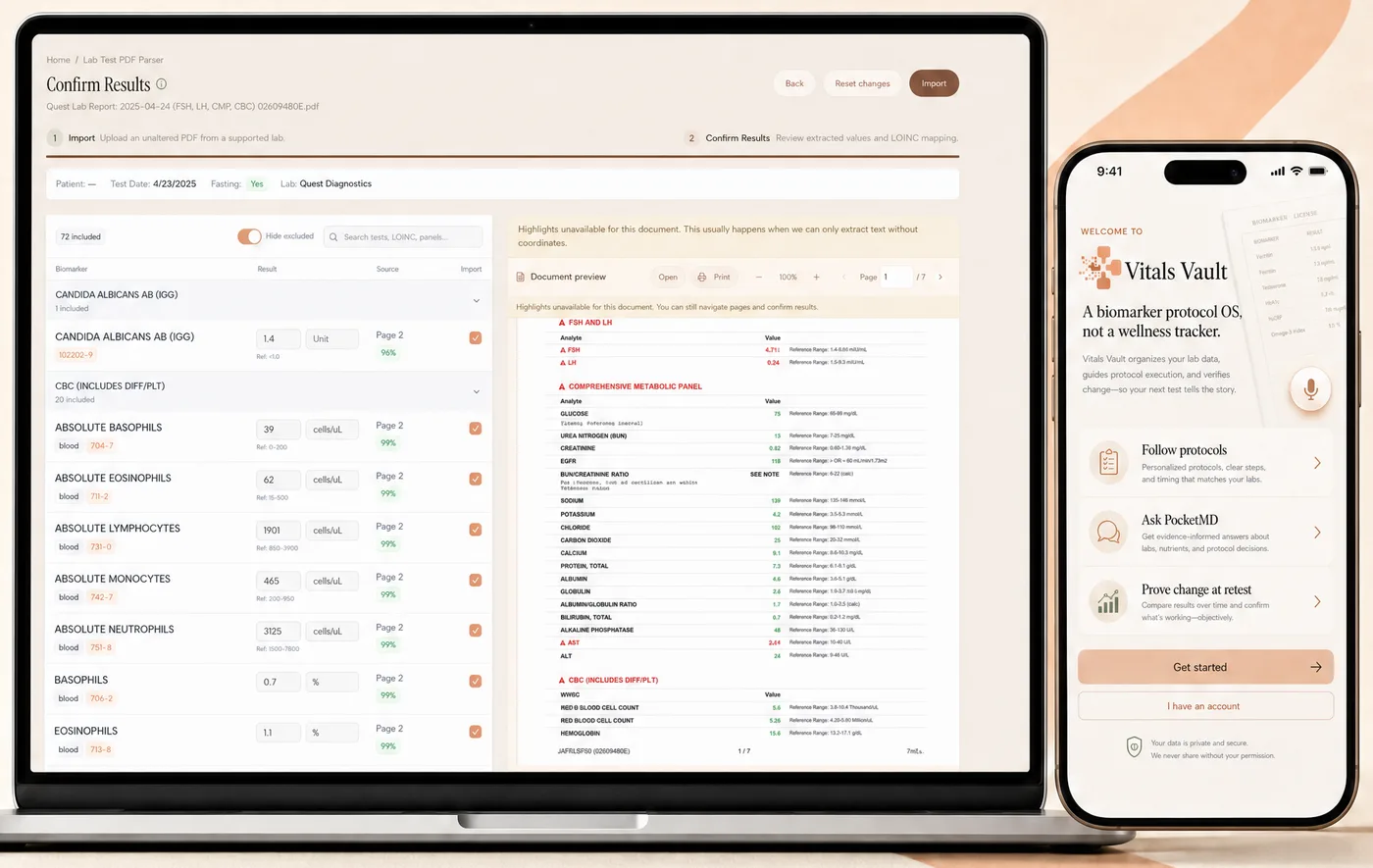
Upload past lab reports, search your documents, and keep appointments and results organized—our AI can extract biomarkers from PDFs so everything lives in one dashboard.
Browse longevity, nutrition, supplement, and movement protocols—structured plans you can follow with clear habits, labs, and targets tied to your profile.
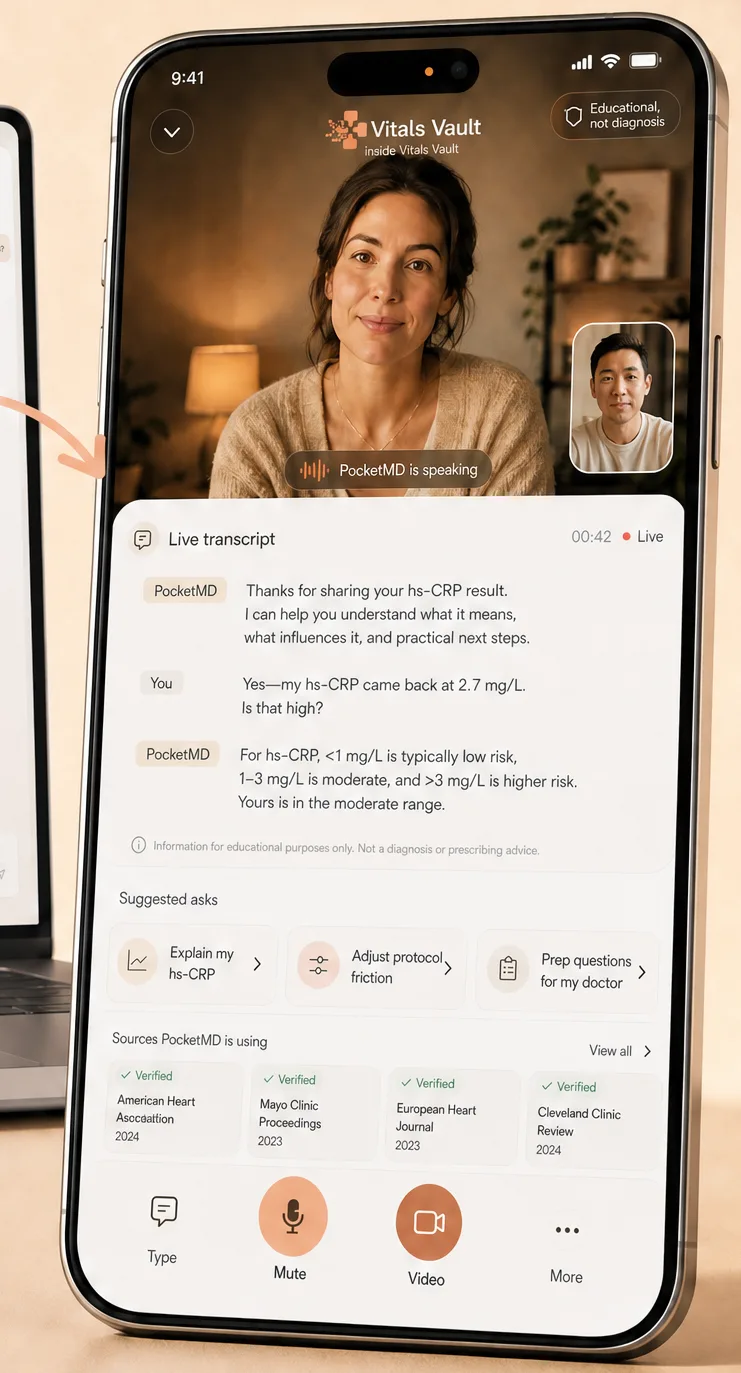
Ask for protocols, nutrition plans, supplement stacks, and education—context-aware suggestions powered by your labs and goals (beta experience).
Order online
Add Cystatin C with eGFR to your cart and check out. No doctor referral is required.
Visit a Quest lab
Provide your blood sample at a Quest Diagnostics location. Appointments can be scheduled after checkout.
Review in Vitals Vault
Results in about 5 days. They stay in your Vitals Vault account for trends and follow-up.
No special preparation is usually needed unless noted at checkout.
This order includes the lab markers used for Cystatin C with eGFR and reported in your Vitals Vault account.
Results
Results in about 5 days
HSA/FSA
Accepted
Who takes it
Must be taken by the purchaser
Preparation
No special preparation needed unless noted at checkout.
It estimates kidney filtration using cystatin C to refine eGFR when creatinine is unclear, with easy ordering and Quest lab access via Vitals Vault.





This test pairs a cystatin C blood level with an estimated glomerular filtration rate (eGFR) calculation to describe how well your kidneys are filtering.
It is most useful when a creatinine-based eGFR may be misleading, such as if you have unusually high or low muscle mass, are older, or have results that do not match how you feel.
Your number is not a diagnosis by itself, but it can help you and your clinician decide whether you need follow-up testing, medication adjustments, or a plan to protect kidney function over time.
You may want this test if you are trying to clarify kidney function and your creatinine-based eGFR feels “off” for your body. Creatinine is influenced by muscle mass, diet, and supplements, so two people with the same kidney function can have different creatinine results.
This test is also commonly used when you have risk factors for chronic kidney disease (CKD), such as diabetes, high blood pressure, cardiovascular disease, a family history of kidney disease, or long-term use of medications that can affect the kidneys (for example, some anti-inflammatories). It can be helpful if you have swelling, changes in urination, unexplained fatigue, or lab results like abnormal electrolytes that raise questions about filtration.
You may also consider it when medication dosing depends on kidney function, because a more accurate estimate can change what is considered a safe dose. If you are monitoring known CKD, cystatin C can add confidence when you are deciding whether a change is real or just day-to-day variation.
Testing supports clinician-directed care and follow-up planning. It is not meant for self-diagnosis, and it works best when interpreted alongside your symptoms, blood pressure, and other kidney markers.
Cystatin C is measured in a CLIA-certified laboratory, and the eGFR value is calculated from your result using validated equations; results should be interpreted with a clinician in context.
from $63.99 at Quest Diagnostics
Results in days
Clear next steps
HSA / FSA
If you want a clearer view of kidney filtration, you can order cystatin C with eGFR through Vitals Vault and complete your blood draw at a participating lab location.
After your results post, PocketMD can help you translate the numbers into plain language, flag common follow-up questions to ask, and suggest companion labs that often explain “why” an eGFR looks the way it does (such as urine albumin/creatinine or a urinalysis).
This is especially useful when you are comparing options, deciding whether you should retest, or preparing to review results with your clinician. You stay in control of timing, and you can trend results over time to see whether changes are persistent.
Cystatin C is a small protein made by most cells in your body at a fairly steady rate. Your kidneys filter it out of the blood, so when filtration slows, cystatin C tends to rise.
The “eGFR” in this test is an estimated glomerular filtration rate, which is a calculated number that describes how much blood your kidneys filter each minute, adjusted to a standard body surface area. When eGFR is calculated from cystatin C, it can be less sensitive to muscle mass than creatinine-based eGFR.
Clinically, cystatin C–based eGFR is often used as a confirmatory or clarifying test. It does not replace the full kidney workup, because filtration is only one part of kidney health, and urine findings can be just as important.
Creatinine comes from muscle metabolism, so very muscular people can look “worse” on creatinine, while people with low muscle mass can look “better” than they truly are. Cystatin C is generally less affected by muscle mass, which can make it a better fit when body composition is a major confounder.
eGFR is calculated from a blood marker plus factors such as age and sex, using population-based equations. It is a strong screening and monitoring tool, but it is not the same as a directly measured GFR test, which is usually reserved for special situations.
A lower cystatin C level usually corresponds to a higher estimated filtration rate, which is often reassuring. In many cases, it simply reflects normal kidney filtration.
If your eGFR looks unusually high, it can sometimes happen with “hyperfiltration,” which may be seen early in diabetes or with high protein intake, but it is not diagnosed from this test alone. Your clinician may look at blood pressure, urine albumin, and trends over time to decide whether it matters.
An in-range cystatin C with an eGFR that aligns with your age and health history generally suggests stable filtration. The most useful next step is often trend-based: comparing today’s result with prior results rather than focusing on a single number.
If you have CKD risk factors, “normal” filtration does not fully rule out early kidney stress, so urine testing (especially albumin/creatinine ratio) can still be important.
A higher cystatin C level typically means your kidneys are filtering less efficiently, which shows up as a lower eGFR. This can be temporary (for example, dehydration or an acute illness) or persistent, which raises concern for chronic kidney disease.
Your clinician will usually confirm whether the change persists, review medications and recent illnesses, and pair this result with other kidney markers such as creatinine, urine albumin, and urinalysis. If the eGFR is significantly reduced or dropping over time, follow-up may include imaging or referral depending on the full picture.
Cystatin C is less affected by muscle mass than creatinine, but it is not immune to confounders. Inflammation, thyroid dysfunction, smoking, and some medications (including corticosteroids) can shift cystatin C independent of filtration.
Hydration status and recent acute illness can also change kidney filtration temporarily, which is why repeat testing is often recommended when a result is unexpected. Finally, eGFR equations estimate kidney function and can be less precise at extremes of body size or in rapidly changing kidney function.
It can be more accurate for you when creatinine is biased by muscle mass, diet, or supplements. Many clinicians use cystatin C–based eGFR as a confirmatory test when creatinine eGFR is borderline or does not match your clinical picture. The best approach is often to interpret both along with urine albumin and urinalysis.
Fasting is usually not required for cystatin C. If your blood draw is bundled with other tests (like lipids or glucose), fasting instructions may come from those tests instead. Follow the instructions provided with your order.
eGFR is interpreted by category and trend, not a single universal “perfect” number. eGFR tends to decline with age, and a mildly reduced value may be monitored rather than treated as an emergency. Persistent reduction over 3 months, a downward trend, or abnormal urine albumin are common reasons your clinician may evaluate for CKD.
Retesting depends on why you checked it. If the result is unexpected or you were recently ill or dehydrated, your clinician may repeat it after you are stable. For ongoing monitoring (such as CKD risk or known CKD), intervals are often every few months to annually, guided by your trend and urine findings.
Yes. Dehydration can temporarily reduce kidney filtration, which may increase cystatin C and lower eGFR. That is why context matters, and why repeat testing after hydration and recovery is common when results are borderline.
Common companions include creatinine with creatinine-based eGFR, urine albumin/creatinine ratio (uACR), and a urinalysis to look for blood, protein, or signs of infection. Depending on your situation, electrolytes, bicarbonate, and blood pressure tracking can also help explain kidney-related risk.
Purchase online through Vitals Vault. A licensed clinician reviews and approves your order, then you receive a digital requisition for a Quest Diagnostics blood draw.
Samples are collected in person at Quest Diagnostics locations nationwide. After checkout you can schedule your visit at a convenient site.
Most results in 3–5 business days. You can view them securely in your Vitals Vault account.
No separate referral appointment is required. Clinician review is included in the online order flow.
Yes. Eligible HSA/FSA cards can be used at checkout for qualifying lab orders.
Results are available in your secure Vitals Vault account. You control who you share them with, subject to applicable law.
Blood glucose shows the amount of sugar in your blood at a single moment. A1c (hemoglobin A1c) estimates your average blood sugar over roughly the past 8–12 weeks. Comparing them helps explain whether your long-term average lines up with your fasting glucose on draw day.
It helps you understand how this marker fits into your broader metabolic picture, with results tracked in your Vitals Vault account.
Elevated values can signal higher metabolic risk. Many people start with nutrition, activity, sleep, and weight management, then retest and review results with a clinician. This test is educational and does not replace medical advice or diagnosis.
Your sample is processed at CLIA-certified Quest Diagnostics laboratories. Results should still be interpreted with a qualified clinician alongside your history, symptoms, and other labs.
Consumer-initiated testing through Vitals Vault is limited to adults 18+ so ordering and interpretation stay aligned with clinical best practices for this channel.