01
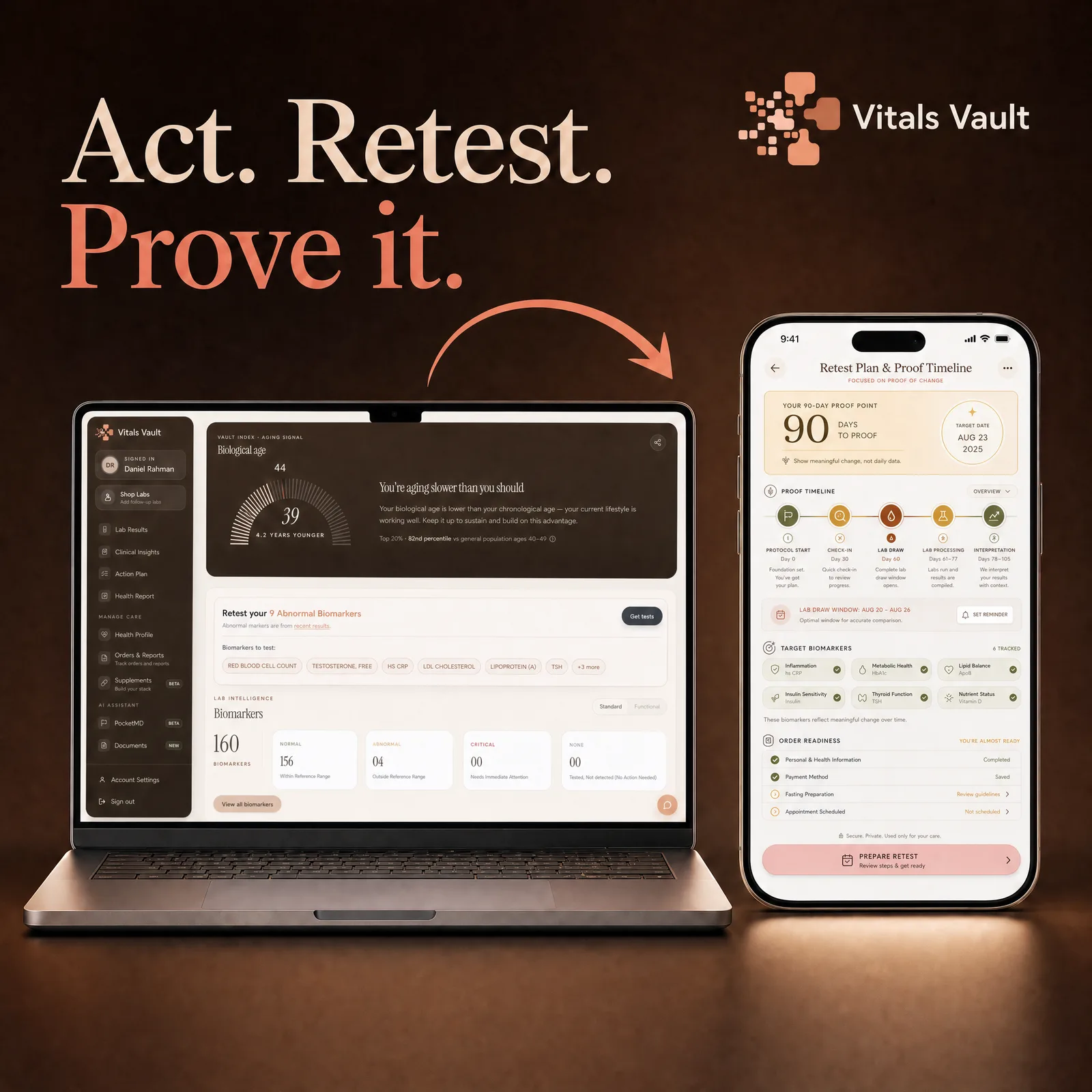
Biological age
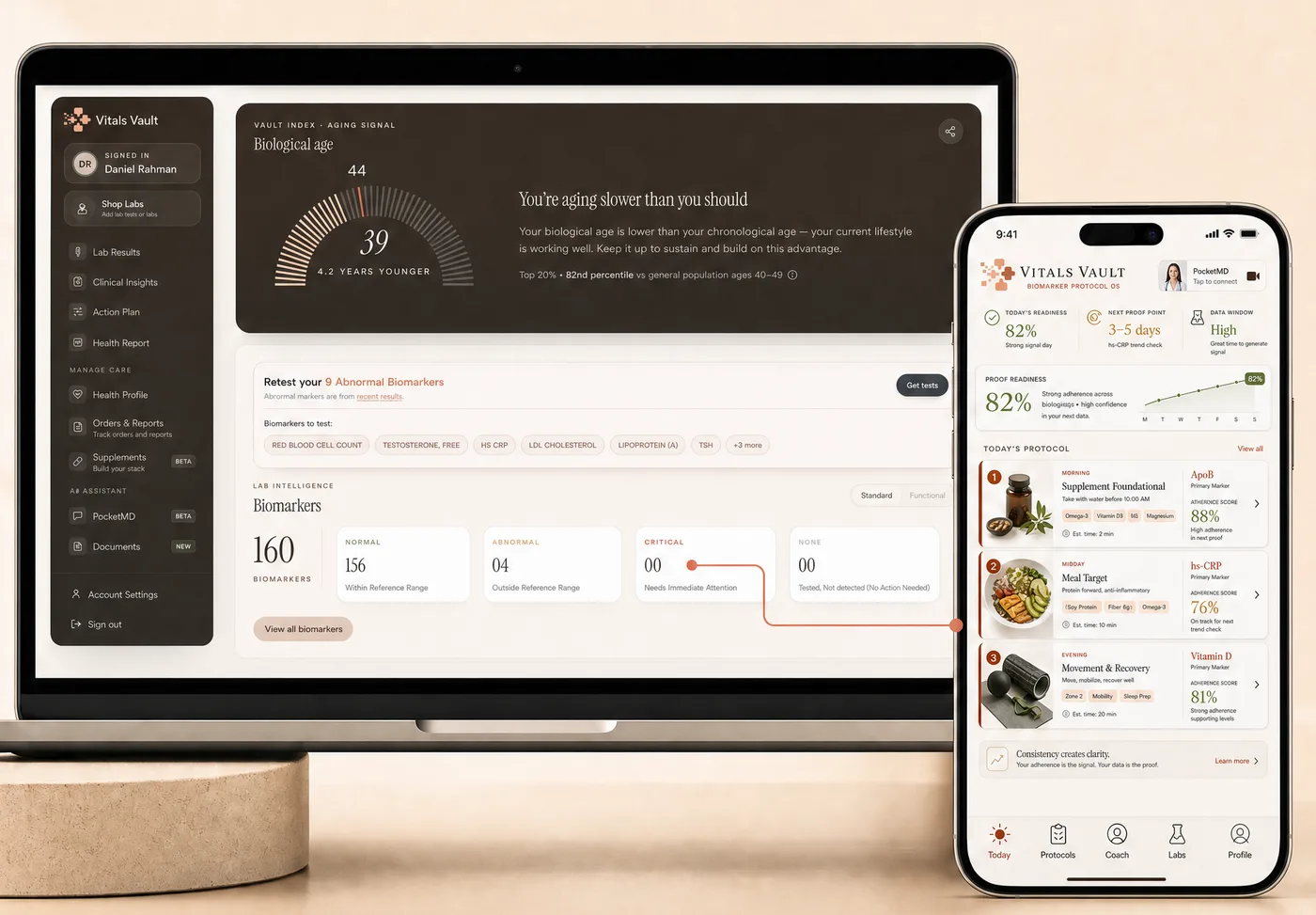
Find out if your body is aging faster or slower than your actual age — and see how you rank against the general population.
39
Biological age
44
Actual age
4.2
Years younger
Urine Culture
Results in about 6–12 days
Culture Urine Routine (Urine Culture) Test: What It Measures and How to Read Results. It checks for bacterial growth in your urine and which antibiotics may work, with easy ordering and results support through Vitals Vault and Quest.
A Culture Urine Routine test (often called a urine culture) looks for germs that can grow in your urine, most commonly bacteria that cause urinary tract infections (UTIs). It is different from a quick urine dipstick because it tries to grow the organism and identify it. If the culture is positive, the lab may also report which antibiotics are likely to work (susceptibility testing). That extra detail can matter when symptoms persist, when infections keep coming back, or when you want to avoid trial-and-error treatment. Your result is most useful when it is interpreted alongside your symptoms and how the sample was collected. A “positive” culture can sometimes reflect contamination from skin or vaginal flora rather than a true bladder infection.
What to expect before and at your draw.
Sample Type
Blood
Collection Method
In person at a Quest Diagnostics location
Age
18+
This order includes the lab markers used for Urine Culture.
Culture, Urine, Routine
Included in this Quest Diagnostics order and reported in your Vitals Vault account.
Order Urine Culture online.
Visit a Quest Diagnostics location near you for your blood draw. Appointments can be scheduled after checkout.
View easy-to-read results in your Vitals Vault account, with trends and a personalized action plan.
Included with every package
Function Health shows you numbers. Vitals Vault connects them — ratios, patterns, and a personalized action plan grounded in functional medicine.
Find out if your body is aging faster or slower than your actual age — and see how you rank against the general population.
39
Biological age
44
Actual age
4.2
Years younger
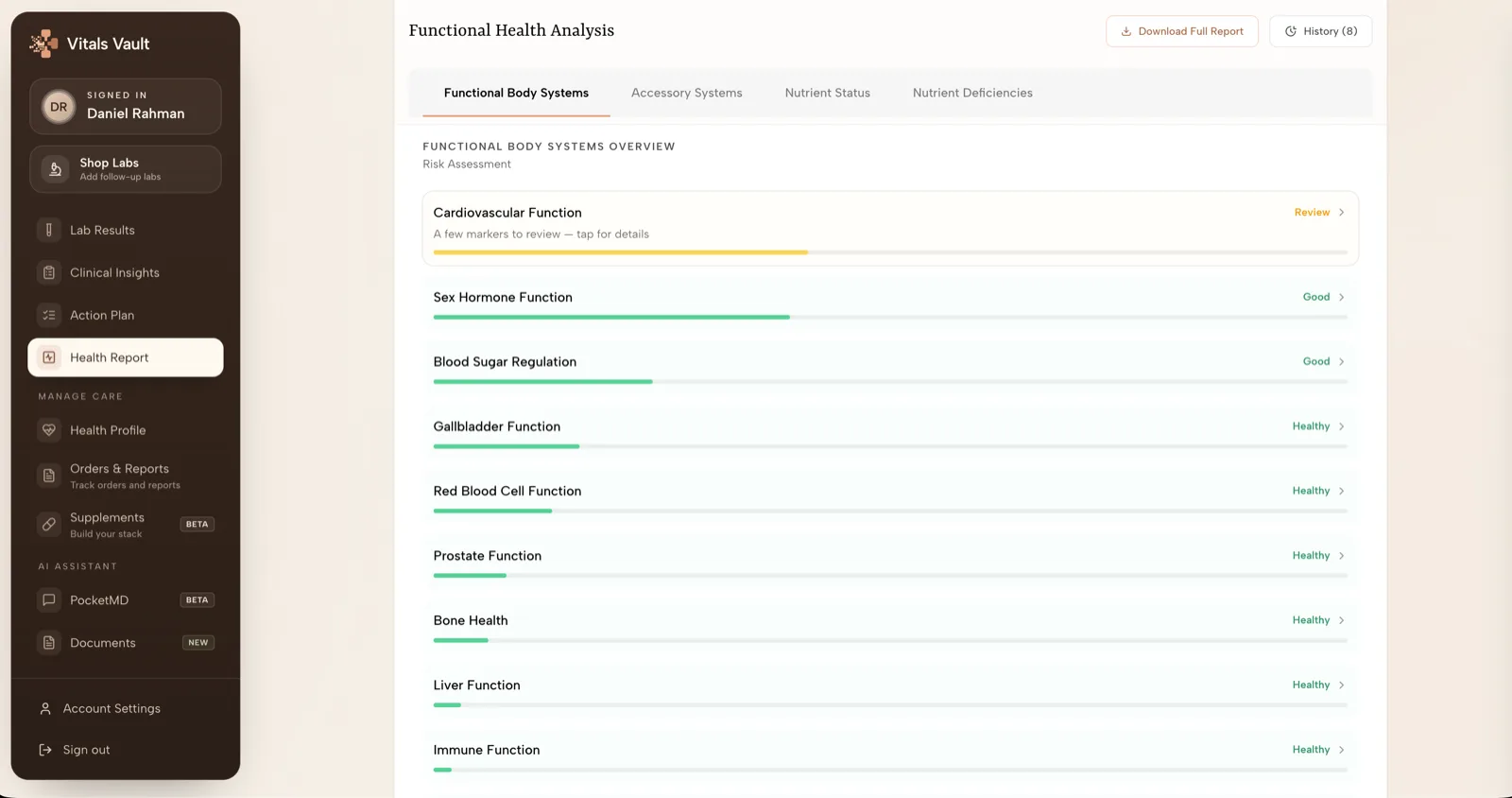
Turn lab data into what to do next—clear guidance on follow-ups, lifestyle context, and add-on testing when you need to go deeper. Make the healthy choice the obvious one.
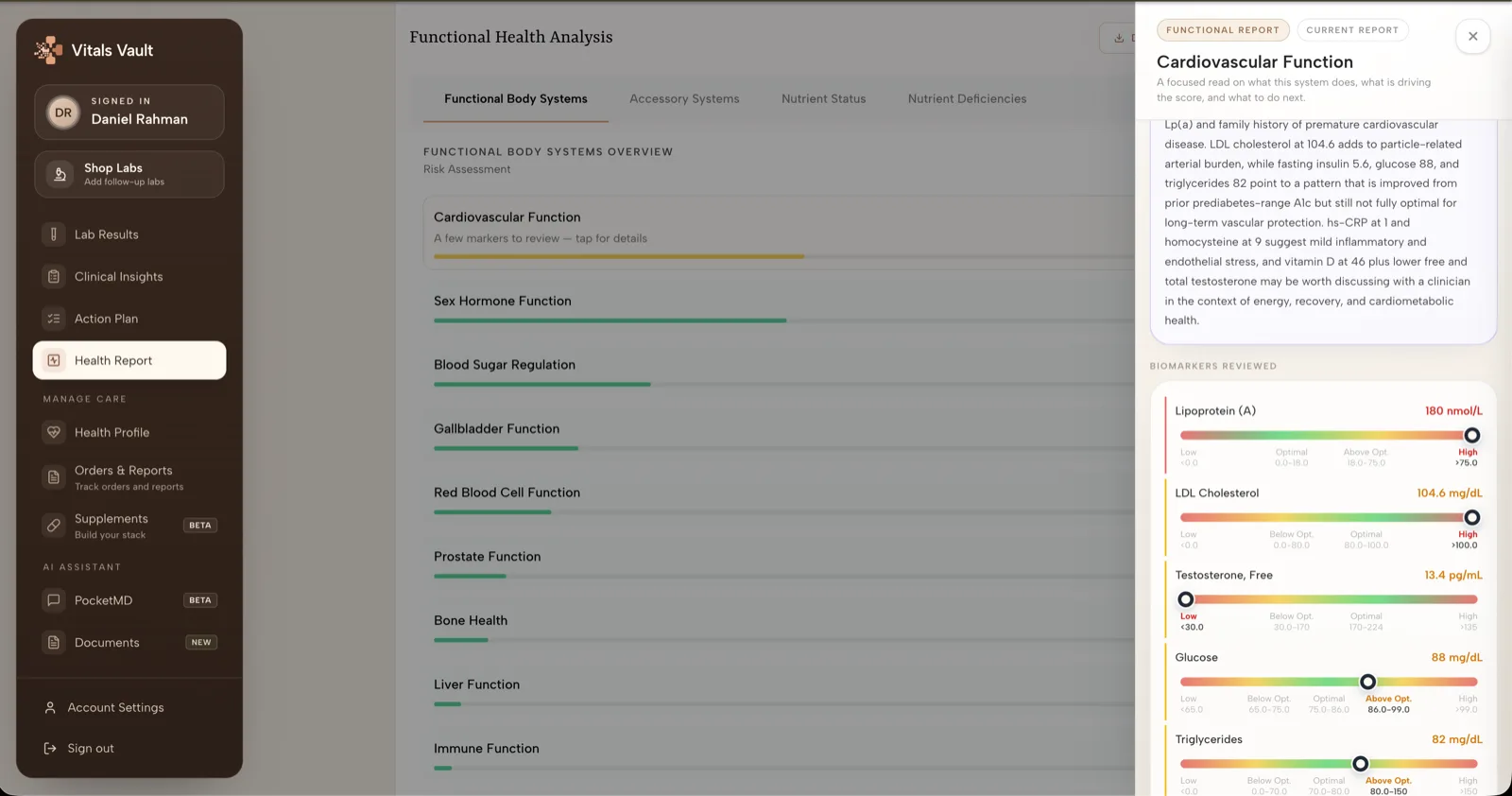
A personalized, plain-language walkthrough of your abnormal markers—reference ranges, pattern context, and what to watch next, grounded in your actual labs.
Personalized Insights
Clear Explanations
Actionable guidance
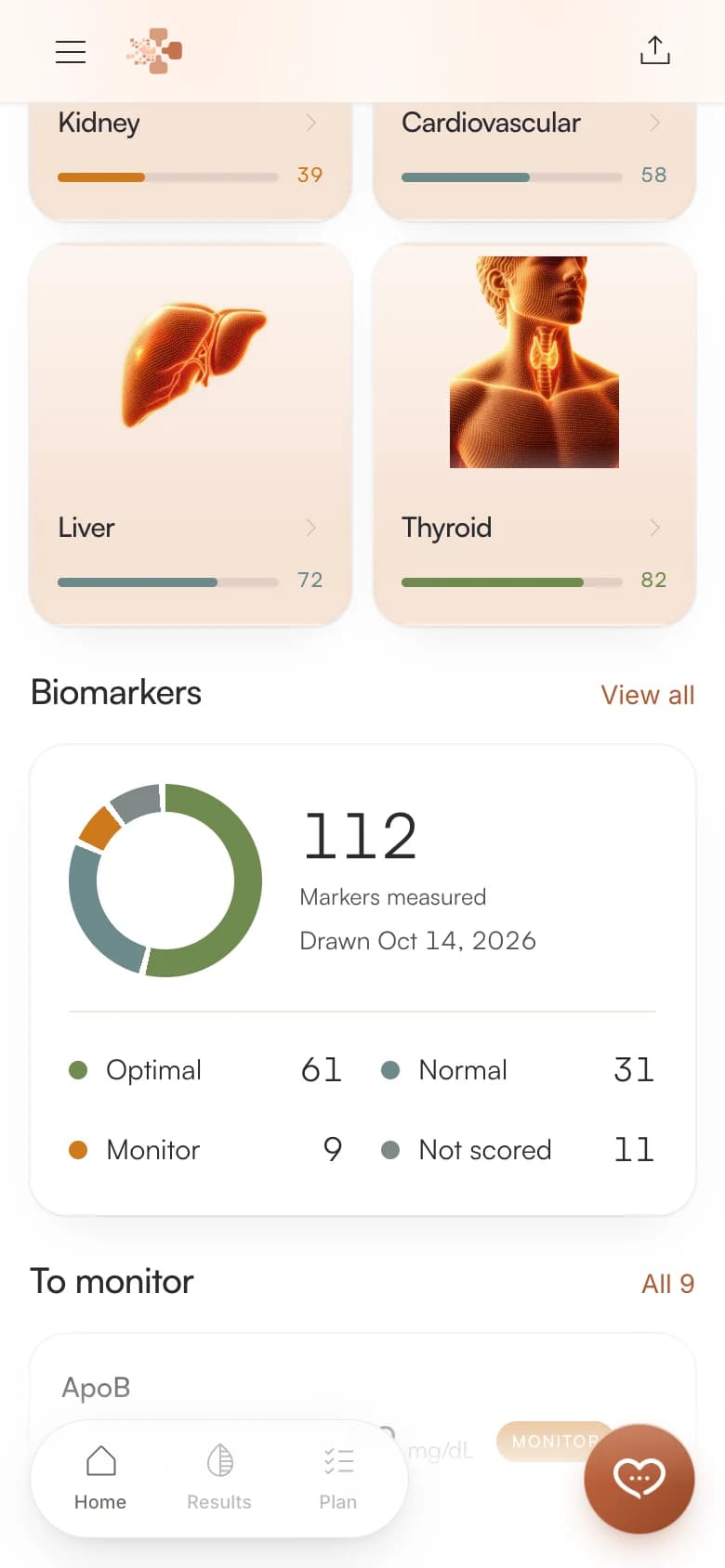
Explore your body systems with clear risk context — refresh your report, download the full PDF, and monitor hormones, heart, bone, and more in one place.
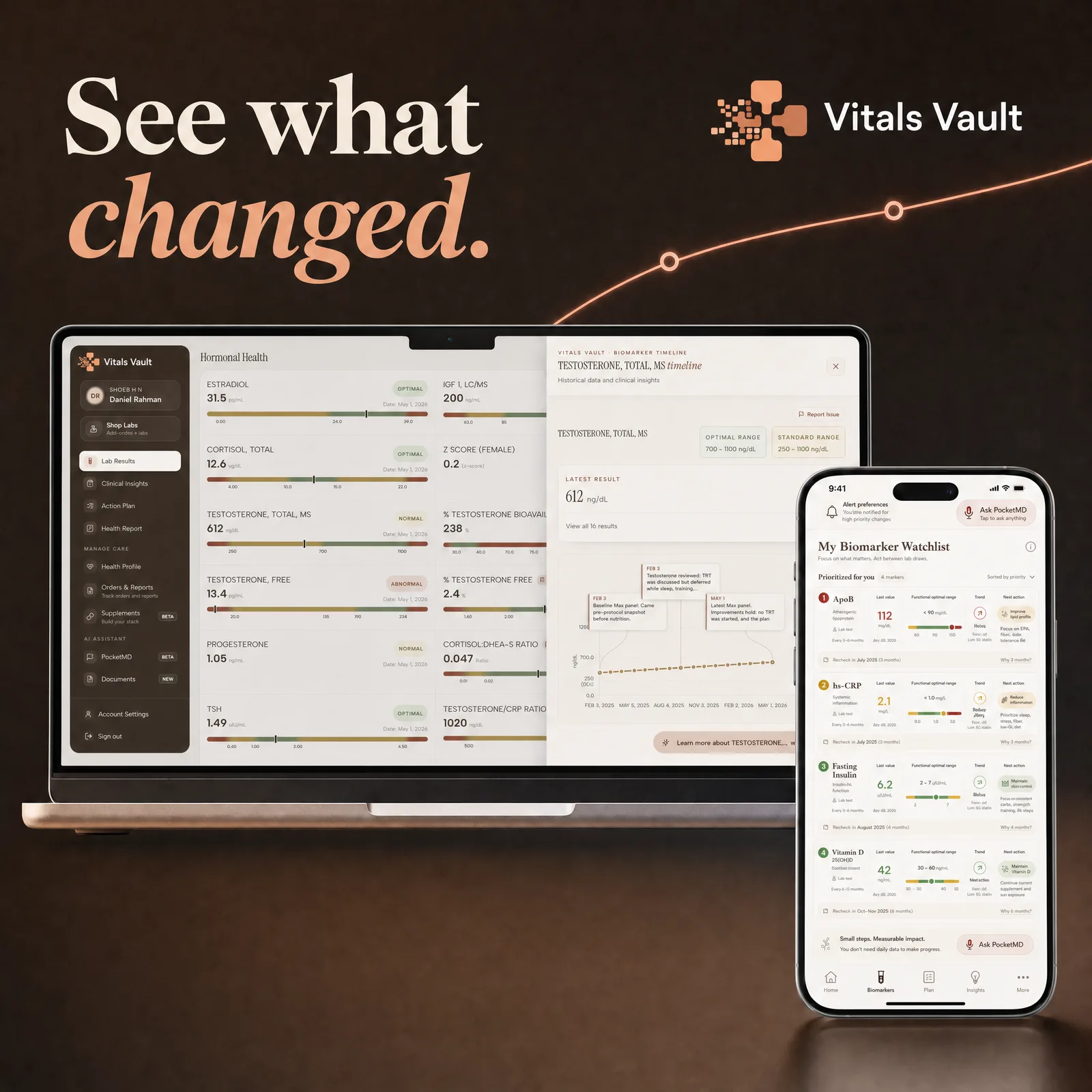
Explore hundreds of tests and panels, filter by concern, and manage your cart—member-exclusive pricing with quick checks and full-body options in one flow.
Wide test selection
300+ tests & panels available
Smart filtering
Find tests by symptoms or goals
Seamless ordering
Add to cart and manage easily
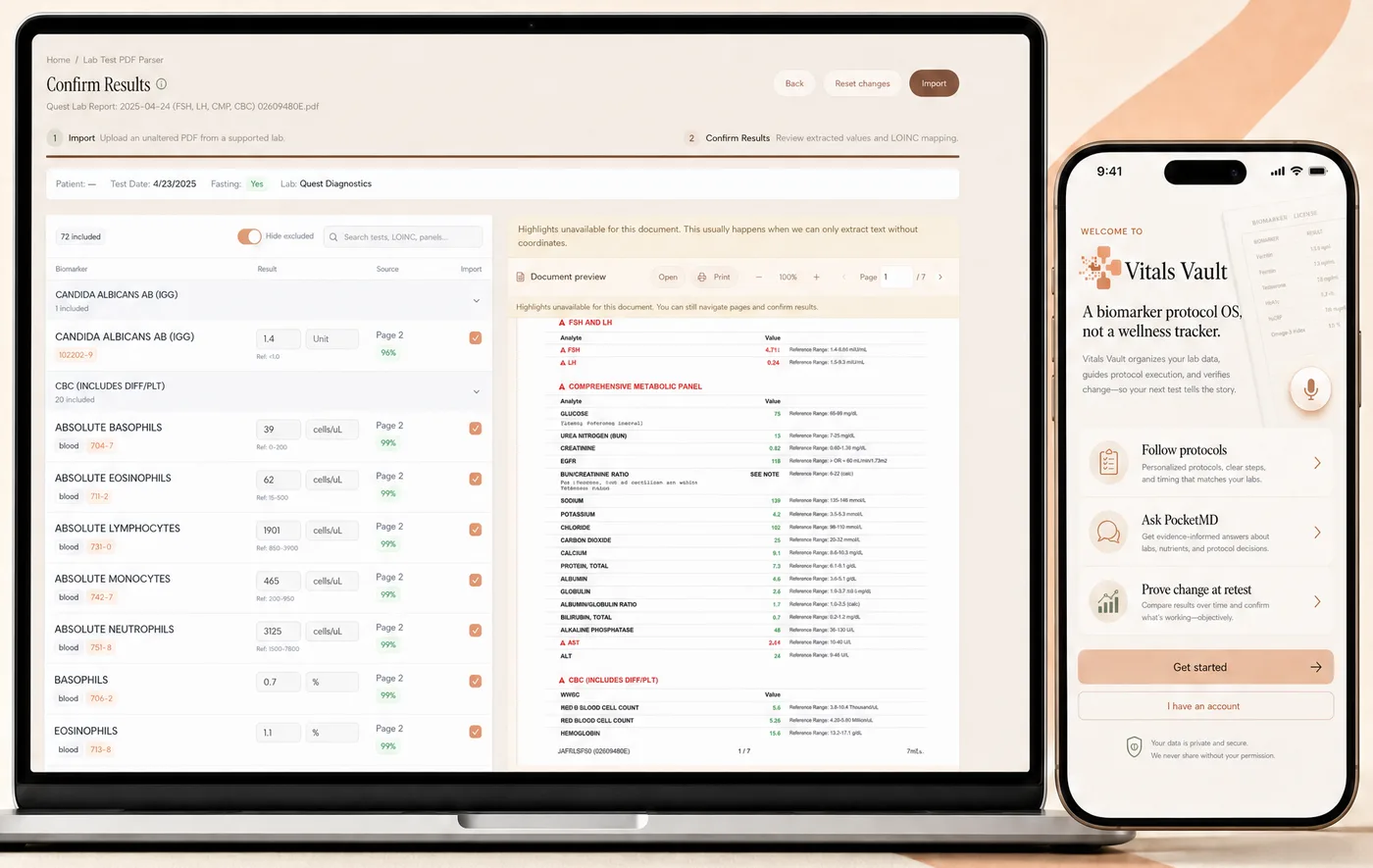
Upload past lab reports, search your documents, and keep appointments and results organized—our AI can extract biomarkers from PDFs so everything lives in one dashboard.
Browse longevity, nutrition, supplement, and movement protocols—structured plans you can follow with clear habits, labs, and targets tied to your profile.
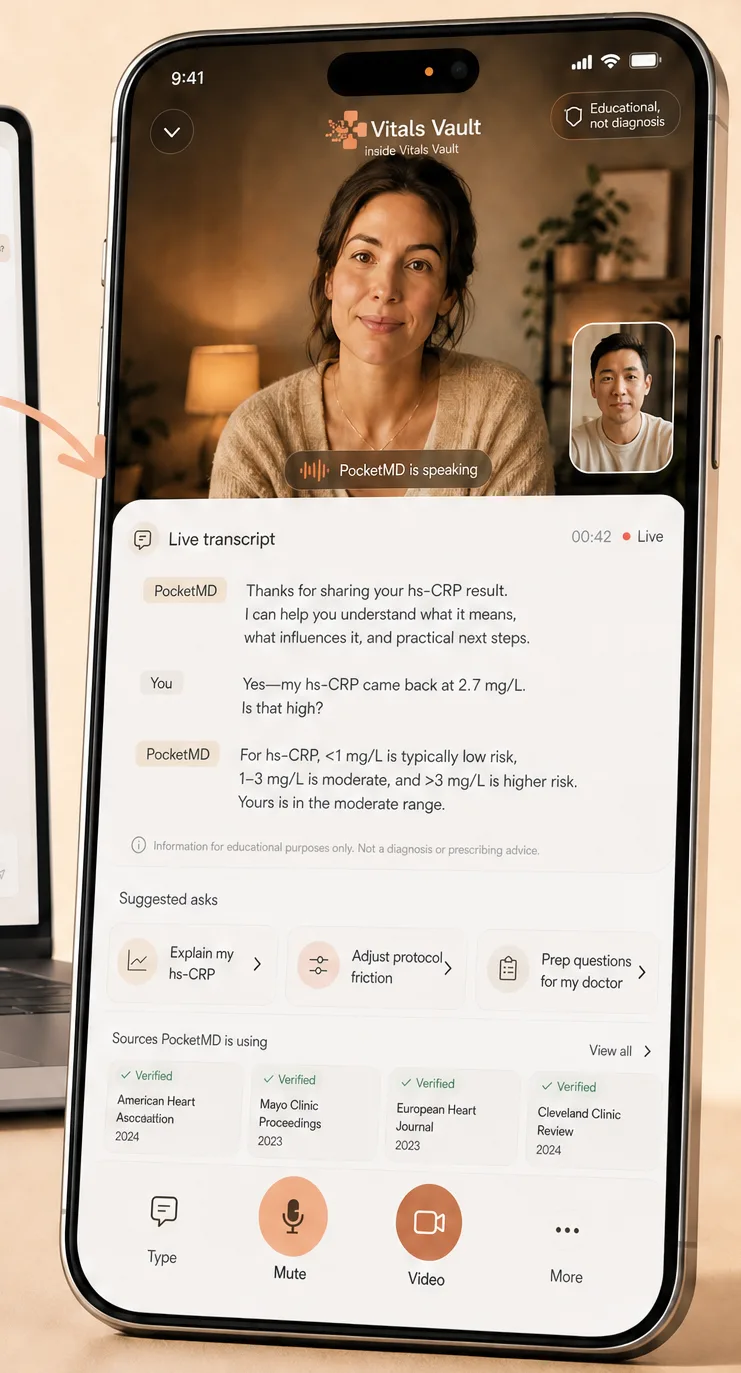
Ask for protocols, nutrition plans, supplement stacks, and education—context-aware suggestions powered by your labs and goals (beta experience).
Order online
Add Urine Culture to your cart and check out. No doctor referral is required.
Visit a Quest lab
Provide your blood sample at a Quest Diagnostics location. Appointments can be scheduled after checkout.
Review in Vitals Vault
Results in about 6–12 days. They stay in your Vitals Vault account for trends and follow-up.
No special preparation is usually needed unless noted at checkout.
This order includes the lab markers used for Urine Culture and reported in your Vitals Vault account.
Results
Results in about 6–12 days
HSA/FSA
Accepted
Who takes it
Must be taken by the purchaser
Preparation
No special preparation needed unless noted at checkout.
It checks for bacterial growth in your urine and which antibiotics may work, with easy ordering and results support through Vitals Vault and Quest.





A Culture Urine Routine test (often called a urine culture) looks for germs that can grow in your urine, most commonly bacteria that cause urinary tract infections (UTIs). It is different from a quick urine dipstick because it tries to grow the organism and identify it.
If the culture is positive, the lab may also report which antibiotics are likely to work (susceptibility testing). That extra detail can matter when symptoms persist, when infections keep coming back, or when you want to avoid trial-and-error treatment.
Your result is most useful when it is interpreted alongside your symptoms and how the sample was collected. A “positive” culture can sometimes reflect contamination from skin or vaginal flora rather than a true bladder infection.
You may want a urine culture if you have classic UTI symptoms such as burning with urination, frequent urges to urinate, lower abdominal discomfort, foul-smelling urine, or new urgency. A culture is especially helpful when symptoms are moderate to severe, when you have fever or flank/back pain (which can suggest a kidney infection), or when you are pregnant.
A culture is also commonly ordered if you have recurrent UTIs, symptoms that did not improve after antibiotics, or a urinalysis that shows signs of infection (like white blood cells or nitrites) but the picture is not clear. In these situations, identifying the organism and its antibiotic susceptibility can help you and your clinician choose a more targeted next step.
You might not need a culture for every episode of mild, uncomplicated symptoms if your clinician is comfortable treating empirically and you improve quickly. However, if symptoms are atypical (vaginal irritation, discharge, pelvic pain without urinary symptoms) a culture can help avoid unnecessary antibiotics.
This test supports clinician-directed care and does not diagnose you on its own. Your symptoms, exam, and related urine tests help determine whether the culture reflects a true infection, colonization, or contamination.
Urine cultures are performed in CLIA-certified laboratories; results should be interpreted with your symptoms and clinical history rather than used as a standalone diagnosis.
from $29.99 at Quest Diagnostics
Results in days
Clear next steps
HSA / FSA
Vitals Vault lets you order a Culture Urine Routine test directly, then complete the specimen collection through a participating lab site. If you are comparing options, the key advantage of a culture is that it can identify the organism and, when appropriate, provide antibiotic susceptibility guidance.
After your results post, you can use PocketMD to walk through what “no growth,” “mixed flora,” colony counts, and susceptibility tables typically mean. That can be useful if you are deciding whether to retest, whether a repeat clean-catch sample is needed, or which companion urine tests would add clarity.
If you are dealing with recurring symptoms, you can also use Vitals Vault to reorder the culture at a consistent lab network and keep your results organized over time, which makes pattern-spotting and follow-up discussions easier.
A Culture Urine Routine test is a laboratory method that tries to grow microorganisms from your urine sample. If organisms grow, the lab can identify them (for example, Escherichia coli is a common cause of UTIs) and estimate how much grew using a colony count (reported as colony-forming units per milliliter, CFU/mL).
Because urine passes through areas that naturally have bacteria on the skin, collection technique matters. A clean-catch midstream sample is designed to reduce contamination so the culture reflects what is in the bladder rather than what is on the skin.
When the lab finds a likely pathogen, it may run antibiotic susceptibility testing. This reports which antibiotics the organism is “susceptible,” “intermediate,” or “resistant” to, which can help your clinician choose an option that is more likely to work and less likely to drive resistance.
Urinalysis looks for indirect clues of infection, such as white blood cells (pyuria), nitrites, leukocyte esterase, or bacteria seen under a microscope. A culture looks for actual growth and can identify the organism. You may have symptoms with a negative dipstick, and a culture can still be positive, especially early in infection or with certain organisms.
“Routine” typically means the lab follows standard urine culture procedures for common urinary pathogens. If you have special circumstances (recent hospitalization, catheter use, immune suppression), your clinician may request additional workup or interpretation because the range of organisms and resistance patterns can differ.
A result such as “no growth” or “no significant growth” usually means the lab did not find a meaningful amount of bacteria growing under standard conditions. If your symptoms are improving, this often supports that a bacterial UTI is unlikely. If you still feel unwell, it can mean the sample was collected after antibiotics started, the organism was hard to grow, or your symptoms are coming from a non-bacterial cause such as irritation, stones, or a vaginal infection.
For this test, the “best” result is typically a negative culture when you do not have UTI symptoms, or when symptoms have resolved. A negative culture paired with a urinalysis that also lacks white blood cells makes an active bacterial UTI less likely. If you have recurrent symptoms with repeated negative cultures, it is worth discussing other explanations and whether collection technique or timing could be affecting results.
A positive culture means organisms grew, and the report may list the organism name and a colony count (CFU/mL). Higher colony counts and growth of a single typical urinary pathogen are more consistent with a true UTI, especially when you also have symptoms and pyuria on urinalysis. If susceptibility testing is included, “resistant” results can explain why a prior antibiotic did not work and can guide a better next choice with your clinician.
Collection method is one of the biggest factors: poor clean-catch technique can lead to “mixed flora” or contamination, which can obscure a true infection. Starting antibiotics before the sample is collected can reduce growth and produce a false-negative culture. Hydration level, how long the urine sat before processing, menstruation, and the presence of a catheter can also affect interpretation. Finally, symptoms can come from causes that a routine culture will not detect well, so your clinician may consider additional testing when cultures do not match how you feel.
Many cultures have preliminary information within about 24 hours, but final results commonly take 2–3 days because the lab needs time to grow and identify organisms. Susceptibility testing, if performed, can add additional time.
No. Fasting is not required for a urine culture. The most important preparation is collecting a clean-catch midstream sample and getting it to the lab promptly.
“Mixed flora” usually means multiple different organisms grew, which often suggests contamination from skin or genital bacteria rather than a single urinary pathogen. If you have symptoms, your clinician may recommend repeating the test with careful clean-catch technique or using a catheterized sample in select cases.
Thresholds vary by lab, organism, and clinical context. Higher counts and a single typical pathogen are more suggestive of infection, especially when you have symptoms and white blood cells in urine. Lower counts can still be meaningful in some situations, so it is best interpreted with your urinalysis and symptoms.
Yes. If you start antibiotics before the sample is collected, bacteria may not grow well in the lab even if you had an infection. If your symptoms persist, tell your clinician when you started antibiotics and whether a repeat culture is needed.
No. Urinalysis checks chemical and microscopic signs of infection (like leukocyte esterase, nitrites, and white blood cells). A culture tries to grow and identify the organism and may include antibiotic susceptibility testing.
Retesting depends on your situation. Many people do not need a “test of cure” if symptoms fully resolve, but retesting is more common in pregnancy, recurrent infections, persistent symptoms, or complicated cases. Your clinician can help decide the right timing based on your history and the organism found.
Purchase online through Vitals Vault. A licensed clinician reviews and approves your order, then you receive a digital requisition for a Quest Diagnostics blood draw.
Samples are collected in person at Quest Diagnostics locations nationwide. After checkout you can schedule your visit at a convenient site.
Most results in 3–5 business days. You can view them securely in your Vitals Vault account.
No separate referral appointment is required. Clinician review is included in the online order flow.
Yes. Eligible HSA/FSA cards can be used at checkout for qualifying lab orders.
Results are available in your secure Vitals Vault account. You control who you share them with, subject to applicable law.
Blood glucose shows the amount of sugar in your blood at a single moment. A1c (hemoglobin A1c) estimates your average blood sugar over roughly the past 8–12 weeks. Comparing them helps explain whether your long-term average lines up with your fasting glucose on draw day.
It helps you understand how this marker fits into your broader metabolic picture, with results tracked in your Vitals Vault account.
Elevated values can signal higher metabolic risk. Many people start with nutrition, activity, sleep, and weight management, then retest and review results with a clinician. This test is educational and does not replace medical advice or diagnosis.
Your sample is processed at CLIA-certified Quest Diagnostics laboratories. Results should still be interpreted with a qualified clinician alongside your history, symptoms, and other labs.
Consumer-initiated testing through Vitals Vault is limited to adults 18+ so ordering and interpretation stay aligned with clinical best practices for this channel.