01
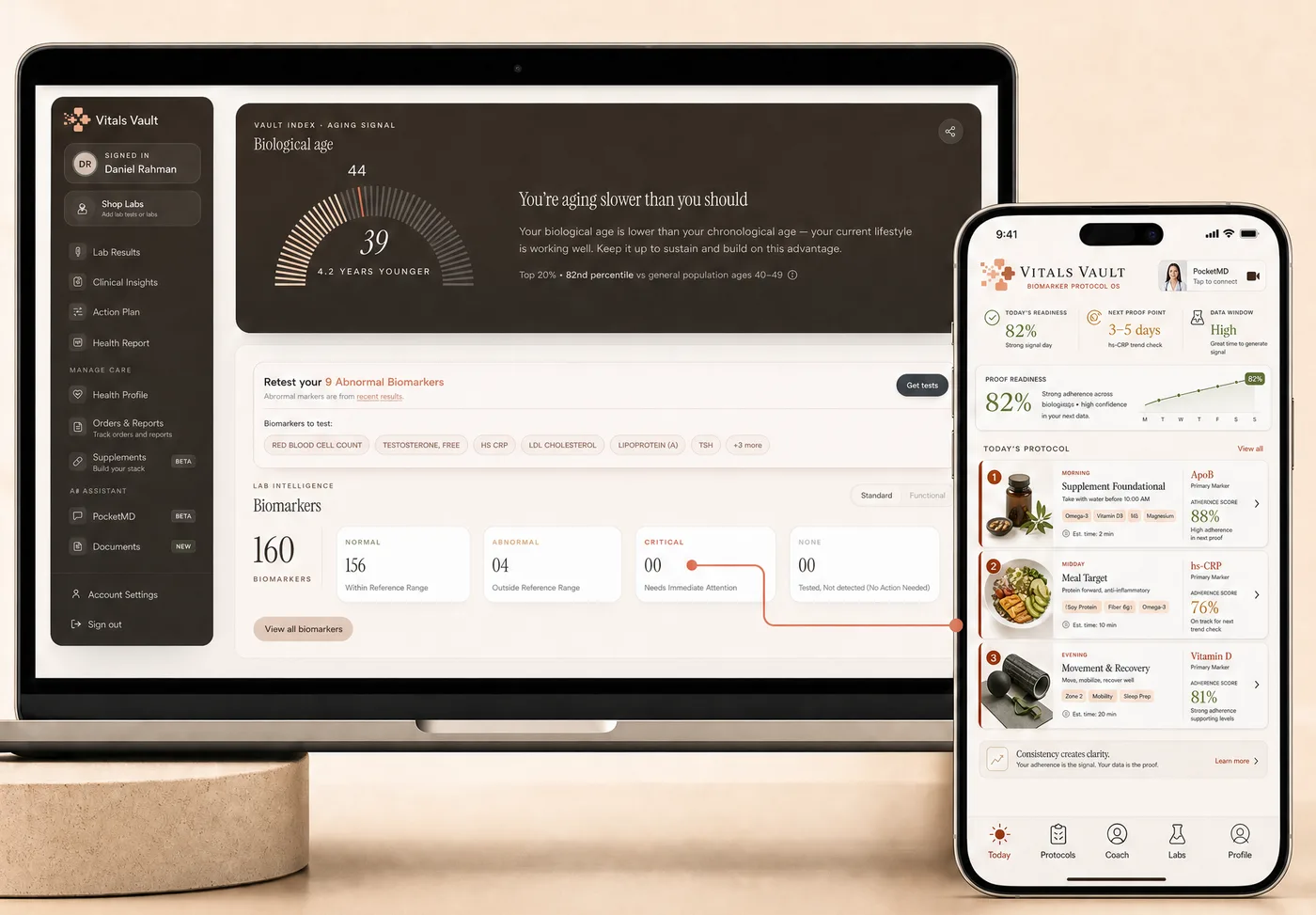
Biological age
Find out if your body is aging faster or slower than your actual age — and see how you rank against the general population.
39
Biological age
44
Actual age
4.2
Years younger
AMH (Anti-Mullerian Hormone)
Results in about 6 days
Anti-Müllerian Hormone (AMH) blood test (female): what it measures and how to read your result. An AMH test estimates ovarian reserve and helps guide fertility planning and treatment decisions, with convenient ordering and Quest labs via Vitals Vault.
An Anti-Müllerian Hormone (AMH) test is one of the most common blood tests used to estimate ovarian reserve, which is a practical way to describe how many eggs you likely have remaining and how your ovaries may respond to stimulation. AMH is not a “fertility yes-or-no” result. It does not confirm whether you can or cannot get pregnant on your own, and it does not measure egg quality. Still, it can be very useful when you are planning timing, considering egg freezing, or comparing treatment options. Because AMH changes over time and varies by lab method, the most helpful way to use it is in context: your age, your cycle history, ultrasound findings (like antral follicle count), and other hormones such as FSH and estradiol.
What to expect before and at your draw.
Sample Type
Blood
Collection Method
In person at a Quest Diagnostics location
Age
18+
This order includes the lab markers used for AMH (Anti-Mullerian Hormone).
Anti-Mullerian Hormone (Amh), Female
Included in this Quest Diagnostics order and reported in your Vitals Vault account.
Order AMH (Anti-Mullerian Hormone) online.
Visit a Quest Diagnostics location near you for your blood draw. Appointments can be scheduled after checkout.
View easy-to-read results in your Vitals Vault account, with trends and a personalized action plan.
Included with every package
Function Health shows you numbers. Vitals Vault connects them — ratios, patterns, and a personalized action plan grounded in functional medicine.
Find out if your body is aging faster or slower than your actual age — and see how you rank against the general population.
39
Biological age
44
Actual age
4.2
Years younger
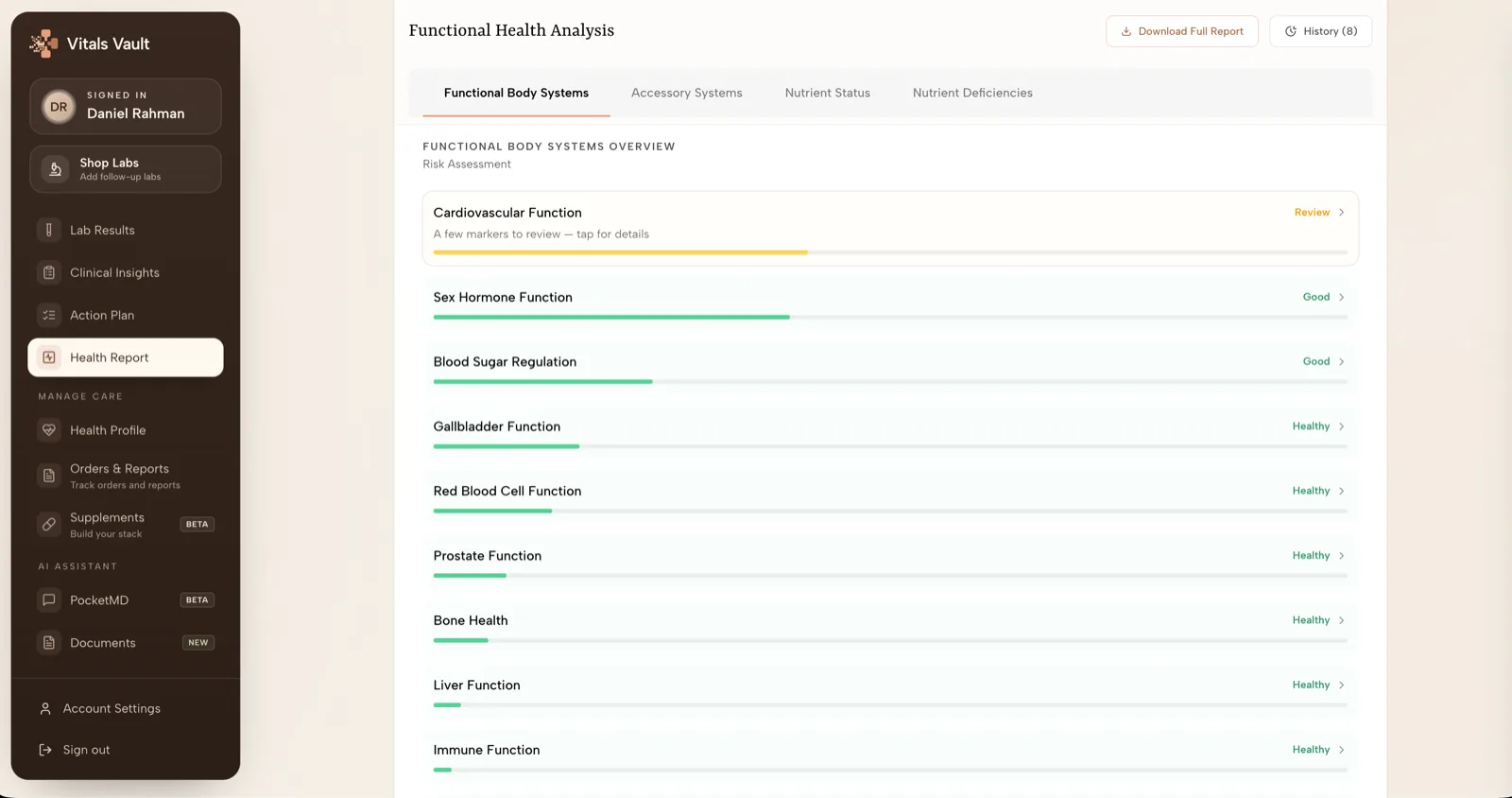
Turn lab data into what to do next—clear guidance on follow-ups, lifestyle context, and add-on testing when you need to go deeper. Make the healthy choice the obvious one.
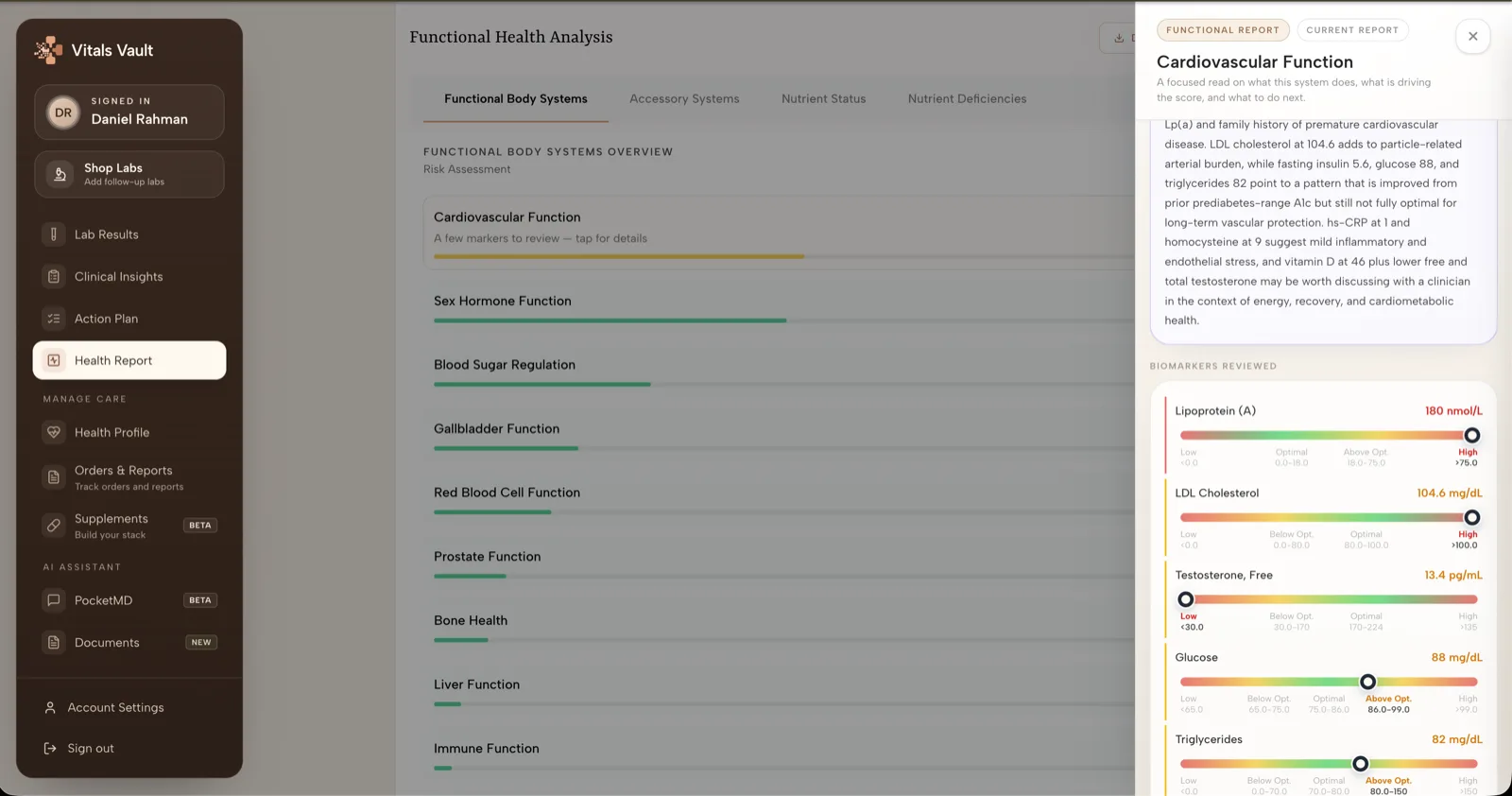
A personalized, plain-language walkthrough of your abnormal markers—reference ranges, pattern context, and what to watch next, grounded in your actual labs.
Personalized Insights
Clear Explanations
Actionable guidance
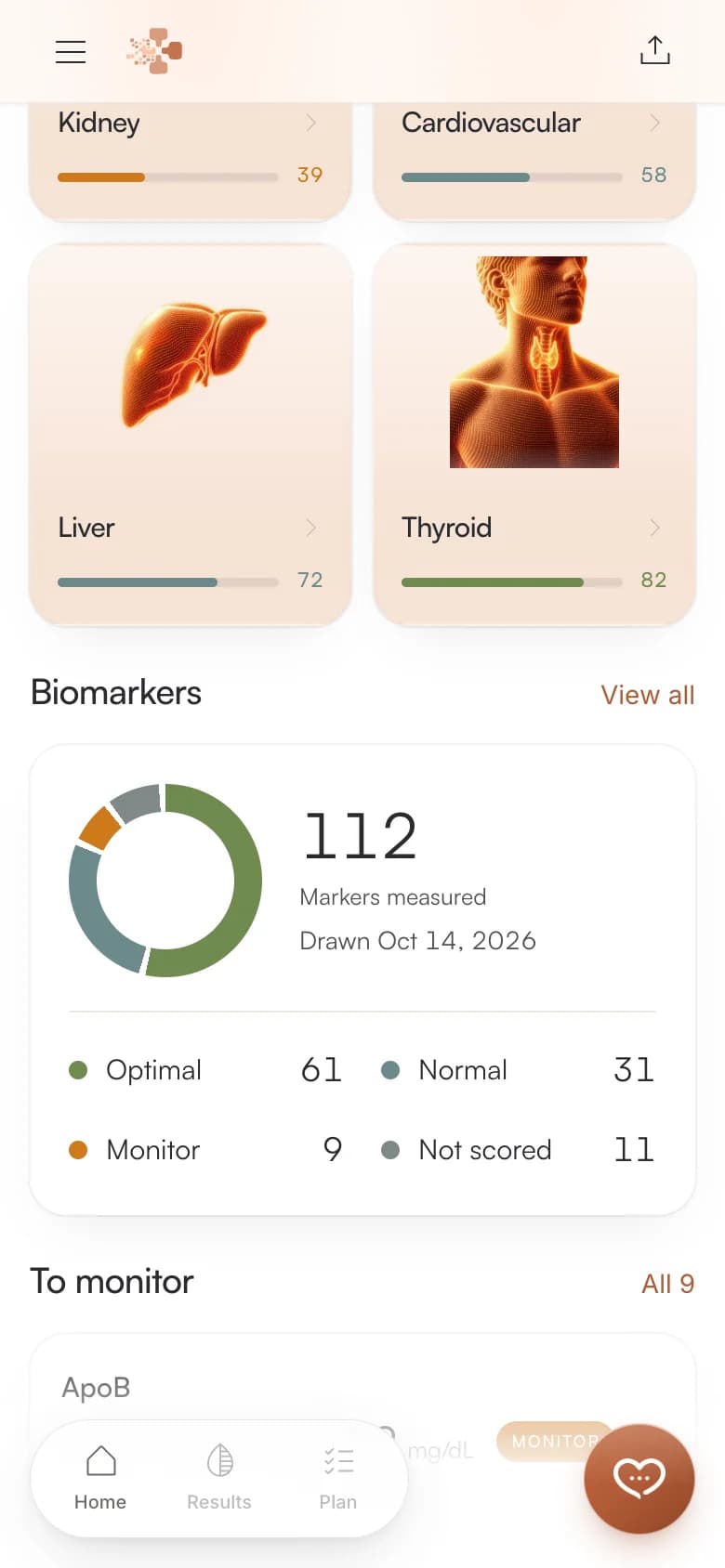
Explore your body systems with clear risk context — refresh your report, download the full PDF, and monitor hormones, heart, bone, and more in one place.
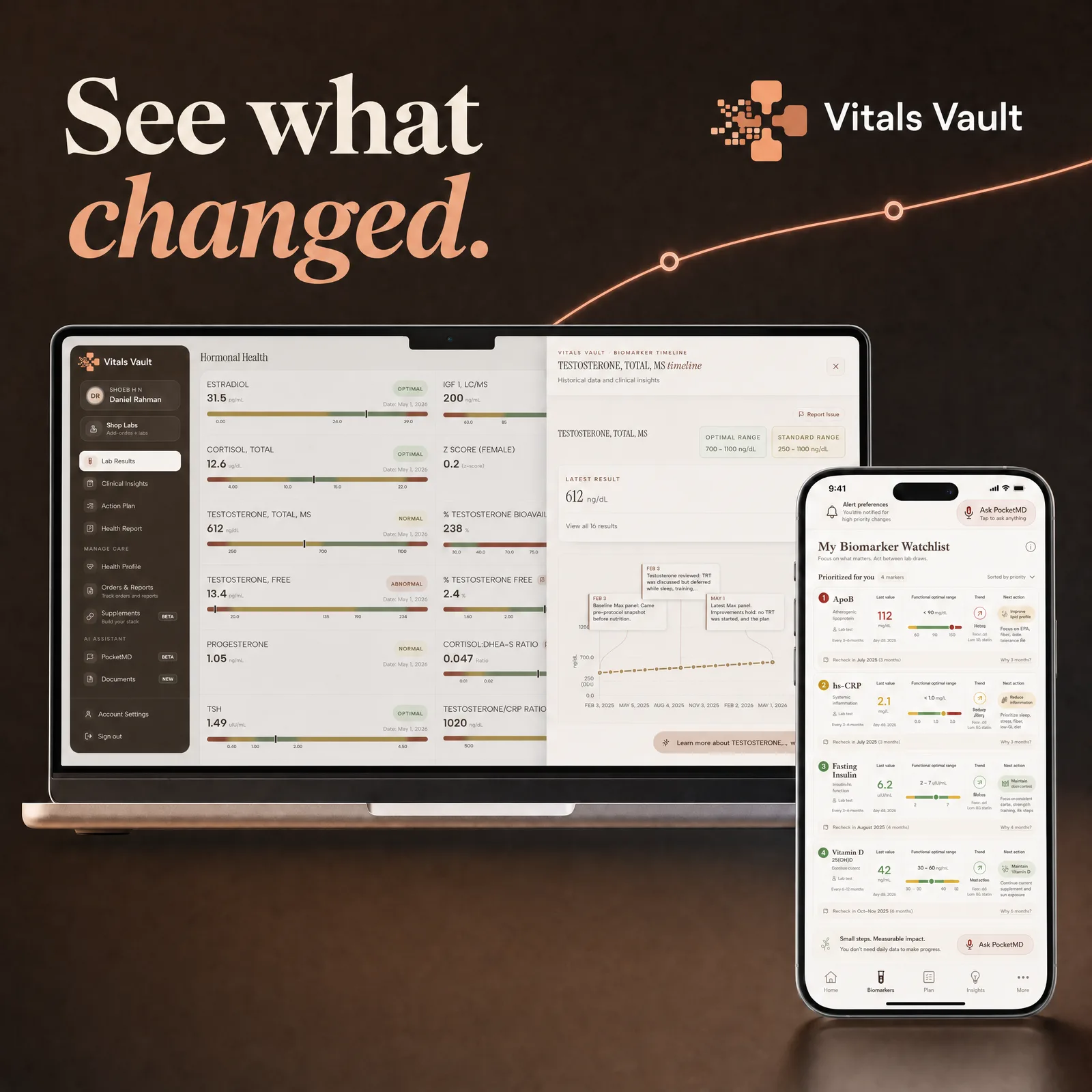
Explore hundreds of tests and panels, filter by concern, and manage your cart—member-exclusive pricing with quick checks and full-body options in one flow.
Wide test selection
300+ tests & panels available
Smart filtering
Find tests by symptoms or goals
Seamless ordering
Add to cart and manage easily
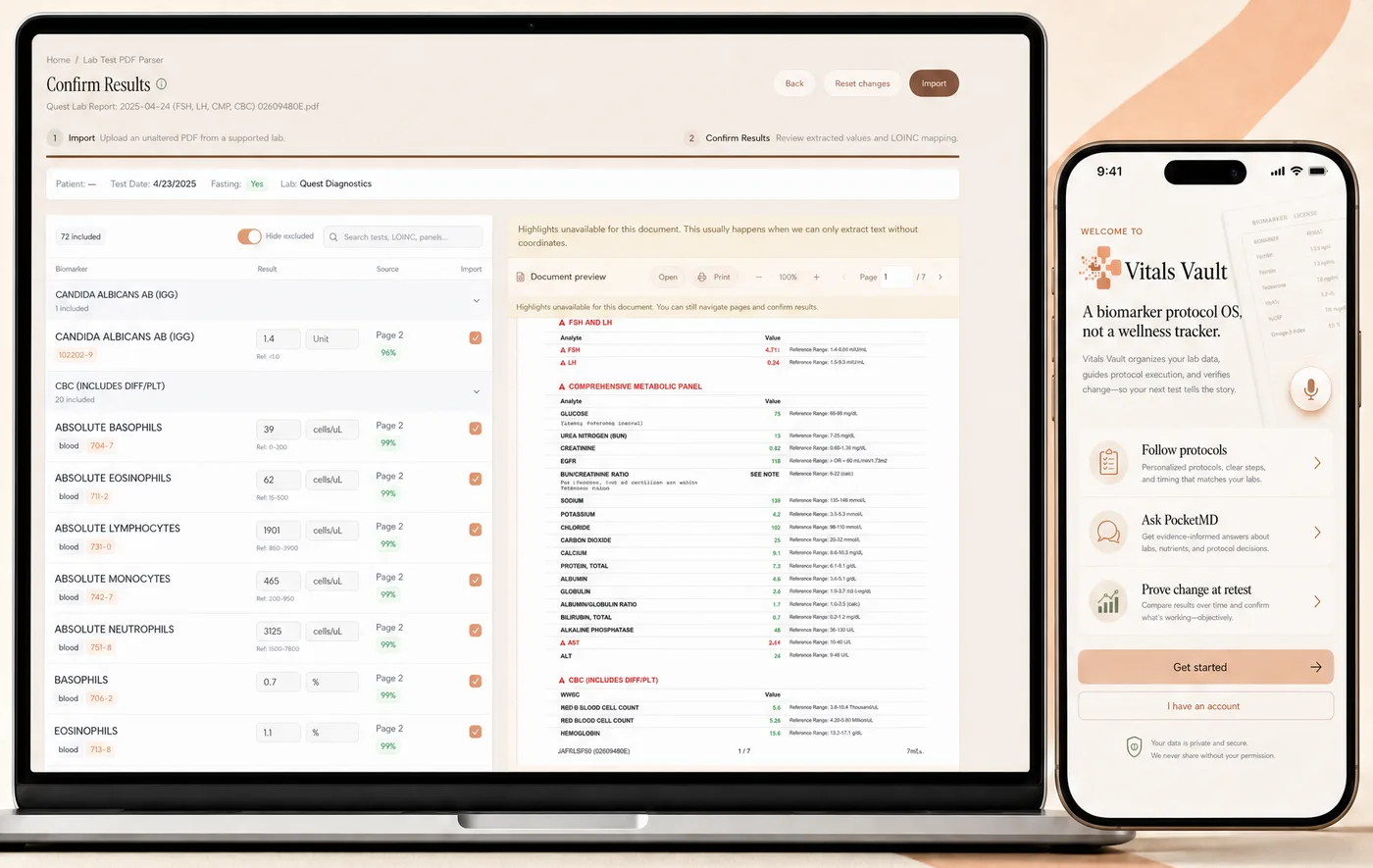
Upload past lab reports, search your documents, and keep appointments and results organized—our AI can extract biomarkers from PDFs so everything lives in one dashboard.
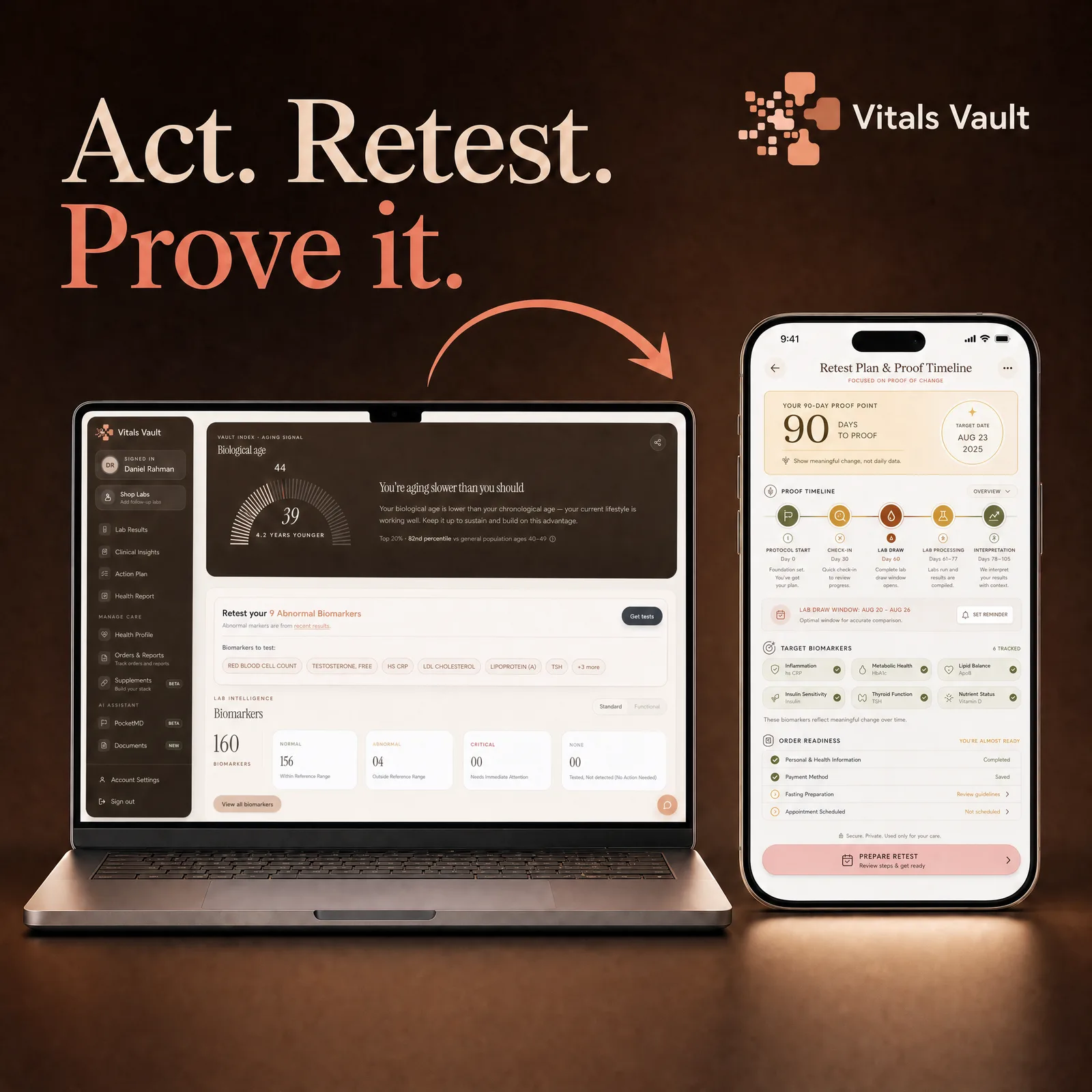
Browse longevity, nutrition, supplement, and movement protocols—structured plans you can follow with clear habits, labs, and targets tied to your profile.

Ask for protocols, nutrition plans, supplement stacks, and education—context-aware suggestions powered by your labs and goals (beta experience).
Order online
Add AMH (Anti-Mullerian Hormone) to your cart and check out. No doctor referral is required.
Visit a Quest lab
Provide your blood sample at a Quest Diagnostics location. Appointments can be scheduled after checkout.
Review in Vitals Vault
Results in about 6 days. They stay in your Vitals Vault account for trends and follow-up.
No special preparation is usually needed unless noted at checkout.
This order includes the lab markers used for AMH (Anti-Mullerian Hormone) and reported in your Vitals Vault account.
Results
Results in about 6 days
HSA/FSA
Accepted
Who takes it
Must be taken by the purchaser
Preparation
No special preparation needed unless noted at checkout.
An AMH test estimates ovarian reserve and helps guide fertility planning and treatment decisions, with convenient ordering and Quest labs via Vitals Vault.


An Anti-Müllerian Hormone (AMH) test is one of the most common blood tests used to estimate ovarian reserve, which is a practical way to describe how many eggs you likely have remaining and how your ovaries may respond to stimulation.
AMH is not a “fertility yes-or-no” result. It does not confirm whether you can or cannot get pregnant on your own, and it does not measure egg quality. Still, it can be very useful when you are planning timing, considering egg freezing, or comparing treatment options.
Because AMH changes over time and varies by lab method, the most helpful way to use it is in context: your age, your cycle history, ultrasound findings (like antral follicle count), and other hormones such as FSH and estradiol.
You might consider an AMH test if you are trying to understand your fertility timeline, especially if you are thinking about egg freezing, starting fertility treatment, or you simply want a clearer picture of ovarian reserve than age alone provides.
This test is also commonly ordered when you have irregular cycles, a history that raises concern for reduced ovarian reserve (for example, ovarian surgery, chemotherapy/radiation exposure, or a strong family history of early menopause), or when you are evaluating possible polycystic ovary syndrome (PCOS) alongside symptoms and ultrasound.
If you are already working with a fertility clinician, AMH can help with planning—such as choosing medication dosing and setting expectations for how many eggs might be retrieved in an IVF cycle. If you are not in fertility care, AMH can still be a useful starting point, but it should guide questions and next steps rather than act as a standalone diagnosis.
If you have been pregnant recently, are using certain hormonal medications, or are in the months after stopping hormonal contraception, ask your clinician how to time testing so your result is interpreted appropriately.
AMH is measured from a blood sample in a CLIA-certified laboratory; results support clinical decision-making but do not diagnose infertility on their own.
from $83.99 at Quest Diagnostics
Results in days
Clear next steps
HSA / FSA
Vitals Vault lets you order an AMH blood test without needing to coordinate the paperwork yourself. You choose your lab location and get a clear, shareable result you can bring to your OB-GYN, reproductive endocrinologist, or primary care clinician.
If your AMH is lower or higher than you expected, PocketMD can help you make sense of what it may mean in your situation and what follow-up labs are commonly paired with AMH (such as FSH, estradiol, LH, and thyroid testing). That way, you are not left guessing whether to retest, add companion tests, or focus on cycle tracking and ultrasound.
AMH is often most useful when you can compare it over time using the same lab method. If you plan to trend your result, Vitals Vault makes it straightforward to reorder and keep your testing consistent.
Anti-Müllerian Hormone (AMH) is a hormone produced mainly by small, growing follicles in your ovaries. Because those follicles reflect the pool of eggs that can potentially mature, AMH is used as an indirect marker of ovarian reserve.
AMH is different from hormones that rise and fall dramatically across the menstrual cycle. In many people, AMH is relatively stable compared with FSH or estradiol, which is one reason it is commonly used for planning. However, “stable” does not mean “unchanging.” AMH tends to decline with age, and it can shift with certain medical conditions, medications, and lab methods.
AMH is most clinically useful for predicting ovarian response (how many follicles may grow with stimulation) rather than predicting natural conception. You can have a low AMH and still conceive, and you can have a high AMH and still face fertility challenges for other reasons (such as ovulation issues, tubal factors, or male-factor infertility).
AMH mainly reflects quantity (the number of recruitable follicles), not quality. Egg quality is more closely tied to age and genetics, which is why AMH is often interpreted alongside your age and your overall fertility evaluation.
In fertility treatment, AMH helps estimate how strongly your ovaries may respond to stimulation medications. This can influence dosing decisions and can help anticipate risks such as ovarian hyperstimulation syndrome (OHSS), especially when AMH is high.
A low AMH result often suggests reduced ovarian reserve, meaning fewer follicles are producing AMH at the time of testing. In practice, this can be associated with a lower expected egg yield during IVF or egg freezing, and it may prompt earlier action if you are trying to conceive. Low AMH does not automatically mean you cannot get pregnant naturally, and it does not diagnose early menopause by itself. Your clinician will usually interpret it with age, antral follicle count, and day-3 FSH/estradiol.
An in-range AMH result generally suggests ovarian reserve that is typical for your age group, although “typical” varies widely between individuals. This can be reassuring for planning, but it still does not guarantee natural fertility or predict how long you will be able to conceive. If you are pursuing fertility treatment, an in-range AMH often aligns with an average expected response to stimulation. The most helpful next step is usually pairing AMH with cycle history and ultrasound findings.
A high AMH result can reflect a larger number of small follicles, which is sometimes seen in PCOS. In treatment settings, higher AMH can be associated with a stronger response to stimulation and may increase the need for careful dosing to reduce OHSS risk. High AMH does not mean “super fertility,” and it does not confirm PCOS on its own. Diagnosis of PCOS typically depends on a combination of ovulation patterns, signs of androgen excess, and ultrasound findings.
Age is the biggest driver of AMH over the long term, with a general decline as you get older. Hormonal contraception, recent pregnancy, and the months after stopping certain hormones can shift AMH and complicate interpretation in some people. Ovarian surgery, chemotherapy/radiation, and some genetic or autoimmune conditions can be associated with lower AMH. Finally, different lab assays and reference ranges can produce different numeric results, so trending is most meaningful when you use the same lab method over time.
AMH is strongly age-dependent, and “normal” is usually defined by age-based percentiles or lab-specific reference ranges rather than one universal cutoff. Your report should show the reference interval used by that lab method. If you want the most accurate interpretation, compare your result to people in your age group and review it alongside antral follicle count and day-3 FSH/estradiol.
Fasting is typically not required for AMH. You can usually test at any time of day. If you are combining AMH with other labs (like lipids or glucose/insulin testing), those other tests may require fasting, so follow the instructions for your full order.
AMH can often be measured on any cycle day because it tends to vary less across the cycle than FSH or estradiol. That said, if you are doing a fertility workup, clinicians may coordinate AMH with day-3 labs and ultrasound for convenience and a complete picture. If your cycles are very irregular, your clinician may recommend timing based on your specific pattern.
In some people, hormonal contraception can lower AMH modestly, and the effect can vary by formulation and duration of use. If you are testing specifically for fertility planning, ask whether you should test while on contraception or after a washout period. The key is to interpret the number in context rather than assuming it reflects your long-term baseline.
No. Low AMH suggests reduced ovarian reserve and may predict a lower egg yield with stimulation, but it does not directly measure your ability to conceive naturally. Many factors influence pregnancy chances, including ovulation, sperm quality, tubal health, and age-related egg quality. A clinician can help you translate a low AMH into practical next steps based on your goals and timeline.
AMH can be higher in many people with PCOS because there may be more small follicles producing AMH. However, AMH alone does not diagnose PCOS. Diagnosis typically relies on a combination of irregular or absent ovulation, signs or labs suggesting higher androgens, and/or ultrasound findings, after ruling out other causes.
Retesting depends on why you tested in the first place. If you are monitoring ovarian reserve for planning, clinicians often consider repeating in about 6–12 months, or sooner if treatment decisions are time-sensitive. If you are trending, try to use the same lab method and interpret changes as part of a broader fertility evaluation rather than reacting to small fluctuations.
Purchase online through Vitals Vault. A licensed clinician reviews and approves your order, then you receive a digital requisition for a Quest Diagnostics blood draw.
Samples are collected in person at Quest Diagnostics locations nationwide. After checkout you can schedule your visit at a convenient site.
Most results in 3–5 business days. You can view them securely in your Vitals Vault account.
No separate referral appointment is required. Clinician review is included in the online order flow.
Yes. Eligible HSA/FSA cards can be used at checkout for qualifying lab orders.
Results are available in your secure Vitals Vault account. You control who you share them with, subject to applicable law.
Blood glucose shows the amount of sugar in your blood at a single moment. A1c (hemoglobin A1c) estimates your average blood sugar over roughly the past 8–12 weeks. Comparing them helps explain whether your long-term average lines up with your fasting glucose on draw day.
It helps you understand how this marker fits into your broader metabolic picture, with results tracked in your Vitals Vault account.
Elevated values can signal higher metabolic risk. Many people start with nutrition, activity, sleep, and weight management, then retest and review results with a clinician. This test is educational and does not replace medical advice or diagnosis.
Your sample is processed at CLIA-certified Quest Diagnostics laboratories. Results should still be interpreted with a qualified clinician alongside your history, symptoms, and other labs.
Consumer-initiated testing through Vitals Vault is limited to adults 18+ so ordering and interpretation stay aligned with clinical best practices for this channel.