How to Get More Deep Sleep: Science-Backed Strategies
Deep sleep — the slow, powerful brain-wave stage that happens mostly in the first half of your night — is where your body does its most serious repair work.


Deep sleep — the slow, powerful brain-wave stage that happens mostly in the first half of your night — is where your body does its most serious repair work. If you wake up tired despite a full eight hours, or you feel mentally foggy by mid-afternoon, there is a reasonable chance you are not getting enough of it. The good news is that several specific, well-studied levers can meaningfully increase how much deep sleep you get, and most of them cost nothing. Interest in this topic has surged this week after sleep researcher Matt Walker released a dedicated episode on deep sleep and physician Peter Attia published back-to-back shorts on noise and blue light disruption — two factors that quietly erode sleep quality for millions of people. If you want to run your own numbers or rule out underlying issues like thyroid imbalance or low testosterone that can fragment sleep, Vitals Vault's lab panels and PocketMD telehealth team are a practical starting point.
Why this is trending
Matt Walker, whose work at UC Berkeley has shaped how most people think about sleep science, recently dedicated a full episode to the specific mechanisms of slow-wave sleep — not just sleep in general, but the deep stage that most people are chronically short on. Around the same time, Peter Attia published short-form videos zeroing in on two underappreciated disruptors: ambient noise and evening blue light exposure. The convergence of these voices on the same narrow topic in the same week created a rare multi-expert moment that pushed deep sleep from background wellness chatter to front-page conversation. What makes this more than a trend cycle is that the underlying science is genuinely strong. Slow-wave sleep is not a soft wellness concept — it is the stage during which your brain clears metabolic waste through the glymphatic system, your pituitary gland releases growth hormone, and your immune system consolidates its defenses. The strategies being discussed are not new, but the level of specificity and the quality of the evidence behind them is better than it has ever been.
What Deep Sleep Actually Is
The slow-wave stage your brain craves
Deep sleep — formally called slow-wave sleep [SWS] — is the third stage of non-REM sleep, characterized by large, synchronized brain waves called delta waves. Your heart rate drops, your muscles relax almost completely, and your brain becomes largely unreachable from the outside world, which is why it is so hard to wake someone from this stage.
When it happens and how much you need
Most of your deep sleep is front-loaded into the first three to four hours of the night, which means going to bed late or waking up early cuts into it disproportionately. Adults typically spend about 13 to 23 percent of total sleep time in this stage, and that percentage naturally declines with age — so protecting what you have becomes more important as you get older.
What your body is actually doing during it
During deep sleep your brain runs a kind of biological dishwasher — the glymphatic system [a waste-clearance network in the brain] flushes out metabolic byproducts including proteins linked to Alzheimer's disease. At the same time your pituitary gland releases the majority of your daily growth hormone, which drives tissue repair, muscle recovery, and fat metabolism.
Lab testing
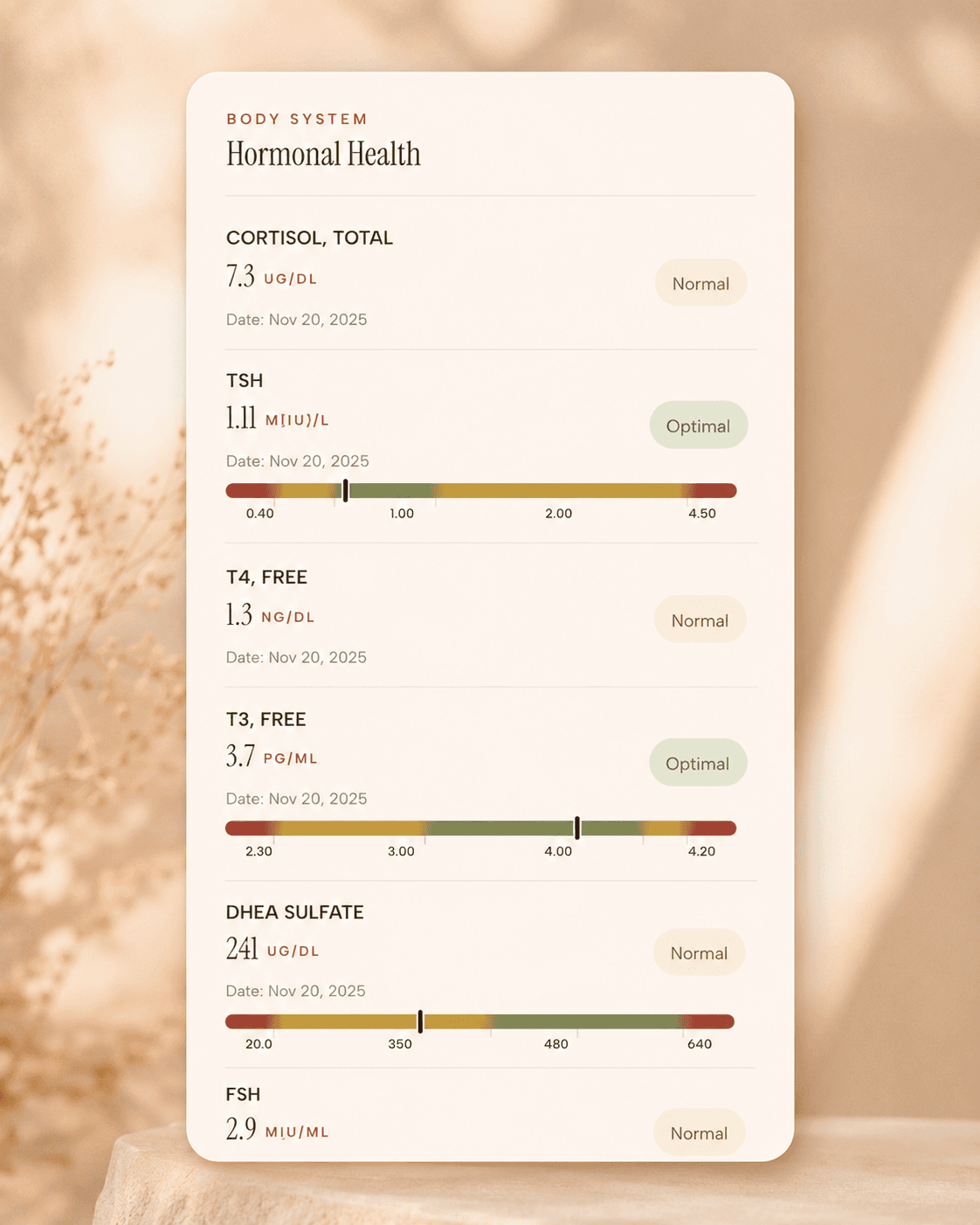
Cortisol, testosterone, thyroid hormones, and blood glucose all influence sleep architecture. Check yours with Vitals Vault's starting-from-$99 panel covering 100+ tests
no doctor's visit required
About 1 week
Schedule online — results typically within a week
Clear next steps
Guidance included, with follow-up care available
HSA / FSA
Eligible for pre-tax health spending accounts
Why Everyone Is Talking About It Now
Matt Walker's dedicated deep sleep framework
Walker's recent episode went beyond generic sleep hygiene to explain the specific inputs that drive slow-wave activity — including temperature, adenosine buildup, and alcohol's suppressive effect on deep sleep even when it seems to help you fall asleep faster. That level of mechanistic detail is rare in mainstream health content and it resonated widely.
Peter Attia on noise as a hidden disruptor
Attia's short on sleep noise highlighted research showing that sounds well below the threshold of waking you up — a partner's breathing, distant traffic, a refrigerator hum — can still pull your brain out of deep sleep and into lighter stages without you ever knowing it happened. This reframed noise from an annoyance into a genuine physiological threat to sleep quality.
Blue light gets a more precise indictment
Attia's blue light short moved the conversation past the vague advice to 'avoid screens before bed' and into the specific biology: short-wavelength blue light suppresses melatonin production by signaling to the part of your brain that controls your body clock [suprachiasmatic nucleus] that it is still daytime. The practical implication is that the timing and intensity of light exposure in the two hours before bed matters far more than most people realize.
The Evidence Behind the Strategies
Temperature: the most reliable lever
Your core body temperature needs to drop by about one to two degrees Fahrenheit to initiate and sustain deep sleep, and this is one of the most replicated findings in sleep science. Studies consistently show that sleeping in a room between 65 and 68 degrees Fahrenheit increases the proportion of slow-wave sleep compared to warmer environments — and cooling the feet and hands, which helps radiate heat, amplifies the effect.
Adenosine buildup drives sleep pressure
Every hour you are awake, a chemical called adenosine accumulates in your brain, and the higher it builds, the stronger your drive for deep sleep becomes — this is what researchers call sleep pressure [homeostatic sleep drive]. Caffeine works by blocking adenosine receptors, which is why drinking it too late in the day reduces deep sleep even if you fall asleep without trouble, because the adenosine signal that would have triggered deep sleep is chemically muted.
Noise disrupts architecture without waking you
A landmark study published in the journal Sleep found that intermittent noise at just 40 decibels — roughly the level of a quiet conversation in another room — significantly reduced slow-wave sleep and increased lighter sleep stages, even though participants did not report waking up. This is why people who sleep in noisy environments often feel unrested despite logging enough total hours.
Alcohol suppresses deep sleep in the second half of the night
Alcohol is a sedative, so it does help you fall asleep faster — but it is metabolized within a few hours and its rebound effect actively suppresses REM and deep sleep in the second half of the night. Research shows that even moderate alcohol consumption reduces slow-wave sleep by up to 20 percent, which is why a nightcap reliably leaves people feeling less restored than a sober night of the same length.
How to Apply These Strategies Tonight
Build a two-hour light and temperature wind-down
About two hours before bed, dim the lights in your home to roughly the level of a lamp rather than overhead lighting, and switch any screens to night mode or warm-toned settings — not because it eliminates blue light entirely, but because it meaningfully reduces the intensity your eyes receive. At the same time, drop your thermostat to between 65 and 68 degrees, or use a fan to cool the room, so your body can begin the temperature drop that signals deep sleep is coming.
Cut caffeine by early afternoon and track the difference
Caffeine has a half-life of roughly five to seven hours in most people, which means a 3 p.m. coffee still has half its adenosine-blocking power at 8 or 9 p.m. Moving your last caffeine to before noon is the single change that many people report produces the most noticeable improvement in how rested they feel — not because they sleep longer, but because their deep sleep deepens.
Address noise with white noise or earplugs, not just silence
Complete silence is not actually the goal — intermittent noise is the problem, because your brain responds to changes in sound rather than to a constant level. A white noise machine or a fan creates a steady acoustic backdrop that masks the unpredictable sounds that would otherwise pull you out of deep sleep, and the research on this is solid enough that it is worth trying even if you think you sleep through noise fine.
Risks and Caveats Worth Knowing
Sleep trackers measure deep sleep imprecisely
Consumer wearables estimate sleep stages using movement and heart rate, but the gold standard is a clinical sleep study [polysomnography] that reads actual brain waves. Your tracker's deep sleep number is a useful trend indicator but not a precise measurement, so avoid making drastic lifestyle changes based on a single night's reading.
Persistent poor sleep may signal an underlying condition
If you apply these strategies consistently for two to three weeks and still wake unrefreshed, it is worth investigating whether something physiological is interfering — sleep apnea, thyroid dysfunction, low testosterone, or elevated cortisol can all fragment sleep architecture in ways that behavioral changes alone cannot fix. A clinician can help you decide whether a sleep study or lab work makes sense.
Sleeping pills do not produce natural deep sleep
Most prescription and over-the-counter sleep medications, including common sedatives and even some antihistamines, induce sedation rather than natural sleep and can actually suppress slow-wave activity. This is a meaningful distinction: you may feel like you slept, but your brain may have gotten less of the restorative deep sleep it needed.
Frequently Asked Questions
How much deep sleep should I be getting each night?
Most adults get between 1 and 2 hours of deep sleep per night, which works out to roughly 13 to 23 percent of total sleep time. That proportion naturally decreases as you age, so a 60-year-old getting 90 minutes of deep sleep is doing well, while a 30-year-old getting only 45 minutes may have room to improve. The quality of those deep sleep cycles matters as much as the raw minutes.
Does melatonin increase deep sleep?
Melatonin helps signal to your brain that it is time to sleep, but it does not directly increase the amount of slow-wave sleep you get — it primarily helps with sleep timing and onset. It is most useful for shifting your sleep schedule, such as when traveling across time zones, rather than as a tool for deepening sleep quality. The strategies that most reliably increase deep sleep are temperature management, caffeine timing, and noise control.
Can you make up for lost deep sleep on weekends?
Partial recovery is possible — your brain does prioritize deep sleep when it is sleep-deprived, so you will get a higher proportion of slow-wave sleep after a short night. But research suggests you cannot fully repay a chronic sleep debt, and the metabolic and cognitive consequences of consistently poor deep sleep accumulate over time in ways that a weekend lie-in does not fully reverse.
Does exercise increase deep sleep?
Yes, and this is one of the most consistent findings in sleep research. Moderate aerobic exercise increases slow-wave sleep, likely because it raises adenosine levels and causes physical fatigue that deepens sleep pressure. The timing matters though — vigorous exercise within two to three hours of bedtime can raise your core body temperature and heart rate in ways that delay sleep onset for some people, so morning or early afternoon workouts tend to work best.
What lab tests are relevant if I think I have a deep sleep problem?
Thyroid hormones, cortisol, testosterone, and fasting glucose are all worth checking because imbalances in any of them can fragment sleep architecture or reduce slow-wave activity. Iron deficiency is also worth ruling out, as it is a common driver of restless legs syndrome, which pulls people out of deep sleep repeatedly through the night. Vitals Vault's panels cover all of these markers and can be ordered without a prior doctor's visit.