Why Are You Gaining Weight Even Though You’re Busy and Not Eating More?
Weight gain in working women often comes from stress hormones, insulin resistance, or low thyroid. Targeted blood tests available—no referral needed.






Weight gain in working women is often driven by stress biology, blood-sugar shifts, or hormone changes that change how your body stores and uses energy. The most common patterns are chronic stress pushing appetite and belly fat, insulin resistance making carbs “stick,” and an underactive thyroid slowing your baseline burn. Simple blood tests can help you figure out which pattern fits you so you stop guessing. If you’re busy, it’s extra frustrating because you can feel like you’re doing “nothing different” while your clothes get tighter. Work can quietly change your sleep, your movement, and your eating rhythm, and those three things talk directly to your hormones. This article walks you through the most likely causes, what actually helps in real life, and which labs are worth checking. If you want help connecting your symptoms to a plan, PocketMD can talk it through with you, and Vitals Vault labs can help you confirm what’s going on.
Why you’re gaining weight at work
Chronic stress changes your appetite
When your stress system stays “on,” your body leans on the stress hormone cortisol to keep you alert and fueled. That can increase cravings for quick energy and make it easier to store fat around your midsection, even if your meals look similar on paper. A useful clue is when weight gain comes with feeling wired at night, tired in the morning, and hungry in the late afternoon. Your takeaway: treat stress like a biological input, not a personality flaw, and start by protecting sleep and meal timing before you slash calories.
Insulin resistance makes carbs stick
Insulin is the hormone that moves sugar from your blood into your cells, but under chronic stress, poor sleep, and frequent snacking, your cells can stop responding well (insulin resistance). Then your body needs more insulin to do the same job, and higher insulin makes it harder to access stored fat for energy. This often feels like energy crashes after lunch and intense cravings for something sweet or starchy later in the day. Your takeaway: you don’t need “no carbs,” but you do need fewer blood-sugar spikes, which usually means more protein at breakfast and fewer ultra-processed snacks at your desk.
Low thyroid slows your baseline burn
Your thyroid is your metabolism’s pace-setter, and when it runs low, your body burns fewer calories at rest and holds onto fluid more easily. This can show up as weight gain plus constipation, dry skin, feeling cold, or hair shedding, although not everyone gets all of those. Work stress can also unmask a borderline thyroid issue because you have less recovery time. Your takeaway: if weight gain comes with those “low thyroid” clues, a TSH test is a reasonable first check rather than assuming it’s willpower.
Perimenopause shifts fat storage
In your late 30s to 50s, changing estrogen and progesterone can alter how your body handles insulin and where it prefers to store fat, often moving it toward the abdomen. You might notice that the scale changes even though your routine hasn’t, and strength training suddenly matters more than it used to. This can feel unfair, but it’s also predictable biology. Your takeaway: if your cycle is changing, sleep is lighter, or you’re getting new PMS-like symptoms, plan for more protein and resistance training rather than just “eating less.”
Work patterns quietly add calories
Long meetings, commuting, and screen-heavy days reduce your natural movement, and that can drop your daily energy burn more than you’d expect. At the same time, decision fatigue makes convenience foods and “just a bite” grazing more likely, which adds up without feeling like a big change. This pattern often looks like steady gain over months rather than a sudden jump. Your takeaway: you don’t need a perfect diet; you need a workday structure that makes the default choice the easier choice.
What actually helps (without quitting your job)
Build a “protein-first” breakfast
If you start the day with enough protein, your hunger hormones tend to calm down and your blood sugar stays steadier through late morning. Aim for roughly 25–35 grams of protein within 1–2 hours of waking, which might look like Greek yogurt plus nuts, eggs with cottage cheese, or a protein smoothie you can drink on the commute. This is especially helpful if your cravings hit at 3–5 pm. Your takeaway: make breakfast repeatable, not impressive, and keep the ingredients at work or at home so you’re not relying on willpower.
Use two short strength sessions
Resistance training tells your body to keep muscle, and muscle is metabolically active tissue that helps with insulin sensitivity. You don’t need hour-long workouts; two 20–30 minute sessions per week can be enough to change the trajectory if you’re consistent. It also helps with the “soft gain” many women notice in perimenopause. Your takeaway: pick a simple plan you can do even on busy weeks, and track reps or weight so you’re progressing instead of just sweating.
Create a snack rule for meetings
Work snacks are rarely about hunger; they’re about availability and stress relief, which is why they’re so hard to “just stop.” Choose one rule you can follow without thinking, such as “I only snack if I can sit down and eat it,” or “I pair any snack with protein,” like cheese, edamame, or a protein bar with at least 15 grams. This reduces mindless grazing without making you feel deprived. Your takeaway: change the environment first, then your habits will follow.
Fix sleep like it’s a treatment
Short sleep raises hunger signals and makes your body more insulin resistant the next day, which means you can gain weight even with the same food. If you can’t add hours, focus on consistency: a fixed wake time, dimmer lights for the last 60 minutes, and caffeine cut off at least 8 hours before bed. If you wake at 3 am with a racing mind, that can be a stress-hormone pattern, not “bad discipline.” Your takeaway: treat sleep as the foundation for appetite control, not a reward you earn after everything else is done.
Match your plan to your labs
If your TSH suggests a thyroid issue, or your insulin markers point to insulin resistance, the most effective plan changes. Thyroid-driven weight gain often improves when the underlying thyroid problem is treated, while insulin resistance responds best to fewer spikes, more muscle, and sometimes medication support. This is where targeted testing saves you months of trial-and-error. Your takeaway: use symptoms to choose tests, then use tests to choose strategy.
Useful biomarkers to discuss with your clinician
Insulin
Insulin is a master metabolic hormone that regulates glucose uptake, fat storage, and numerous cellular processes. In functional medicine, fasting insulin levels are one of the earliest and most sensitive markers of metabolic dysfunction. Elevated insulin (hyperinsulinemia) often precedes diabetes by years or decades and is central to metabolic syndrome. High insulin levels promote fat storage, inflammation, and contribute to numerous chronic diseases including cardiovascular disease, PCOS, and certain cancers.…
Learn moreTSH
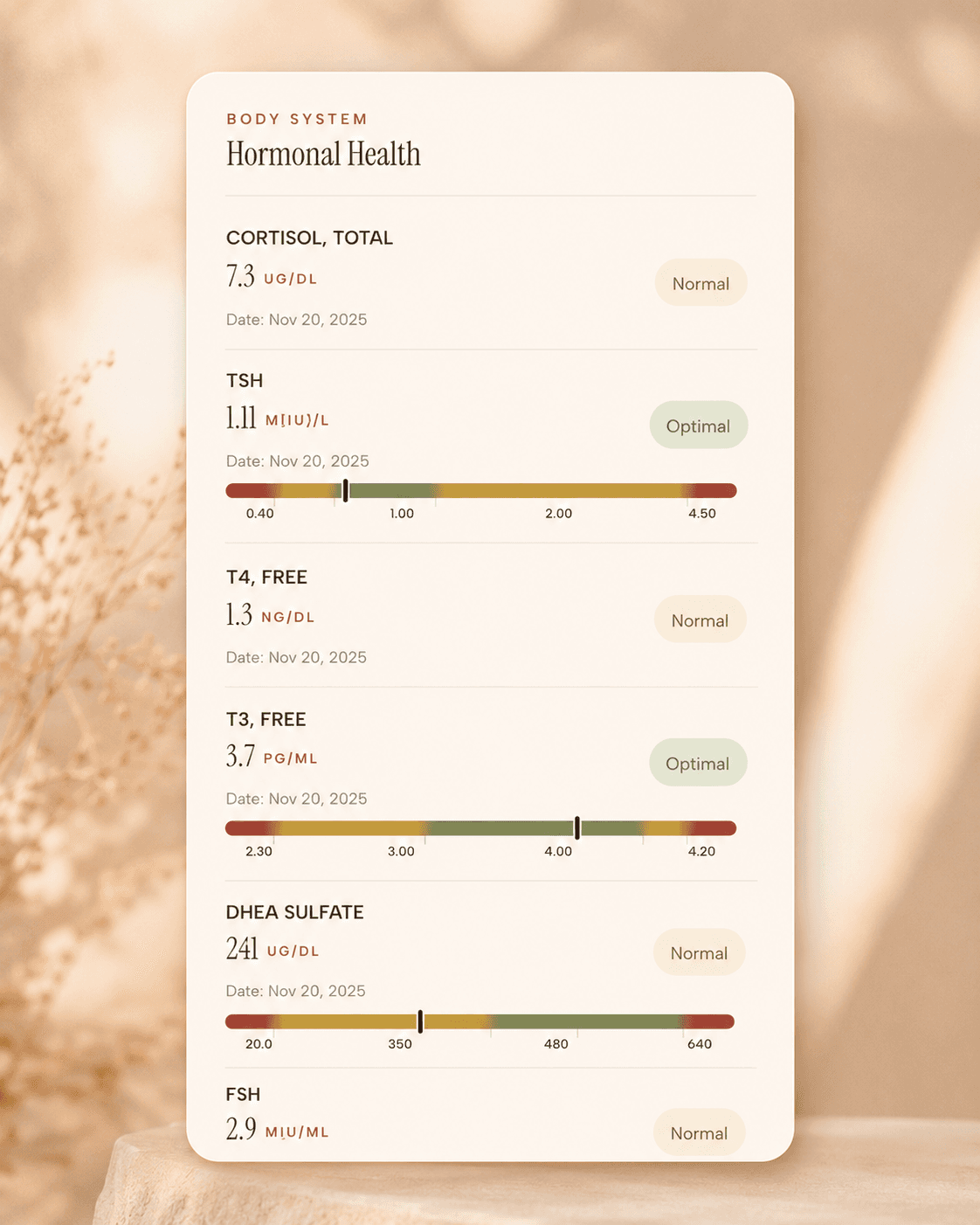
TSH is the master regulator of thyroid function, controlling the production of thyroid hormones T4 and T3. In functional medicine, we use narrower TSH ranges than conventional medicine to identify subclinical thyroid dysfunction early. Even mildly elevated TSH can indicate thyroid insufficiency, leading to fatigue, weight gain, depression, and metabolic dysfunction. TSH levels are influenced by stress, nutrient deficiencies, autoimmune conditions, and environmental toxins. Optimal TSH supports energy, metabolism…
Learn moreCortisol, Total
Cortisol is the primary stress hormone that regulates metabolism, immune function, and blood pressure. In functional medicine, cortisol assessment is crucial for understanding stress response and its impact on overall health. Chronic elevation suppresses testosterone production and immune function, while low cortisol indicates adrenal insufficiency. Optimal cortisol rhythm supports energy, mood stability, and hormone balance. Cortisol orchestrates the body's stress response and daily energy rhythms. Balanced cor…
Learn moreLab testing
Check TSH, fasting insulin, and HbA1c at Quest
starting from $99 panel with 100+ tests, one visit
No referral needed
About 1 week
Schedule online — results typically within a week
Clear next steps
Guidance included, with follow-up care available
HSA / FSA
Eligible for pre-tax health spending accounts
Pro Tips
Run a 7-day “workday audit” by writing down when you first eat, when you last eat, and when cravings hit. Patterns like a tiny breakfast and a huge late lunch show up fast, and they’re fixable.
If you snack to stay focused, try a planned 3 pm protein snack for two weeks and see what changes. Something with 15–25 grams of protein often reduces the evening “I need something now” feeling.
Add a 10-minute walk right after your biggest carb meal, even if it’s just around the building or up and down stairs. Post-meal movement can noticeably blunt blood-sugar spikes in a way that feels like “less crash.”
Keep one “meeting-safe” meal in your bag or desk that you actually like, such as a tuna pouch with crackers or a shelf-stable protein shake. It prevents the emergency pastry decision when your schedule blows up.
Weighing daily can backfire if stress and cycle-related water retention are part of your story. Try weighing 2–3 times per week and also track waist measurement monthly, because midsection changes often show progress before the scale does.
Frequently Asked Questions
Why am I gaining weight even though I’m eating the same?
Your intake might be similar, but your output and hormones can change without you noticing. Less sleep, less daily movement, and higher stress can raise appetite signals and worsen insulin resistance, which makes your body store energy more easily. Checking fasting insulin and HbA1c can show whether blood sugar is part of the story. Start by tightening meal timing and adding two weekly strength sessions, then reassess in 8–12 weeks.
Can stress really cause belly fat in women?
Yes, chronic stress can keep cortisol higher, and that can increase cravings and shift fat storage toward your abdomen. It also makes sleep lighter, and poor sleep further pushes hunger hormones the next day. If your belly gain comes with waking at night or feeling wired, treat sleep and decompression as part of the plan, not optional extras. A consistent wake time is often the fastest lever.
What thyroid test should I ask for with weight gain?
TSH is the usual first test because it screens for an underactive thyroid pattern that can contribute to weight gain and fatigue. If TSH is elevated or you have strong symptoms, many clinicians add free T4 and sometimes thyroid antibodies to clarify the cause. A TSH above roughly 2.5–3.0 mIU/L can be worth discussing in symptomatic people, even if the lab flags it as normal. Bring a short symptom list to your appointment so the number is interpreted in context.
How do I know if I have insulin resistance?
Common clues are strong carb cravings, energy crashes after meals, and weight gain around the midsection, but labs make it clearer. Fasting insulin that is higher than expected and an HbA1c drifting toward 5.7% suggest insulin resistance is likely contributing. You can start improving it with protein-forward breakfasts, fewer snack spikes, and resistance training. Recheck HbA1c after about 3 months to see if your changes are working.
What’s the fastest realistic way to stop gaining weight with a busy job?
The fastest “realistic” move is to stabilize your day so your body stops swinging between under-fueled and over-hungry. Pick a repeatable protein breakfast, plan one protein snack time, and add a 10-minute walk after your biggest meal for two weeks. If weight gain continues or you have symptoms like constipation, hair shedding, or feeling cold, add labs such as TSH, fasting insulin, and HbA1c to avoid guessing. Then adjust based on what you find.
What the research says
AHA/ACC/TOS guideline on overweight and obesity management in adults (behavior, diet, and activity strategies)
Sleep restriction increases hunger and appetite, helping explain why short sleep can drive weight gain
Insulin resistance and cardiometabolic risk: ADA Standards of Care (screening and interpretation of A1c and related markers)