Slow Metabolism in Working Women: What’s Really Going On?
Slow metabolism in working women often comes from thyroid slowdown, muscle loss, or insulin resistance. Targeted labs available at Quest—no referral needed.





Slow metabolism in working women is usually not a character flaw or “bad willpower.” It is most often driven by a thyroid slowdown, insulin resistance that keeps your body in storage mode, or a drop in lean muscle that quietly lowers your daily calorie burn. A few targeted blood tests can help you figure out which one is actually happening in your body. If you are working long hours, sitting more than you realize, sleeping less than you need, and trying to diet on top of it, your body can adapt in ways that feel unfair. You may be eating “pretty well” and still gaining weight, feeling cold, or dragging through afternoons. This page walks you through the most common medical and lifestyle drivers, what tends to help in real life, and which labs can clarify the picture. If you want help connecting your symptoms and results into a plan, PocketMD can talk it through with you, and Vitals Vault labs can help you check the key markers without a long wait.
Why your metabolism feels slow at work
Thyroid underactivity slows your engine
Your thyroid is like your body’s idle speed control, and when it runs low, you burn fewer calories at rest and you often feel tired, cold, and puffy. This can happen with an underactive thyroid (hypothyroidism), but it can also show up as “borderline” thyroid function that still affects how you feel. If your weight gain comes with constipation, dry skin, or a slower heart rate than usual, thyroid labs are a smart first check.
Insulin resistance keeps you storing
Insulin is the hormone that moves sugar from your blood into your cells, but when your cells stop responding well, your body compensates by making more. High insulin makes it easier to store fat and harder to access it, which can feel like you are doing everything right and nothing is moving. A common clue is strong cravings or a mid-afternoon crash after a carb-heavy lunch, so looking at fasting insulin and A1c can be more revealing than the scale alone.
Dieting lowers your daily burn
When you cut calories hard for weeks, your body often responds by quietly spending less energy, which is called metabolic adaptation. You may unconsciously move less, feel colder, and have less “get up and go,” even if you are still forcing workouts. If you have a history of yo-yo dieting, the takeaway is not “eat less,” but “rebuild” with enough protein and strength training so your body has a reason to maintain muscle.
Stress and poor sleep change hormones
Chronic stress and short sleep push your body toward survival mode, which can raise your appetite and make your blood sugar harder to control. The stress hormone (cortisol) is supposed to rise in the morning and fall at night, but when your schedule keeps you wired late, that rhythm can flatten and you may feel both tired and restless. If your slow metabolism feeling comes with 2–3 a.m. wake-ups or a “tired but wired” vibe, treating sleep like a medical priority can move the needle faster than another workout.
Less muscle from sitting all day
Muscle is metabolically active tissue, so when you lose it, your resting calorie burn drops even if your weight stays the same for a while. Busy work seasons often mean more sitting, fewer steps, and less strength training, which slowly shifts your body composition. A practical clue is that your clothes fit tighter even if the scale barely changes, and the fix is to build muscle on purpose rather than chasing more cardio.
What actually helps speed things up
Strength train for muscle, not punishment
Two to four short sessions a week can be enough if you focus on progressive overload, which means you gradually lift heavier or do more reps over time. Muscle makes your body more insulin-sensitive and raises your baseline energy use, so it helps even on days you do not work out. If you are new, start with a simple full-body plan and track one or two lifts so you can see progress in black and white.
Build meals around protein and fiber
When your plate starts with protein and high-fiber plants, your blood sugar rises more slowly and you stay full longer, which makes cravings less bossy. This is not about perfection; it is about making lunch stop wrecking your afternoon. Try anchoring each meal with a palm-sized protein and adding a fiber “volume” food like beans, berries, or a big salad, then notice your energy at 3 p.m.
Use a “movement snack” workday
If you sit for hours, your muscles stop soaking up glucose efficiently, even if you exercise later. A two- to five-minute walk after meals or a quick set of stairs between meetings can improve blood sugar handling the same day. Put it on your calendar like a meeting, because relying on motivation during a busy week rarely works.
Fix sleep like it’s part of treatment
Aim for a consistent wake time and a wind-down routine that actually lowers stimulation, because your body needs a predictable signal that the day is over. If you wake at night, bright light and phone scrolling can lock you into a stress loop, so keep lights low and do something boring until you feel sleepy again. After two weeks of steadier sleep, many people notice fewer cravings and better workout recovery, which makes fat loss possible again.
Treat the underlying medical cause
If labs show true thyroid underactivity, treatment can improve energy, bowel regularity, and weight trajectory, although it is rarely an instant “weight loss switch.” If insulin resistance is the main driver, your clinician may discuss medications that improve insulin sensitivity alongside nutrition and strength training. The point is to stop guessing, because the right plan depends on what your hormones and metabolism are actually doing.
Lab tests that help explain slow metabolism
TSH
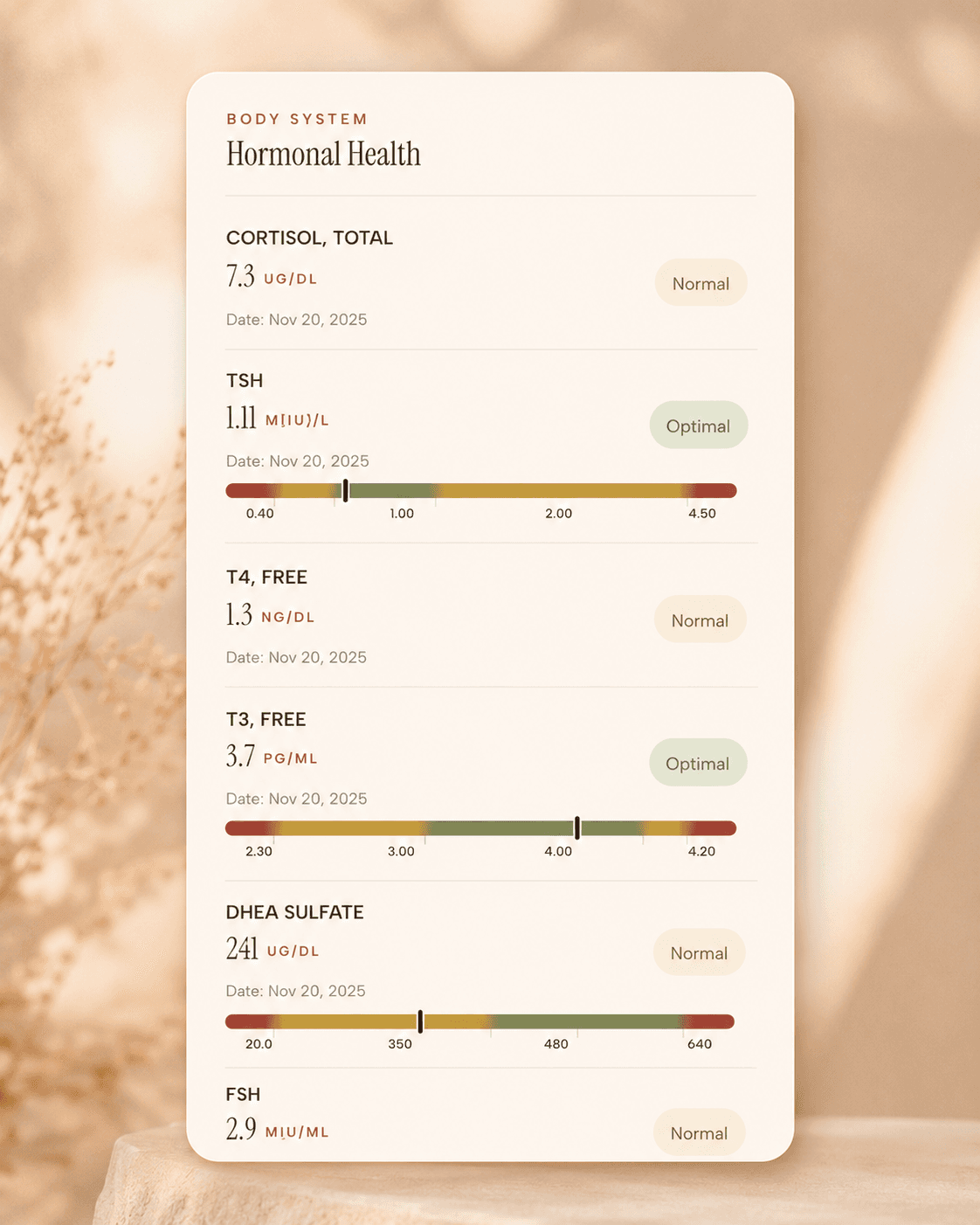
TSH is the master regulator of thyroid function, controlling the production of thyroid hormones T4 and T3. In functional medicine, we use narrower TSH ranges than conventional medicine to identify subclinical thyroid dysfunction early. Even mildly elevated TSH can indicate thyroid insufficiency, leading to fatigue, weight gain, depression, and metabolic dysfunction. TSH levels are influenced by stress, nutrient deficiencies, autoimmune conditions, and environmental toxins. Optimal TSH supports energy, metabolism…
Learn moreInsulin
Insulin is a master metabolic hormone that regulates glucose uptake, fat storage, and numerous cellular processes. In functional medicine, fasting insulin levels are one of the earliest and most sensitive markers of metabolic dysfunction. Elevated insulin (hyperinsulinemia) often precedes diabetes by years or decades and is central to metabolic syndrome. High insulin levels promote fat storage, inflammation, and contribute to numerous chronic diseases including cardiovascular disease, PCOS, and certain cancers.…
Learn moreGlucose
Fasting glucose is a fundamental marker of glucose metabolism and insulin function. In functional medicine, we recognize that even 'normal' glucose levels in the upper range may indicate early insulin resistance. Optimal fasting glucose reflects efficient glucose regulation and insulin sensitivity. Elevated fasting glucose suggests the body's inability to maintain normal glucose levels overnight, indicating hepatic insulin resistance or insufficient insulin production. This marker is essential for early detectio…
Learn moreLab testing
Check TSH, free T4, fasting insulin, and A1c at Quest
starting from $99 panel with 100+ tests, one visit
No referral needed
About 1 week
Schedule online — results typically within a week
Clear next steps
Guidance included, with follow-up care available
HSA / FSA
Eligible for pre-tax health spending accounts
Pro Tips
Run a two-week “energy and hunger” log, not just a food log. Rate your 3 p.m. energy from 1–10 and note what lunch was, because patterns like a carb-heavy lunch followed by a crash often point to insulin resistance.
If you only have 20 minutes, do strength training instead of squeezing in more cardio. Pick one lower-body move and one upper-body move, and try to add one rep each week so your body gets a clear signal to keep muscle.
Use a 10-minute walk after dinner as your default, even if it is slow. Post-meal walking can lower the glucose spike that drives cravings later, which makes the next day easier.
Stop “saving calories” all day and then overeating at night by planning a protein-forward afternoon snack. Something like Greek yogurt or a protein shake can prevent the late-night pantry spiral that makes you feel like your metabolism is broken.
If you suspect thyroid issues, take photos of any neck swelling and write down your resting heart rate for a week. Those details help your clinician interpret TSH and free T4 in the context of your actual symptoms.
Frequently Asked Questions
Can stress really slow your metabolism?
Yes, chronic stress can make your metabolism feel slower because it disrupts sleep, increases cravings, and pushes your body toward higher insulin levels. It is less about “stress burning calories” and more about stress changing your recovery and appetite signals. If your sleep is under 6–7 hours most nights, start there and reassess your weight trend after two weeks of steadier sleep.
Why can’t I lose weight even with diet and exercise?
If you are dieting hard and exercising more, your body can adapt by lowering daily energy burn and increasing hunger, which is metabolic adaptation. Another common reason is insulin resistance, where fasting insulin is high even when glucose looks normal. Ask for fasting insulin and A1c, and consider strength training as your main workout focus for 8–12 weeks.
What thyroid tests should I ask for if my metabolism feels slow?
A practical starting point is TSH plus free T4, because together they show the signal from your brain and the hormone available to your tissues. If those are abnormal or your symptoms are strong, many clinicians add thyroid antibodies to look for autoimmune thyroid disease. Bring a short symptom list like cold intolerance, constipation, and fatigue so the numbers are interpreted in context.
What is a good fasting insulin level for fat loss?
There is no single perfect number, but many metabolic clinicians like fasting insulin in the low single digits, and values above about 8–10 µIU/mL often suggest insulin resistance. High fasting insulin can make fat loss feel unusually difficult because your body stays in storage mode. If yours is elevated, prioritize strength training and protein-forward meals, then recheck in about 8–12 weeks.
Is metabolism slower after 35, or is that a myth?
Your metabolism does not suddenly “crash” at 35, but many women lose muscle gradually with busy schedules and less strength training, and that lowers resting calorie burn. Hormone shifts, sleep disruption, and stress can stack on top of that and make the change feel dramatic. If you rebuild muscle and improve sleep consistency, many people see their weight and energy respond again within a few months.