Slow Metabolism in Women: What It Really Means
Slow metabolism in women often comes from low thyroid function, insulin resistance, or muscle loss with age. Targeted labs at Quest—no referral needed.





Slow metabolism in women is usually not a mystery “broken metabolism” problem. It is most often driven by an underactive thyroid, insulin resistance that keeps your body in storage mode, or a drop in muscle mass from dieting, stress, or aging. A few targeted blood tests can help you figure out which one is actually happening in your body. If you feel like you are doing “everything right” and the scale will not budge, you are not alone, and you are not imagining it. Metabolism is the sum of how your body uses energy, and it changes with hormones, sleep, muscle, and even how aggressively you have been dieting. This page walks you through the most common reasons it slows down in women, what tends to help in real life, and which labs can clarify the story. If you want help connecting your symptoms and results into a plan, PocketMD can talk it through with you, and Vitals Vault labs can help you test the most relevant markers without a long wait.
Why your metabolism feels slow (especially as a woman)
Your thyroid is underactive
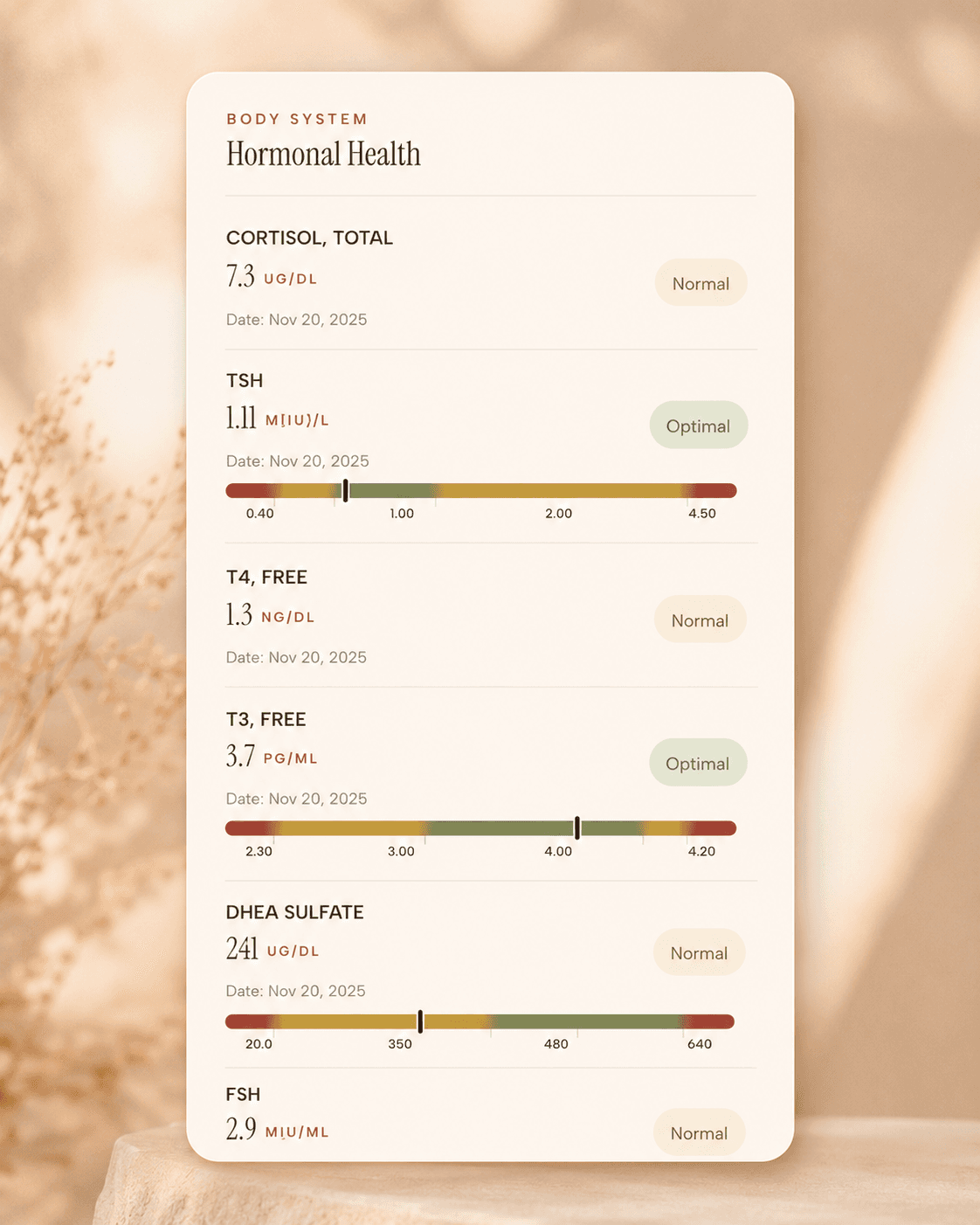
Your thyroid is like your body’s energy dial, and when it runs low (hypothyroidism), you burn fewer calories at rest and you often feel tired, cold, and puffy. The tricky part is that “normal” thyroid labs can still hide a problem if your TSH is high-normal and your free T4 is low-normal for you. If weight gain comes with constipation, dry skin, hair thinning, or heavier periods, it is worth checking TSH and free T4 rather than guessing.
Insulin resistance keeps you storing
Insulin is the hormone that moves sugar from your blood into your cells, but when your cells stop responding well, your body compensates by making more. Higher insulin makes it easier to store fat and harder to access it, which can feel like you are “stuck” even with calorie control. If you notice belly weight gain, intense carb cravings, or you get sleepy after meals, ask for fasting insulin and HbA1c so you can see whether this is part of your picture.
You lost muscle from dieting
Muscle is expensive tissue, which means it burns energy even when you are sitting still. If you have done repeated low-calorie diets or a lot of cardio without strength training, your body can adapt by lowering resting energy use and shedding muscle, so the same food intake now maintains a higher body fat percentage. A simple takeaway is to treat strength training as a metabolism intervention, not just a fitness hobby, because rebuilding muscle raises your baseline burn over time.
Perimenopause shifts hormones and appetite
In your 40s and early 50s, changing estrogen and progesterone can alter where you store fat, how hungry you feel, and how well you sleep. Poor sleep and more stress hormones can push you toward higher evening cravings and lower daytime energy, which quietly reduces daily movement and total burn. If your weight changed around the same time your cycle became irregular or your sleep got worse, think “hormone transition plus lifestyle ripple effects,” not “suddenly lazy.”
Your body is running on low sleep
When you are chronically short on sleep, your hunger hormones shift so you feel less satisfied after meals and more drawn to quick energy. At the same time, fatigue makes you move less without realizing it, which can drop your daily calorie burn more than a single workout adds back. If you wake unrefreshed, snore, or have morning headaches, it is worth treating sleep like a medical issue, because fixing it can make every other strategy work better.
What actually helps speed it up (without gimmicks)
Build muscle with progressive strength
Aim for two to four strength sessions per week where you gradually increase the challenge, because “maintenance workouts” rarely rebuild lost muscle. Focus on big movements like squats, hinges, pushes, and pulls, and track either weight, reps, or sets so you know you are progressing. If you are new or dealing with joint pain, starting with machines or resistance bands still counts, and it is often the most sustainable path.
Eat enough protein at each meal
Protein supports muscle and it also has a higher “digesting cost,” which means your body uses more energy processing it than it does with carbs or fat. A practical target many women can use is 25–35 grams of protein per meal, which usually looks like a palm-sized portion of meat or tofu, or a Greek yogurt plus an added protein source. If you are always hungry an hour after eating, increasing protein is often a faster fix than cutting more calories.
Treat insulin resistance directly
If fasting insulin or HbA1c suggests insulin resistance, the goal is to lower insulin spikes and improve how your muscles use glucose. That often means pairing carbs with protein and fiber, taking a 10–15 minute walk after meals, and prioritizing strength training because muscle is a major glucose sink. If your numbers are clearly abnormal, talk with a clinician about whether medication like metformin or a GLP-1 is appropriate for you rather than trying to white-knuckle it.
Fix the thyroid problem you can measure
If your TSH is elevated and free T4 is low, treating hypothyroidism can improve energy, constipation, and water retention, which makes weight management feel possible again. The key is that thyroid medication is not a fat-burner, so you still need protein and strength work, but it removes a major brake. Ask your clinician what TSH target they use for symptom control, because many people feel best when TSH is closer to the lower half of the reference range.
Stop the crash-diet cycle
Very low-calorie dieting can temporarily drop the scale, but it also increases fatigue and makes your body defend its weight more aggressively. A more effective approach is a modest deficit you can hold for months, with planned diet breaks and a focus on performance goals like adding strength or steps. If you have been dieting for years, even a 4–8 week “maintenance phase” can help restore training quality and reduce rebound eating.
Useful biomarkers to discuss with your clinician
TSH
TSH is the master regulator of thyroid function, controlling the production of thyroid hormones T4 and T3. In functional medicine, we use narrower TSH ranges than conventional medicine to identify subclinical thyroid dysfunction early. Even mildly elevated TSH can indicate thyroid insufficiency, leading to fatigue, weight gain, depression, and metabolic dysfunction. TSH levels are influenced by stress, nutrient deficiencies, autoimmune conditions, and environmental toxins. Optimal TSH supports energy, metabolism…
Learn moreInsulin
Insulin is a master metabolic hormone that regulates glucose uptake, fat storage, and numerous cellular processes. In functional medicine, fasting insulin levels are one of the earliest and most sensitive markers of metabolic dysfunction. Elevated insulin (hyperinsulinemia) often precedes diabetes by years or decades and is central to metabolic syndrome. High insulin levels promote fat storage, inflammation, and contribute to numerous chronic diseases including cardiovascular disease, PCOS, and certain cancers.…
Learn moreHemoglobin A1C
Hemoglobin A1C (HbA1c) reflects average blood glucose levels over the past 2-3 months by measuring the percentage of hemoglobin proteins that have glucose attached. In functional medicine, HbA1c is a cornerstone marker for metabolic health, insulin sensitivity, and diabetes risk assessment. Optimal levels (4.6-5.3%) indicate excellent blood sugar regulation and reduced risk of metabolic disease. Levels above 5.4% but below 5.7% suggest early metabolic dysfunction and increased cardiovascular risk, even before pr…
Learn moreLab testing
Get TSH, free T4, fasting insulin, and HbA1c checked at Quest
starting from $99 panel with 100+ tests, one visit
No referral needed
About 1 week
Schedule online — results typically within a week
Clear next steps
Guidance included, with follow-up care available
HSA / FSA
Eligible for pre-tax health spending accounts
Pro Tips
Run a 14-day “energy and hunger” log alongside your weight: rate your afternoon energy 1–10, note cravings after dinner, and write down your sleep time. Patterns often point to sleep debt or under-eating protein faster than any supplement does.
If you strength train, pick one lift to progress for a month, such as a leg press or dumbbell row, and add 1–2 reps each week before you add weight. That small, measurable progression is how you rebuild the muscle that drives resting burn.
Try a 10–15 minute walk right after your biggest carb meal for one week. If your post-meal sleepiness and cravings improve, it is a strong hint that insulin dynamics are part of your “slow metabolism” story.
If you suspect thyroid issues, take your temperature and resting heart rate for three mornings before you get out of bed. A consistently low waking temp and a slow pulse do not diagnose anything, but they give you concrete data to bring to a thyroid conversation.
If you have been dieting hard, schedule a two-week maintenance phase where you keep calories steady and focus on lifting performance and steps. Many women find their training quality and hunger signals normalize, which makes the next fat-loss phase more effective.
Frequently Asked Questions
Can a slow metabolism be caused by hypothyroidism?
Yes. Low thyroid function (hypothyroidism) lowers your resting energy use and often comes with fatigue, cold intolerance, constipation, and weight gain that feels out of proportion to your habits. Checking TSH and free T4 is the most direct way to screen for it, and treatment can remove a major brake on your energy. If you have symptoms plus a rising TSH over time, bring that trend to your clinician.
Why can’t I lose weight even with diet and exercise?
The most common reasons are that your calorie burn has adapted downward after repeated dieting, you have insulin resistance that keeps hunger and storage signals high, or your thyroid is underperforming. None of those are character flaws, and they are all testable or addressable. Start by tracking protein intake and strength progression for two weeks, and consider fasting insulin, HbA1c, TSH, and free T4 if you still feel stuck.
What blood tests should I get for a slow metabolism?
A practical starting trio is TSH and free T4 to evaluate thyroid drive, plus fasting insulin to look for insulin resistance even when glucose seems normal. If fasting insulin is elevated, adding HbA1c helps show whether blood sugar has been running high over the last 2–3 months. Bring your results and symptoms together, because the “best” interpretation depends on what you are feeling.
Does metabolism slow down after 40 for women?
It can, but the biggest driver is usually loss of muscle and lower daily movement, not a sudden collapse in metabolism. Perimenopause can also worsen sleep and shift appetite, which indirectly reduces your daily burn and makes cravings louder. The most reliable counter-move is progressive strength training paired with enough protein, because that protects the tissue that keeps metabolism higher.
How do I boost my metabolism safely without supplements?
The safest “metabolism boosters” are boring but powerful: build muscle with progressive strength training, eat enough protein at each meal, and use short post-meal walks to improve glucose handling. If labs show hypothyroidism or significant insulin resistance, treating the underlying issue is safer and more effective than stimulant-based supplements. Pick one measurable change this week, such as two strength sessions and a protein target, and reassess in 14 days.