Why Is Your Sleep Getting Worse in Your 30s?
Poor sleep in your 30s often comes from stress hormones, circadian drift, or sleep apnea. Targeted blood tests available—no referral needed.






Poor sleep in your 30s is usually your brain getting “stuck” in alert mode from stress and schedule pressure, your body clock drifting later than your life allows, or a hidden sleep disruptor like sleep apnea. It can also be driven by thyroid changes or iron deficiency that make your nights lighter and your mornings rougher. A few targeted labs can help narrow down which of these is most likely for you. Your 30s are a perfect storm for sleep: more responsibility, less recovery time, and often more caffeine and screen time than you realize. If you’re a new parent, your sleep may be fragmented even when you technically “get enough hours,” and that fragmentation can feel brutal. The good news is that sleep is trainable, and the best fixes are usually specific, not vague. This guide walks you through the most common causes, what actually helps (including CBT-I style strategies), and where PocketMD and Vitals Vault labs can help you personalize the plan instead of guessing.
Why Is Your Sleep Getting Worse in Your 30s?
Stress keeps your body on
When your stress system is revved up, your body makes more alertness signals, which can feel like a tired-but-wired brain that won’t power down. You might fall asleep and then pop awake at 2–4 a.m. with your mind racing, because your body treats the night like problem-solving time. The takeaway is to treat this like a nervous-system pattern, not a willpower issue, and build a wind-down that starts earlier than you think.
Your body clock drifts later
Many adults naturally shift toward a later sleep schedule, but work, kids, and early mornings don’t shift with you. That mismatch can look like “insomnia,” even though your body is simply not ready to sleep at 10 p.m. If you’re most alert late at night and miserable in the morning, your best move is to anchor a consistent wake time and use morning light to pull your clock earlier.
Sleep apnea or snoring fragments sleep
You don’t have to be older to have breathing-related sleep disruption. If your airway narrows at night, your brain briefly “micro-wakes” to reopen it, which means you can spend eight hours in bed and still feel unrefreshed. Clues include loud snoring, waking with a dry mouth, morning headaches, or your partner noticing pauses in breathing. If this sounds like you, a sleep evaluation is worth it because no amount of magnesium will fix an airway problem.
Thyroid overdrive or swings
If your thyroid is running fast, your whole system speeds up, which can feel like restlessness, a pounding heart at night, heat intolerance, or waking too early. Even milder thyroid shifts can make sleep lighter and more fragile, especially when life stress is already high. A simple TSH test is often the quickest way to rule this in or out, and it matters because treating the thyroid issue can improve sleep without sedatives.
Low iron or vitamin D
Low iron stores can make your sleep feel unsettled and can worsen leg discomfort at night, even if your hemoglobin is “normal.” Low vitamin D is also linked with poorer sleep quality in many people, and it often travels with indoor work, winter months, and exhaustion that makes you skip daylight. The practical takeaway is that checking ferritin and vitamin D can prevent months of trial-and-error supplements that don’t match what your body actually needs.
What Actually Helps You Sleep Again
Use CBT-I rules for insomnia
CBT-I (cognitive behavioral therapy for insomnia) works because it retrains the connection between your bed and sleepiness. The core move is to stop spending long stretches awake in bed, which teaches your brain that the bed is a place to think. If you’re awake for about 20–30 minutes, get up, keep lights low, do something boring, and return only when sleepy.
Set a fixed wake time
A consistent wake time is the strongest “reset button” for your sleep rhythm, even after a bad night. Sleeping in can feel like relief, but it often pushes your body clock later and makes the next night worse. Pick a wake time you can keep most days, and let bedtime drift earlier naturally as your sleep drive rebuilds.
Get bright light early
Morning light tells your brain it is daytime, which helps melatonin rise earlier the next evening. You do not need perfection, but you do need consistency: 10–20 minutes outside within an hour of waking is a strong start, even on cloudy days. If mornings are dark where you live, a 10,000-lux light box can be a practical substitute.
Cut caffeine earlier than you think
Caffeine can linger for hours, and in your 30s you may notice you are less forgiving than you were at 22. If you’re waking at night or taking forever to fall asleep, try moving your last caffeinated drink to before noon for two weeks and see what changes. This is one of the fastest experiments you can run because the signal is usually clear.
Treat the specific disruptor
If snoring, reflux, pain, or nighttime anxiety is the main thing waking you, the best sleep plan targets that driver directly. For example, reflux-related waking often improves when you finish dinner earlier and elevate the head of the bed, while suspected sleep apnea needs a sleep study and airway-focused treatment. The point is to stop blaming “bad sleep” and start naming what is actually interrupting your sleep cycles.
Useful biomarkers to discuss with your clinician
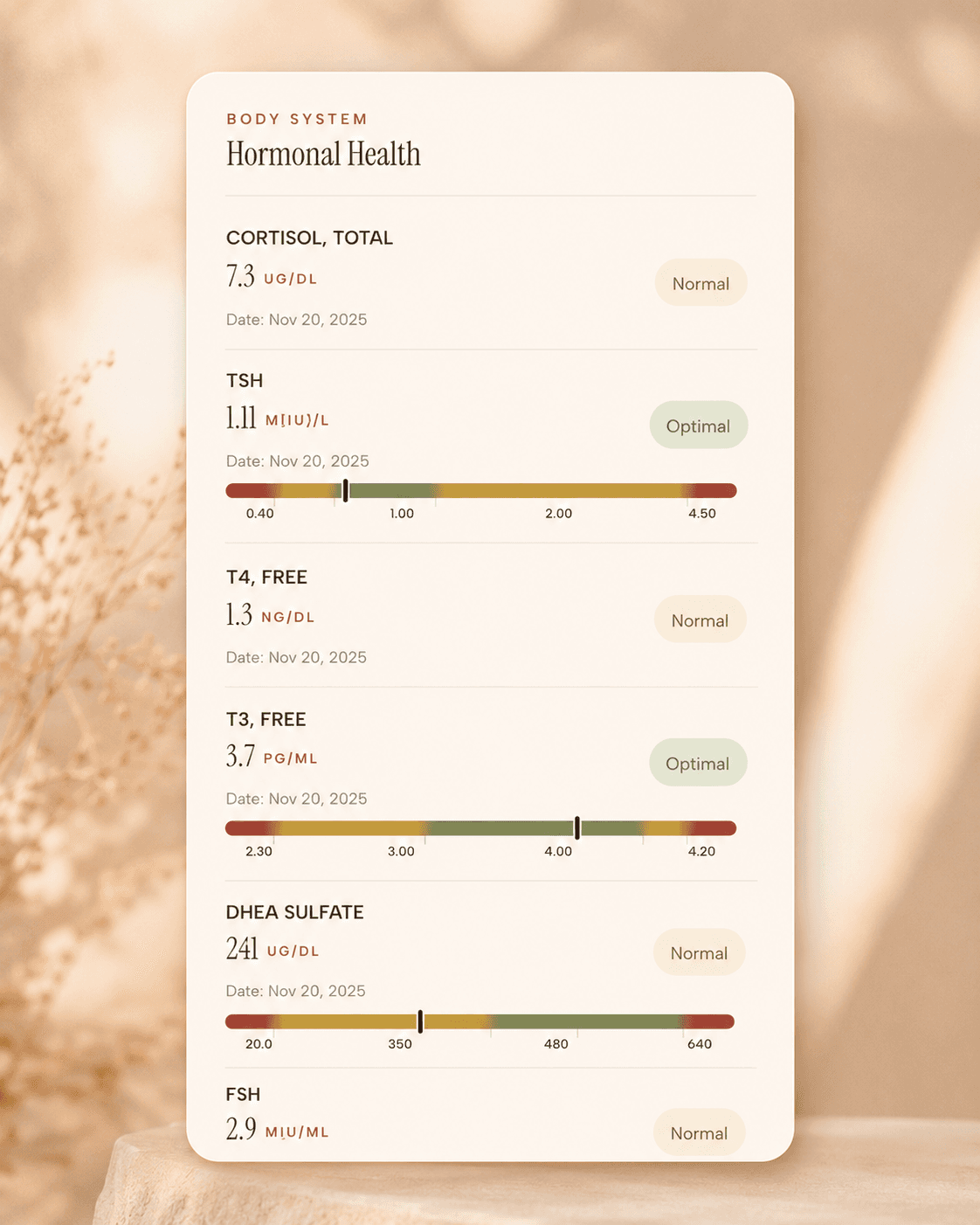
Cortisol, Total
Cortisol is the primary stress hormone that regulates metabolism, immune function, and blood pressure. In functional medicine, cortisol assessment is crucial for understanding stress response and its impact on overall health. Chronic elevation suppresses testosterone production and immune function, while low cortisol indicates adrenal insufficiency. Optimal cortisol rhythm supports energy, mood stability, and hormone balance. Cortisol orchestrates the body's stress response and daily energy rhythms. Balanced cor…
Learn moreTSH
TSH is the master regulator of thyroid function, controlling the production of thyroid hormones T4 and T3. In functional medicine, we use narrower TSH ranges than conventional medicine to identify subclinical thyroid dysfunction early. Even mildly elevated TSH can indicate thyroid insufficiency, leading to fatigue, weight gain, depression, and metabolic dysfunction. TSH levels are influenced by stress, nutrient deficiencies, autoimmune conditions, and environmental toxins. Optimal TSH supports energy, metabolism…
Learn moreFerritin
Ferritin is your body's iron storage protein, reflecting total iron stores in the body. In functional medicine, ferritin assessment is crucial for identifying both iron deficiency and iron overload, conditions that can significantly impact energy levels and overall health. Low ferritin is the earliest sign of iron deficiency, often occurring before anemia develops. This can cause fatigue, weakness, restless leg syndrome, and cognitive impairment. Conversely, elevated ferritin may indicate iron overload, inflamma…
Learn moreLab testing
Get TSH, ferritin, and vitamin D checked at Quest
starting from $99 panel with 100+ tests, one visit
No referral needed
About 1 week
Schedule online — results typically within a week
Clear next steps
Guidance included, with follow-up care available
HSA / FSA
Eligible for pre-tax health spending accounts
Pro Tips
Run a two-week “sleep detective” log, but keep it simple: write down your wake time, estimated sleep time, caffeine cutoff, alcohol, and the single biggest stressor that day. Patterns usually show up faster than you expect.
If you wake at 3 a.m., avoid checking the time on your phone because it trains your brain to start calculating how much sleep you have left. Turn the clock away, and use a low-light, boring activity until you feel sleepy again.
Try a 90-minute wind-down boundary: the last 30 minutes are screen-free, the 30 minutes before that are “tomorrow planning,” and the first 30 minutes are for chores. This stops your brain from doing life admin in bed.
If you suspect sleep apnea, record a short audio clip of your snoring (or ask your partner what they notice) and bring it to a clinician. Concrete evidence speeds up getting the right testing.
If you use melatonin, think of it as a timing tool, not a sedative. A low dose like 0.3–1 mg taken 2–3 hours before your target bedtime is often more helpful for shifting your schedule than a large dose right at bedtime.
Frequently Asked Questions
Why am I suddenly sleeping badly in my 30s?
In your 30s, sleep often gets worse because stress and responsibilities keep your nervous system activated, and your body clock can drift later than your schedule allows. Hidden disruptors like snoring or sleep apnea can also fragment sleep without you fully realizing it. If this change feels abrupt, checking TSH and ferritin can help rule out thyroid shifts or low iron stores. Start by locking in a consistent wake time for two weeks and see if your sleep pressure rebuilds.
How do I know if my poor sleep is anxiety or insomnia?
Anxiety-driven sleep trouble usually feels like mental “spin” and physical tension, especially at bedtime or after a nighttime wake-up, while insomnia is the pattern of difficulty falling or staying asleep regardless of the topic in your head. In real life they overlap, which is why CBT-I techniques help both by breaking the bed = worry association. If you regularly wake with a racing heart, sweating, or panic, it is worth addressing anxiety directly alongside sleep training. Try a 10-minute scheduled worry list earlier in the evening so your brain is less tempted to do it at 2 a.m.
What labs should I get for insomnia?
The most useful starter labs depend on your symptoms, but TSH can catch thyroid-driven restlessness, ferritin can identify low iron stores linked to restless legs and fragmented sleep, and 25(OH) vitamin D can reflect a deficiency that often travels with fatigue and poor sleep quality. “Normal” results still need context, but they can prevent months of guessing. If you also have heavy periods, hair loss, or leg discomfort at night, ferritin becomes especially important. Use the results to guide a targeted plan instead of stacking random supplements.
Can sleep apnea happen in your 30s even if you’re not overweight?
Yes. Airway shape, nasal congestion, alcohol near bedtime, and sleeping on your back can all contribute, and you can have sleep apnea without fitting the stereotype. The tell is usually unrefreshing sleep plus snoring, choking/gasping, morning headaches, or a partner noticing breathing pauses. A home sleep apnea test is often the first step, and treating apnea can improve mood, blood pressure, and daytime energy quickly. If you suspect it, prioritize evaluation because it changes the whole strategy.
How long does it take to fix a messed up sleep schedule?
If your main issue is a shifted body clock, you can often feel meaningful improvement in 1–2 weeks by keeping a fixed wake time and getting bright light early. If you have chronic insomnia patterns, CBT-I style changes typically take 4–8 weeks because you are retraining sleep drive and the bed-sleep association. The first week can feel worse before it gets better, which is normal and not a sign you are failing. Track progress by how you function during the day, not just by one “perfect” night.