Why You Get Mood Swings After Exercise
Mood swings after exercise often come from blood sugar dips, stress-hormone spikes, or sleep debt. Targeted labs available, no referral needed.






Mood swings after exercise usually happen when your blood sugar drops, your stress response overshoots, or you are training on top of poor sleep and recovery. Hormone shifts across your cycle, perimenopause, or thyroid problems can make that “post-workout crash” feel sharper and more emotional. A few targeted labs can help you figure out which pattern fits your body. This symptom is surprisingly common because exercise is not just “movement.” It is a whole-body stress test that changes adrenaline, cortisol, temperature, inflammation, and how fast you burn through stored fuel. For some people that feels like calm and clarity, but for others it shows up as irritability, tearfulness, anxiety, or a sudden sense of doom on the drive home. The good news is that the fix is often practical once you know your trigger, and tools like PocketMD and Vitals Vault labs can help you connect the dots without guessing.
Why mood swings hit after a workout
Blood sugar drops after training
If you start a workout under-fueled or you push hard for a long time, your muscles pull glucose out of your bloodstream fast. When your blood sugar dips, your brain reads it as an emergency and you can feel shaky, snappy, or suddenly sad for “no reason.” A simple experiment is to add a small carb-and-protein snack within 30–60 minutes after exercise and see if the emotional crash softens.
Stress hormones stay turned on
Hard intervals, long runs, and even intense strength sessions can spike your fight-or-flight chemicals like adrenaline and your longer-acting stress hormone (cortisol). If that surge does not come down smoothly, you can feel wired, anxious, or unusually reactive to small frustrations. This is more likely when you train late in the day or stack workouts on top of a stressful job week, so dialing intensity down for a week is a useful test.
You are under-recovered or overtrained
When you do more than your recovery can support, your nervous system can get stuck in a “revved up” state and your mood becomes the first thing to wobble. You might notice you are less resilient, more negative, and you dread workouts you normally enjoy. The takeaway is not “stop exercising,” but to treat mood changes as a training metric and schedule at least two true easy days per week until you feel steady again.
Hormone shifts amplify emotions
Your cycle, PMS, postpartum changes, and the menopause transition can all change how your brain responds to stress and blood sugar swings. That means the same workout that feels great one week can feel emotionally rough the next, especially in the late luteal phase or early perimenopause. If the timing is predictable, you can plan lower-intensity sessions during your more sensitive days and save hard efforts for when you feel more stable.
Low iron makes effort feel harder
If your iron stores are low, your body has to work harder to deliver oxygen, so the same workout creates more strain. That extra strain can feel like irritability, brain fog, or a “why am I so overwhelmed?” mood shift after you finish. If you also have heavy periods, restless legs, or you get unusually winded, checking ferritin is a high-yield next step.
What actually helps you feel steady
Fuel the workout you are doing
If mood swings happen after longer or harder sessions, treat it like a fueling problem first. Try 20–40 grams of carbs before training if you are going in fasted, and aim for a recovery snack with carbs plus 20–30 grams of protein soon after. You are not “undoing” your workout by eating; you are preventing the brain from interpreting the session as a threat.
Add a longer cool-down
A sudden stop can leave your body stuck in high gear, which is when anxiety and irritability often show up. Spend 8–12 minutes walking, easy cycling, or gentle mobility until your breathing is mostly nasal and you can speak in full sentences. That gradual downshift helps your nervous system switch from fight-or-flight to rest-and-digest.
Shift intensity, not consistency
If you suspect overreaching, keep the habit but lower the dose for 7–14 days. Swap one high-intensity day for zone-2 cardio or a technique-focused lift, and cap sessions at a length that still leaves you feeling “better than when you started.” Mood stability is a sign you are adapting, not falling behind.
Protect your post-workout sleep window
Late-day hard exercise can push cortisol later into the evening, which can fragment sleep and set you up for a next-day emotional crash. If you cannot move the workout earlier, make the last hour before bed boring on purpose: dim lights, no work email, and a warm shower to help your body temperature drop afterward. Better sleep often fixes the mood issue faster than any supplement.
Know when it is more than exercise
If workouts reliably trigger panic-like symptoms, uncontrollable crying, or risky behavior, it is worth treating it as a mental health signal, not a willpower issue. Exercise can unmask anxiety disorders, depression, or bipolar-spectrum patterns in some people, especially when combined with sleep loss. A clinician can help you screen for this, and you can bring a simple log of workout type, timing, sleep, and mood to make the visit far more productive.
Useful biomarkers to discuss with your clinician
Glucose
Fasting glucose is a fundamental marker of glucose metabolism and insulin function. In functional medicine, we recognize that even 'normal' glucose levels in the upper range may indicate early insulin resistance. Optimal fasting glucose reflects efficient glucose regulation and insulin sensitivity. Elevated fasting glucose suggests the body's inability to maintain normal glucose levels overnight, indicating hepatic insulin resistance or insufficient insulin production. This marker is essential for early detectio…
Learn moreCortisol, Total
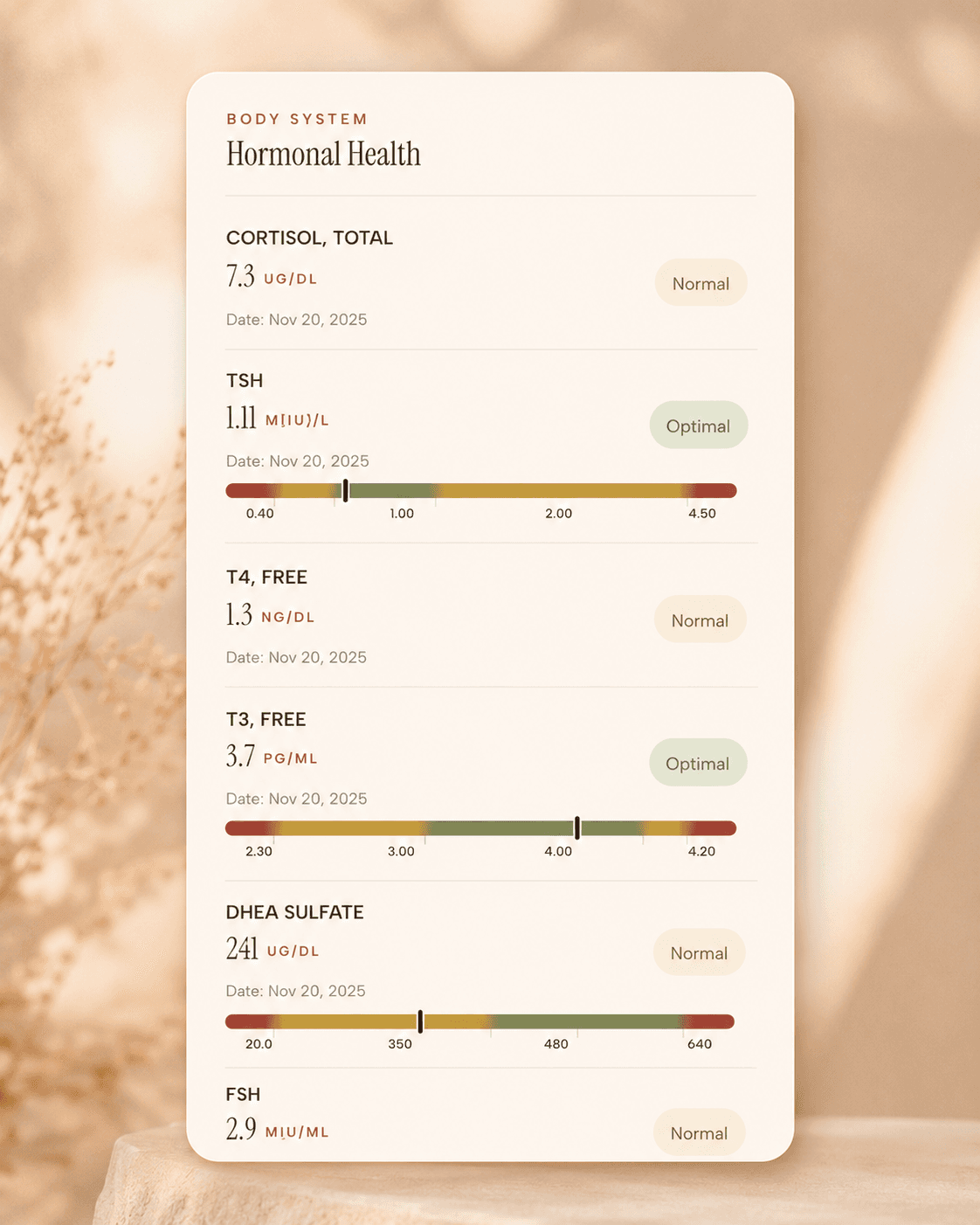
Cortisol is the primary stress hormone that regulates metabolism, immune function, and blood pressure. In functional medicine, cortisol assessment is crucial for understanding stress response and its impact on overall health. Chronic elevation suppresses testosterone production and immune function, while low cortisol indicates adrenal insufficiency. Optimal cortisol rhythm supports energy, mood stability, and hormone balance. Cortisol orchestrates the body's stress response and daily energy rhythms. Balanced cor…
Learn moreInsulin
Insulin is a master metabolic hormone that regulates glucose uptake, fat storage, and numerous cellular processes. In functional medicine, fasting insulin levels are one of the earliest and most sensitive markers of metabolic dysfunction. Elevated insulin (hyperinsulinemia) often precedes diabetes by years or decades and is central to metabolic syndrome. High insulin levels promote fat storage, inflammation, and contribute to numerous chronic diseases including cardiovascular disease, PCOS, and certain cancers.…
Learn moreLab testing
Get TSH, ferritin, and fasting insulin checked at Quest
starting from $99 panel with 100+ tests, one visit
No referral needed
About 1 week
Schedule online — results typically within a week
Clear next steps
Guidance included, with follow-up care available
HSA / FSA
Eligible for pre-tax health spending accounts
Pro Tips
Run a 10-day “mood and training” log where you rate mood 0–10 at 30 minutes and 3 hours after workouts, and write one sentence about what you ate before and after; patterns usually pop fast.
If you tend to crash after morning workouts, try moving your caffeine to after you eat something, because caffeine on an empty stomach can worsen the adrenaline-and-blood-sugar swing.
Use the “talk test” for two weeks: keep most cardio easy enough that you can speak in full sentences, and see whether your post-workout irritability drops before you add intensity back.
If you get tearful after strength training, experiment with longer rest periods and fewer sets to failure; training to failure is a bigger nervous-system hit than most people realize.
If mood swings cluster in the week before your period, plan your hardest sessions for the first half of your cycle and treat the late-luteal week as a maintenance phase, not a time to chase PRs.
Frequently Asked Questions
Is it normal to feel depressed after a workout?
It can happen, especially after long or high-intensity sessions, because your blood sugar can dip and your stress hormones can stay elevated longer than you expect. If it is occasional and improves with better fueling and recovery, it is usually fixable. If you feel hopeless, numb, or unsafe after workouts, treat that as a reason to talk to a clinician promptly and bring notes on timing and triggers.
Why do I get angry or irritable after exercising?
Irritability after exercise often points to a “stress plus low fuel” combo, where adrenaline is still high but your brain is short on quick energy. It is more likely when you train fasted, skip the post-workout meal, or stack hard workouts with poor sleep. Try adding carbs plus protein within an hour after training and include a 10-minute cool-down to help your nervous system settle.
Can low blood sugar cause mood swings after exercise?
Yes. When blood sugar drops, your body releases adrenaline to raise it, and that can feel like anxiety, shakiness, or sudden emotional reactivity. If you notice symptoms within 1–3 hours after training, test a practical fix first: eat a recovery snack with carbs and protein and avoid “just coffee” afterward. If you have frequent episodes, consider checking fasting insulin and discussing reactive hypoglycemia with a clinician.
Do hormones make post-workout mood swings worse?
They can. PMS, postpartum changes, and perimenopause can make your brain more sensitive to stress hormones and blood sugar swings, so the same workout can feel emotionally different across the month. If the pattern tracks your cycle, plan intensity around it and consider checking thyroid markers like TSH if you also have fatigue, palpitations, or heat/cold intolerance. A simple calendar-style symptom log is often the most useful first step.
What labs should I get for mood swings after exercise?
A focused starting trio is TSH for thyroid strain, ferritin for iron stores, and fasting insulin for blood sugar stability. These tests help explain why exercise feels like a bigger stressor than it “should,” and they can guide whether you focus on fueling, recovery, or medical evaluation. If results are abnormal or symptoms are severe, use them as a prompt to follow up rather than trying to self-treat blindly.