Why You Sleep Worse After Working Out (And What Helps)
Poor sleep after exercise is often from late-day adrenaline, elevated body temperature, or low fueling that spikes cortisol. Targeted labs—no referral needed.






Poor sleep after exercise usually happens because your nervous system is still “revved up,” your core temperature stays elevated, or you under-fueled the workout and your stress hormone response stays high. It can feel like you are tired but wired, with a racing mind, light sleep, or a 2–4 a.m. wake-up. A few targeted labs can help you figure out whether this is mostly stress hormones, thyroid overdrive, or low iron dragging down recovery. This is frustrating because exercise is supposed to help sleep, and for many people it does. But timing, intensity, and recovery matter, and life context matters too. If you are a stressed professional squeezing training into late evenings, a new parent running on broken sleep, or an aging adult whose sleep is already lighter, your “sleep system” has less margin. Below you will see the most common reasons workouts backfire at night, what to change first, and when it is worth using PocketMD to talk through your pattern or using VitalsVault labs to get objective clues.
Why you sleep worse after exercise
You trained too close to bedtime
Hard training turns on your “fight-or-flight” system, which raises adrenaline and keeps your brain alert even if your muscles feel pleasantly tired. When you finish late, that alertness can spill into bedtime as restlessness, a fast heartbeat, or a mind that will not shut off. If this is you, the simplest experiment is moving intense sessions earlier by even 60–90 minutes, or swapping late HIIT for an easy zone-2 session.
Your body temperature stayed high
To fall asleep, your body needs to cool down a bit, and exercise temporarily pushes your core temperature up. If you are still warm at bedtime, you can feel sleepy but unable to “drop” into deep sleep, and you may wake more easily. A practical takeaway is to build a cool-down buffer: finish with 5–10 minutes of easy movement, then take a lukewarm shower and keep your bedroom cool.
You under-fueled and cortisol rose
If you train hard without enough carbs or overall calories, your body may treat the workout like a stressor and keep stress hormones elevated to maintain blood sugar. That often shows up as a 2–4 a.m. wake-up, vivid dreams, or feeling hungry and jittery at night. The fix is not “eat perfectly,” it is eating enough: a post-workout meal with carbs plus protein, and if you train in the evening, a small carb-forward snack 60–90 minutes before bed can help.
Overreaching or overtraining is building
When training load outpaces recovery for weeks, sleep is often the first thing to break because your nervous system stays on high alert. You might notice your usual workout feels harder, your resting heart rate is higher, and you wake up feeling unrefreshed even after enough hours in bed. Treat poor sleep as a recovery signal: take a deload week, reduce intensity, and prioritize easy aerobic work until sleep stabilizes.
An underlying issue is amplifying it
Sometimes exercise is not the root cause, it is the trigger that reveals something else, like an overactive thyroid, low iron stores, or anxiety that spikes when your heart rate rises. That can look like palpitations after workouts, unusually heavy breathing for your fitness level, or feeling “wired” on rest days too. If your sleep suddenly changed for weeks, or you also have weight change, hair shedding, or shortness of breath, labs and a clinician conversation are worth it.
What actually helps you sleep after workouts
Change intensity, not just timing
If evenings are your only option, keep late workouts truly easy and save intervals, heavy lifting, or long runs for earlier in the day. Easy sessions can still improve sleep because they reduce stress without spiking adrenaline. A good rule is that you should be able to breathe through your nose most of the time during a late workout.
Use a real cool-down routine
Stopping abruptly can leave your heart rate and stress response elevated, which makes bedtime feel like you are still mid-workout. Spend 5–10 minutes gradually lowering effort, then do slow breathing with a longer exhale for another 3–5 minutes. You are teaching your nervous system that the “threat” is over, which often reduces that wired feeling within a week.
Fuel recovery on purpose
After training, your body wants to refill muscle glycogen and repair tissue, and if you do not give it the building blocks, it may keep you awake to search for them. Aim for protein soon after exercise, and add carbs if the workout was intense or longer than about 45–60 minutes. If you wake at 3 a.m. hungry, try shifting more of your daily carbs to dinner for two weeks and see if the pattern changes.
Dial in caffeine and pre-workout
Caffeine can still be active 6–8 hours later, and some pre-workouts include stimulants that linger even longer, especially if you are smaller, older, or sensitive. The result is often light sleep with frequent awakenings, even if you fall asleep quickly. A concrete test is a two-week “caffeine curfew” where you stop all stimulants after 10 a.m., then reintroduce only if sleep improves.
Treat sleep like training
If you are already sleep-deprived, adding more training can backfire because your recovery system is maxed out. Set a short “sleep block” for two weeks: a fixed wake time, a consistent wind-down, and no hard workouts on days after a bad night. Once sleep is stable, you can build intensity again without your nights falling apart.
Useful biomarkers to discuss with your clinician
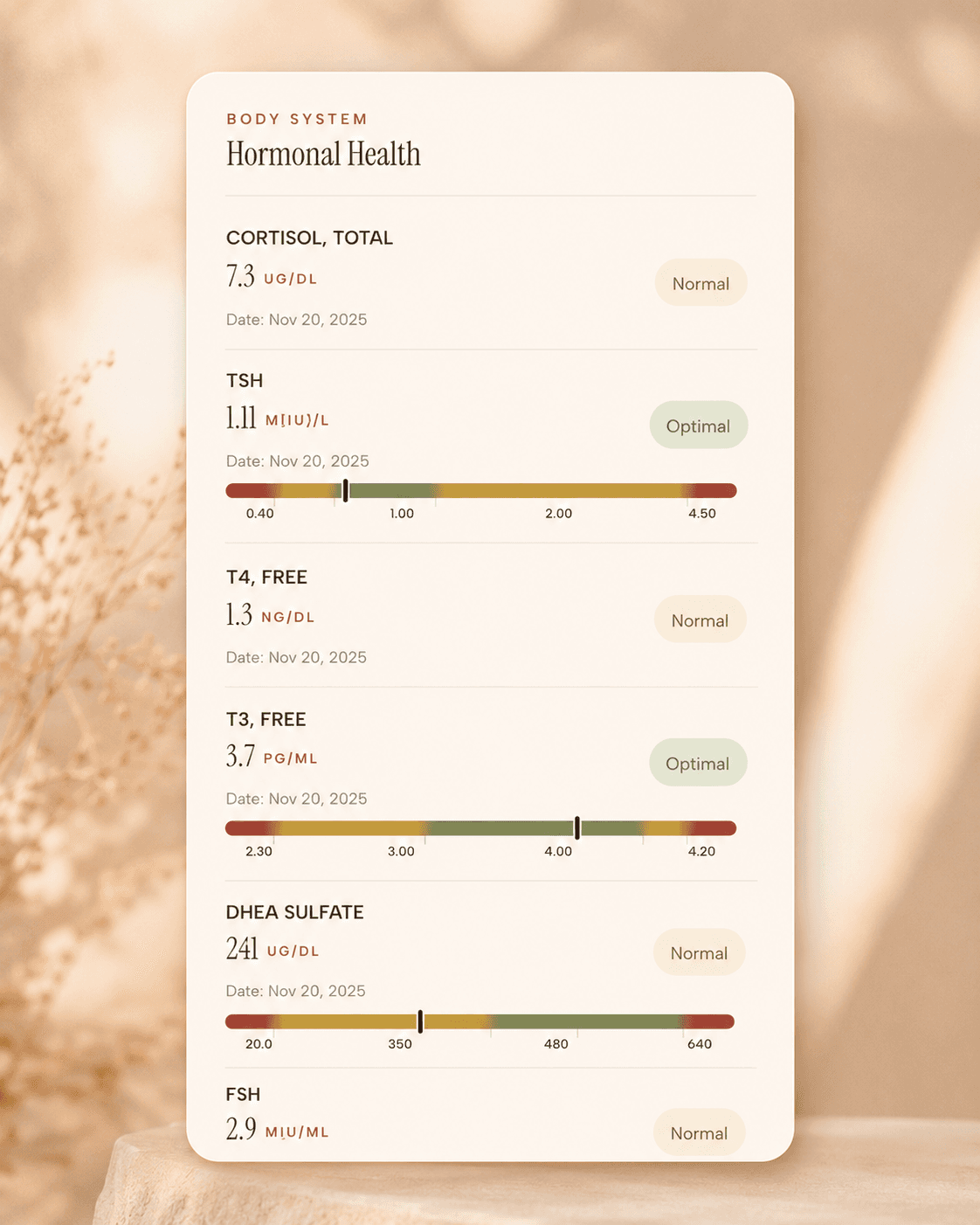
Cortisol, Total
Cortisol is the primary stress hormone that regulates metabolism, immune function, and blood pressure. In functional medicine, cortisol assessment is crucial for understanding stress response and its impact on overall health. Chronic elevation suppresses testosterone production and immune function, while low cortisol indicates adrenal insufficiency. Optimal cortisol rhythm supports energy, mood stability, and hormone balance. Cortisol orchestrates the body's stress response and daily energy rhythms. Balanced cor…
Learn moreGlucose
Fasting glucose is a fundamental marker of glucose metabolism and insulin function. In functional medicine, we recognize that even 'normal' glucose levels in the upper range may indicate early insulin resistance. Optimal fasting glucose reflects efficient glucose regulation and insulin sensitivity. Elevated fasting glucose suggests the body's inability to maintain normal glucose levels overnight, indicating hepatic insulin resistance or insufficient insulin production. This marker is essential for early detectio…
Learn moreInsulin
Insulin is a master metabolic hormone that regulates glucose uptake, fat storage, and numerous cellular processes. In functional medicine, fasting insulin levels are one of the earliest and most sensitive markers of metabolic dysfunction. Elevated insulin (hyperinsulinemia) often precedes diabetes by years or decades and is central to metabolic syndrome. High insulin levels promote fat storage, inflammation, and contribute to numerous chronic diseases including cardiovascular disease, PCOS, and certain cancers.…
Learn moreLab testing
Get cortisol, TSH, and ferritin checked at Quest
starting from $99 panel with 100+ tests, one visit
No referral needed
About 1 week
Schedule online — results typically within a week
Clear next steps
Guidance included, with follow-up care available
HSA / FSA
Eligible for pre-tax health spending accounts
Pro Tips
Do one quick experiment at a time: for the next 7 nights, keep your workout the same but move it earlier by 60 minutes, and track how long it takes you to fall asleep and how often you wake.
If you finish training within 3 hours of bed, set a “cooling runway” by ending with 10 minutes easy, taking a lukewarm shower, and keeping your bedroom around 60–67°F (16–19°C).
If you wake at 2–4 a.m. after evening workouts, try a small snack with 20–30 g carbs plus a little protein (like yogurt with fruit) 60–90 minutes before bed for two weeks.
If you use pre-workout, write down the exact product and dose, then try a stimulant-free version for 10 days; many people are surprised how much their sleep improves without changing training.
Watch for the recovery red flags that predict sleep trouble: rising resting heart rate, irritability, and workouts feeling harder at the same pace; if you see them, take a deload before your body forces one.
Frequently Asked Questions
Can working out at night cause insomnia?
Yes, especially if the workout is intense or ends close to bedtime, because adrenaline stays elevated and your core temperature takes time to drop. The pattern is often “tired but wired,” light sleep, or waking around 3 a.m. Try moving hard sessions earlier or switching late workouts to easy cardio for 10–14 days and compare your sleep.
Why do I wake up at 3 a.m. after an evening workout?
A common reason is low fueling, where your body releases stress hormones to keep blood sugar stable during the night. It can also happen when training load is high and your nervous system stays activated. A practical next step is a post-workout meal plus a small carb-forward bedtime snack for two weeks, and consider checking morning cortisol if it keeps happening.
How long before bed should I stop exercising?
Many people sleep best when hard exercise ends at least 3 hours before bed, although some need 4–5 hours if they are sensitive. Easy movement is different and may be fine closer to bedtime if it does not spike your heart rate. If you are unsure, keep your bedtime fixed and shift only workout end time earlier by 60–90 minutes to see what your body prefers.
What labs help explain poor sleep after exercise?
Morning cortisol can show whether your stress system is running high, TSH can screen for thyroid overactivity that feels like being over-caffeinated, and ferritin can reveal low iron stores that worsen recovery and restless sleep. These tests do not “diagnose insomnia,” but they can point to fixable contributors. If results are abnormal, bring them to a clinician or use PocketMD to plan your next questions.
Is it overtraining if my sleep gets worse?
Not always, but worsening sleep is one of the earliest signs that your training load is outpacing recovery, especially if your workouts feel harder and your resting heart rate is creeping up. The safest move is to reduce intensity for a week and see if sleep rebounds, because true overtraining can take months to recover from. If sleep stays poor despite a deload, look at caffeine timing, fueling, and thyroid or iron labs.
What the research says
AASM clinical guideline: behavioral and psychological treatments for chronic insomnia (CBT-I as first-line)
Systematic review: acute and regular exercise effects on sleep, including timing and intensity considerations
Consensus statement: overtraining syndrome and the role of sleep disturbance as an early warning sign