Why You’re Sleeping Lightly in Your 50s (and How to Fix It)
Light sleep in your 50s often comes from hormone shifts, stress-driven cortisol, or sleep apnea. Targeted blood tests available—no referral needed.





Light sleep in your 50s usually happens because your sleep becomes easier to “break” from hormone shifts, stress chemistry that keeps your brain on alert, or breathing problems like sleep apnea that repeatedly nudge you toward wakefulness. The good news is that you can often pinpoint the driver by matching your pattern to a few clues, and targeted labs can help confirm whether thyroid or iron issues are adding fuel. In your 50s, it is common to feel like you are sleeping all night but never dropping into the heavy, restoring kind of sleep. That can show up as frequent awakenings, early-morning wake-ups, or a sense that every small sound pulls you back to the surface. Sometimes it is lifestyle and timing, but sometimes it is a real body change such as perimenopause or menopause, a shift in your thyroid, or unrecognized sleep apnea. This page walks you through the most common causes, what tends to help in real life, and which blood tests are actually useful. If you want help sorting your specific pattern, PocketMD can help you think it through, and Vitals Vault labs can give you objective data to bring to your clinician.
Why you’re sleeping lightly in your 50s
Hormone shifts change sleep depth
In your 50s, changing sex hormones can make sleep more fragmented, even if you still “get enough hours.” For many women, falling estrogen and progesterone can reduce deep sleep and make night sweats or temperature swings more likely, which pulls you toward lighter stages. If your light sleep comes with heat episodes, new anxiety, or a suddenly shorter fuse, tracking those alongside your sleep can help you spot a hormone-driven pattern to discuss with your clinician.
Stress chemistry keeps you alert
When your body is under chronic pressure, your stress system can stay revved at night, which means your brain treats bedtime like a light nap instead of a shutdown. You might fall asleep fine but wake at 2–4 a.m. with a busy mind, a tight chest, or a “wide awake” feeling that seems out of proportion. A key clue is that weekends or vacations improve your sleep quickly, which points toward stress timing rather than a fixed medical problem.
Sleep apnea causes micro-awakenings
Sleep apnea is when your airway narrows during sleep and your brain briefly wakes you to reopen it, sometimes dozens of times per hour. You may not remember waking, but you wake up unrefreshed because your deep sleep keeps getting interrupted. If you snore, wake with a dry mouth, or feel sleepy while driving, it is worth asking for a sleep study because treating apnea often improves “light sleep” faster than any supplement.
Thyroid overdrive or underdrive
Your thyroid sets the baseline speed of many body systems, and both too much and too little thyroid activity can mess with sleep. When it runs fast, you can feel wired, warm, and restless, and your heart may feel like it is doing extra work at night. When it runs slow, you can still sleep lightly because your breathing and mood shift, and you may wake up feeling heavy and foggy; a simple TSH test is often the best first screen.
Low iron reduces sleep stability
Low iron stores can make your nervous system more reactive at night, and it is strongly linked with restless legs and frequent awakenings. This can feel like an internal “buzz,” creepy-crawly leg sensations, or a need to move that gets worse when you lie still. Ferritin is the lab that tells you about iron storage, and many sleep specialists aim for ferritin above about 50 ng/mL when restless legs or fragmented sleep is part of the picture.
What actually helps you sleep deeper
Treat breathing-related sleep disruption
If you suspect sleep apnea, the most effective “sleep depth” intervention is to diagnose and treat it, because no amount of perfect sleep hygiene can override repeated oxygen drops. A home sleep test is often enough to get started, and treatment might be CPAP, an oral appliance, or positional therapy depending on your results. A practical first step is to record yourself sleeping for a couple nights, because snoring and gasping are often more obvious on audio than in memory.
Anchor your wake time for two weeks
Light sleep often improves when your body clock gets a consistent signal, and the strongest signal is waking up at the same time every day. Pick a realistic wake time and hold it for 14 days, even after a rough night, because sleeping in teaches your brain that mornings are optional. Once your wake time is stable, your bedtime will usually drift earlier on its own as sleep pressure builds correctly.
Use light and darkness on purpose
Morning outdoor light tells your brain when “day” starts, which helps melatonin rise at the right time later, and that can deepen sleep. Aim for 10–20 minutes outside within an hour of waking, and keep evenings dimmer by lowering overhead lights and reducing bright screens in the last hour. If you do shift work, using bright light only during your work window and blackout curtains during your sleep window can prevent your rhythm from constantly fighting you.
Try magnesium glycinate thoughtfully
Magnesium glycinate is one of the better-tolerated forms for sleep because it is less likely to cause diarrhea than magnesium citrate. It can help if your light sleep is tied to muscle tension, nighttime cramps, or a “can’t relax” feeling, although it is not a cure-all. Many people start with 100–200 mg in the evening and adjust slowly, and if you have kidney disease you should check with your clinician first because magnesium can build up.
Address hot nights and night sweats
If temperature swings are waking you, your goal is to reduce the number of times your body has to “reset” during the night. Cooling bedding, a fan aimed across the bed, and a slightly cooler room can make a bigger difference than you would expect because they prevent those sudden wake-ups. If night sweats are new, intense, or paired with irregular periods or mood shifts, bring it up directly because targeted menopause treatment can improve sleep depth dramatically for the right person.
Useful biomarkers to discuss with your clinician
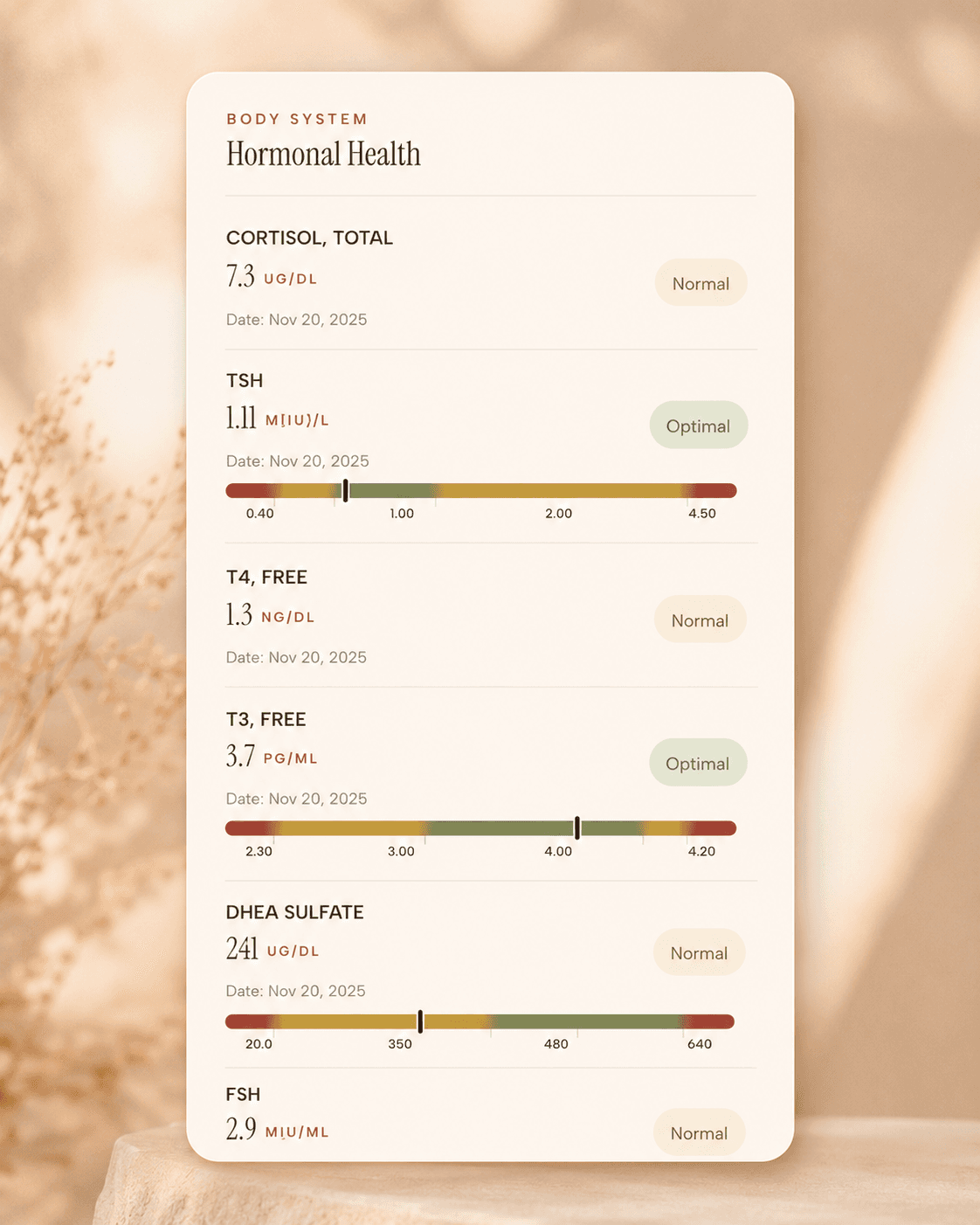
Cortisol, Total
Cortisol is the primary stress hormone that regulates metabolism, immune function, and blood pressure. In functional medicine, cortisol assessment is crucial for understanding stress response and its impact on overall health. Chronic elevation suppresses testosterone production and immune function, while low cortisol indicates adrenal insufficiency. Optimal cortisol rhythm supports energy, mood stability, and hormone balance. Cortisol orchestrates the body's stress response and daily energy rhythms. Balanced cor…
Learn moreEstradiol
Estradiol in men is produced from testosterone via aromatase enzyme. In functional medicine, we recognize that men need optimal estradiol levels for bone health, cognitive function, and cardiovascular protection. However, excessive estradiol can suppress testosterone production and cause feminizing effects. The testosterone-to-estradiol ratio is crucial for male health, with optimal balance supporting vitality while preventing estrogen dominance. Balanced estradiol levels in men support bone health and cognitive…
Learn moreTSH
TSH is the master regulator of thyroid function, controlling the production of thyroid hormones T4 and T3. In functional medicine, we use narrower TSH ranges than conventional medicine to identify subclinical thyroid dysfunction early. Even mildly elevated TSH can indicate thyroid insufficiency, leading to fatigue, weight gain, depression, and metabolic dysfunction. TSH levels are influenced by stress, nutrient deficiencies, autoimmune conditions, and environmental toxins. Optimal TSH supports energy, metabolism…
Learn moreLab testing
Check TSH, ferritin, and HbA1c at Quest
starting from $99 panel with 100+ tests, one visit
No referral needed
About 1 week
Schedule online — results typically within a week
Clear next steps
Guidance included, with follow-up care available
HSA / FSA
Eligible for pre-tax health spending accounts
Pro Tips
Do a 10-night “wake-up audit”: each time you wake, jot the time and the most likely reason (hot, bathroom, mind racing, noise, leg discomfort). Patterns show up fast, and they point you toward the right fix.
If you wake between 2 and 4 a.m., try moving alcohol earlier or skipping it for a week, because it can deepen sleep at first and then trigger rebound wake-ups later in the night.
If you suspect restless legs, test a simple rule: symptoms get worse when you lie still and improve when you move. If that is true, ask for ferritin and aim to correct low iron rather than just “powering through.”
If you are a shift worker, protect one consistent sleep block as your “anchor sleep” on workdays and days off. Even a 4–5 hour anchor at the same clock time reduces the constant jet-lag feeling that keeps sleep light.
If you wake to pee more than once most nights, stop fluids two hours before bed and get screened for glucose issues with HbA1c. Fixing the driver often improves sleep more than bladder training does.
Frequently Asked Questions
Is it normal to sleep lighter in your 50s?
It is common, but you should not have to accept feeling unrefreshed. Sleep can get lighter with age because hormones, stress load, and medical issues like sleep apnea become more common, and those factors fragment deep sleep. If your light sleep comes with loud snoring, gasping, or daytime sleepiness, ask about a sleep study because that is treatable.
Why do I wake up at 3 a.m. and can’t fall back asleep?
A 3 a.m. wake-up often happens when stress chemistry is high, when alcohol wears off, or when blood sugar dips and your body releases alerting hormones. If it is happening most nights for more than a few weeks, it is worth checking patterns and considering labs like HbA1c and TSH to look for contributors. Try anchoring your wake time for two weeks, because it is one of the fastest ways to reset this pattern.
Can menopause cause light sleep even if I don’t have hot flashes?
Yes. Hormone shifts can change sleep architecture so you spend less time in deep sleep, even without obvious night sweats. You might notice more awakenings, more vivid dreams, or a new sensitivity to noise and stress. If this started alongside cycle changes, mood shifts, or new anxiety, bring it up directly because menopause-targeted treatment can be very effective for the right person.
What vitamins or supplements help with light sleep?
Magnesium glycinate is a reasonable first try if your light sleep is tied to tension, cramps, or difficulty relaxing, and many people start around 100–200 mg in the evening. Melatonin can help more with timing than depth, especially if your schedule is irregular, and lower doses like 0.3–1 mg often work better than high doses. If you have restless legs symptoms, iron repletion guided by ferritin is often more impactful than any sleep supplement.
Which blood tests should I get for light sleep in my 50s?
Three useful starters are TSH for thyroid-driven sleep disruption, ferritin for low iron stores linked to restless legs and fragmented sleep, and HbA1c for glucose patterns that can trigger nighttime waking. These tests do not diagnose everything, but they can quickly reveal common, fixable contributors. If results are abnormal, use them as a concrete starting point for a plan with your clinician.