Why You’re Sleeping Lightly in Your 60s
Light sleep in your 60s often comes from circadian shifts, sleep apnea, or low iron. Targeted blood tests are available—no referral needed.





Light sleep in your 60s usually happens because your internal clock shifts earlier, your sleep becomes easier to interrupt, or something is repeatedly “poking” your brain awake—most commonly sleep apnea, restless legs from low iron, or medication effects. You can feel like you slept “all night” but still miss the deeper stages that restore energy and mood. A few targeted labs can help sort out whether iron, thyroid function, or another treatable issue is contributing. This change is frustrating because it can look like “just aging,” but that is not the whole story. In your 60s, sleep is more sensitive to light, stress hormones, pain, alcohol, and even small breathing disruptions, which means tiny problems add up fast. The good news is that you can often improve depth and continuity once you identify the main driver. If you want help narrowing it down based on your symptoms and meds, PocketMD can walk through the pattern with you, and VitalsVault labs can help you check the most common biological contributors.
Why you’re sleeping lightly in your 60s
Your sleep clock shifts earlier
As you age, your brain’s sleep timing system (circadian rhythm) often moves earlier, which means you get sleepy earlier and also wake earlier. The problem is that if you stay up late anyway, your body can feel “wired and tired,” and your sleep becomes more fragmented. A practical clue is waking around 3–5 a.m. and struggling to fall back asleep even when you’re exhausted.
Breathing pauses keep waking you
Obstructive sleep apnea happens when your airway narrows during sleep, so your brain briefly wakes you to reopen it. You might not remember these micro-awakenings, but they can steal deep sleep and leave you foggy or irritable the next day. If you snore, wake with a dry mouth, or need to pee multiple times at night, it is worth asking your clinician about a home sleep study.
Low iron drives restless legs
Restless legs syndrome can feel like a creepy-crawly urge to move your legs when you finally lie down, and it can keep you stuck in light sleep. In many adults, the issue is low iron stores, even when your hemoglobin is “normal,” because your brain needs iron for dopamine signaling. If your legs feel jumpy in the evening or you keep kicking at night, checking ferritin is one of the most useful next steps.
Medications and alcohol fragment sleep
In your 60s, your body clears some drugs more slowly, so a medication that once felt fine can start disrupting sleep architecture. Common culprits include some antidepressants, steroids, decongestants, and even “PM” sleep aids that cause next-day grogginess and lighter sleep later in the night. Alcohol can knock you out at first, but it tends to cause more awakenings in the second half of the night, so a simple experiment is to avoid it for two weeks and see what changes.
Pain, reflux, or nighttime urination
Light sleep is often your brain doing its job: it stays vigilant when your body is uncomfortable. Arthritis pain, nerve pain, acid reflux, and bladder urgency can all trigger repeated awakenings that you interpret as “I never got into deep sleep.” If you are waking with chest burning, coughing, or pain that forces you to change position, treating that specific problem usually improves sleep more than adding another sleep supplement.
What actually helps you sleep deeper
Anchor a consistent wake time
If your wake time swings by an hour or two, your brain never fully locks in a stable sleep rhythm, and light sleep becomes the default. Pick a wake time you can keep at least five days a week, then let bedtime drift earlier or later based on genuine sleepiness. After 10–14 days, many people notice fewer early-morning awakenings because the body starts predicting sleep again.
Treat apnea, not just insomnia
If breathing disruptions are the problem, sleep meds can sometimes make things worse by relaxing airway muscles, while CPAP or an oral appliance can be life-changing. You do not have to guess—home sleep testing can measure breathing events and oxygen dips. If you wake with headaches, have high blood pressure, or your partner notices pauses in breathing, put apnea at the top of your list.
Use light to shift your clock
Morning light is a strong signal to your brain that it is daytime, which helps consolidate sleep at night. Try 10–20 minutes of outdoor light within an hour of waking, and keep evenings dimmer by lowering overhead lights and avoiding bright screens close to bed. This matters more in your 60s because your circadian system becomes less “sticky,” so it needs clearer cues.
Target restless legs with iron
If ferritin is low, raising iron stores can reduce the urge-to-move sensation and the leg kicks that keep you in shallow sleep. Many sleep specialists aim for ferritin above about 50–75 ng/mL for restless legs, even if the lab’s reference range starts lower. Do not start iron blindly if you have a history of iron overload, but if your ferritin is low, ask your clinician about a plan and a recheck in 8–12 weeks.
Do a medication timing review
Sometimes the fix is as simple as moving a stimulating medication earlier in the day, or switching a diuretic so it does not trigger nighttime bathroom trips. Bring a complete list—including supplements and “as needed” meds—and focus on what you take after 2 p.m. If you are using antihistamine sleep aids regularly, consider a safer long-term strategy because they can worsen next-day thinking and still fail to improve deep sleep.
Useful biomarkers to discuss with your clinician
Ferritin
Ferritin is your body's iron storage protein, reflecting total iron stores in the body. In functional medicine, ferritin assessment is crucial for identifying both iron deficiency and iron overload, conditions that can significantly impact energy levels and overall health. Low ferritin is the earliest sign of iron deficiency, often occurring before anemia develops. This can cause fatigue, weakness, restless leg syndrome, and cognitive impairment. Conversely, elevated ferritin may indicate iron overload, inflamma…
Learn moreHemoglobin
Hemoglobin is the iron-containing protein in red blood cells that actually carries oxygen throughout your body. In functional medicine, hemoglobin is considered one of the most important markers of oxygen-carrying capacity and overall vitality. Low hemoglobin (anemia) significantly impacts energy levels, cognitive function, exercise tolerance, and quality of life. Even mild decreases can cause fatigue and reduced performance. Hemoglobin levels are influenced by iron status, vitamin B12, folate, protein intake, a…
Learn moreLab testing
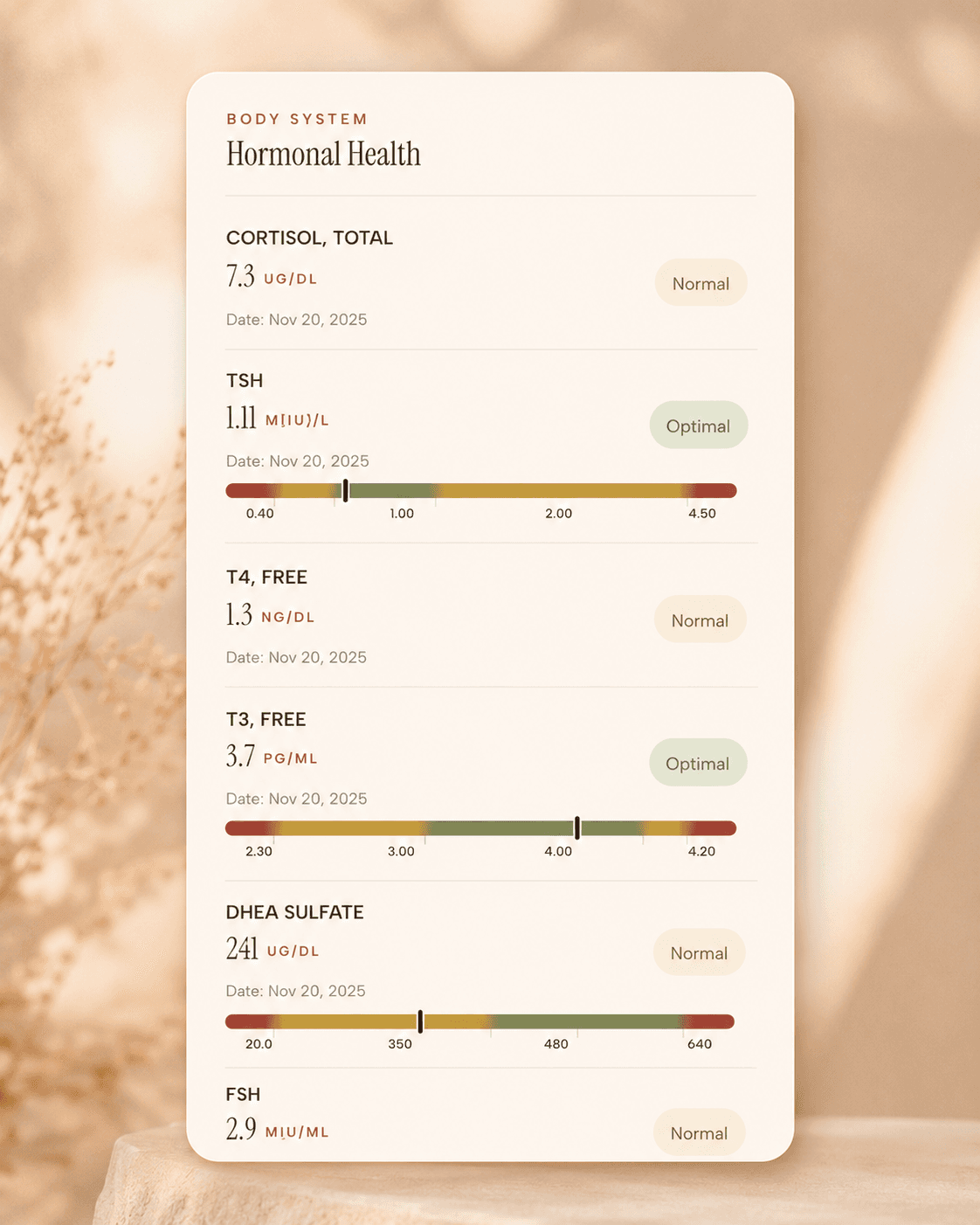
Check ferritin, TSH, and vitamin D at Quest
starting from $99 panel with 100+ tests, one visit
No referral needed
About 1 week
Schedule online — results typically within a week
Clear next steps
Guidance included, with follow-up care available
HSA / FSA
Eligible for pre-tax health spending accounts
Pro Tips
Try a “two-night experiment” with your bedroom temperature: set it 2–3°F cooler than usual and use a light blanket you can adjust. Older sleep is more sensitive to heat, and cooler skin temperature can help you stay in deeper stages longer.
If you wake at 3–4 a.m., avoid checking the time. Turn the clock face away and use a low-light routine instead, because time-checking trains your brain to treat that wake-up as an event that needs solving.
Do a one-week “caffeine cutoff” at noon, even if you think caffeine does not affect you. In your 60s, caffeine can linger longer, and the effect often shows up as lighter sleep rather than trouble falling asleep.
If nighttime bathroom trips are your main interrupter, move most fluids earlier and ask about shifting any diuretic dose to the morning. You are not trying to drink less overall—you are trying to stop your bladder from being the alarm clock.
Keep a simple sleep log for 14 days that tracks bedtime, wake time, awakenings, alcohol, and leg sensations. Patterns like ‘restless legs nights’ or ‘late light exposure nights’ usually jump out faster than you expect.
Frequently Asked Questions
Is it normal to have lighter sleep in your 60s?
Sleep often becomes lighter with age because deep sleep tends to decrease and your brain wakes more easily to noise, light, pain, or bladder signals. That said, “normal” should not mean you feel miserable every day. If you are waking unrefreshed most mornings, it is worth screening for sleep apnea, restless legs, and medication effects.
Why do I fall asleep fine but wake up every hour?
That pattern often points to repeated arousals rather than classic trouble falling asleep, and the big three are sleep apnea, pain or reflux, and alcohol or medication effects. You may not fully wake up long enough to remember it, but your sleep still gets fragmented. Track whether awakenings cluster in the second half of the night and ask about a home sleep test if snoring or dry mouth is part of the picture.
Can low iron really cause poor sleep?
Yes—low iron stores can contribute to restless legs syndrome, which keeps you in lighter sleep and can cause frequent leg movements at night. Ferritin is the key test because it reflects iron reserves, and many clinicians get concerned about sleep symptoms when ferritin is below about 50 ng/mL. If you have evening leg discomfort or an urge to move, ask for ferritin rather than assuming it is “just anxiety.”
What is the best supplement for deeper sleep at 60?
There is no single best supplement because the cause matters more than the product, and supplements cannot fix sleep apnea or uncontrolled pain. If your issue is circadian timing, light therapy and a consistent wake time usually outperform pills; if it is restless legs, correcting low ferritin can be more effective than magnesium. If you want to try something, start one change at a time for 10–14 days so you can tell what actually helped.
When should I worry about light sleep and see a doctor?
Get checked sooner if you have loud snoring with pauses in breathing, morning headaches, new or worsening high blood pressure, or you are so sleepy that driving feels unsafe. Also bring it up if sleep changes started after a new medication, or if you have leg sensations that force you to move at night. A clinician can help you decide whether you need a sleep study, a medication adjustment, or labs like ferritin and TSH.