Why You Sleep Lightly When You’re Fasting
Light sleep during fasting often comes from low blood sugar dips, a cortisol bump, or too much caffeine. Targeted labs available—no referral needed.






Light sleep during fasting usually happens because your body is trying to keep you alert: your stress hormones rise a bit, your blood sugar can dip overnight, and stimulants like caffeine suddenly hit harder. The result is more awakenings, lighter stages of sleep, and that “I slept, but I didn’t recover” feeling. A few targeted labs can help you figure out whether the main driver is blood sugar stability, thyroid overdrive, or iron-related restlessness. This is frustrating because fasting can make you feel great during the day, but weird at night. Your brain is balancing energy conservation with survival instincts, and sleep is one of the first places that trade-off shows up. The good news is that you can often keep the benefits of fasting while adjusting timing, electrolytes, and your evening routine so your nervous system stops acting like it needs to stand guard. If you want help narrowing down which pattern fits you, PocketMD can talk through your schedule and symptoms, and VitalsVault labs can confirm the physiology instead of guessing.
Why you sleep lightly when you’re fasting
Your stress system stays “on”
When you fast, your body often nudges up alertness hormones like cortisol so you have the energy to find food. That can feel like falling asleep fine but waking up at 2–4 a.m. with a busy brain or a subtle wired feeling. If this is you, moving your fasting window earlier in the day and building a longer wind-down (dim light, no work, no intense exercise late) usually helps more than adding another supplement.
Overnight blood sugar dips
Even without diabetes, some people get a blood sugar drop at night during fasting, and your body responds by releasing adrenaline to bring sugar back up. You might wake suddenly, feel warm or sweaty, or notice your heart is a little faster than usual. A practical clue is that a small, protein-forward dinner earlier in the evening can improve sleep more than simply “eating more,” because it steadies the overnight fuel supply without spiking you.
Caffeine lasts longer than you think
Fasting can make caffeine feel stronger, and caffeine’s half-life is long enough that a “normal” afternoon coffee can still be active at bedtime. Light sleep shows up as frequent micro-awakenings and vivid, restless dreaming. Try a hard cutoff at least 8–10 hours before bed for one week and see if your sleep depth changes; it is one of the fastest experiments you can run.
Electrolyte shifts wake your body
When you fast, insulin tends to run lower, and your kidneys spill more sodium and water, which can leave you slightly depleted. That can translate into nighttime thirst, leg cramps, a racing heart when you roll over, or waking to pee more often. If this fits, adding sodium earlier in the day and pairing it with adequate fluid can calm the “internal jitter” that keeps you in lighter sleep.
An underlying issue gets unmasked
Fasting does not create thyroid disease or iron deficiency, but it can make their sleep effects more obvious because you have less buffer. An overactive thyroid can feel like heat intolerance and a fast pulse at night, while low iron stores can drive an urge to move your legs and fragment sleep. If you are also losing weight unintentionally, having palpitations, or feeling short of breath with exertion, that is a good reason to get checked rather than pushing through.
What actually helps you sleep deeper
Shift your eating window earlier
If you are doing time-restricted eating, try making your last meal 3–5 hours before bed instead of pushing it late. That timing often reduces reflux and keeps your body from doing active digestion at midnight, but it also avoids the “too empty” feeling that can trigger stress hormones. Give it at least 7 nights, because your sleep system adapts slowly.
Build a steady, protein-forward dinner
A dinner built around protein plus fiber-rich carbs tends to smooth overnight blood sugar better than a very low-carb meal during a fasting phase. That can mean fewer adrenaline spikes and fewer 3 a.m. wake-ups. If you are experimenting, keep the meal size similar and change only the composition so you can tell what actually helped.
Use electrolytes on purpose
If fasting makes you lightheaded or crampy, add an electrolyte plan rather than just drinking more water. Many people do well with a salty broth or an electrolyte mix earlier in the day, because taking it right before bed can increase nighttime urination. The goal is to feel calm and steady, not puffy or thirsty.
Make caffeine boring again
During fasting periods, treat caffeine like a medication with a dose and a cutoff time. Switching to half-caf, moving your last dose to late morning, or cycling off for a week can reveal whether caffeine is the main reason your sleep is shallow. If your sleep deepens quickly, you have your answer without needing a complicated protocol.
Consider targeted supplements, not stacks
If your main issue is trouble staying asleep, low-dose magnesium glycinate in the evening can help some people relax, while melatonin is usually more useful for shifting timing than for “deeper” sleep. Start one change at a time and keep the dose modest so you can judge the effect and avoid next-day grogginess. If you have kidney disease or take heart rhythm medications, check with a clinician before adding magnesium.
Useful biomarkers to discuss with your clinician
Glucose
Fasting glucose is a fundamental marker of glucose metabolism and insulin function. In functional medicine, we recognize that even 'normal' glucose levels in the upper range may indicate early insulin resistance. Optimal fasting glucose reflects efficient glucose regulation and insulin sensitivity. Elevated fasting glucose suggests the body's inability to maintain normal glucose levels overnight, indicating hepatic insulin resistance or insufficient insulin production. This marker is essential for early detectio…
Learn moreCortisol, Total
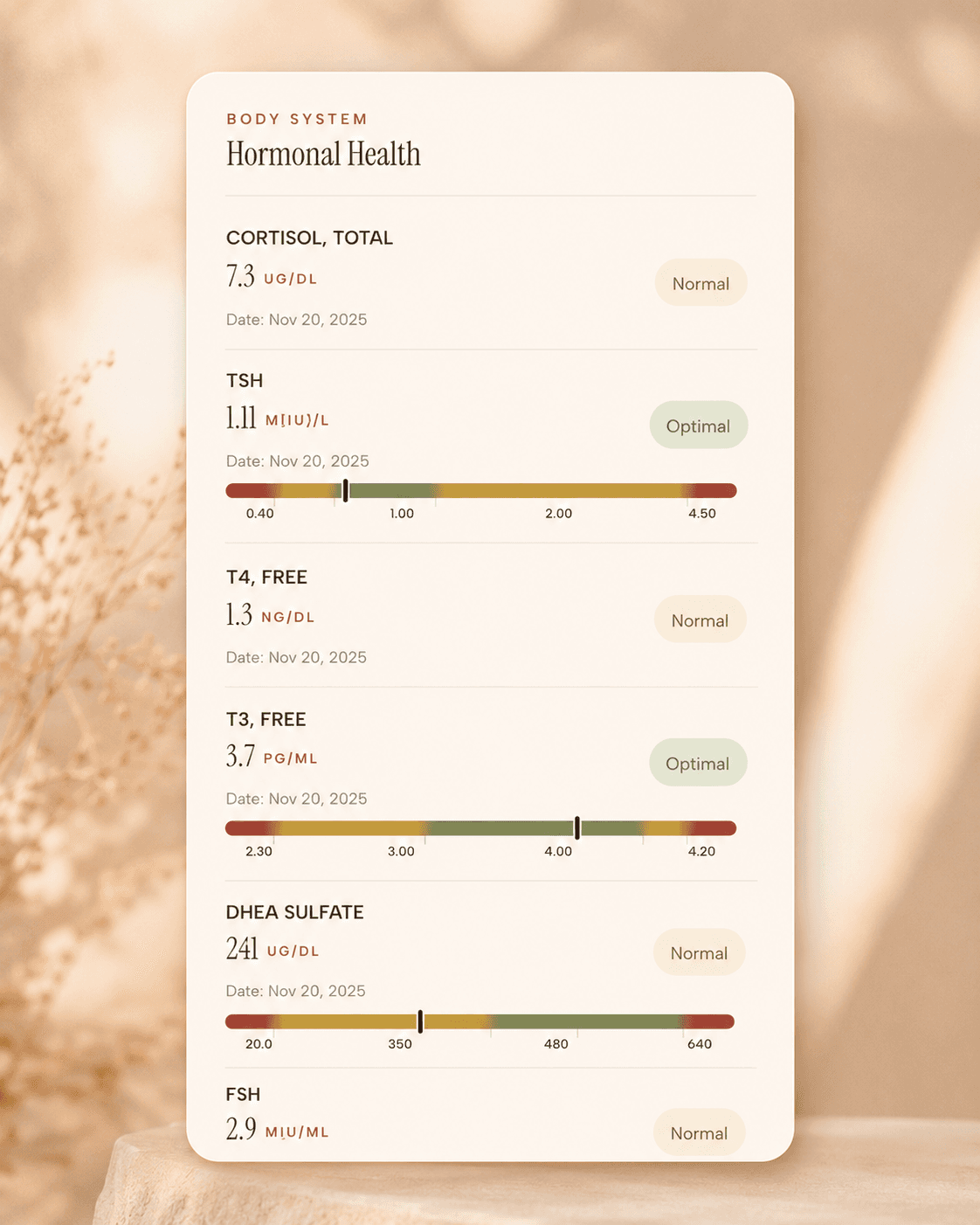
Cortisol is the primary stress hormone that regulates metabolism, immune function, and blood pressure. In functional medicine, cortisol assessment is crucial for understanding stress response and its impact on overall health. Chronic elevation suppresses testosterone production and immune function, while low cortisol indicates adrenal insufficiency. Optimal cortisol rhythm supports energy, mood stability, and hormone balance. Cortisol orchestrates the body's stress response and daily energy rhythms. Balanced cor…
Learn moreInsulin
Insulin is a master metabolic hormone that regulates glucose uptake, fat storage, and numerous cellular processes. In functional medicine, fasting insulin levels are one of the earliest and most sensitive markers of metabolic dysfunction. Elevated insulin (hyperinsulinemia) often precedes diabetes by years or decades and is central to metabolic syndrome. High insulin levels promote fat storage, inflammation, and contribute to numerous chronic diseases including cardiovascular disease, PCOS, and certain cancers.…
Learn moreLab testing
Check fasting glucose, TSH, and ferritin at Quest
starting from $99 panel with 100+ tests, one visit
No referral needed
About 1 week
Schedule online — results typically within a week
Clear next steps
Guidance included, with follow-up care available
HSA / FSA
Eligible for pre-tax health spending accounts
Pro Tips
Run a 7-night “timing trial”: keep your fasting length the same, but move your last calories earlier by 2 hours. If your 2–4 a.m. wake-ups drop, your issue is probably stress hormones and sleep timing rather than willpower.
If you wake up wired, do a 60-second check-in before you change anything: notice if you are thirsty, crampy, or peeing a lot at night. That pattern often points to electrolytes, not anxiety, and it responds best to daytime sodium rather than bedtime water.
Use a simple sleep log that tracks just three things: bedtime, number of awakenings, and whether you had caffeine after noon. After a week, you usually see a clear relationship without needing a wearable.
If you suspect blood sugar dips, try making dinner protein-first and keeping alcohol out for five nights. Alcohol can knock you out early but it reliably fragments the second half of sleep, which can look exactly like “fasting insomnia.”
If your legs feel jumpy at night, ask for ferritin specifically rather than assuming a standard blood count rules iron out. Low iron stores can wreck sleep long before you become anemic, and it is one of the more straightforward fixes.
Frequently Asked Questions
Is it normal to sleep lightly when intermittent fasting?
It can be normal, especially in the first 1–3 weeks, because your body often increases alertness hormones to help you function with less incoming fuel. That can translate into more awakenings and less deep sleep even if you fall asleep quickly. If it persists beyond a month, it is worth adjusting timing, caffeine, and electrolytes, or checking labs like fasting glucose, TSH, and ferritin.
Why do I wake up at 3am when I’m fasting?
A common reason is an overnight blood sugar dip that triggers adrenaline to bring your sugar back up, which wakes you up suddenly. Another common reason is a cortisol bump from stress, late workouts, or a fasting window that is too aggressive for your current sleep debt. Try moving your last meal earlier and cutting caffeine after late morning for a week to see if the 3 a.m. wake-up fades.
Should I stop fasting if it ruins my sleep?
If fasting consistently makes you sleep poorly, it is reasonable to pause or shorten the fast, because chronic sleep loss can raise hunger hormones and backfire on health goals. Many people do better with a gentler schedule, like a 12–14 hour overnight fast, rather than pushing to 16–18 hours. Use your sleep quality as a “vital sign,” and adjust the plan until you can sleep deeply most nights.
What can I take for insomnia while fasting?
Start with the basics that match fasting physiology: earlier caffeine cutoff, electrolytes earlier in the day if you feel depleted, and a consistent bedtime. If you want a supplement, magnesium glycinate is often used for relaxation, while melatonin is mainly helpful for shifting your sleep schedule rather than preventing awakenings. Add one change at a time for 5–7 nights so you can tell what is actually working.
Which labs are most useful for light sleep during fasting?
Fasting glucose can hint at overnight dips that trigger adrenaline and wake-ups, while TSH checks for thyroid overactivity that can make you feel wired at night. Ferritin is important if you have restless legs, frequent awakenings, or heavy periods, because low iron stores can fragment sleep even without anemia. If any result is abnormal or you have symptoms like palpitations or unexplained weight loss, bring the numbers to a clinician and adjust your fasting plan in the meantime.
What the research says
AASM clinical practice guideline for pharmacologic treatment of chronic insomnia in adults
International Restless Legs Syndrome Study Group updated algorithm for RLS management (includes ferritin targets)
Caffeine effects on sleep: systematic review and meta-analysis (shows reduced total sleep time and efficiency)