Why You Sleep Worse When You’re Fasting
Poor sleep during fasting often comes from low blood sugar, higher stress hormones, or caffeine timing. Targeted labs available—no referral needed.






Poor sleep during fasting usually happens because your blood sugar dips overnight, your stress system turns up (cortisol and adrenaline), or your fasting schedule pushes caffeine and meals later than your body can handle. It can feel like you’re “tired but wired,” waking at 2–4 a.m., or sleeping lightly and never fully recovering. A few targeted labs can help you figure out which of those is driving your nights. Fasting can be a useful tool, but sleep is not optional, and your body will protect sleep and safety before it protects a fasting goal. If you are consistently sleeping worse once you start fasting, that is your physiology giving feedback, not a character flaw. This page walks you through the most common reasons fasting disrupts sleep, what tends to work in real life, and which blood tests can clarify the picture. If you want help tailoring a plan to your schedule, PocketMD can help you think it through, and Vitals Vault labs can help you confirm whether blood sugar, thyroid, or iron issues are part of the story.
Why you sleep worse when you’re fasting
Overnight low blood sugar dips
If your liver runs low on stored fuel overnight, your blood sugar can dip and your body responds by releasing adrenaline to bring it back up. That surge is great for survival, but it feels like a sudden wake-up, a racing mind, or a pounding heart at 2–4 a.m. A practical clue is that you fall asleep fine but wake up hungry, shaky, or unusually alert, and a small balanced snack earlier in the evening often changes the pattern.
Stress system stays switched on
Fasting is a mild stressor, and for some people it pushes your alertness hormones higher than expected, especially if you are already under pressure, sleeping less, or training hard. When cortisol runs high at night, you can feel “wired,” have lighter sleep, and wake up too early even if you are exhausted. If your sleep worsened right when you tightened your fasting window or increased exercise, that timing is a big hint that your stress load is simply too high right now.
Caffeine hits harder when fasting
When you drink coffee without food, the stimulating effect can feel sharper and last longer, which matters because caffeine can linger for 6–8 hours in many people. That can show up as trouble falling asleep, more nighttime awakenings, or shallow sleep that never feels restorative. If you are fasting until noon and stacking caffeine to get through the morning, you may be accidentally moving your “last effective caffeine dose” later than your brain can tolerate.
Hunger signals keep you alert
Your hunger hormone (ghrelin) rises when you go longer without food, and it does more than make you want to eat — it also nudges wakefulness. That can feel like you are sleepy, but your body will not let you drift into deep sleep, especially if you go to bed with a strong empty-stomach sensation. If your stomach is growling or you keep thinking about food at bedtime, the issue may be the timing of your last meal, not your willpower.
Low iron or thyroid issues exposed
Sometimes fasting is not the true cause — it is the thing that reveals an underlying problem that already made sleep fragile. Low iron stores can drive restless legs and frequent waking, and an overactive or under-treated thyroid can make you feel jittery and hot at night. If you also have hair shedding, cold intolerance, palpitations, or new restless legs, it is worth checking labs rather than endlessly tweaking your fasting window.
What actually helps you sleep while fasting
Move your eating window earlier
Many people sleep better when the last meal ends 3–4 hours before bed, but the fasting window is earlier in the day rather than later at night. This reduces bedtime hunger and also gives your body time to cool down and settle, which supports deeper sleep. If you are doing 16:8, try shifting it to something like 8 a.m. to 4 p.m. or 10 a.m. to 6 p.m. for two weeks and see what happens.
Add a small “sleep buffer” snack
If you keep waking up in the middle of the night, a small snack can be a targeted tool rather than “breaking your plan.” Aim for something that steadies blood sugar, like Greek yogurt or cottage cheese, or a small portion of nuts plus a piece of fruit, and keep it 60–90 minutes before bed. The goal is not a big meal, but enough fuel to prevent an adrenaline-driven wake-up.
Set a caffeine cut-off you can keep
Pick a time that protects your sleep even on stressful days, and treat it like a boundary, not a suggestion. For many people that is 10 a.m. to noon, and if you are sensitive it may need to be earlier. If you want a simple experiment, keep caffeine the same amount but move the last dose 2 hours earlier for one week and track sleep onset and 2–4 a.m. awakenings.
Use electrolytes strategically
Fasting can increase salt and water loss, and low sodium can make you feel restless, headachy, or “off,” which can spill into sleep. If you are doing longer fasts or sweating a lot, try adding an electrolyte drink earlier in the day, and keep it low-sugar so it does not become a late-night blood sugar roller coaster. If you have high blood pressure, kidney disease, or heart failure, check with a clinician before increasing sodium.
Treat it like insomnia, not a diet issue
If you are lying awake for more than 20–30 minutes, the fastest way to stop your brain from learning “bed equals stress” is to get out of bed and do something boring in dim light until you feel sleepy again. This is a core CBT-I approach (cognitive behavioral therapy for insomnia) and it works even when fasting is the trigger. Once your sleep stabilizes, you can re-test fasting changes from a stronger baseline instead of fighting two battles at once.
Useful biomarkers to discuss with your clinician
Glucose
Fasting glucose is a fundamental marker of glucose metabolism and insulin function. In functional medicine, we recognize that even 'normal' glucose levels in the upper range may indicate early insulin resistance. Optimal fasting glucose reflects efficient glucose regulation and insulin sensitivity. Elevated fasting glucose suggests the body's inability to maintain normal glucose levels overnight, indicating hepatic insulin resistance or insufficient insulin production. This marker is essential for early detectio…
Learn moreCortisol, Total
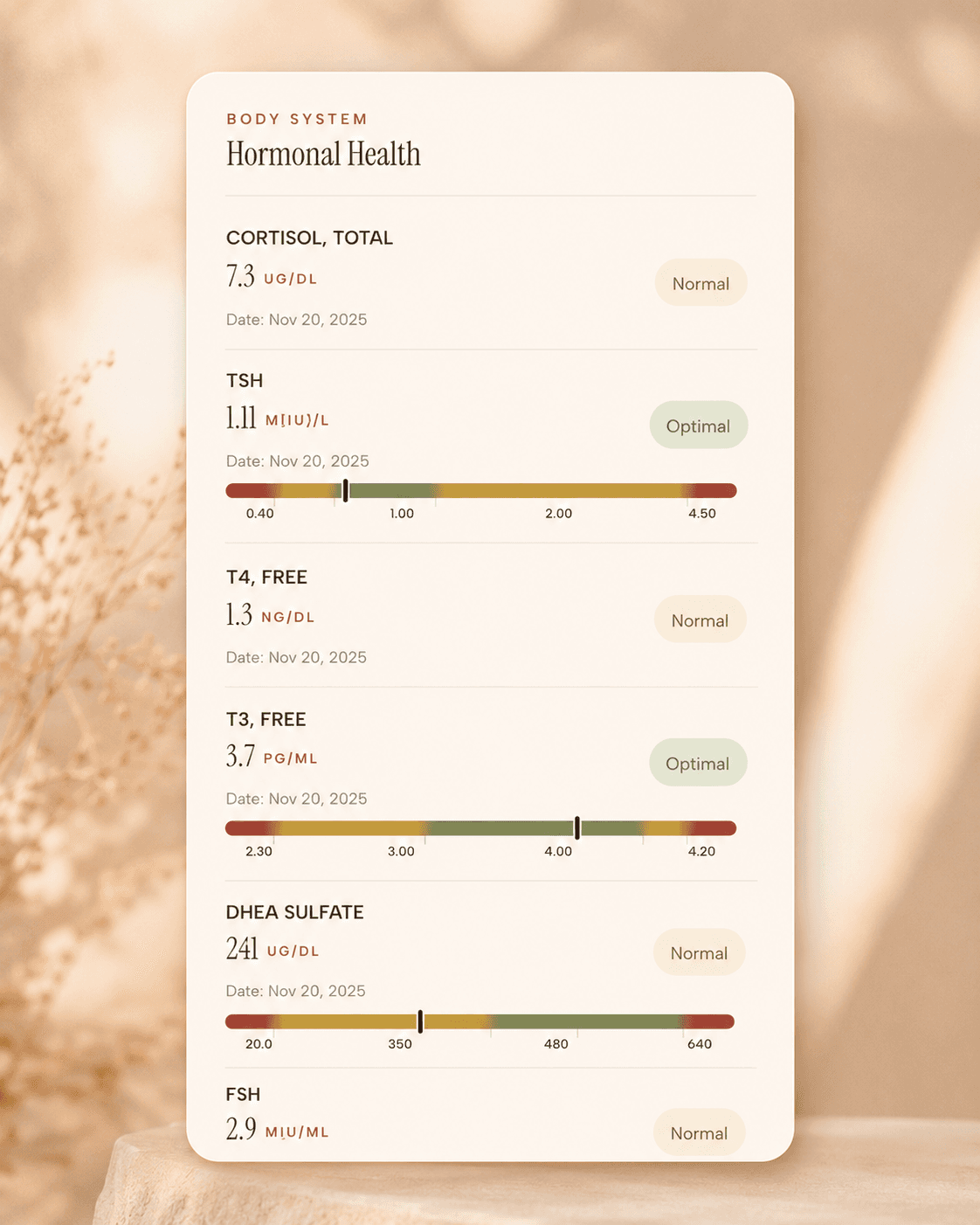
Cortisol is the primary stress hormone that regulates metabolism, immune function, and blood pressure. In functional medicine, cortisol assessment is crucial for understanding stress response and its impact on overall health. Chronic elevation suppresses testosterone production and immune function, while low cortisol indicates adrenal insufficiency. Optimal cortisol rhythm supports energy, mood stability, and hormone balance. Cortisol orchestrates the body's stress response and daily energy rhythms. Balanced cor…
Learn moreInsulin
Insulin is a master metabolic hormone that regulates glucose uptake, fat storage, and numerous cellular processes. In functional medicine, fasting insulin levels are one of the earliest and most sensitive markers of metabolic dysfunction. Elevated insulin (hyperinsulinemia) often precedes diabetes by years or decades and is central to metabolic syndrome. High insulin levels promote fat storage, inflammation, and contribute to numerous chronic diseases including cardiovascular disease, PCOS, and certain cancers.…
Learn moreLab testing
Check fasting glucose/insulin, TSH, and ferritin at Quest
starting from $99 panel with 100+ tests, one visit
No referral needed
About 1 week
Schedule online — results typically within a week
Clear next steps
Guidance included, with follow-up care available
HSA / FSA
Eligible for pre-tax health spending accounts
Pro Tips
Run a 7-night experiment: keep your fasting length the same, but move your last caffeine two hours earlier and write down whether you still wake between 2 and 4 a.m. Patterns show up fast.
If you wake up hungry, try a “protein anchor” at dinner, like eggs, fish, tofu, or Greek yogurt, because protein tends to steady overnight blood sugar better than a carb-only meal.
If you are doing longer fasts, set a reminder to drink an electrolyte mix before 3 p.m., not at night, so you support hydration without turning bedtime into a bathroom marathon.
Use a simple rule for middle-of-the-night wake-ups: if you are awake longer than about 20 minutes, get out of bed and read something boring in dim light until you feel sleepy again.
If your sleep is falling apart, loosen the fasting window for two weeks and protect sleep first; once you are sleeping, you can re-tighten gradually and see where your personal threshold is.
Frequently Asked Questions
Why do I wake up at 3 a.m. when I’m fasting?
A 3 a.m. wake-up during fasting often happens when your blood sugar dips and your body releases adrenaline to correct it, which feels like sudden alertness. It can also be a cortisol timing issue if your stress load is high or you are overtraining. Try shifting your eating window earlier for a week, and if it keeps happening, consider checking fasting glucose and fasting insulin to see how stable your fuel system is.
Is it normal to have insomnia on intermittent fasting?
It is common, especially in the first 1–3 weeks, because your hunger and alertness hormones are adapting to a new schedule. If insomnia persists past a few weeks or you feel “wired” every night, it usually means the fasting plan is too aggressive for your current stress, sleep debt, or activity level. A safer next step is to shorten the fast by 2–3 hours and see if sleep rebounds.
Should I eat before bed if fasting ruins my sleep?
If you are repeatedly waking up hungry or shaky, a small snack 60–90 minutes before bed can reduce adrenaline-driven awakenings. Keep it modest and balanced, such as yogurt or a small handful of nuts with fruit, so you do not trigger reflux or a sugar spike. Treat it as a sleep tool for a week, and then reassess once your nights stabilize.
Does fasting increase cortisol and make you feel wired?
Fasting can raise cortisol in some people, especially when combined with intense exercise, high work stress, or too little sleep. Higher cortisol at night can make you feel restless, light-sleeping, and prone to early waking. If you suspect this, try moving workouts earlier, shifting the eating window earlier, and using a consistent caffeine cut-off for 10–14 days.
What labs should I check if fasting is wrecking my sleep?
A practical starting trio is fasting glucose with fasting insulin to assess blood sugar stability, TSH to screen for thyroid-driven “wired” sleep, and ferritin to look for low iron stores linked to restless legs and fragmented sleep. For many people, sleep feels best when fasting glucose is roughly 75–90 mg/dL, TSH is around 0.5–2.5 mIU/L, and ferritin is above about 50 ng/mL. If results are off, use them to guide your next change instead of guessing.