Why You Sleep Light on an Empty Stomach
Light sleep before eating often comes from low blood sugar dips, stress hormones staying high, or reflux. Targeted labs available at Quest—no referral needed.






Light sleep before eating usually means your body is staying on “alert” because your blood sugar is dipping, your stress hormones are running high, or your stomach is irritating your throat while you lie down. It can feel like you never fully drop into deep sleep, or you wake up too easily and can’t settle again until you eat. A few targeted labs can help you figure out which of these is driving your nights. This pattern is common in people who skip dinner, do early-morning workouts, work shifts, or run on caffeine and stress. It’s also more likely as you get older because your sleep becomes lighter and your blood sugar control can get a little less flexible. The good news is that you can often improve it quickly once you match the fix to the cause, and tools like PocketMD and targeted testing through VitalsVault can help you narrow it down without guessing. If you ever wake up with chest pain, severe shortness of breath, confusion, or you’re having repeated episodes of shaking sweats that improve only with sugar, that’s a reason to get urgent care rather than trying to troubleshoot at home.
Why you sleep light on an empty stomach
Blood sugar dips overnight
If you go to bed with low fuel on board, your blood sugar can drift down enough that your body releases adrenaline and glucagon to bring it back up. That “rescue” response makes your sleep shallow, and you might wake up with a wired feeling, a fast heartbeat, or a hollow stomach. A simple clue is that a small, balanced snack helps more than a sedative routine, especially if you also wake up early and can’t get back to sleep.
Stress hormones stay switched on
When your stress system is revved up, your body keeps cortisol (your main “get going” hormone) higher than it should be at night. That can make you a light sleeper who wakes at the slightest noise, and it can also blunt hunger cues until you finally eat and feel calmer. If your mind is quiet but your body feels tense, warm, or restless, this cause is worth taking seriously.
Reflux that you don’t feel
You can have reflux even without classic heartburn, and it often gets worse when your stomach is empty because acid has less food to buffer it. Tiny amounts of irritation in your throat can trigger micro-awakenings, so you wake up repeatedly but can’t explain why. If you’re also hoarse in the morning, clearing your throat, or coughing at night, think reflux even if you “don’t get heartburn.”
Caffeine timing and withdrawal
Caffeine can keep your brain in lighter sleep for longer than you expect, especially if you drink it after lunch or you’re sensitive to it. On the flip side, if you rely on caffeine all day, you can also wake early with a mild withdrawal that feels like fatigue plus restlessness, and eating can temporarily smooth that out. The key takeaway is that “I fall asleep fine” does not rule caffeine out, because it often shows up as lighter sleep and early waking.
Thyroid running a bit fast
When your thyroid is overactive (hyperthyroidism), your metabolism runs hot and your nervous system stays more activated, which makes deep sleep harder. You might notice sweating, a racing heart, more frequent bowel movements, or feeling unusually “amped” even when you’re tired. This is one of the most fixable medical causes, and a simple blood test can flag it quickly.
What actually helps you sleep deeper
Try a targeted bedtime snack
If your light sleep improves after you eat in the morning, experiment with a small snack 30–60 minutes before bed for one week. Aim for protein plus a slow carb, like Greek yogurt with berries or peanut butter on whole-grain toast, because that steadies blood sugar longer than sugar alone. If you wake less and feel more rested, you’ve learned something important about your fuel needs at night.
Shift your last caffeine earlier
Move caffeine earlier by two hours at a time until your last dose is no later than 8 hours before bed, and keep the amount consistent for a week. This reduces both lingering stimulation and early-morning withdrawal, which can look like “I sleep light until I eat.” If you work nights, anchor caffeine to the first half of your wake window and avoid it in the final third.
Use a reflux-friendly sleep setup
If reflux might be waking you, stop eating 2–3 hours before lying down and elevate your upper body by 6–8 inches using a wedge or bed risers. Sleeping on your left side also reduces reflux episodes for many people because of stomach anatomy. If this helps within a few nights, it’s a strong sign your awakenings were being triggered from the throat, not your mind.
Do a 10-minute downshift routine
A short routine works better than a perfect one when your stress system is the issue. Try 10 minutes of slow breathing with a longer exhale, then write down the one thing you’re worried you’ll forget tomorrow, because that tells your brain it can stop “holding” it overnight. The goal is not relaxation as a vibe; it’s lowering the body’s threat signal enough to allow deeper sleep stages.
Match exercise timing to your sleep
Hard training late in the evening can keep your body temperature and adrenaline higher, which makes sleep lighter, especially if you also go to bed under-fueled. If you can, move intense workouts earlier, and keep late workouts easy and short. If mornings are your only option, make sure dinner includes enough protein and carbs so you’re not running a nighttime deficit.
Useful biomarkers to discuss with your clinician
Glucose
Fasting glucose is a fundamental marker of glucose metabolism and insulin function. In functional medicine, we recognize that even 'normal' glucose levels in the upper range may indicate early insulin resistance. Optimal fasting glucose reflects efficient glucose regulation and insulin sensitivity. Elevated fasting glucose suggests the body's inability to maintain normal glucose levels overnight, indicating hepatic insulin resistance or insufficient insulin production. This marker is essential for early detectio…
Learn moreCortisol, Total
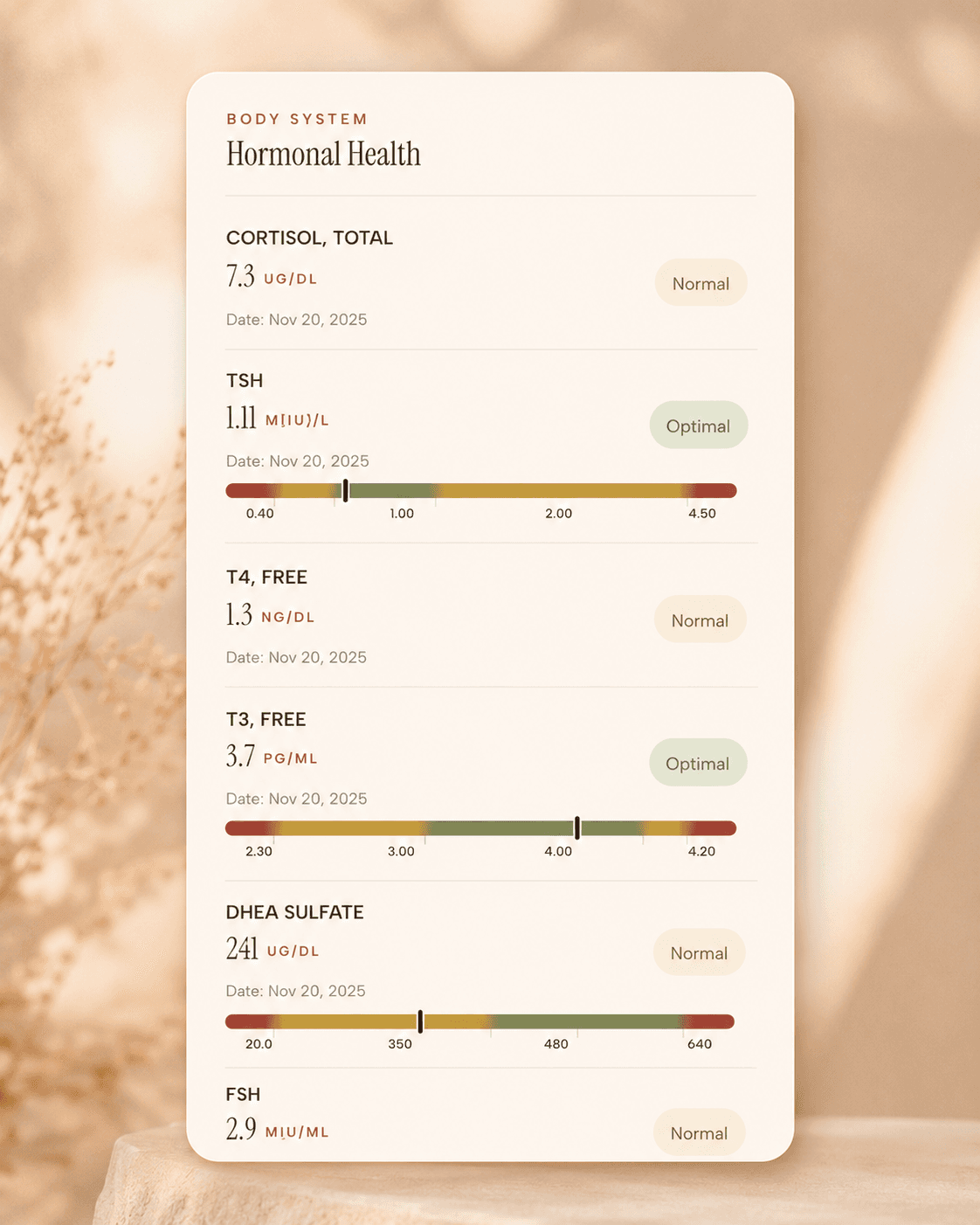
Cortisol is the primary stress hormone that regulates metabolism, immune function, and blood pressure. In functional medicine, cortisol assessment is crucial for understanding stress response and its impact on overall health. Chronic elevation suppresses testosterone production and immune function, while low cortisol indicates adrenal insufficiency. Optimal cortisol rhythm supports energy, mood stability, and hormone balance. Cortisol orchestrates the body's stress response and daily energy rhythms. Balanced cor…
Learn moreHemoglobin A1C
Hemoglobin A1C (HbA1c) reflects average blood glucose levels over the past 2-3 months by measuring the percentage of hemoglobin proteins that have glucose attached. In functional medicine, HbA1c is a cornerstone marker for metabolic health, insulin sensitivity, and diabetes risk assessment. Optimal levels (4.6-5.3%) indicate excellent blood sugar regulation and reduced risk of metabolic disease. Levels above 5.4% but below 5.7% suggest early metabolic dysfunction and increased cardiovascular risk, even before pr…
Learn moreLab testing
Get fasting glucose, HbA1c, and TSH checked at Quest
starting from $99 panel with 100+ tests, one visit
No referral needed
About 1 week
Schedule online — results typically within a week
Clear next steps
Guidance included, with follow-up care available
HSA / FSA
Eligible for pre-tax health spending accounts
Pro Tips
Run a 7-night experiment: keep bedtime and wake time the same, but change only one thing—either add a small protein-plus-carb snack or move caffeine earlier—and write down how many times you woke up.
If you wake at 3–5 a.m., do a quick body check before you spiral: are you hungry, shaky, sweaty, or wired? Hunger-plus-wired often points to a blood sugar dip, while throat irritation or coughing points to reflux.
For shift work, treat your “sleep period” like night even if it’s daytime: keep the room cool and dark, and avoid eating a large, fatty meal right before you lie down because it can worsen reflux and fragment sleep.
If you suspect reflux without heartburn, try the left-side sleep plus wedge setup for three nights in a row. Single-night tests can fool you because reflux varies with position and timing.
When you do labs, time them to your real schedule. If you sleep 3 a.m. to 11 a.m., get “fasting” bloodwork after your sleep window, not at 7 a.m. after being awake for hours.
Frequently Asked Questions
Why do I sleep lightly until I eat?
A common reason is that your blood sugar drifts down overnight and your body releases adrenaline to correct it, which keeps your sleep shallow. Stress hormones and silent reflux can do the same thing by keeping your nervous system on alert. Try a one-week test with a small protein-plus-carb snack before bed, and consider checking fasting glucose, HbA1c, and TSH if it keeps happening.
Can low blood sugar cause insomnia or early waking?
Yes. When your brain senses low fuel, your body can release adrenaline and cortisol to raise blood sugar, and that response can wake you up or prevent deep sleep. People often describe it as waking “wired but tired,” sometimes with sweating or a fast heartbeat. If you get repeated episodes that improve quickly with sugar, bring it up with a clinician and consider glucose and HbA1c testing.
Is it bad to eat right before bed to sleep better?
It depends on why you’re waking. A small balanced snack can help if your issue is overnight fuel, but a large or high-fat meal close to bedtime can worsen reflux and make sleep more fragmented. A practical middle ground is a small snack 30–60 minutes before bed and finishing bigger meals at least 2–3 hours before lying down.
Could this be thyroid-related?
It can be, especially if you also have a racing heart, heat intolerance, tremor, or unexplained weight change. An overactive thyroid often shows up as lighter sleep and early waking because your metabolism is running hot. A TSH blood test is the usual first step, and if it’s low your clinician typically checks free T4 and sometimes free T3 to confirm the pattern.
What’s the fastest way to figure out what’s causing my light sleep?
Combine a short experiment with a short log. For 7 nights, keep your schedule stable and change one variable—like adding a small bedtime snack or moving caffeine earlier—while tracking awakenings and how you feel on waking. If the pattern persists, fasting glucose, HbA1c, and TSH are a focused lab trio that often clarifies whether this is fuel-related, metabolic, or thyroid-driven.