Why You Get Light Sleep After Eating (And What Helps)
Light sleep after eating often comes from blood sugar swings, reflux, or alcohol and late meals disrupting REM. Targeted labs available—no referral needed.





Light sleep after eating usually happens because your blood sugar rises and falls at the wrong time, your stomach stays active and triggers reflux, or alcohol and heavy meals blunt deep sleep and REM. The “wired but tired” feeling and frequent waking are often your nervous system reacting to digestion, hormones, and airway irritation. A few targeted labs can help you figure out whether blood sugar control, thyroid function, or iron status is the main driver for you. This symptom is frustrating because it can look like “just stress,” but the timing around meals is a real clue. Your body has to decide whether to prioritize digestion, temperature control, and stable glucose or to drop into deep sleep, and sometimes it can’t do both smoothly. In the sections below, you’ll learn the most common mechanisms, what to try tonight versus what to work on over a few weeks, and when it’s worth using PocketMD to talk through your pattern or ordering labs through Vitals Vault to confirm what’s going on.
Why eating can make your sleep lighter
Blood sugar swings after dinner
If your dinner is heavy on fast carbs or you eat a large meal late, your blood sugar can spike and then dip a few hours later. That dip can trigger stress hormones like adrenaline and cortisol, which makes you pop into lighter sleep or wake up around 2–4 a.m. A useful clue is waking with a racing mind, mild shakiness, or hunger, especially if a small balanced snack earlier in the evening changes the pattern.
Reflux irritating your throat
When you lie down with a full stomach, stomach contents can creep upward and irritate your esophagus and throat (acid reflux [GERD]). You might not feel classic “heartburn,” but your body still reacts with micro-arousals, coughing, throat clearing, or a sudden need to swallow. If you wake with a sour taste, hoarseness, or a dry cough, treat reflux as a sleep problem, not just a digestion problem.
Alcohol and “fake sleep”
Alcohol can make you fall asleep faster, but it fragments the second half of the night and suppresses REM early on, which often leaves you feeling like you slept lightly. As your body metabolizes alcohol, your sleep becomes more shallow and you wake more easily to noise, heat, or a full bladder. If your light sleep is worst after “just one drink with dinner,” this is likely a big piece of the puzzle.
Big meals raise body temperature
Digestion produces heat, and deep sleep is easier when your core temperature drops. A large, late meal can keep your temperature higher for longer, which nudges you toward lighter stages of sleep and more tossing and turning. If you notice you sleep worse when you feel warm or sweaty after dinner, shifting meal timing earlier can help more than changing what you eat.
Sleep apnea worsened by reflux or weight
If your airway narrows during sleep (obstructive sleep apnea), your brain briefly wakes you to reopen it, and you experience that as light, broken sleep. Late meals and reflux can inflame the throat and make snoring and airway collapse more likely, especially if you sleep on your back. If you snore, wake with a dry mouth, or feel unrefreshed even after 7–8 hours, it’s worth asking about a home sleep test because labs alone won’t catch this.
What actually helps you sleep deeper
Move dinner earlier by 2–3 hours
This is the highest-impact change for many people because it gives your stomach time to empty and your temperature time to drop. Aim to finish your last substantial meal at least 2–3 hours before bed, even if you keep the same foods. If your schedule is tough, start with just three nights a week and see whether your wake-ups shift.
Build a “steady glucose” plate
At dinner, pair carbs with protein, fiber, and fat so your blood sugar rises more slowly and stays steadier overnight. In real life, that looks like adding beans or chicken to rice, or choosing potatoes with a big serving of vegetables and olive oil instead of a bread-heavy meal. If you suspect nighttime dips, avoid dessert right before bed and test whether a smaller carb portion improves your 2–4 a.m. waking.
Try a reflux-friendly wind-down
If reflux is likely, keep your upper body slightly elevated and avoid lying flat right after eating. You can also experiment with a left-side sleeping position, which often reduces reflux because of stomach anatomy. If symptoms are frequent, talk with a clinician about whether a short trial of an acid reducer makes sense, because untreated reflux can keep your sleep shallow for months.
Make alcohol a “daytime” choice
If you drink, shifting alcohol earlier is often more effective than cutting it entirely overnight. Try finishing your last drink at least 4 hours before bed, and notice whether the second half of the night becomes calmer. If you’re using alcohol to “switch off,” replace it with a non-sleepy ritual like a hot shower and a 10-minute brain-dump journal so you’re not trading anxiety for fragmented sleep.
Use light and caffeine strategically
If you’re a shift worker or you eat at odd hours, your circadian rhythm can get confused, and meals can act like a second “time cue” that keeps you alert. Get bright light soon after you wake, and keep caffeine earlier in your wake window so it’s mostly gone by your intended bedtime. A simple rule is to stop caffeine at least 8 hours before sleep, then adjust based on whether you still feel “tired but wired” after dinner.
Useful biomarkers to discuss with your clinician
Glucose
Fasting glucose is a fundamental marker of glucose metabolism and insulin function. In functional medicine, we recognize that even 'normal' glucose levels in the upper range may indicate early insulin resistance. Optimal fasting glucose reflects efficient glucose regulation and insulin sensitivity. Elevated fasting glucose suggests the body's inability to maintain normal glucose levels overnight, indicating hepatic insulin resistance or insufficient insulin production. This marker is essential for early detectio…
Learn moreCortisol, Total
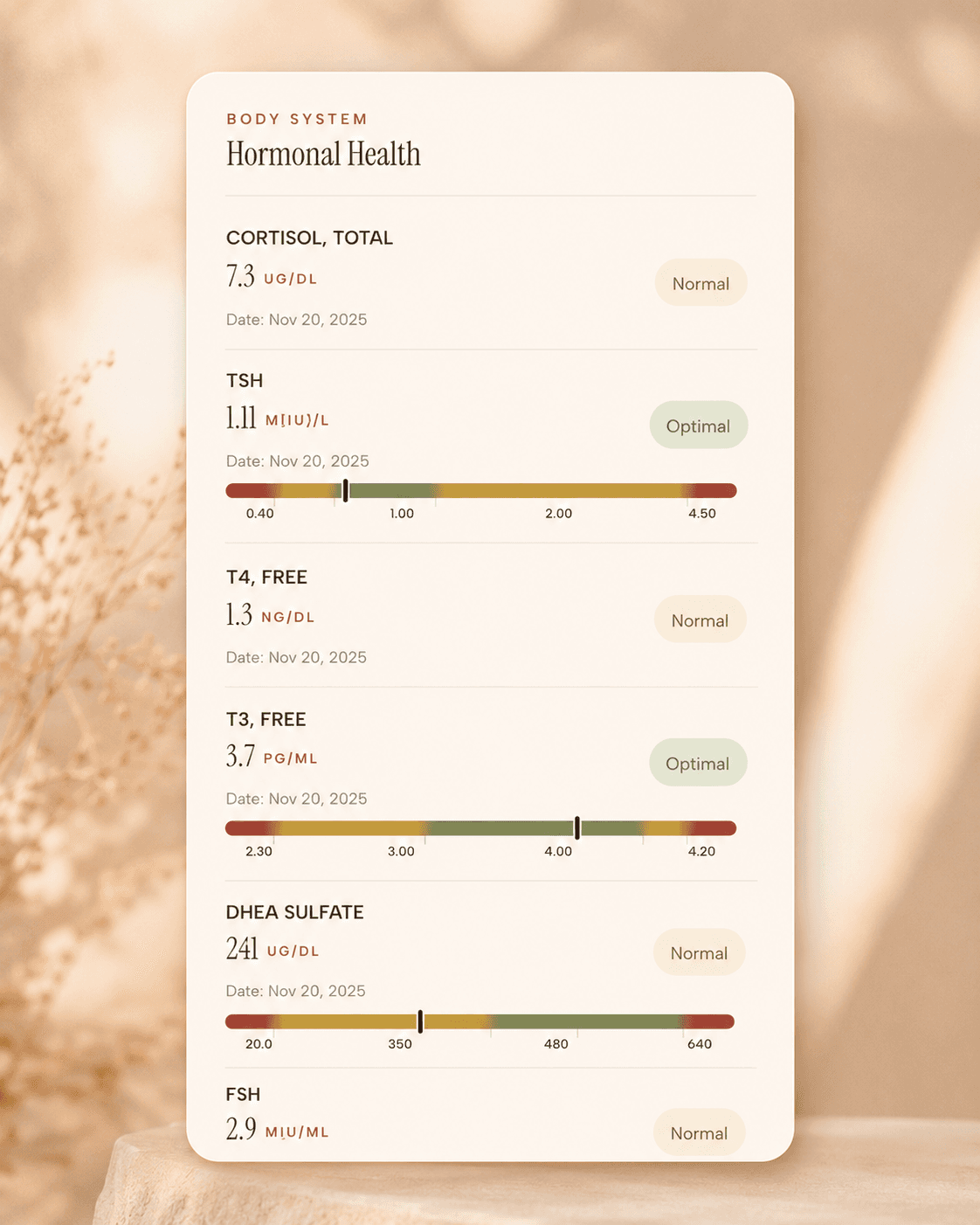
Cortisol is the primary stress hormone that regulates metabolism, immune function, and blood pressure. In functional medicine, cortisol assessment is crucial for understanding stress response and its impact on overall health. Chronic elevation suppresses testosterone production and immune function, while low cortisol indicates adrenal insufficiency. Optimal cortisol rhythm supports energy, mood stability, and hormone balance. Cortisol orchestrates the body's stress response and daily energy rhythms. Balanced cor…
Learn moreHemoglobin A1C
Hemoglobin A1C (HbA1c) reflects average blood glucose levels over the past 2-3 months by measuring the percentage of hemoglobin proteins that have glucose attached. In functional medicine, HbA1c is a cornerstone marker for metabolic health, insulin sensitivity, and diabetes risk assessment. Optimal levels (4.6-5.3%) indicate excellent blood sugar regulation and reduced risk of metabolic disease. Levels above 5.4% but below 5.7% suggest early metabolic dysfunction and increased cardiovascular risk, even before pr…
Learn moreLab testing
Get A1c, TSH, and ferritin checked at Quest
starting from $99 panel with 100+ tests, one visit
No referral needed
About 1 week
Schedule online — results typically within a week
Clear next steps
Guidance included, with follow-up care available
HSA / FSA
Eligible for pre-tax health spending accounts
Pro Tips
Run a 10-night experiment where you keep dinner the same but move it earlier by 30 minutes every two nights until you hit a 3-hour gap before bed. Your wake-ups will usually either improve clearly or not, and that clarity is valuable.
If you suspect a blood sugar dip, try a small, boring snack 60–90 minutes before bed for three nights, such as plain Greek yogurt or a spoonful of peanut butter. If you wake less at 2–4 a.m., that points toward glucose stability as a main lever.
For reflux-type light sleep, put a book or phone on a high shelf after dinner so you’re not tempted to lie flat and scroll. Staying upright for even 45–60 minutes after eating can reduce throat irritation overnight.
If you wake with a dry mouth or your partner notices snoring, record 30–60 minutes of audio on your phone one night. Hearing repeated snorts, gasps, or long quiet pauses is a strong reason to ask about a sleep apnea test.
When you eat late because of shift work, treat your “last meal” like a smaller landing meal rather than a feast. A lighter portion with protein tends to digest more quietly, which gives your brain a better shot at deeper sleep.
Frequently Asked Questions
Why do I wake up 2–3 hours after eating dinner?
A common reason is a blood sugar rise followed by a dip that triggers adrenaline, which pulls you into lighter sleep. Another frequent cause is reflux that starts once you lie down, even if you don’t feel obvious heartburn. Try finishing dinner 3 hours before bed for a week, and consider checking hemoglobin A1c if the pattern is persistent.
Can high blood sugar cause light sleep at night?
Yes. High post-meal blood sugar can increase nighttime urination and thirst, and the later “come down” can trigger stress hormones that wake you. Hemoglobin A1c helps you see whether insulin resistance is likely, and many people feel best when A1c is around 5.0–5.4% rather than near the prediabetes cutoff of 5.7%. If you’re unsure, start by pairing carbs with protein and fiber at dinner and see if your sleep steadies.
Is it reflux if I don’t have heartburn?
It can be. Reflux can show up as throat clearing, a dry cough, hoarseness, or a sudden wake-up with a need to swallow, which is sometimes called “silent reflux.” A practical test is to avoid food for 3 hours before bed and sleep slightly elevated for a week. If your sleep becomes deeper, bring that pattern to your clinician because reflux treatment can be very targeted.
What should I eat at night to avoid light sleep?
The goal is steady digestion and steady glucose, so a dinner with protein plus fiber tends to work better than a large, refined-carb-heavy meal. If you truly need a bedtime snack, keep it small and balanced, such as yogurt or a few nuts, and avoid sugary foods that can spike and crash. Track whether you wake less often and adjust based on your own response.
When is light sleep after eating a red flag?
Get medical help sooner if you have choking or gasping at night, chest pain, black or bloody stools, vomiting, or unintentional weight loss, because those can signal sleep apnea or significant GI disease. It’s also worth acting quickly if you have new palpitations, tremor, or heat intolerance, since thyroid overactivity can fragment sleep and is easy to screen with TSH. If the problem lasts more than 3–4 weeks despite earlier meals and less alcohol, bring a symptom log and consider labs like A1c, TSH, and ferritin.
What the research says
Alcohol and sleep: A systematic review shows alcohol reduces REM and increases sleep disruption later in the night
American Academy of Sleep Medicine guidance on diagnosing obstructive sleep apnea, including home sleep apnea testing
ACG clinical guideline on GERD management, including lifestyle steps like meal timing and head-of-bed elevation