Why You Wake Up Tired Before You’ve Eaten Anything
Waking up tired before eating is often from sleep apnea, low iron, or thyroid slowdown. Targeted blood tests available at Quest—no referral needed.






Waking up tired before eating usually means the problem happened overnight, not at breakfast. The most common culprits are disrupted breathing during sleep (sleep apnea), low iron stores that limit oxygen delivery, and a slowed thyroid that drags down your energy systems. Simple screening plus a few targeted labs can help you figure out which one fits your body. This symptom is frustrating because you can do “everything right” on paper—seven or eight hours in bed—and still feel like you never fully came back online. Morning fatigue can come from sleep quality, hormone timing, or hidden deficiencies, and the clues are often subtle. Below, you’ll see the most likely causes, what tends to help in real life, and which blood tests are worth prioritizing. If you want help connecting your specific pattern to next steps, PocketMD can talk it through with you, and Vitals Vault labs can help you confirm what’s going on without a long wait.
Why you wake up tired before eating
Sleep apnea or snoring-related arousals
If your airway narrows at night, your brain keeps “rescuing” you with tiny wake-ups so you can breathe again. You may not remember waking, but your sleep never gets deep enough to feel restorative, so you open your eyes already drained. A practical clue is loud snoring, waking with a dry mouth, morning headaches, or needing naps despite enough time in bed, and a home sleep test is often the fastest way to confirm it.
Low iron stores (low ferritin)
Iron helps your body move oxygen and make energy inside your cells, so when your iron stores are low, mornings can feel like you are starting the day with an empty tank. This can happen even if your hemoglobin is still “normal,” which is why ferritin matters. If you also notice hair shedding, restless legs at night, or heavy periods, ask specifically for ferritin and a plan to find the reason it’s low.
Thyroid slowdown (hypothyroidism)
Your thyroid hormone sets the pace for how quickly your body generates energy, and when it runs low, everything feels heavier—especially in the morning. You might also feel colder than other people, notice constipation, dry skin, or a slower heart rate. A TSH test is a good starting point, but if it is borderline and you feel clearly “off,” it is worth discussing free T4 and thyroid antibodies with a clinician.
Blood sugar swings overnight
Your brain needs a steady fuel supply while you sleep, and big dips or spikes in blood sugar can trigger stress hormones that fragment sleep. The result is a wired-but-tired feeling when you wake, sometimes with shakiness, sweating, or a racing heart. If you often wake around 2–4 a.m. and feel better after eating later, tracking a few fasting readings or checking an HbA1c can reveal whether glucose stability is part of your story.
Depression, anxiety, or chronic stress
Stress and mood symptoms can change how your brain cycles through sleep stages, so you get plenty of hours but not the kind that restores you. This often shows up as waking too early, feeling “tired but tense,” or having a mind that starts running the second you wake up. If morning fatigue comes with loss of interest, persistent worry, or a sense of dread, treating the underlying mood or stress load is not “all in your head”—it is directly tied to sleep biology.
What actually helps you wake up rested
Screen for sleep apnea, then treat it
If you snore, gasp, or wake unrefreshed most days, a home sleep apnea test is a high-yield next step because it changes the whole plan. Treatment might be CPAP, a dental device, side-sleeping strategies, or weight-focused support, but the key is reducing nighttime breathing interruptions. Many people notice improvement within days to weeks once their sleep stops being “rescued” all night.
Build a 10-minute “wake-up ramp”
When you feel groggy, your brain is often stuck in sleep inertia, which is a real transition state—not laziness. Try bright light within 5 minutes of waking, a glass of water, and 2–3 minutes of easy movement like a brisk walk around your home or gentle squats. This combination nudges your circadian rhythm and stress hormones in the right direction without relying on caffeine as your only switch.
Time caffeine so it helps, not hurts
If you drink coffee immediately on waking, you can mask the problem while also pushing caffeine later into the day, which can make the next night lighter and more fragmented. A simple experiment is to delay caffeine by 60–90 minutes and keep it earlier than mid-afternoon. If your morning fatigue improves after a week, it is a sign your sleep drive was being undercut.
Stabilize nighttime blood sugar
If you wake in the early morning with a “jolt,” your sleep may be getting interrupted by glucose dips or stress-hormone surges. You can test this by avoiding alcohol close to bedtime and choosing a balanced dinner with protein and fiber, then noticing whether the 2–4 a.m. wake-ups ease. If it keeps happening, bring it up with your clinician and consider checking HbA1c or using a short-term glucose monitor to see your overnight pattern.
Treat iron deficiency with a plan
If ferritin is low, the goal is not just to take iron, but to rebuild stores and figure out why they dropped. Many people tolerate iron better when they take it every other day with vitamin C and avoid taking it with calcium, tea, or coffee. Recheck ferritin after about 8–12 weeks, and if it is not rising, you may need a different formulation or an evaluation for blood loss or absorption issues.
Useful biomarkers to discuss with your clinician
Ferritin
Ferritin is your body's iron storage protein, reflecting total iron stores in the body. In functional medicine, ferritin assessment is crucial for identifying both iron deficiency and iron overload, conditions that can significantly impact energy levels and overall health. Low ferritin is the earliest sign of iron deficiency, often occurring before anemia develops. This can cause fatigue, weakness, restless leg syndrome, and cognitive impairment. Conversely, elevated ferritin may indicate iron overload, inflamma…
Learn moreTSH
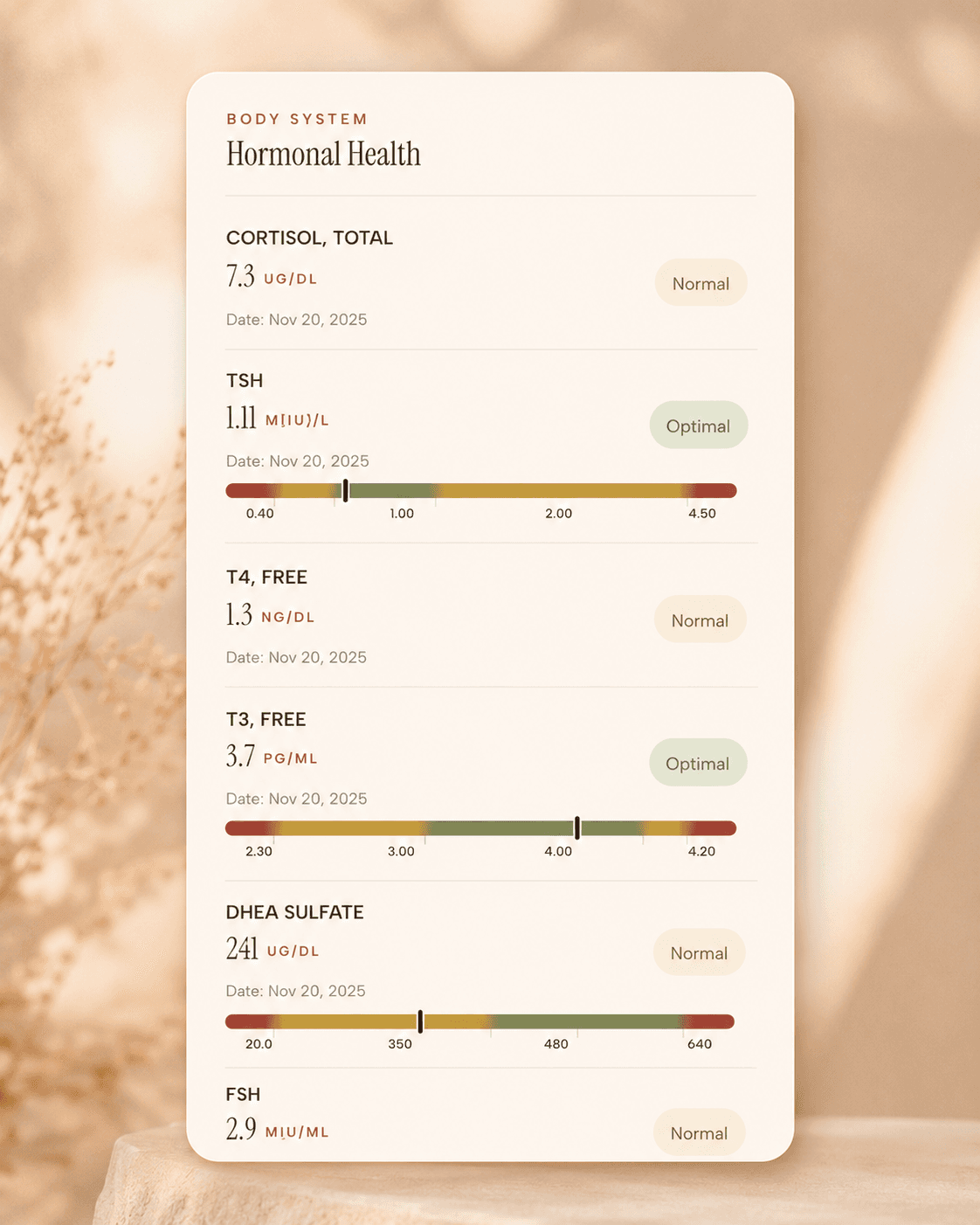
TSH is the master regulator of thyroid function, controlling the production of thyroid hormones T4 and T3. In functional medicine, we use narrower TSH ranges than conventional medicine to identify subclinical thyroid dysfunction early. Even mildly elevated TSH can indicate thyroid insufficiency, leading to fatigue, weight gain, depression, and metabolic dysfunction. TSH levels are influenced by stress, nutrient deficiencies, autoimmune conditions, and environmental toxins. Optimal TSH supports energy, metabolism…
Learn moreGlucose
Fasting glucose is a fundamental marker of glucose metabolism and insulin function. In functional medicine, we recognize that even 'normal' glucose levels in the upper range may indicate early insulin resistance. Optimal fasting glucose reflects efficient glucose regulation and insulin sensitivity. Elevated fasting glucose suggests the body's inability to maintain normal glucose levels overnight, indicating hepatic insulin resistance or insufficient insulin production. This marker is essential for early detectio…
Learn moreLab testing
Check ferritin, TSH, and HbA1c at Quest
starting from $99 panel with 100+ tests, one visit
No referral needed
About 1 week
Schedule online — results typically within a week
Clear next steps
Guidance included, with follow-up care available
HSA / FSA
Eligible for pre-tax health spending accounts
Pro Tips
Do a 2-week morning log where you rate how rested you feel from 1–10, then note snoring, mouth dryness, and any 2–4 a.m. wake-ups. Patterns show up faster than you’d think, and they point you toward either sleep testing or lab work.
If you suspect sleep apnea, try one night of side-sleeping with a pillow behind your back and compare how you feel in the morning. It is not a diagnosis, but a noticeable difference is a strong hint that airway position matters.
If you rely on caffeine to feel human, measure your “time to first coffee” for a week. If it is under 15 minutes most days, treat that as a symptom signal and prioritize sleep breathing, iron, and thyroid checks.
If you have heavy periods, do not wait for anemia to show up on a basic CBC. Ask for ferritin specifically, because low stores can make mornings miserable long before hemoglobin drops.
If you wake with a pounding heart or sweat, keep glucose tablets by the bed once while you investigate. If symptoms reliably ease within 10 minutes, bring that detail to your clinician because it supports a blood-sugar or stress-hormone trigger.
Frequently Asked Questions
Why do I wake up exhausted even after 8 hours of sleep?
Eight hours in bed does not guarantee eight hours of restorative sleep, especially if your breathing is interrupted (sleep apnea) or your sleep is fragmented by stress hormones. Low ferritin and thyroid slowdown can also make you feel like you never “charged” overnight. If this happens most days for more than 2–3 weeks, consider screening for sleep apnea and checking ferritin and TSH.
Can low blood sugar cause morning fatigue before breakfast?
Yes, overnight blood sugar dips can trigger adrenaline and cortisol, which can wake you lightly and leave you tired but jittery. People often describe waking around 2–4 a.m., then feeling better later once they eat. Checking an HbA1c is a good starting point, and if symptoms are frequent, ask about short-term glucose monitoring to see your overnight pattern.
What ferritin level is too low if I feel tired?
It depends, but many people with fatigue feel noticeably better when ferritin is above about 50 ng/mL, even if the lab “normal” range starts much lower. If your ferritin is under 30 ng/mL, it is commonly treated as iron deficiency, especially with heavy periods or restless legs. The next step is to replace iron and also look for the reason your stores are low.
Is waking up tired a sign of sleep apnea if I’m not overweight?
It can be. Sleep apnea is more common with higher body weight, but it also happens with a narrow airway, nasal obstruction, alcohol near bedtime, or certain jaw shapes. If you snore, wake with a dry mouth, or feel sleepy during the day, a home sleep apnea test is still worth discussing.
Which blood tests are best for waking up tired every morning?
For this specific pattern, ferritin helps catch low iron stores, TSH screens for thyroid-related fatigue, and HbA1c checks for longer-term blood sugar issues that can disrupt sleep. These tests do not replace a sleep evaluation if you snore or gasp at night, but they often explain the “why” when sleep time looks adequate. If you get results that are borderline, bring your symptoms and numbers together to a clinician or PocketMD for interpretation and next steps.