Why Is Your Focus Worse After Menopause?
Lack of focus after menopause often comes from sleep disruption, thyroid shifts, or low iron. Targeted blood tests available, no referral needed.






Lack of focus after menopause is usually your brain reacting to a new hormone baseline, poorer sleep quality, or a “fixable” medical issue like thyroid underactivity or low iron stores. It can feel like you lost your sharpness, but in many people it is more about attention control and mental stamina than true memory loss. Simple labs can help you sort out which bucket you’re in so you’re not guessing. This symptom is common because menopause changes more than periods. Lower estrogen affects brain signaling, hot flashes and night sweats can fragment sleep, and midlife stress can push your attention system into constant task-switching. The good news is that there are practical steps that often help within weeks, and tools like PocketMD can help you map your symptoms to the most likely cause while targeted Vitals Vault labs can check for common medical contributors.
Why your focus can drop after menopause
Lower estrogen changes brain signaling
After menopause, estrogen stays lower, and that shifts how your brain uses key messengers like acetylcholine and dopamine, which are involved in attention and working memory. The “so what” is that you can read the same paragraph three times or lose your train of thought mid-task even when you care about the work. If this is your main driver, you’ll often notice it’s worse on high-stress days and better when you sleep well and work in short, structured bursts.
Sleep fragmentation from night symptoms
You do not need to be fully awake for sleep to stop being restorative. Hot flashes, nighttime urination, restless legs, or even mild insomnia can keep you from getting enough deep sleep, which is when your brain clears metabolic waste and “resets” attention circuits. If you wake unrefreshed and your focus improves after a rare good night, treat sleep as the first domino rather than blaming willpower.
Thyroid slowing (hypothyroidism)
When your thyroid runs slow, your whole system downshifts, including processing speed and concentration. It can feel like your brain is moving through mud, and you may also notice constipation, dry skin, feeling cold, or unexplained weight gain. A basic thyroid test can catch this, and if it’s the culprit, treating it often improves focus more than any supplement stack.
Low iron stores, even without anemia
You can have “normal” hemoglobin and still have low iron reserves, which are measured by ferritin. Iron is used in brain energy metabolism and dopamine pathways, so low stores can show up as mental fatigue, poor sustained attention, and an oddly low tolerance for multitasking. If you also get restless legs, hair shedding, or shortness of breath with exertion, ferritin is especially worth checking.
Mood and anxiety hijack attention
Anxiety and depression do not always feel like sadness or panic; sometimes they show up as distractibility, rumination, and a brain that keeps scanning for problems. When your threat system is “on,” your attention gets pulled away from the task in front of you, which makes you feel scattered and behind. If you’re also losing interest, feeling keyed up, or waking early with worry, addressing mood directly is often the fastest path back to focus.
What actually helps you focus again
Build a “single-task” work lane
Your postmenopausal brain may tolerate context switching less well, so you need fewer open loops. Try a 25-minute timer where you work on one clearly defined next action, and keep a scratch pad for every distracting thought so you can park it without chasing it. If you do this twice a day for a week, you can usually tell whether your issue is attention control versus true cognitive decline.
Treat sleep like a medical symptom
If you are waking at night, pick one sleep disruptor to target first, because “try harder” does not fix fragmented sleep. Cooling the bedroom, using breathable bedding, and avoiding alcohol within three hours of bed can reduce night sweats for many people, which then improves next-day focus. If you snore, wake with headaches, or feel sleepy while driving, ask about sleep apnea testing because treating it can be a dramatic upgrade in concentration.
Consider menopause hormone therapy thoughtfully
For some people, menopause hormone therapy (MHT) improves sleep and reduces hot flashes, and that indirect effect can make focus feel much better. The benefit is usually strongest when symptoms started around the menopause transition and you are within about 10 years of your final period, but the decision depends on your personal risks and goals. A clinician can help you weigh options, and it helps to walk in with a clear symptom timeline and what you’ve already tried.
Correct low iron or B12 on purpose
If ferritin or vitamin B12 is low, you do not need a vague “women’s multivitamin,” you need a plan. Iron repletion often takes 6–12 weeks to noticeably improve stamina, and it works best when you take it consistently and recheck labs rather than guessing. For B12, the right form and dose depends on whether the issue is diet, absorption, or a medication effect, so use your results to guide the fix.
Use caffeine strategically, not constantly
Caffeine can help attention, but all-day sipping often backfires by worsening anxiety and sleep depth, which then worsens focus tomorrow. Try a “caffeine window” where you have your usual dose in the morning and stop by early afternoon, then notice whether your late-day brain fog improves over the next week. If you get palpitations or tremor, that is a sign to scale back and look harder at sleep and thyroid as drivers.
Useful biomarkers to discuss with your clinician
TSH
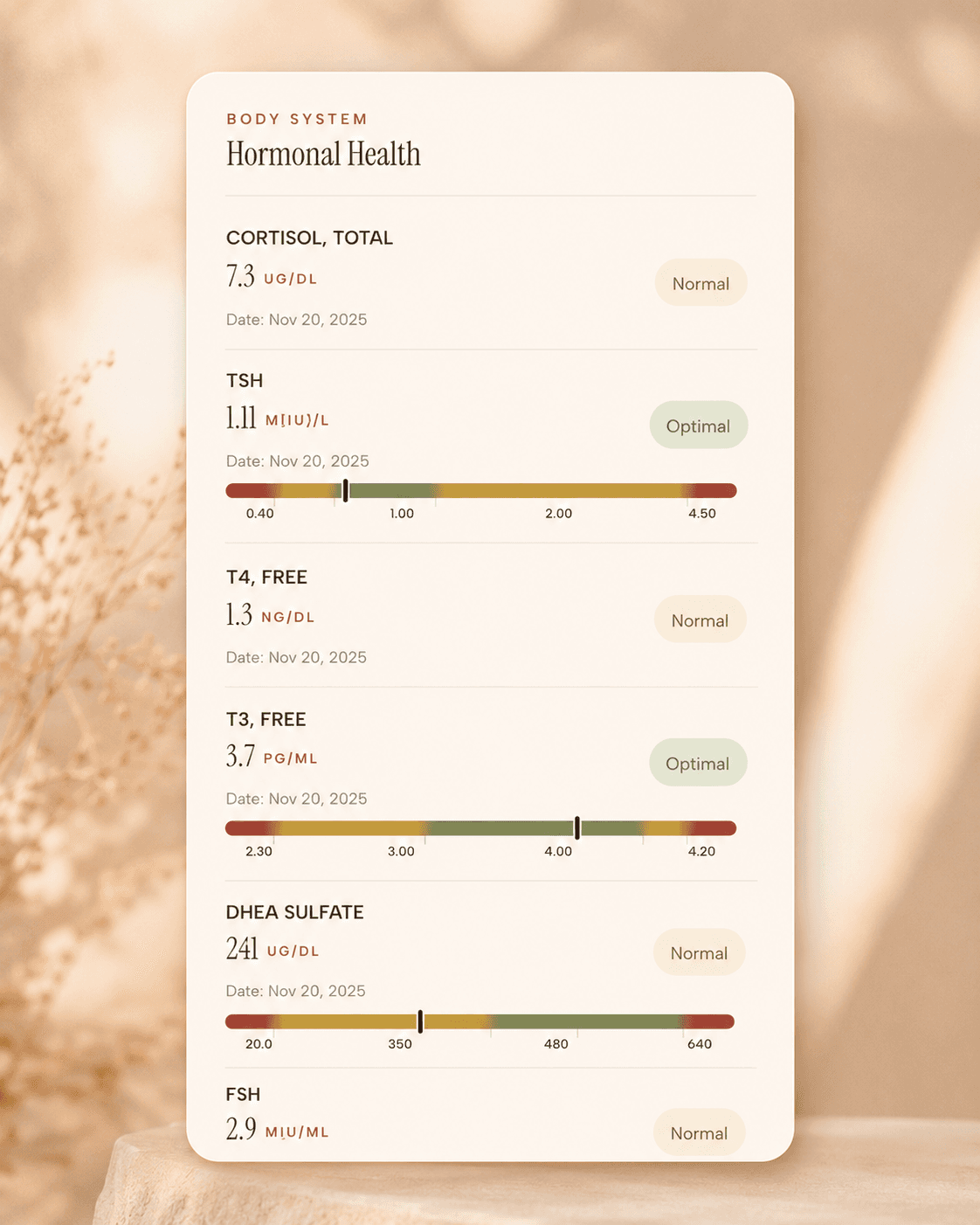
TSH is the master regulator of thyroid function, controlling the production of thyroid hormones T4 and T3. In functional medicine, we use narrower TSH ranges than conventional medicine to identify subclinical thyroid dysfunction early. Even mildly elevated TSH can indicate thyroid insufficiency, leading to fatigue, weight gain, depression, and metabolic dysfunction. TSH levels are influenced by stress, nutrient deficiencies, autoimmune conditions, and environmental toxins. Optimal TSH supports energy, metabolism…
Learn moreFerritin
Ferritin is your body's iron storage protein, reflecting total iron stores in the body. In functional medicine, ferritin assessment is crucial for identifying both iron deficiency and iron overload, conditions that can significantly impact energy levels and overall health. Low ferritin is the earliest sign of iron deficiency, often occurring before anemia develops. This can cause fatigue, weakness, restless leg syndrome, and cognitive impairment. Conversely, elevated ferritin may indicate iron overload, inflamma…
Learn moreVitamin B12
Vitamin B12 (cobalamin) is essential for DNA synthesis, red blood cell formation, neurological function, and energy metabolism. In functional medicine, we recognize that B12 deficiency is surprisingly common, especially in older adults, vegetarians, vegans, and those with digestive issues. B12 deficiency can cause irreversible neurological damage if left untreated. The vitamin is crucial for methylation reactions, which affect cardiovascular health, detoxification, and gene expression. Even subclinical deficienc…
Learn moreLab testing
Check TSH, ferritin, and vitamin B12 at Quest
starting from $99 panel with 100+ tests, one visit
No referral needed
About 1 week
Schedule online — results typically within a week
Clear next steps
Guidance included, with follow-up care available
HSA / FSA
Eligible for pre-tax health spending accounts
Pro Tips
Run a 14-day “focus log” where you rate focus from 1–10 at the same two times daily and write one sentence about sleep quality the night before; patterns show up fast, and they stop the self-blame spiral.
If you keep rereading, switch to “active reading”: after each paragraph, say out loud what it meant in your own words and write a 5-word summary. It forces your attention to stay engaged.
Try a two-screen rule for remote work: one screen for the task and one for communication, and keep chat closed during your timed work blocks. Your brain cannot ignore a blinking tab as well as you think it can.
If afternoons are your danger zone, schedule your hardest thinking within 2–3 hours of waking and reserve the post-lunch window for admin tasks. You are working with your biology instead of fighting it.
When you feel scattered, do a 60-second reset: stand up, look at something far away to relax your eye muscles, and take six slow breaths. It sounds small, but it can interrupt the stress loop that steals attention.
Frequently Asked Questions
Is lack of focus after menopause normal, or is it dementia?
Menopause-related focus problems are usually about attention, word-finding, and mental stamina, and they often fluctuate with sleep and stress. Dementia tends to cause progressive day-to-day decline and problems with daily functioning, not just “brain fog” on busy weeks. If you are getting lost in familiar places, repeating questions, or family members are worried, bring it up promptly for a cognitive evaluation.
How long does brain fog last after menopause?
For many people, the worst brain fog clusters around the menopause transition and improves over months to a couple of years, especially as hot flashes and sleep stabilize. If your symptoms are persistent or worsening, it is worth checking for treatable contributors like high TSH, low ferritin, or low vitamin B12. Start by tracking symptoms for two weeks and pairing that with targeted labs.
Can low estrogen cause ADHD-like symptoms after menopause?
Yes, lower estrogen can reduce dopamine signaling, which can feel like more distractibility, more task switching, and less working memory. That does not automatically mean you “have ADHD,” but it can unmask traits you used to compensate for. If this is affecting work or safety, ask about a structured evaluation and treat sleep and mood at the same time.
What labs should I get for lack of focus after menopause?
A practical starting trio is TSH for thyroid function, ferritin for iron stores, and vitamin B12 for nerve and brain support. Abnormal results can point to specific fixes that often improve concentration within weeks to months. If these are normal and you still feel foggy, the next step is usually a deeper look at sleep quality, medications, mood, and sometimes vitamin D or glucose control.
When should I worry about sudden trouble concentrating?
If your focus problem comes on suddenly over hours to a day, especially with one-sided weakness, trouble speaking, severe headache, chest pain, or confusion, treat it as urgent. A more gradual change is still worth medical attention if it is paired with major sleepiness, new palpitations, unexplained weight change, or worsening depression. Write down when it started and what else changed, because that timeline helps a clinician narrow the cause quickly.