Why Do You Lose Focus After Exercise?
Lack of focus after exercise often comes from low blood sugar, dehydration with low sodium, or overreaching stress hormones. Targeted labs—no referral needed.






Lack of focus after exercise usually happens because your brain is temporarily under-fueled or under-hydrated, or because your workout pushed your stress response higher than your recovery can handle. The most common culprits are a blood sugar dip, fluid and salt loss, and “overreaching” that keeps adrenaline and cortisol elevated. A few targeted labs can help you figure out which one fits your pattern instead of guessing. It can feel confusing because exercise is supposed to help your brain, and in the long run it often does. But right after a session, your body is prioritizing cooling down, refilling muscle energy, and stabilizing your nervous system, which means your attention can take a hit for an hour or two. If you’re a student, remote worker, or you already run a little ADHD-adjacent, that dip can be the difference between a productive afternoon and staring at your screen. This guide walks you through the most likely causes, what to try today, and how PocketMD and Vitals Vault labs can help you connect symptoms to a real plan.
Why you lose focus after exercise
Blood sugar dips after training
If you train hard or long, your muscles pull glucose out of your bloodstream to refill their stored fuel, and your brain can feel that drop quickly. You might notice “can’t think straight,” irritability, shaky hands, or a sudden craving for something sweet. The giveaway is timing: if focus improves within 10–20 minutes of a carb-and-protein snack, a post-workout glucose dip is a strong suspect.
Dehydration and low sodium
Sweat is not just water, and when you lose fluid and salt you can end up with lower blood volume, which makes it harder to deliver oxygen and glucose efficiently to your brain. That often feels like a dull headache, lightheadedness when you stand up, and a foggy “slow” mind. If your workouts are hot, long, or sweaty, try treating hydration as a salt-and-water problem, not just a water problem.
You pushed past your recovery
A tough workout is a stressor, and if you stack intensity on top of poor sleep, under-eating, or life stress, your nervous system can stay in a revved-up state. That can feel like wired-but-tired focus, task switching, and a brain that can’t settle into deep work. The practical takeaway is to watch for patterns across the week: if the fog shows up after your hardest sessions or during high-stress weeks, you may need to dial back intensity or add recovery days.
Breathing too fast while training
If you spend a lot of the workout hyperventilating, you blow off carbon dioxide, which can briefly reduce blood flow to the brain and trigger dizziness or a spaced-out feeling. You might also get tingling around your mouth or in your fingers, which is a clue it’s a breathing pattern issue rather than “being out of shape.” Slowing the exhale, using nasal breathing during easier intervals, and building aerobic capacity can reduce this kind of post-workout fog.
Low iron or thyroid drag
Sometimes exercise doesn’t cause the focus problem so much as reveal a baseline issue, like low iron stores or an underactive thyroid. When your oxygen delivery or metabolic “engine speed” is low, a workout can tip you into brain fog, heavy fatigue, and poor concentration for the rest of the day. If this is happening even after moderate sessions, or you also notice hair shedding, cold intolerance, or restless legs, it’s worth checking labs rather than blaming motivation.
What actually helps you think clearly again
Use a 30-minute refuel rule
Within 30 minutes of finishing, aim for a snack that includes both carbs and protein, because carbs raise blood sugar while protein helps you stay steady. A simple example is yogurt with fruit, a turkey sandwich, or a protein shake plus a banana. If your focus reliably returns after you refuel, you’ve learned something important about your personal “fuel threshold.”
Rehydrate with salt, not just water
If you sweat a lot, plain water can leave you feeling washed out because it doesn’t replace sodium. Try 16–24 oz (500–700 mL) of fluid over the hour after training, and include electrolytes or a salty snack if you had a long or hot session. A practical check is your urine: pale yellow is a good target, while completely clear plus headache can mean you overdid water without enough salt.
Downshift your nervous system
A short cool-down tells your body the “threat” is over, which helps attention come back online. Walk for 5–10 minutes, then do 2–3 minutes of slow breathing with a longer exhale than inhale, because that nudges you toward a calmer state. If you go straight from all-out intervals to a laptop, you’re asking your brain to switch gears without a clutch.
Adjust intensity before you adjust life
If the fog hits after high-intensity work, try swapping one hard session per week for an easier zone-2 style session where you can speak in full sentences. You are not “being lazy”; you are testing whether your brain fog is a recovery problem. Give it two weeks and track focus for the two hours after workouts to see if the change is real.
Time caffeine for the right moment
Caffeine before exercise can improve performance, but for some people it worsens the post-workout crash by amplifying adrenaline and making sleep worse later. If you’re foggy after training, experiment with moving caffeine earlier in the day, lowering the dose, or skipping it on high-intensity days. The goal is steady attention after the workout, not just a better workout.
Lab tests that help explain lack of focus after exercise
Glucose
Fasting glucose is a fundamental marker of glucose metabolism and insulin function. In functional medicine, we recognize that even 'normal' glucose levels in the upper range may indicate early insulin resistance. Optimal fasting glucose reflects efficient glucose regulation and insulin sensitivity. Elevated fasting glucose suggests the body's inability to maintain normal glucose levels overnight, indicating hepatic insulin resistance or insufficient insulin production. This marker is essential for early detectio…
Learn moreSodium
Sodium is the primary extracellular electrolyte essential for fluid balance, nerve transmission, muscle contraction, and blood pressure regulation. In functional medicine, sodium balance reflects kidney function, adrenal health, and hydration status. Low sodium (hyponatremia) can cause neurological symptoms and may indicate SIADH, adrenal insufficiency, or excessive water intake. High sodium may indicate dehydration, diabetes insipidus, or excessive salt intake. Optimal sodium levels support cellular energy prod…
Learn moreCortisol, Total
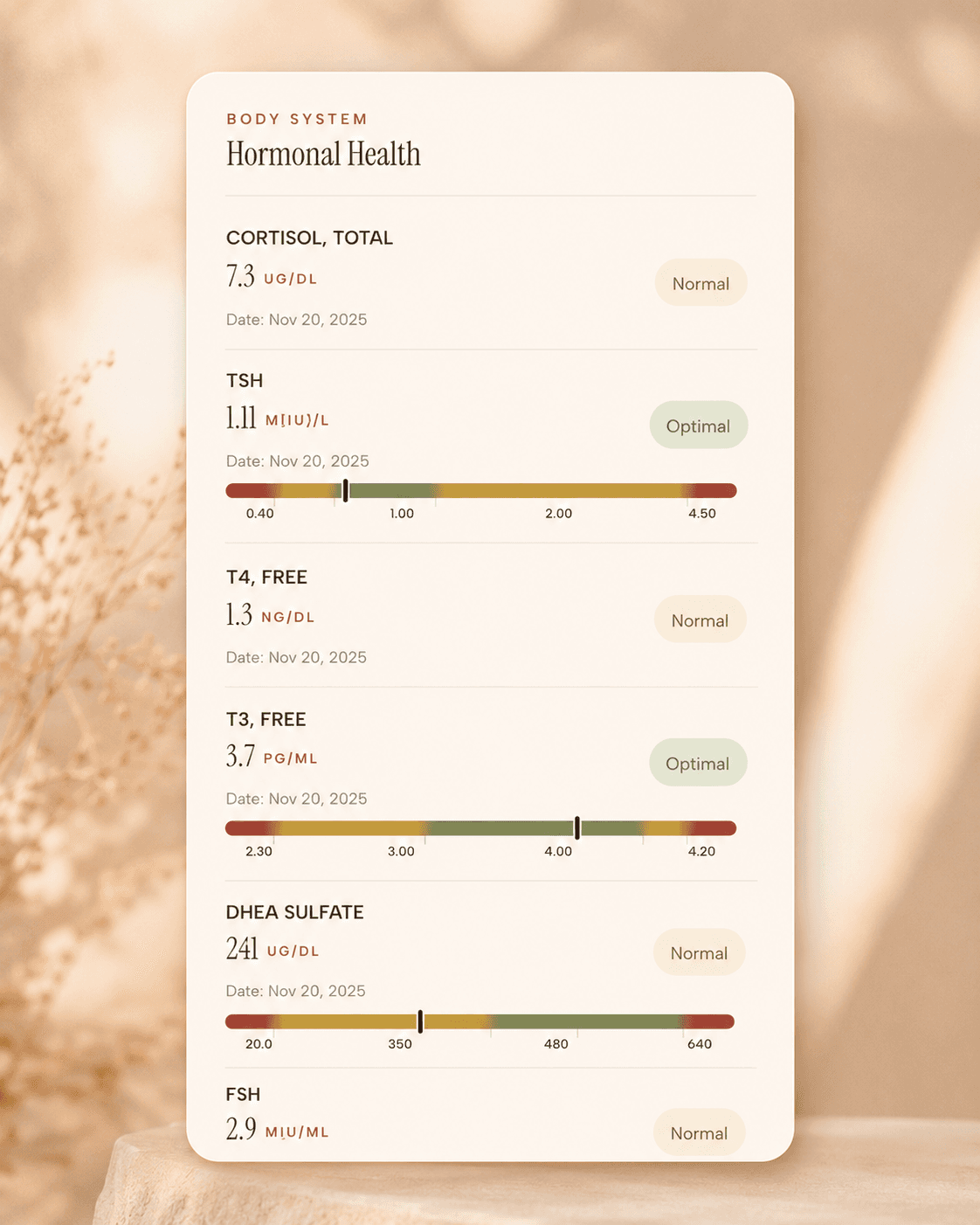
Cortisol is the primary stress hormone that regulates metabolism, immune function, and blood pressure. In functional medicine, cortisol assessment is crucial for understanding stress response and its impact on overall health. Chronic elevation suppresses testosterone production and immune function, while low cortisol indicates adrenal insufficiency. Optimal cortisol rhythm supports energy, mood stability, and hormone balance. Cortisol orchestrates the body's stress response and daily energy rhythms. Balanced cor…
Learn moreLab testing
Check ferritin, TSH, and HbA1c at Quest
starting from $99 panel with 100+ tests, one visit
No referral needed
About 1 week
Schedule online — results typically within a week
Clear next steps
Guidance included, with follow-up care available
HSA / FSA
Eligible for pre-tax health spending accounts
Pro Tips
Run a two-week “focus after workout” log where you rate focus from 1–10 at 30, 60, and 120 minutes post-exercise, and write down what you ate and drank right after. Patterns show up faster than you think, especially around carbs and electrolytes.
If you suspect low blood sugar, try a repeatable test snack: 25–40 g carbs plus 20–30 g protein right after training. If your brain clears within 20 minutes on multiple days, you’ve basically done a real-world experiment.
Weigh yourself before and after one typical workout (same clothes, after you pee). If you’re down more than about 2% of body weight, your hydration strategy is probably not matching your sweat loss.
If you get foggy after high-intensity intervals, keep the workout but add a longer cool-down and a 5-minute sit-down before you drive or jump into work. That small buffer can prevent the “I can’t think” spiral.
If focus problems started after you changed training volume, started a new diet, or increased caffeine, change only one variable for a week at a time. Your brain is good at feedback, but only if you give it a clean signal.
Frequently Asked Questions
Is it normal to feel mentally foggy after a workout?
It can be normal for an hour or two, especially after long, hot, or high-intensity sessions, because your body is shifting blood flow, refilling muscle fuel, and cooling down. If the fog reliably improves after a carb-and-protein snack or electrolyte fluids, it’s often a fuel or hydration issue rather than something scary. If it’s happening after easy workouts or lasting all day, consider checking ferritin, TSH, and HbA1c to look for a baseline problem.
Why do I get brain fog after cardio but not weights?
Cardio often involves longer continuous effort and more sweating, which makes blood sugar dips and sodium loss more likely. It can also push you into faster breathing, and hyperventilating can make you feel spaced out even if your legs feel fine. Try adding electrolytes and a post-cardio snack, and keep the intensity at a pace where you can speak in full sentences for a week to see if the pattern changes.
What should I eat after exercise to improve focus?
A good starting target is 25–40 grams of carbs plus 20–30 grams of protein within 30 minutes, because that combination restores glucose without a sharp crash. Examples include a banana with a protein shake, yogurt with fruit, or a sandwich. If you still feel foggy, increase carbs slightly on harder days and see whether your focus at 60 minutes improves.
Can dehydration cause trouble concentrating after exercise?
Yes, because dehydration lowers blood volume and can reduce efficient delivery of oxygen and glucose to your brain, which feels like headache, lightheadedness, and slow thinking. If you sweat a lot, replacing sodium matters as much as replacing water. A practical plan is 16–24 oz (500–700 mL) of fluid after training plus electrolytes or a salty snack when the workout was long or hot.
When should I worry about lack of focus after exercise?
Get urgent help if you have chest pain, fainting, severe shortness of breath, new one-sided weakness, or confusion that doesn’t improve with rest and fluids, because those are not typical “post-workout fog.” For non-urgent patterns, it’s worth taking action if the symptom is new, worsening, or lasting more than a few hours, especially if you also have heavy fatigue, palpitations, or frequent headaches. Start by testing HbA1c, ferritin, and TSH, and bring your workout log to a clinician or PocketMD so the next step is targeted.
What research says about exercise and mental clarity
ACSM position stand on exercise and fluid replacement (why dehydration can impair performance and cognition)
International Olympic Committee consensus on Relative Energy Deficiency in Sport (RED-S), which can show up as fatigue and brain fog when you under-fuel training
Review of “overreaching” and overtraining syndrome (how too much intensity without recovery affects mood, fatigue, and performance)