Why You Get Brain Fog After Exercise (and What Helps)
Brain fog after exercise often comes from low blood sugar, dehydration with salt loss, or iron/thyroid issues. Targeted labs at Quest—no referral needed.






Brain fog after exercise usually happens because your brain is temporarily under-fueled or under-perfused: your blood sugar dips, you lose more fluid and salt than you replace, or an underlying issue like low iron or thyroid imbalance makes recovery harder. It can also show up when you push past your current conditioning level, especially after illness, because your nervous system stays “stuck on” instead of settling. Simple labs can help you figure out which pattern fits you, so you stop guessing. This symptom is frustrating because you did something “healthy,” and then you feel slow, spacey, or oddly detached for hours. For some people it is a one-off hydration or fueling problem, and for others it is a clue that your baseline reserves are low or that your training load is mismatched to your recovery. Below you will see the most common body-level explanations, what to try right away, and which blood tests are most useful. If you want help matching your exact timeline and triggers to a likely cause, PocketMD can talk it through with you, and Vitals Vault labs can help confirm what is going on.
Why You Get Brain Fog After Exercise
Blood sugar dips after training
If you start a workout under-fueled, or you train long enough to burn through easy-to-access carbs, your blood sugar can drop afterward. Your brain is picky about glucose, so the “fog” can feel like slow thinking, word-finding trouble, or a weird emotional flatness. A useful clue is timing: fog that hits within 30–90 minutes of finishing and improves noticeably after carbs and protein points strongly in this direction.
Dehydration with salt loss
Sweat is not just water, and if you replace fluid without enough sodium, your blood volume can stay low and your brain can feel underpowered. This often feels like head pressure, lightheadedness when you stand, and a “cotton brain” that gets worse in heat or longer sessions. If your urine stays dark after you drink, or you get a headache plus fog, it is worth treating hydration as fluid plus electrolytes, not water alone.
Low iron stores reduce oxygen delivery
Even without anemia, low iron stores can make it harder to deliver oxygen efficiently during and after exercise, which can leave you feeling wiped out and mentally dull. The fog often comes with heavy legs, shortness of breath that seems out of proportion, or a higher-than-usual heart rate at easy paces. If you menstruate, follow a plant-forward diet, or donate blood, checking ferritin can be a high-yield next step.
Thyroid imbalance slows recovery
When your thyroid is underactive, your cells run “low power,” so a workout that used to feel normal can suddenly leave you foggy and drained. You might also notice cold intolerance, constipation, dry skin, or that your resting heart rate is lower than usual while your effort feels higher. If the fog is persistent across many workouts and not clearly tied to fueling or heat, a TSH test can help rule this in or out.
Post-viral fatigue and exertion intolerance
After some viral illnesses, your body can react to exertion with a delayed crash called post-exertional symptom exacerbation (PESE). The fog can show up later that day or the next day, and it often comes with flu-like heaviness, unrefreshing sleep, and a sense that your brain is “buffering.” The key takeaway is pacing: if you suspect this pattern, improving usually comes from staying below your crash threshold for a while, not from pushing harder.
What Helps You Feel Clear Again
Use a post-workout fuel target
Within an hour of finishing, aim for a real snack or meal that includes carbs plus protein, because that combination refills muscle glycogen and stabilizes blood sugar. A simple starting point is 20–30 g of protein with 30–60 g of carbs, then adjust based on workout length and how quickly your fog lifts. If you are foggy and not hungry, a drinkable option like chocolate milk or a smoothie is often easier to get down.
Rehydrate with electrolytes, not just water
If your workouts involve sweat, heat, or long duration, add sodium back on purpose. Many people do well starting with 300–600 mg sodium in the hour after exercise, especially if they notice headaches or lightheadedness with the fog. You will know you overshot if you feel puffy or unusually thirsty afterward, so start modestly and match it to your sweatiness.
Dial in intensity using the talk test
Brain fog is common when your “easy” workouts are not actually easy, because you are spending more time in a stress state that is harder to recover from. Use the talk test: during most sessions you should be able to speak in full sentences, not just short phrases. If you cannot, back off for two weeks and see whether your post-workout clarity improves before you assume something is wrong with your brain.
Try a cooldown that signals safety
Stopping abruptly can leave your nervous system revved up while your blood pressure and blood sugar are shifting, which is a perfect setup for feeling spaced out. Spend 5–10 minutes walking or spinning very lightly, then do 2–3 minutes of slow breathing with a longer exhale than inhale. It is a small habit, but many people notice the fog is less intense when their body gets a clear “we are done” signal.
If crashes are delayed, pace on purpose
When your fog shows up hours later or the next day, treat it like a recovery problem rather than a willpower problem. Keep workouts below the level that triggers a next-day crash, and increase time or intensity in tiny steps only after you have two stable weeks. If you are getting chest pain, fainting, or severe shortness of breath with exertion, that is not a pacing issue, and you should get medical care promptly.
Useful biomarkers to discuss with your clinician
Glucose
Fasting glucose is a fundamental marker of glucose metabolism and insulin function. In functional medicine, we recognize that even 'normal' glucose levels in the upper range may indicate early insulin resistance. Optimal fasting glucose reflects efficient glucose regulation and insulin sensitivity. Elevated fasting glucose suggests the body's inability to maintain normal glucose levels overnight, indicating hepatic insulin resistance or insufficient insulin production. This marker is essential for early detectio…
Learn moreIron, Total
Serum iron measures the amount of iron circulating in your blood at the time of testing. In functional medicine, we recognize that serum iron alone provides limited information about iron status, as it fluctuates throughout the day and is affected by recent iron intake, inflammation, and diurnal variation. However, when combined with other iron studies, it helps assess iron metabolism and transport. Iron is essential for oxygen transport, energy production, DNA synthesis, and immune function. Optimal serum iron…
Learn moreTSH
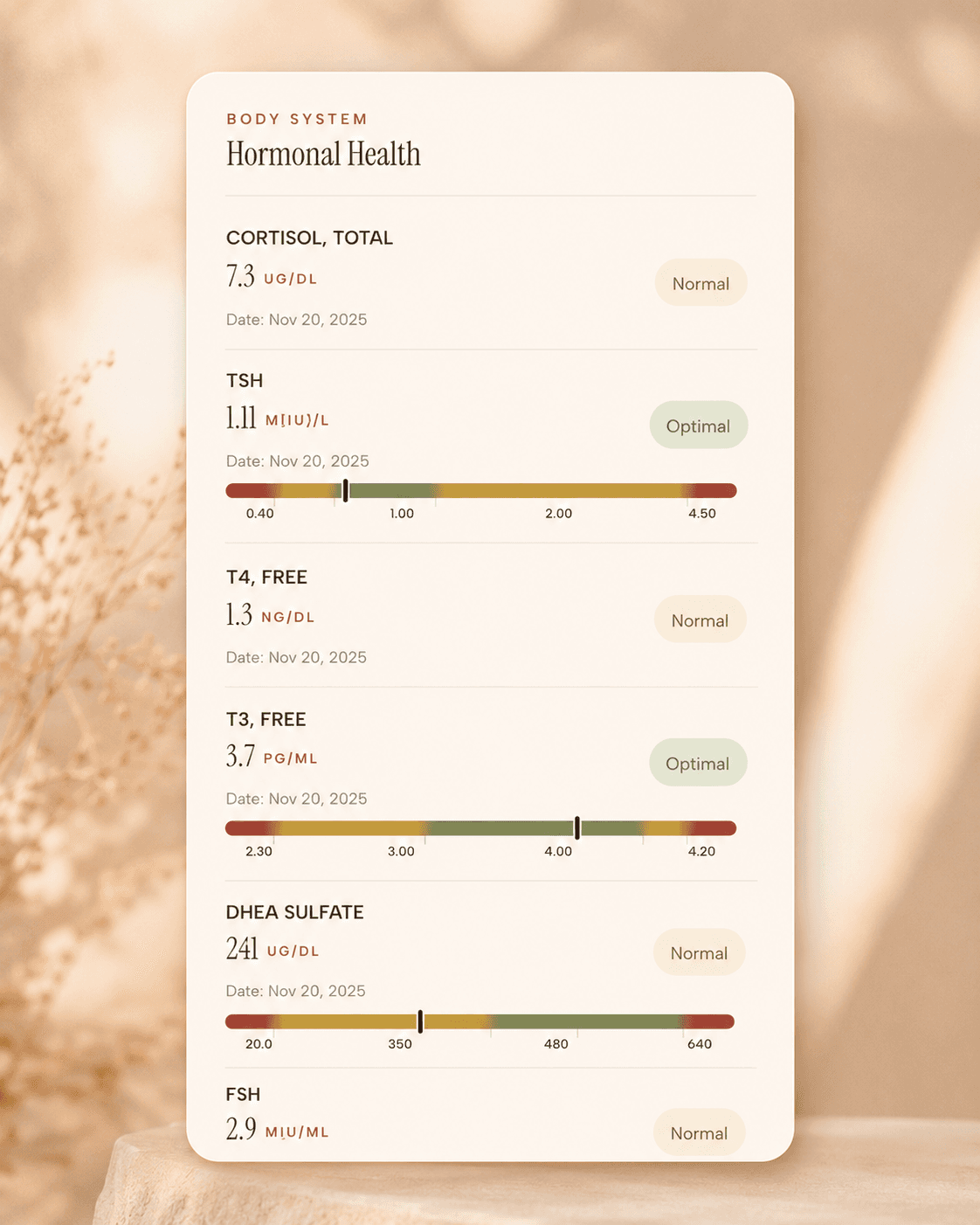
TSH is the master regulator of thyroid function, controlling the production of thyroid hormones T4 and T3. In functional medicine, we use narrower TSH ranges than conventional medicine to identify subclinical thyroid dysfunction early. Even mildly elevated TSH can indicate thyroid insufficiency, leading to fatigue, weight gain, depression, and metabolic dysfunction. TSH levels are influenced by stress, nutrient deficiencies, autoimmune conditions, and environmental toxins. Optimal TSH supports energy, metabolism…
Learn moreLab testing
Check ferritin, TSH, and HbA1c at Quest
starting from $99 panel with 100+ tests, one visit
No referral needed
About 1 week
Schedule online — results typically within a week
Clear next steps
Guidance included, with follow-up care available
HSA / FSA
Eligible for pre-tax health spending accounts
Pro Tips
Do a two-week “fog log” where you rate brain fog from 0–10 and write down three things: what you ate in the 3 hours before training, how long you trained, and when the fog started. Patterns usually show up faster than you expect.
If fog hits after morning workouts, try moving most of your carbs to before and right after training for one week, even if you prefer low-carb the rest of the day. You are not “failing” a diet; you are matching fuel to demand.
Weigh yourself before and after one typical sweaty workout, and treat each pound lost as roughly 16 ounces (about 500 mL) of fluid to replace over the next few hours. If you replace that fluid, include electrolytes so it actually stays in your system.
If you suspect post-viral exertion intolerance, use a heart-rate cap for a month and keep most sessions below a level where you can breathe through your nose and talk comfortably. The goal is to finish feeling like you could do more, not to empty the tank.
If your fog comes with shakiness, sweating, or sudden anxiety, check whether it improves within 15 minutes of fast carbs like juice or glucose tablets. That quick response is a strong clue your brain is reacting to low blood sugar.
Frequently Asked Questions
Is brain fog after exercise normal?
Mild fog right after a hard session can happen, especially if you trained longer than usual, got hot, or did not eat enough. It is less “normal” if it happens after easy workouts, lasts many hours, or is getting worse over time. Try one week of structured fueling and electrolytes, and if it persists, consider checking ferritin, TSH, and HbA1c.
Why do I feel mentally worse after cardio than weights?
Cardio often burns through glycogen faster and creates more sweat loss, so you are more likely to get a blood sugar dip or a fluid-and-sodium deficit afterward. It can also keep you at a higher breathing rate for longer, which some people experience as a wired-then-foggy crash. Compare two matched days by fueling the same way and adding electrolytes after cardio to see if the gap narrows.
Can low iron cause brain fog after workouts even if my hemoglobin is normal?
Yes. Low iron stores can show up first as low ferritin while hemoglobin still looks “fine,” and you can feel it as poor exercise tolerance plus brain fog. Many active people feel better when ferritin is above about 30 ng/mL, and some need closer to 50–100 ng/mL when symptoms fit. Ask for ferritin specifically, not just a basic blood count.
How long should post-workout brain fog last?
If it is mostly a fueling or hydration issue, you often feel noticeably clearer within 30–120 minutes after eating and rehydrating. Fog that lasts into the next day suggests you either overreached your current recovery capacity or you might be dealing with post-viral exertion intolerance. If next-day crashes are your pattern, reduce intensity for two weeks and rebuild gradually.
When should I worry about brain fog after exercise?
Get urgent care if fog comes with chest pain, fainting, one-sided weakness, new severe headache, or confusion that is not improving. For non-urgent but important evaluation, reach out if you have persistent fog after most workouts for more than 2–3 weeks, especially with shortness of breath, palpitations, or unexplained weight change. Bring a simple log of workout intensity, food timing, and symptom onset so the visit is more productive.
What Research Says
ACSM position stand on exercise and fluid replacement (how dehydration affects performance and cognition)
Consensus criteria for myalgic encephalomyelitis/chronic fatigue syndrome (describes post-exertional symptom worsening and cognitive issues)
International Consensus Statement on Concussion in Sport (recognizes exercise intolerance and cognitive symptoms after exertion in some contexts)