Why Is Your Hair Thinning When You’re Working Full-Time?
Hair thinning in working women is often from low iron, thyroid slowdown, or stress shedding. Targeted labs available at Quest—no referral needed.





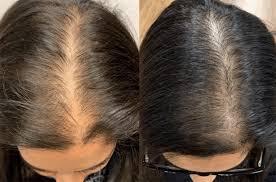
Hair thinning in working women is usually a mix of stress-related shedding, low iron stores, or a thyroid slowdown, and the pattern you notice (overall shedding versus widening part) helps narrow it down. The good news is that many of the common drivers are measurable, which means a few targeted blood tests can often tell you what to fix instead of guessing. Hair is surprisingly sensitive to what’s happening in the rest of your body, and work life can amplify the triggers. Tight deadlines can disrupt sleep and appetite, postpartum changes can overlap with returning to work, and “normal” lab results can still hide low iron stores that matter for hair. This article walks you through the most common causes, what helps in a practical way, and which labs are most useful. If you want help matching your pattern to the most likely cause, PocketMD can talk it through with you, and Vitals Vault labs can help you confirm what’s going on.
Why your hair thins during busy seasons
Stress shedding after a shock
When your body goes through a stressor, it can push more hairs than usual into the “resting” phase, and then they shed a couple of months later. This is called stress shedding (telogen effluvium), and it often feels like handfuls in the shower or a ponytail that suddenly looks skinnier. The key clue is timing: think back 6–12 weeks for triggers like intense work stress, illness, rapid weight loss, or a big life change.
Low iron stores, even without anemia
Your hair follicles are high-energy tissue, so they notice when your iron “savings account” is low, even if your hemoglobin looks fine. Low ferritin can show up as diffuse thinning, more shedding, and hair that seems to stop growing past a certain length. If you have heavy periods, follow a restrictive diet, or donate blood, ferritin is one of the highest-yield tests to check before you spend money on supplements that may not address the real issue.
Thyroid slowdown affecting growth
Your thyroid sets the pace for how fast cells turn over, including hair follicles, so an underactive thyroid can make hair grow more slowly and shed more easily. You might also notice dry skin, constipation, feeling cold, or fatigue that you’ve been blaming on work. If thinning is paired with those “slowed down” symptoms, a TSH test is a practical starting point because fixing thyroid function often improves hair over months.
Pattern thinning from hormone sensitivity
If your part is widening or your crown looks thinner while the sides stay relatively dense, you may be dealing with pattern hair loss (female pattern hair loss [androgenetic alopecia]). It is not about having “too much testosterone” for most women; it is about follicles being more sensitive to normal hormone signals over time. This matters because the earlier you treat pattern thinning, the more follicles you can keep in the growing phase.
Postpartum and perimenopause shifts
After pregnancy, estrogen drops quickly, and that can trigger a temporary shed that peaks around 3–4 months postpartum. Later in life, perimenopause can also change hair density because hormone fluctuations shorten the growth phase and make strands finer. If your timeline matches a postpartum return to work or midlife cycle changes, it helps to know that the “fix” is often a mix of patience, correcting deficiencies, and using treatments that support regrowth rather than chasing a single magic product.
What actually helps hair thicken again
Match the solution to your pattern
Start by deciding whether you’re mostly shedding (hair everywhere, sudden change) or mostly thinning (widening part, gradual change), because the best next step differs. Shedding patterns often improve once the trigger is addressed, while pattern thinning usually needs an ongoing treatment to maintain gains. Take three photos in consistent lighting—front hairline, center part, and crown—once a month so you can judge progress without daily panic.
Use topical minoxidil consistently
Topical minoxidil helps keep follicles in the growth phase longer, which is why it is one of the best-studied options for female pattern thinning. The catch is consistency: you typically need daily use for at least 3–6 months before you can judge results, and some early shedding can happen as old hairs make way for new growth. If you stop, the benefit gradually fades, so think of it like a long-term support tool rather than a short “course.”
Rebuild iron stores the right way
If ferritin is low, hair often improves only after you refill the tank, which can take months even with supplements. Many people do better with a lower-dose iron taken every other day because it can absorb well and cause fewer stomach side effects. Pair it with vitamin C and avoid taking it at the same time as coffee, tea, or calcium, then recheck ferritin in about 8–12 weeks to make sure you’re moving in the right direction.
Protect sleep like it’s treatment
Hair follicles respond to your stress hormones, and poor sleep keeps those signals turned up, which can prolong shedding. You do not need a perfect routine, but you do need a repeatable one: pick a realistic bedtime window and a 20-minute wind-down that you can do even after late meetings. If you wake at 3 a.m. with a racing mind, that is a clue your nervous system is still “on,” and calming it can be as important as any supplement.
Know when to see a dermatologist
If you have bald patches, scalp pain, heavy scaling, or eyebrow loss, you should get checked sooner because some causes can scar follicles if they are missed. A dermatologist can examine your scalp closely and may do a quick in-office hair pull test or dermatoscopy to distinguish shedding from inflammatory conditions. Bring your timeline, photos, and any lab results so the visit is efficient and focused.
Useful biomarkers to discuss with your clinician
Ferritin
Ferritin is your body's iron storage protein, reflecting total iron stores in the body. In functional medicine, ferritin assessment is crucial for identifying both iron deficiency and iron overload, conditions that can significantly impact energy levels and overall health. Low ferritin is the earliest sign of iron deficiency, often occurring before anemia develops. This can cause fatigue, weakness, restless leg syndrome, and cognitive impairment. Conversely, elevated ferritin may indicate iron overload, inflamma…
Learn moreTSH
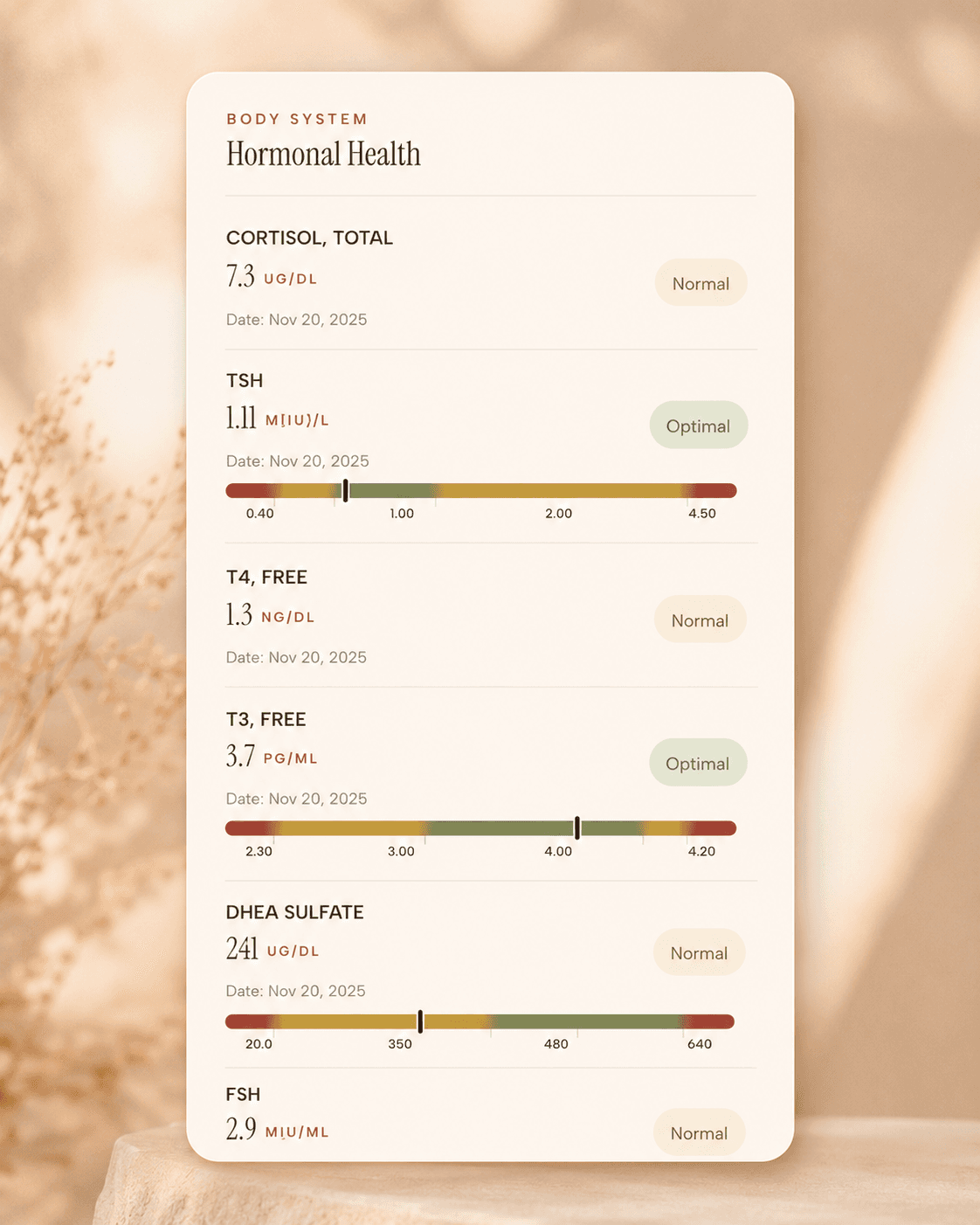
TSH is the master regulator of thyroid function, controlling the production of thyroid hormones T4 and T3. In functional medicine, we use narrower TSH ranges than conventional medicine to identify subclinical thyroid dysfunction early. Even mildly elevated TSH can indicate thyroid insufficiency, leading to fatigue, weight gain, depression, and metabolic dysfunction. TSH levels are influenced by stress, nutrient deficiencies, autoimmune conditions, and environmental toxins. Optimal TSH supports energy, metabolism…
Learn moreIron Binding Capacity
TIBC helps distinguish between different causes of abnormal iron levels. High TIBC indicates iron deficiency (the body increases transferrin to capture more iron), while low TIBC suggests iron overload or chronic disease. It's essential for accurate iron status assessment. Total Iron Binding Capacity (TIBC) measures the blood's capacity to bind iron with transferrin, the main iron transport protein. It indirectly reflects transferrin levels and iron status.
Learn moreLab testing
Check ferritin, TSH, and vitamin D at Quest
starting from $99 panel with 100+ tests, one visit
No referral needed
About 1 week
Schedule online — results typically within a week
Clear next steps
Guidance included, with follow-up care available
HSA / FSA
Eligible for pre-tax health spending accounts
Pro Tips
Do a two-week “shed check” by counting roughly how many hairs you lose on wash days versus non-wash days, because a sudden jump supports stress shedding more than slow pattern thinning.
If your part is the main issue, switch your part line for a month and take photos in the same spot each time; pattern thinning often shows up as consistent scalp show-through regardless of styling tricks.
If you start iron, set a calendar reminder to recheck ferritin in 8–12 weeks, because hair changes lag behind blood changes and you need proof that your stores are actually rising.
Treat your scalp like skin, not just hair: if you have itch, burning, or flakes that stick to the scalp, address that first because inflammation can worsen shedding and make regrowth slower.
Give any regrowth plan a fair timeline by tracking monthly, not daily; most people need 3 months to see less shedding and 6–12 months to see visible density changes.
Frequently Asked Questions
Is hair thinning from stress reversible?
Stress shedding (telogen effluvium) is usually reversible once the trigger settles, but the timeline is slow because hair cycles move in months, not days. Shedding often peaks 2–3 months after the stressor and then gradually improves over another 2–4 months. If shedding continues past 6 months, it is worth checking ferritin and TSH so you are not missing an ongoing driver.
What ferritin level is too low for hair growth?
For hair, “normal” on the lab report can still be too low, because follicles are sensitive to low iron stores. Many clinicians use ferritin below about 30 ng/mL as clearly low, and often aim for at least 50 ng/mL (sometimes 70–100 ng/mL) when hair thinning is the main complaint. If your ferritin is low, recheck it after 8–12 weeks of a plan to confirm it is rising.
Can thyroid problems cause hair thinning even if TSH is only slightly high?
Yes, because hair follicles respond to subtle shifts in thyroid signaling, and a mildly high TSH can still reflect a thyroid that is underperforming for you. Hair thinning is especially suspicious when it comes with fatigue, dry skin, constipation, or feeling cold. Ask for TSH first, and if it is abnormal, discuss whether free T4 and thyroid antibodies make sense for your situation.
How long does minoxidil take to work for women?
Most people need at least 3–6 months of consistent use to judge whether topical minoxidil is helping, and the best results often show up closer to 9–12 months. An early increase in shedding can happen in the first few weeks as older hairs cycle out, which is scary but not always a bad sign. Take monthly photos so you can see trend changes that are easy to miss day-to-day.
When should I worry that hair loss is something serious?
Get checked promptly if you have sudden bald patches, scalp pain or sores, thick scale, or hair loss in your eyebrows, because those patterns can signal inflammatory or autoimmune conditions. Also take rapid, diffuse shedding seriously if it follows a high fever, major surgery, or a new medication, since the trigger may be identifiable and fixable. Bringing a timeline, photos, and key labs like ferritin and TSH makes the evaluation much faster.