Blood Pressure Spikes on Keto: What’s Going On?
Blood pressure spikes on keto often come from sodium loss, dehydration, or stimulant effects from caffeine and stress. Targeted labs available—no referral needed.





Blood pressure spikes on keto usually happen because your body dumps salt and water early on, which can trigger stress hormones that temporarily tighten your blood vessels. They can also show up when you unintentionally swing between “too little sodium” and “too much sodium,” or when caffeine, poor sleep, or anxiety amplifies normal blood pressure variability. A few targeted labs and better home monitoring can help you figure out which pattern is actually happening for you. This is a frustrating symptom because keto is often marketed as “good for blood pressure,” and for many people it is over the long run. But the transition phase can be bumpy, and your numbers can look scary even when the underlying issue is fixable. In this guide, you’ll learn the most common reasons keto triggers spikes, what you can do this week to smooth them out, and which blood tests can catch problems like dehydration-related kidney strain or hidden thyroid issues. If you want help interpreting your readings and your diet changes in context, PocketMD can walk through your situation, and Vitals Vault labs can help you confirm what your body is responding to.
Why your blood pressure spikes on keto
Salt and water loss early on
When you cut carbs, your insulin levels drop and your kidneys release more sodium, which pulls water with it. That can leave you feeling “wired but weak,” and your body may respond by turning up adrenaline and tightening blood vessels to keep pressure up. The takeaway is that a spike in the first 1–2 weeks is often a hydration-and-sodium problem, not a permanent new baseline.
Electrolyte imbalance, not just sodium
Keto changes how you hold onto potassium and magnesium too, and low levels can make your blood vessels more reactive. You might notice palpitations, muscle twitching, or headaches alongside the higher readings, which is your clue that this is more than “white coat” anxiety. If your diet is heavy on meat and cheese but light on leafy greens, nuts, and seeds, you’re more likely to run into this.
Too much salty keto food
Some people fix “keto flu” by aggressively salting everything, drinking salty broths, and leaning on processed keto snacks. If your kidneys are sensitive to sodium, that can push your pressure up, especially later in the day when you’ve accumulated more salt. A useful clue is that your morning readings look okay, but your evening readings climb after salty meals.
Caffeine, fasting, and stress hormones
Keto often pairs with intermittent fasting, and both can increase stress hormones that raise blood pressure in the short term. Add coffee on an empty stomach and you can get a sharp, temporary jump that feels like a surge: pounding heart, shaky energy, and a high top number. If your spikes cluster around caffeine or long gaps between meals, the trigger is likely hormonal rather than structural.
Underlying hypertension or thyroid shift
Sometimes keto doesn’t cause the problem so much as reveal it, because you’re measuring more often and paying closer attention. Thyroid overactivity (hyperthyroidism) can also raise heart rate and widen pulse pressure, and it can be missed if you chalk everything up to diet. If your readings stay elevated beyond a few weeks, or you have chest pain, one-sided weakness, severe shortness of breath, or a blood pressure of 180/120 or higher, treat that as urgent and get medical care right away.
What actually helps calm the spikes
Rebuild fluids and sodium on purpose
Instead of guessing, try a structured approach for 3–5 days: drink to thirst, and add a measured amount of sodium (for many people, that’s 1–2 cups of broth or an electrolyte drink daily). Then watch whether your dizziness improves and your blood pressure becomes less jumpy. If your pressure rises with added sodium, you’ve learned something important and you can scale back without abandoning keto.
Prioritize potassium-rich keto foods
Potassium helps your blood vessels relax and helps your kidneys handle sodium more smoothly. On keto, that usually means building meals around avocado, leafy greens, mushrooms, and salmon rather than relying on “keto replacement” bars and shakes. If you take a potassium supplement, keep the dose conservative and check with a clinician if you have kidney disease or take blood pressure meds, because potassium can build up.
Dial back caffeine during the transition
If you’re in the first couple of weeks, your nervous system is already on high alert, and caffeine can turn a mild bump into a scary spike. Try cutting your usual caffeine in half for a week, or switch to half-caf, and avoid coffee before you’ve had water and some salt. If your spikes disappear, you can reintroduce slowly and find your personal threshold.
Use a real home BP technique
Bad technique can create “spikes” that are really measurement noise. Sit quietly for five minutes, keep your feet flat, support your arm at heart level, and take two readings one minute apart, then record the average. Do this at the same times daily for a week, because patterns matter more than a single scary number.
Adjust meds with your prescriber
Keto and weight loss can change how blood pressure medicines feel, and diuretics in particular can worsen dehydration and electrolyte loss. That can create a cycle where you feel awful, your body releases stress hormones, and your readings swing. If you’re on any blood pressure medication, bring your home log to your clinician so adjustments are based on data, not guesswork.
Useful biomarkers to discuss with your clinician
Sodium
Sodium is the primary extracellular electrolyte essential for fluid balance, nerve transmission, muscle contraction, and blood pressure regulation. In functional medicine, sodium balance reflects kidney function, adrenal health, and hydration status. Low sodium (hyponatremia) can cause neurological symptoms and may indicate SIADH, adrenal insufficiency, or excessive water intake. High sodium may indicate dehydration, diabetes insipidus, or excessive salt intake. Optimal sodium levels support cellular energy prod…
Learn morePotassium
Potassium is the primary intracellular electrolyte crucial for muscle function, nerve transmission, and cardiovascular health. In functional medicine, potassium deficiency is extremely common due to low fruit/vegetable intake and high sodium diets. Potassium supports healthy blood pressure, prevents kidney stones, and maintains bone health. Low potassium increases risk of hypertension, arrhythmias, and stroke. Optimal potassium levels support heart rhythm, muscle function, and cellular metabolism. Potassium is e…
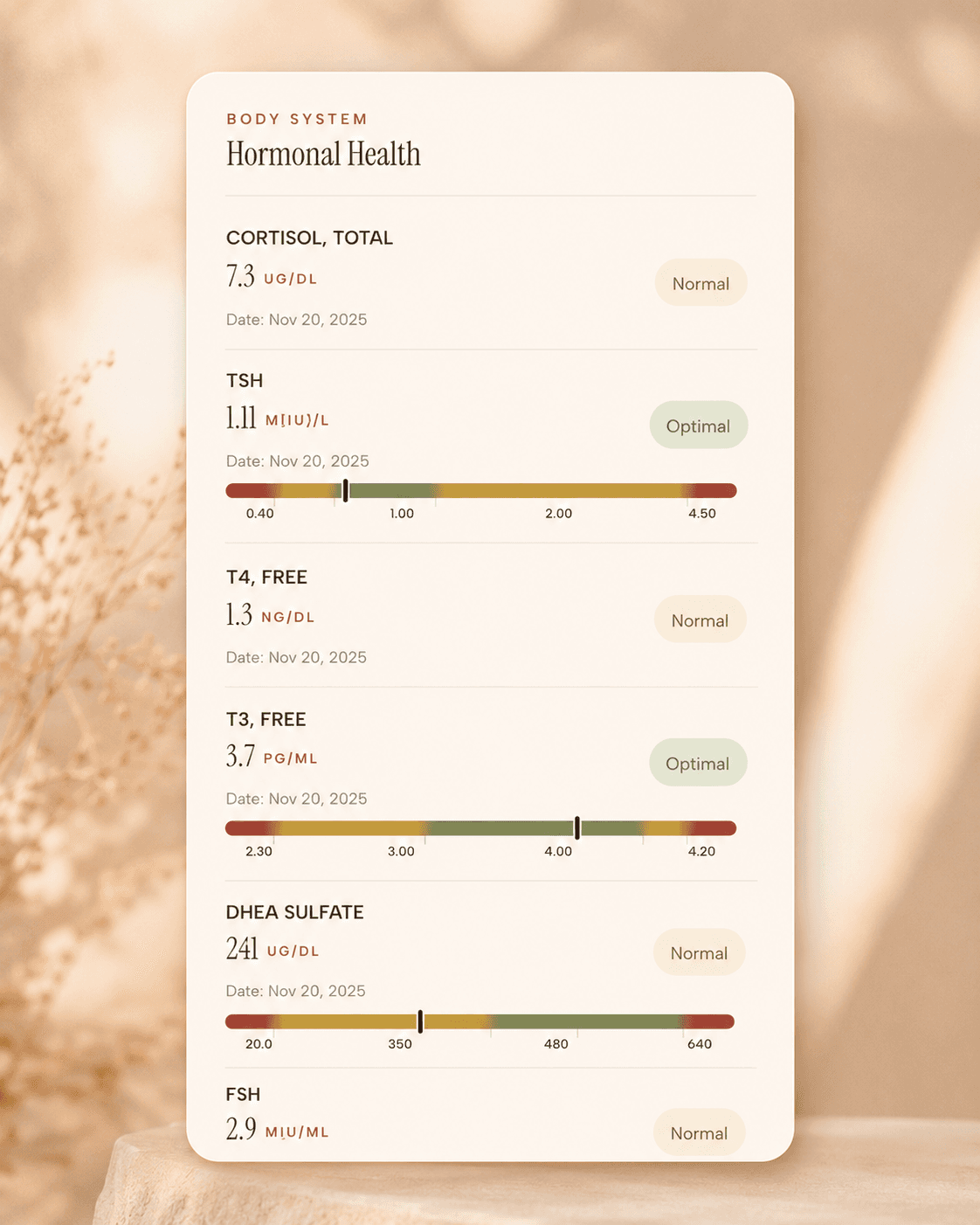
Learn moreCortisol, Total
Cortisol is the primary stress hormone that regulates metabolism, immune function, and blood pressure. In functional medicine, cortisol assessment is crucial for understanding stress response and its impact on overall health. Chronic elevation suppresses testosterone production and immune function, while low cortisol indicates adrenal insufficiency. Optimal cortisol rhythm supports energy, mood stability, and hormone balance. Cortisol orchestrates the body's stress response and daily energy rhythms. Balanced cor…
Learn moreLab testing
Check kidney function, electrolytes, and thyroid status at Quest
starting from $99 panel with 100+ tests, one visit
No referral needed
About 1 week
Schedule online — results typically within a week
Clear next steps
Guidance included, with follow-up care available
HSA / FSA
Eligible for pre-tax health spending accounts
Pro Tips
Do a 7-day “same-time” blood pressure log: take readings within an hour of waking and again in the evening, and write down what you had for salt, caffeine, and fasting that day. Patterns show up fast when the timing is consistent.
If you’re getting spikes after salty foods, try a two-day experiment where you keep carbs the same but swap processed keto foods for whole foods and stop adding extra salt. If the evening numbers drop, sodium sensitivity is part of your story.
If you’re getting spikes during fasting, try moving your first meal earlier for three days and include protein plus a potassium-rich keto food like avocado. If the spikes shrink, your body is telling you it doesn’t love long gaps right now.
When a reading scares you, repeat it correctly after 5–10 minutes of quiet breathing and no phone scrolling. A big drop on the repeat suggests a stress surge more than a sustained pressure problem.
If you recently started or increased a diuretic, bring that up immediately, because keto’s early water loss can stack with the medication. Ask specifically whether your dose, timing, or electrolyte plan should change.
Frequently Asked Questions
Is it normal for blood pressure to go up when starting keto?
It can happen, especially in the first 1–2 weeks, because you lose sodium and water and your body compensates by releasing stress hormones that tighten blood vessels. That can create higher or more “jumpy” readings even if your long-term trend will improve. Track twice daily for a week and focus on hydration and electrolytes before assuming keto is harming you.
How high is too high for a blood pressure spike on keto?
A single high number is less important than the level and your symptoms, but 180/120 mmHg or higher is an emergency threshold, especially with chest pain, severe shortness of breath, confusion, or weakness on one side. If you’re repeatedly above 140/90 at home after proper technique, that’s worth a clinician conversation even if you feel fine. Bring a 7-day home log so the decision is based on your real pattern.
Can electrolytes lower blood pressure spikes on keto?
Yes, if the spikes are driven by low sodium, low potassium, or low magnesium during keto adaptation. A basic metabolic panel (sodium, potassium, creatinine) plus RBC magnesium can show whether you’re running low or stressing your kidneys. Use measured changes for a few days and watch your readings rather than constantly changing multiple supplements at once.
Why do my blood pressure spikes happen after coffee on keto?
Caffeine can raise adrenaline and temporarily narrow blood vessels, and keto plus fasting can make you more sensitive to that surge. You’ll often see a higher top number within 30–90 minutes, sometimes with shakiness or a pounding heartbeat. Try half your usual caffeine and avoid coffee before water and food, then reassess with two properly taken readings.
What labs should I get if keto is raising my blood pressure?
A practical starting set is a basic metabolic panel to check sodium, potassium, and kidney function, RBC magnesium to assess intracellular magnesium status, and TSH to screen for thyroid-driven blood pressure and heart rate changes. These tests help separate “transition physiology” from a problem that needs a different plan. If your readings stay high beyond a few weeks, use your lab results and home log to guide next steps with a clinician.
What research and guidelines say
AHA scientific statement on dietary patterns and cardiometabolic health (includes low-carb patterns and blood pressure considerations)
2017 ACC/AHA guideline for high blood pressure in adults (home BP monitoring and thresholds)
Systematic review and meta-analysis of low-carbohydrate diets and cardiovascular risk factors (includes blood pressure outcomes)