Why Your Blood Pressure Spikes During Fasting
Blood pressure spikes during fasting often come from stress hormones, dehydration, or medication timing. Targeted labs available at Quest—no referral needed.






Blood pressure spikes during fasting usually happen because your body turns up stress hormones, you get a little dehydrated (often from less salt and fluid), or your usual blood pressure medication timing no longer matches your day. The spike can feel scary, but it often has a pattern you can identify and fix. A few targeted labs can help confirm whether this is a “normal fasting response” or a sign of an underlying issue that needs treatment. Fasting changes your nervous system, your kidneys’ salt handling, and the hormones that keep your brain fueled. That is why two people can do the same fasting schedule and have totally different blood pressure readings. If you are seeing numbers that jump on fasting days, you are not “doing it wrong” — you are getting feedback from your body. This guide walks you through the most common reasons, what actually helps in real life, and which tests can make the picture clearer. If you want help interpreting your pattern, PocketMD can talk it through with you, and Vitals Vault labs can help you check the most relevant markers without a long wait.
Why your blood pressure spikes when you fast
Stress hormones rise during fasting
When you go without food, your body often boosts adrenaline and cortisol to keep you alert and keep blood sugar available for your brain. Those hormones tighten blood vessels and can make your heart beat a little harder, which pushes your numbers up even if you feel “fine.” If your spike comes with jitters, a racing heart, or feeling wired, try shortening the fast and see if the pattern improves over a week.
You’re under-salted or dehydrated
Many people drink more water while fasting but accidentally cut sodium too hard, especially if they also avoid processed foods. Low effective fluid volume makes your body squeeze blood vessels and activate the salt-saving system, which can raise blood pressure even though you are technically “hydrated.” A practical clue is dizziness when standing or a headache that improves after a salty broth or an electrolyte drink.
Medication timing no longer fits
Fasting changes when you take pills, when you drink coffee, and when you are active, and that can expose gaps in blood pressure control. Some medications wear off before your next dose, while others work best with food and can hit differently on an empty stomach. If spikes happen at the same time each fasting day, write down the exact dose times and bring that schedule to your clinician so they can adjust timing rather than just increasing the dose.
Low blood sugar triggers a surge
If your blood sugar dips too low for your body’s comfort, your liver releases sugar and your stress system kicks in to protect you. That “rescue” response can raise blood pressure and make you feel shaky, sweaty, or suddenly anxious. This is more common if you start fasting after a very low-carb day, after hard exercise, or if you take diabetes medications, so it is worth checking a fingerstick glucose during symptoms at least once.
An underlying hormone BP driver
Sometimes fasting doesn’t cause the problem so much as it reveals it, because your baseline blood pressure control is already being pushed by hormones. Overactive thyroid, sleep apnea, or an adrenal/kidney hormone imbalance can make your pressure more reactive when your routine changes. If you are seeing repeated readings at or above 180/120, or you have chest pain, severe headache, weakness on one side, or new confusion, treat that as urgent and get emergency care rather than trying to “wait out” the fast.
What actually helps during fasting days
Use a “gentler” fasting window
If you are doing 18:6 or longer and your blood pressure jumps, try 12:12 or 14:10 for two weeks and watch what happens. Many people still get appetite and weight benefits without the same stress-hormone surge. The goal is not to win fasting, it is to find the longest window your body tolerates without reactive spikes.
Add electrolytes on purpose
On fasting mornings, aim for fluids that include sodium rather than only plain water, especially if you sweat, exercise, or drink coffee. A simple approach is a cup of salty broth or an electrolyte mix that provides meaningful sodium, then re-check your blood pressure 30–60 minutes later to see if it settles. If you have heart failure or kidney disease, ask your clinician first because sodium targets are different for you.
Plan caffeine like a medication
Coffee and energy drinks can raise blood pressure on their own, and fasting can make that effect stronger because there is no food buffer. If your spike happens after caffeine, try delaying it until you eat, cutting the dose in half, or switching to tea for a week. This is one of the fastest experiments you can run because the result usually shows up within days.
Measure correctly, not obsessively
A single high reading is less useful than a clean pattern, so focus on technique. Sit quietly for five minutes, keep your feet flat, use the right cuff size, and take two readings one minute apart, then record the average. If your fasting-day average is consistently higher than your eating-day average by 10–15 mmHg, that is meaningful data to act on.
Review meds before you fast
If you take blood pressure meds, diabetes meds, or stimulants, fasting can change how safe and effective your routine is. A quick medication review can prevent avoidable spikes and prevent lows that trigger a rebound surge. Bring a one-week log that includes fasting window, dose times, caffeine, and your highest reading, because that is usually enough for a clinician to make a smart adjustment.
Useful biomarkers to discuss with your clinician
Glucose
Fasting glucose is a fundamental marker of glucose metabolism and insulin function. In functional medicine, we recognize that even 'normal' glucose levels in the upper range may indicate early insulin resistance. Optimal fasting glucose reflects efficient glucose regulation and insulin sensitivity. Elevated fasting glucose suggests the body's inability to maintain normal glucose levels overnight, indicating hepatic insulin resistance or insufficient insulin production. This marker is essential for early detectio…
Learn moreCortisol, Total
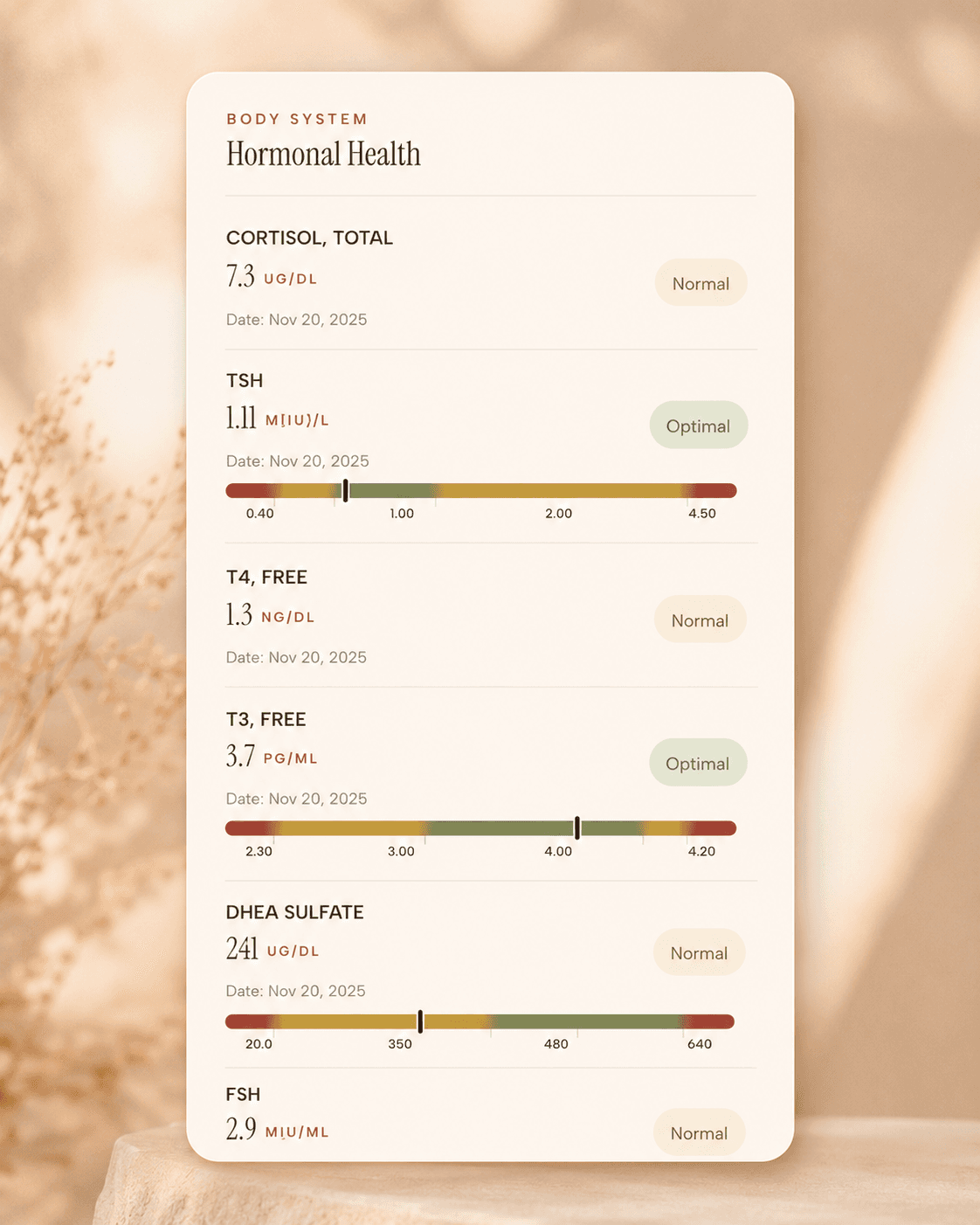
Cortisol is the primary stress hormone that regulates metabolism, immune function, and blood pressure. In functional medicine, cortisol assessment is crucial for understanding stress response and its impact on overall health. Chronic elevation suppresses testosterone production and immune function, while low cortisol indicates adrenal insufficiency. Optimal cortisol rhythm supports energy, mood stability, and hormone balance. Cortisol orchestrates the body's stress response and daily energy rhythms. Balanced cor…
Learn moreSodium
Sodium is the primary extracellular electrolyte essential for fluid balance, nerve transmission, muscle contraction, and blood pressure regulation. In functional medicine, sodium balance reflects kidney function, adrenal health, and hydration status. Low sodium (hyponatremia) can cause neurological symptoms and may indicate SIADH, adrenal insufficiency, or excessive water intake. High sodium may indicate dehydration, diabetes insipidus, or excessive salt intake. Optimal sodium levels support cellular energy prod…
Learn moreLab testing
Check aldosterone/renin, a thyroid panel, and fasting glucose/insulin at Quest
starting from $99 panel with 100+ tests, one visit
No referral needed
About 1 week
Schedule online — results typically within a week
Clear next steps
Guidance included, with follow-up care available
HSA / FSA
Eligible for pre-tax health spending accounts
Pro Tips
Do a 7-day “A/B test”: keep your fasting schedule the same, but on days 4–7 add a measured electrolyte drink in the morning, then compare your average systolic pressure (top number) between the two halves.
If you are getting spikes, take your blood pressure at the same three times each day for a week (for example: within an hour of waking, mid-afternoon, and before bed). Consistent timing makes patterns obvious and reduces panic-checking.
Try a protein-forward first meal when you break the fast, because a big refined-carb meal can cause a blood sugar swing that makes your nervous system jumpy and your pressure more reactive later.
If your readings are high only on fasting days, do one “no caffeine until you eat” week. It is a clean experiment that tells you quickly whether caffeine is amplifying the fasting response.
If you use a smartwatch or sleep tracker and your sleep is worse on fasting nights, take that seriously. Poor sleep raises next-day blood pressure, so moving your last meal earlier or shortening the fast can help more than pushing through.
Frequently Asked Questions
Is it normal for blood pressure to go up when fasting?
It can happen, especially early on, because fasting can raise adrenaline and cortisol and change how your kidneys handle salt and water. A small bump is common, but repeated large jumps or readings above 180/120 are not something to brush off. Track a week of fasting-day versus eating-day averages and use that pattern to decide whether to adjust your fasting plan or get checked.
Why does my blood pressure spike right before I eat?
For some people, the “anticipation” phase of eating triggers a stress response, especially if you are very hungry or your blood sugar is dipping. Your body releases hormones to keep you alert and protect your brain, and that can tighten blood vessels. Try breaking the fast a bit earlier with a small protein snack and see whether the pre-meal spike shrinks over several days.
Can dehydration cause high blood pressure during fasting?
Yes, and it is often more about low sodium than low water. When your body senses low effective circulating volume, it activates hormone systems that constrict blood vessels, which can raise blood pressure. If you feel lightheaded when standing or your headache improves after salty fluids, a measured electrolyte strategy is worth testing.
Should I stop intermittent fasting if I have hypertension?
Not automatically, but you should treat blood pressure readings as real feedback. If fasting days consistently raise your average by 10–15 mmHg or you are getting symptoms like chest pain, severe headache, or shortness of breath, it is smarter to shorten the fasting window and review medications. Bring your home BP log and your fasting schedule to your clinician so you can make a plan that is safe for your risk level.
What labs help explain blood pressure spikes during fasting?
Aldosterone-to-renin ratio (ARR) can uncover a salt-retaining hormone pattern, TSH with free T4 can flag an overactive thyroid, and fasting glucose with fasting insulin can show whether blood sugar swings are triggering stress surges. These tests do not replace home monitoring, but they can explain why your body reacts so strongly when you skip meals. If you are unsure which tests fit your situation, start by logging your readings for a week and then choose labs based on that pattern.