Why You’re Getting Mood Swings on Keto (and What Helps)
Mood swings on keto diet often come from electrolyte shifts, low carb withdrawal, or sleep disruption. Targeted labs available—no referral needed.






Mood swings on keto usually come from a few predictable body shifts: you lose sodium and water quickly, your brain adapts to less glucose, and your sleep can get lighter while your stress hormones run higher. That combination can feel like irritability, anxiety, sudden sadness, or a hair-trigger temper even when “nothing is wrong.” If it keeps happening, a few targeted labs can help you tell the difference between normal keto adjustment and something like thyroid strain or low iron that is making your mood worse. Keto can be a useful tool, but it is not emotionally neutral. When you change fuel sources fast, your appetite signals, stress response, and sleep architecture can all wobble for a couple of weeks, and that can spill into relationships and work in a very real way. The goal of this page is to help you spot the pattern behind your mood changes and fix the most common drivers without guessing. If you want help sorting your exact situation, PocketMD can walk through your symptoms and timing with you, and Vitals Vault labs can help confirm what your body is doing under the hood.
Why you’re getting mood swings on keto
Electrolyte loss hits your nervous system
Early in keto, your insulin level drops and your kidneys dump more sodium and water, which can also pull potassium and magnesium along with it. When those minerals run low, your nerves and muscles fire differently, so you can feel edgy, restless, or “wired but tired,” and small stressors suddenly feel huge. A practical clue is that your mood dips on days you also get headaches, lightheadedness, or heart flutters, and it improves within an hour or two of a salty broth or electrolyte drink.
Your brain misses quick glucose
Even if keto is right for you long-term, the first stretch can feel like withdrawal because your brain is used to steady glucose and now has to ramp up ketone use. That transition can temporarily lower your mental “buffer,” so frustration tolerance drops and you might cry more easily or snap faster. If your mood swings are worst in the first 3–10 days and slowly ease as your energy steadies, this adaptation phase is a likely driver.
Sleep gets lighter and more broken
Some people sleep worse on keto at first, especially if carbs were helping you fall asleep by nudging serotonin and melatonin. When sleep fragments, your emotional regulation takes the hit the next day, so you can feel anxious, pessimistic, or unusually reactive even if you are doing everything “right.” Pay attention to 2 a.m. wake-ups, vivid dreams, or a racing mind at bedtime, because fixing sleep often fixes the mood.
Undereating raises stress hormones
Keto can blunt appetite, which sounds great until you accidentally run a big calorie deficit for days. When your body senses “not enough fuel,” it leans on stress chemistry like adrenaline and cortisol, which can feel like irritability, impatience, and a tight chest. If your mood swings show up alongside cold hands, constant busyness, or a sudden drop in workout performance, you may need more total food, not more willpower.
Hormone timing can amplify swings
If you menstruate or you are in perimenopause, keto changes in energy availability and sleep can collide with normal hormone shifts across your cycle. In the week before your period, many people are more sensitive to low blood sugar feelings and poor sleep, so keto can make PMS mood symptoms feel louder. If your mood swings cluster in the luteal phase (after ovulation) or around cycle irregularity, track timing for two cycles and consider labs that rule out thyroid issues or low iron that can worsen mood.
What actually helps you feel stable (without quitting keto in a panic)
Treat sodium like a real lever
If you are low-carb and peeing more, you often need more sodium than you did before, and mood can be one of the first things to wobble when you are short. Try adding 1–2 cups of salty broth daily for a week, or use an electrolyte mix that includes sodium, and see if your irritability and “internal buzzing” calm down. If you have high blood pressure, kidney disease, or heart failure, check with your clinician before aggressively increasing salt.
Stop the accidental calorie crash
A lot of keto mood swings are simply “not enough food,” especially if you are also fasting or training hard. For 7 days, aim for consistent meals with a clear protein anchor, and add an extra serving of fat or a higher-calorie protein option if you are losing weight faster than you intended. Your goal is to feel steady between meals, not heroic.
Use carbs strategically at night
If your mood swings are tied to insomnia, a small, planned carb portion at dinner can be a smarter move than white-knuckling through bad sleep. Many people do well with 15–30 grams of carbs from whole-food sources, which can help sleep onset without turning into an all-day carb rebound. Treat it like an experiment for two weeks and judge it by sleep quality and next-day mood, not by ideology.
Ease into keto instead of flipping a switch
A hard drop from high-carb to very low-carb can be a shock to your stress system, especially if you already run anxious or you are under heavy work pressure. A step-down approach—reducing carbs over 2–4 weeks while keeping protein steady—often reduces the “keto rage” phase because your brain and kidneys have time to adapt. If you already feel emotionally unstable, this gentler ramp is usually the safer bet.
Know when it’s not “just keto”
If you are having panic-level anxiety, thoughts of self-harm, or you feel out of control, treat that as urgent regardless of your diet plan. Keto can unmask or worsen underlying mood disorders in some people, and medication timing, sleep loss, or thyroid changes can be part of the picture. The most useful next step is to pause extreme restriction, stabilize sleep and meals for a few days, and talk to a clinician or PocketMD about what changed and when.
Useful biomarkers to discuss with your clinician
Sodium
Sodium is the primary extracellular electrolyte essential for fluid balance, nerve transmission, muscle contraction, and blood pressure regulation. In functional medicine, sodium balance reflects kidney function, adrenal health, and hydration status. Low sodium (hyponatremia) can cause neurological symptoms and may indicate SIADH, adrenal insufficiency, or excessive water intake. High sodium may indicate dehydration, diabetes insipidus, or excessive salt intake. Optimal sodium levels support cellular energy prod…
Learn morePotassium
Potassium is the primary intracellular electrolyte crucial for muscle function, nerve transmission, and cardiovascular health. In functional medicine, potassium deficiency is extremely common due to low fruit/vegetable intake and high sodium diets. Potassium supports healthy blood pressure, prevents kidney stones, and maintains bone health. Low potassium increases risk of hypertension, arrhythmias, and stroke. Optimal potassium levels support heart rhythm, muscle function, and cellular metabolism. Potassium is e…
Learn moreCortisol, Total
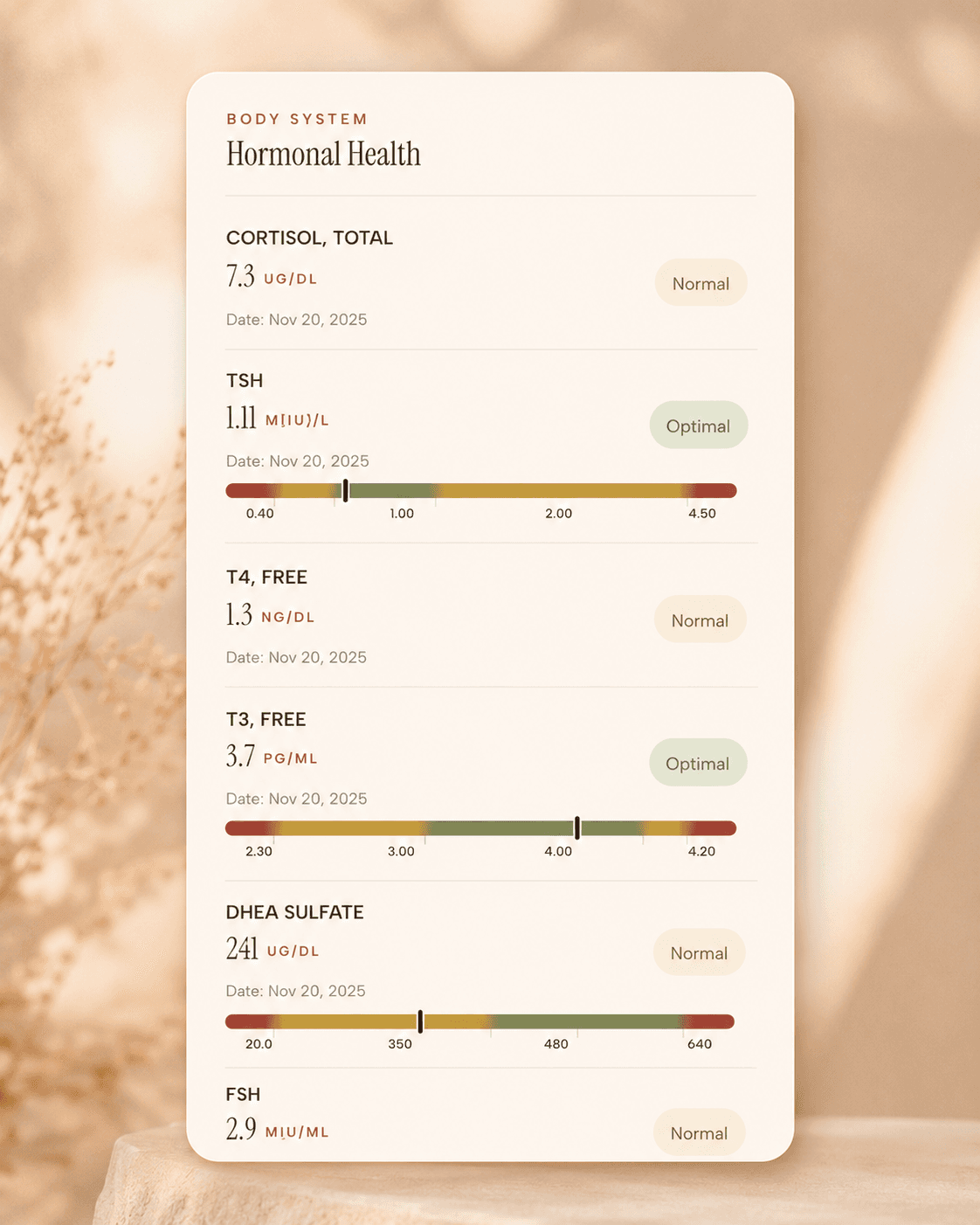
Cortisol is the primary stress hormone that regulates metabolism, immune function, and blood pressure. In functional medicine, cortisol assessment is crucial for understanding stress response and its impact on overall health. Chronic elevation suppresses testosterone production and immune function, while low cortisol indicates adrenal insufficiency. Optimal cortisol rhythm supports energy, mood stability, and hormone balance. Cortisol orchestrates the body's stress response and daily energy rhythms. Balanced cor…
Learn moreLab testing
Check TSH, ferritin, and magnesium to see what’s pushing your mood around
starting from $99 panel with 100+ tests, one visit
No referral needed
About 1 week
Schedule online — results typically within a week
Clear next steps
Guidance included, with follow-up care available
HSA / FSA
Eligible for pre-tax health spending accounts
Pro Tips
Run a 10-day “stability experiment”: keep carbs consistent, keep meal times consistent, and change only one lever (like adding salty broth). If your mood steadies, you have a real signal instead of a guess.
If you track ketones, do not chase the highest number. Many people feel emotionally best at “moderate ketosis,” especially if you are also working long hours or sleeping poorly.
When you feel a mood drop coming on, do a quick body check: are you thirsty, headachy, or lightheaded? If yes, try electrolytes first and reassess in 30–60 minutes before you assume it is “you.”
If your mood swings cluster before your period, plan for it like you would plan for a busy work week: slightly higher carbs at dinner, earlier bedtime, and fewer fasting windows during that week can prevent the crash.
If you take lithium, diuretics, or blood pressure meds, do not do aggressive keto or electrolyte changes on your own. Sodium and hydration shifts can change how these medications behave, so loop in your prescriber.
Frequently Asked Questions
How long do mood swings last when starting keto?
For many people, the roughest mood changes happen in the first 3–10 days, when your brain and kidneys are adapting to lower carbs and different fluid balance. If you support electrolytes and avoid undereating, things often settle by weeks 2–4. If your mood is getting worse after the first month, it is worth checking sleep, calorie intake, and labs like TSH and ferritin.
Can keto cause anxiety or panic attacks?
Keto can make anxiety feel worse in some people, especially early on, because low sodium, poor sleep, and a big calorie deficit can all increase adrenaline-type sensations. That can feel like a racing heart, shakiness, and a sense of dread even when you are “fine.” If you are having panic symptoms, stabilize meals and electrolytes for a few days and consider checking magnesium and thyroid markers.
Are mood swings on keto a sign my electrolytes are low?
They can be, particularly if mood swings come with headaches, dizziness when standing, muscle twitching, or heart palpitations. Sodium loss is common in early keto, and low magnesium can worsen sleep and irritability. A practical test is whether a salty drink improves how you feel within an hour, and a lab like RBC magnesium can help if symptoms keep recurring.
Should I stop keto if I feel depressed or irritable?
If you feel unsafe, have thoughts of self-harm, or your mood feels out of control, stop extreme restriction and get help right away. If it is milder but persistent, try a structured reset first: consistent meals for a week, no fasting, and a small planned carb portion at dinner to protect sleep. If symptoms still do not improve, talk with a clinician and consider labs such as TSH and ferritin to look for a fixable contributor.
What labs are most useful for mood swings on keto?
Three high-yield tests are TSH for thyroid strain, ferritin for low iron stores, and RBC magnesium for magnesium status that can affect sleep and anxiety. These do not diagnose every cause, but they often explain why keto feels emotionally rough even when your macros look perfect. If any result is off, use it to guide a specific change rather than randomly adding supplements.
What research says about keto and mood
Ketogenic diet therapies for epilepsy and beyond (mechanisms that also affect mood and brain energy)
Systematic review: ketogenic diet and mood/mental health outcomes (mixed effects, strong role of adherence and side effects)
Electrolyte and fluid shifts with carbohydrate restriction (why early keto can feel “off”)