Blood Pressure Spikes During Menopause: What’s Going On?
Blood pressure spikes during menopause often come from hormone-driven vessel stiffness, stress surges, or sleep apnea. Targeted labs—no referral needed.






Blood pressure spikes during menopause usually happen because falling estrogen makes your blood vessels less flexible, your stress response becomes easier to trigger, and sleep disruption (sometimes sleep apnea) pushes your pressure up at the worst times. The result can feel like sudden “surges” with pounding, flushing, or anxiety even if your average numbers look okay. A few targeted labs and good home readings can help pinpoint whether this is mainly hormones and sleep, thyroid issues, or true hypertension that needs treatment. This symptom is frustrating because it sits right at the intersection of hormones, nerves, sleep, and long-term heart risk. You might get a scary high number during a hot flash or a rough night and then feel fine an hour later, which makes it hard to know what to take seriously. Below, you’ll learn the most common reasons these spikes happen in the menopause transition, what tends to help in real life, and which tests can rule out “look-alike” causes. If you want help making sense of your pattern, PocketMD can talk it through with you, and VitalsVault labs can give you objective clues without turning the whole thing into a months-long appointment hunt.
Why blood pressure can spike in menopause
Estrogen drops, vessels get stiffer
As estrogen falls, your blood vessels don’t relax as easily, which means the same stressor can produce a bigger jump in pressure than it used to. You might notice higher readings in the morning or after a busy day even if you haven’t changed anything obvious. The takeaway is that “new” high numbers in this phase are common, but they still deserve tracking because stiffness can turn temporary spikes into sustained hypertension over time.
Hot flashes trigger adrenaline surges
A hot flash is not just heat; it is a brief nervous-system surge that can raise heart rate and tighten blood vessels for a few minutes. That can show up as a sudden high reading, especially if you check right when you feel flushed or shaky. If your spikes line up with flushing or night sweats, try re-checking after 10–15 minutes of quiet breathing so you can separate a short-lived surge from a true sustained elevation.
Sleep loss and sleep apnea
Broken sleep raises stress hormones and makes your body hold onto salt and water, which pushes blood pressure up the next day. In menopause, snoring and obstructive sleep apnea (airway collapse during sleep) become more common, and apnea can cause repeated nighttime pressure spikes you never see. If you wake with headaches, dry mouth, or you feel unrefreshed despite “enough” hours, it is worth asking about a sleep evaluation because treating apnea can lower blood pressure meaningfully.
Thyroid overactivity can mimic menopause
An overactive thyroid can cause palpitations, heat intolerance, anxiety, and higher systolic blood pressure, which can look a lot like “just menopause.” The difference is that thyroid-driven symptoms often come with unexplained weight loss, tremor, or frequent bowel movements. A simple TSH test can quickly rule this in or out, and it is one of the most practical checks when your spikes feel out of proportion to your triggers.
Medication, alcohol, and decongestants
Some common things can push blood pressure up sharply, including NSAID pain relievers, stimulant decongestants, and heavier alcohol nights, and menopause can make you more sensitive to them. You may notice spikes after a cold medicine dose, after a salty restaurant meal, or the morning after wine that never used to bother you. A useful move is to circle any new or “as needed” meds on your calendar and compare them to your highest readings so you can bring a clear pattern to your clinician.
What helps calm the spikes
Measure the right way at home
If you measure during a surge, you will capture the peak, not your baseline, and that can make everything feel scarier than it is. Sit with your back supported and feet flat, rest for five minutes, and take two readings one minute apart, then record the average. If your first number is high, repeat after 10 minutes of quiet rest because a meaningful drop suggests a stress-driven spike rather than sustained hypertension.
Use a “surge” reset routine
When you feel the rush, your nervous system is in “go” mode, so telling yourself to relax rarely works. Try a concrete routine: slow exhale breathing (for example, inhale for 4 seconds and exhale for 6–8 seconds) for three minutes, then sip cool water and re-check your pressure. This does not fix the root cause, but it can shorten the spike and helps you learn whether your body can downshift quickly.
Treat hot flashes and night sweats
If your spikes cluster around hot flashes, reducing the flashes often reduces the pressure surges that come with them. Options include hormone therapy for the right candidate, or non-hormonal prescriptions such as certain SSRIs/SNRIs or gabapentin, depending on your symptoms and risk profile. The practical step is to bring your blood pressure log to the same conversation as your vasomotor symptoms so treatment choices match what your body is actually doing.
Prioritize sleep like a BP treatment
In menopause, better sleep is not a luxury; it is one of the fastest ways to lower your average readings. Keep caffeine earlier in the day, protect a consistent wake time, and consider a sleep study if you snore or wake gasping because apnea treatment can lower blood pressure and reduce morning spikes. If your highest numbers are consistently in the morning, sleep is a prime suspect worth addressing first.
Know when meds are the right tool
If your home averages stay above 130/80 over a couple of weeks, or you are repeatedly hitting 160/100 even after resting, lifestyle alone may not be enough during this transition. Blood pressure medication is not a “failure”; it is a way to protect your brain, kidneys, and heart while you work on triggers like sleep and stress. Bring your device and your log to a visit so the plan is based on accurate measurements, not one scary reading.
Useful biomarkers to discuss with your clinician
Estradiol
Estradiol in men is produced from testosterone via aromatase enzyme. In functional medicine, we recognize that men need optimal estradiol levels for bone health, cognitive function, and cardiovascular protection. However, excessive estradiol can suppress testosterone production and cause feminizing effects. The testosterone-to-estradiol ratio is crucial for male health, with optimal balance supporting vitality while preventing estrogen dominance. Balanced estradiol levels in men support bone health and cognitive…
Learn moreCortisol, Total
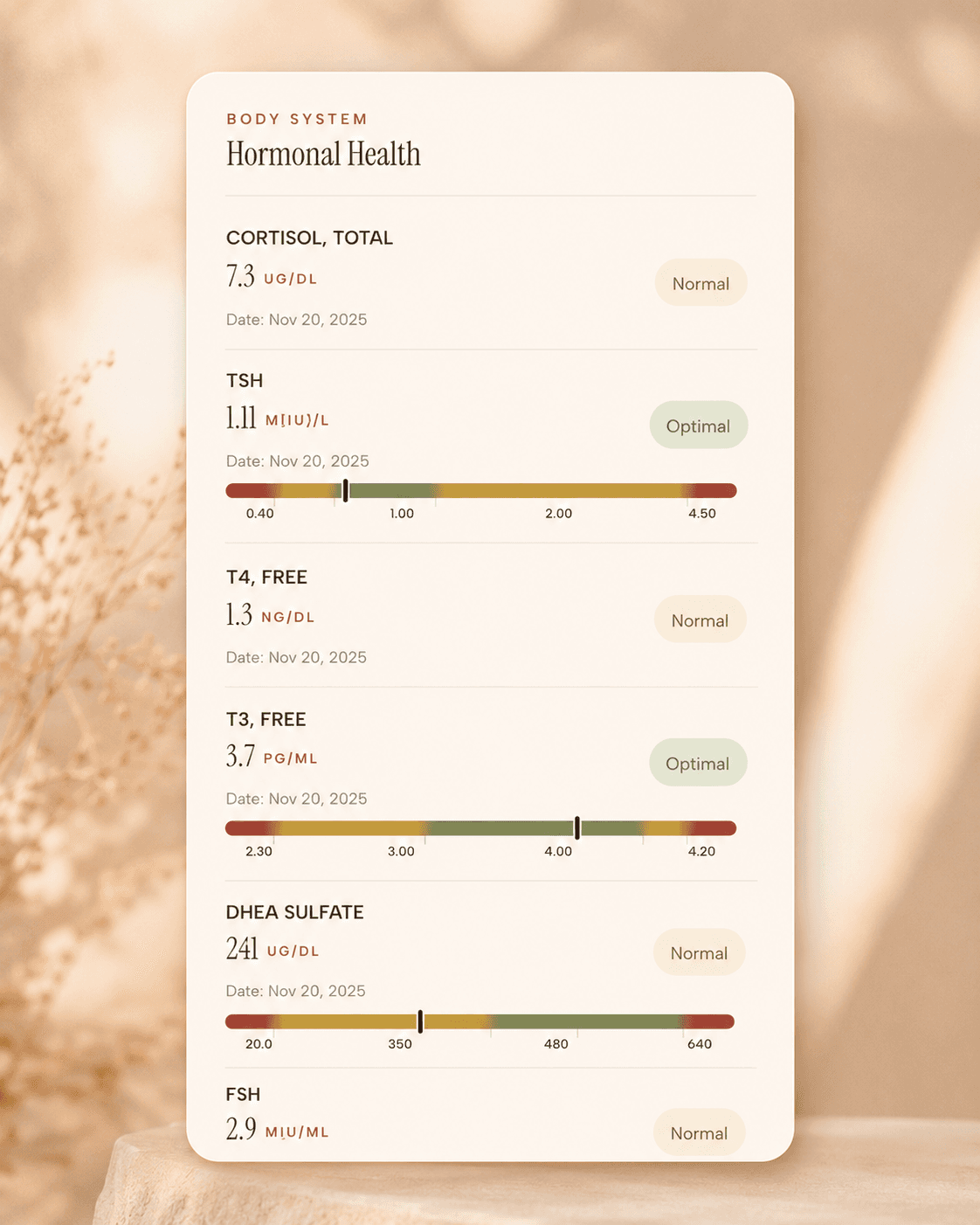
Cortisol is the primary stress hormone that regulates metabolism, immune function, and blood pressure. In functional medicine, cortisol assessment is crucial for understanding stress response and its impact on overall health. Chronic elevation suppresses testosterone production and immune function, while low cortisol indicates adrenal insufficiency. Optimal cortisol rhythm supports energy, mood stability, and hormone balance. Cortisol orchestrates the body's stress response and daily energy rhythms. Balanced cor…
Learn moreTSH
TSH is the master regulator of thyroid function, controlling the production of thyroid hormones T4 and T3. In functional medicine, we use narrower TSH ranges than conventional medicine to identify subclinical thyroid dysfunction early. Even mildly elevated TSH can indicate thyroid insufficiency, leading to fatigue, weight gain, depression, and metabolic dysfunction. TSH levels are influenced by stress, nutrient deficiencies, autoimmune conditions, and environmental toxins. Optimal TSH supports energy, metabolism…
Learn moreLab testing
Get TSH, free T4, fasting glucose, and fasting insulin checked at Quest
starting from $99 panel with 100+ tests, one visit
No referral needed
About 1 week
Schedule online — results typically within a week
Clear next steps
Guidance included, with follow-up care available
HSA / FSA
Eligible for pre-tax health spending accounts
Pro Tips
Do a 14-day blood pressure log where you always take readings at the same two times (for example, within an hour of waking and before dinner), because consistent timing makes patterns obvious fast.
When you get a scary number, write down what was happening in the 30 minutes before it, then re-check after 10 minutes of quiet rest; the size of that drop is one of the best clues that you are dealing with a surge rather than sustained hypertension.
If you suspect hot flashes are tied to spikes, take one reading at the start of a flush and another 15 minutes later after cooling down; bring both numbers to your next visit so the story is clear.
Check your cuff accuracy once by bringing your home monitor to a pharmacy or clinic reading and comparing results, because a poorly fitting cuff can add 10–20 mmHg and create “spikes” that are not real.
If your spikes are mostly after meals, try one week of smaller dinners with more protein and fewer refined carbs, then compare your evening readings; reactive blood sugar swings can quietly drive reactive blood pressure too.
Frequently Asked Questions
Can menopause really cause sudden blood pressure spikes?
Yes. Falling estrogen can make your vessels less able to relax, and hot flashes can trigger short adrenaline surges that temporarily raise blood pressure. Sleep disruption, which is common in the menopause transition, can also push your baseline up over weeks to months. Track home averages for 1–2 weeks so you can tell spikes from a true upward trend.
When is a blood pressure spike an emergency?
If you have a reading around 180/120 or higher and you also have chest pain, shortness of breath, severe headache, weakness on one side, confusion, or vision changes, treat it as urgent and seek emergency care. If the number is high but you feel okay, rest quietly for 5–10 minutes and re-check to see if it comes down. Either way, repeated readings above 160/100 deserve prompt follow-up.
Why is my blood pressure higher at night during menopause?
Night sweats and awakenings can activate your stress response, and sleep apnea can cause repeated oxygen dips that spike blood pressure while you are asleep. Alcohol close to bedtime can also worsen both hot flashes and apnea, which stacks the effect. If your morning readings are consistently higher than your evening readings, ask about sleep evaluation and bring your log.
Could my thyroid be causing my blood pressure surges?
It can. An overactive thyroid often shows up as a low TSH with a high free T4, and it can cause palpitations, heat intolerance, and higher systolic pressure that feels like “surges.” Because thyroid symptoms overlap with menopause, checking TSH (and usually free T4) is a practical way to avoid missing a treatable cause. If your results are abnormal, review them with a clinician before changing any supplements or meds.
What home blood pressure numbers should I aim for during menopause?
For many adults, a common goal is an average home blood pressure under about 130/80, but your personal target depends on your overall risk and medications. What matters most is the average of multiple readings, not one peak during a hot flash. Take two readings morning and evening for a week and calculate the average, then use that number to guide next steps.