Blood Pressure Spikes in Perimenopause: What’s Going On?
Blood pressure spikes in perimenopause often come from hormone swings, stress-adrenal surges, or sleep apnea. Targeted labs available—no referral needed.






Blood pressure spikes in perimenopause are usually your nervous system reacting to hormone swings, sleep disruption, or “fight-or-flight” surges that suddenly tighten blood vessels. Sometimes the spikes are a clue that something else is stacking the deck, like thyroid overactivity or sleep apnea. A few targeted labs and a smart home blood pressure plan can help you figure out which one fits your body. The frustrating part is that you can feel “fine” most of the day and then see a scary number out of nowhere, which naturally makes you think about stroke or a heart attack. Most spikes are not an emergency, but some are, and the difference is about symptoms and repeat readings, not just one number. This guide walks you through common perimenopause-specific drivers, what actually helps in the moment and over time, and which blood tests are worth doing. If you want help interpreting your pattern, PocketMD can talk it through with you, and Vitals Vault labs can help you check the most relevant markers without turning this into a months-long appointment marathon.
Why your blood pressure spikes in perimenopause
Hormone swings amplify stress responses
In perimenopause, estrogen and progesterone can swing week to week, and that can make your blood vessels more “reactive” to adrenaline. The same meeting, argument, or rushing out the door that used to barely register can now push your top number up fast. If your spikes cluster around hot flashes, irritability, or cycle changes, treat it like a pattern problem and start tracking timing alongside symptoms.
Hot flashes trigger a temporary surge
A hot flash is not just heat; it is a nervous system event that can briefly speed your heart and tighten blood vessels. That can show up as a sudden jump on the cuff, especially if you measure while you feel flushed or shaky. A useful takeaway is to recheck after 10 minutes of quiet sitting, because hot-flash spikes often settle quickly when the surge passes.
Sleep loss and possible sleep apnea
Broken sleep raises stress hormones overnight, and that can keep your blood pressure higher the next day even if you feel like you “got through” the night. If you snore, wake up gasping, or feel unrefreshed, sleep apnea can cause repeated oxygen dips that drive morning spikes. The clue is often a pattern of higher readings first thing in the morning, so morning measurements matter here.
Thyroid overactivity (hyperthyroidism)
If your thyroid is running fast, your body tends to run fast too, which can raise your pulse and push your systolic blood pressure up. It can feel like anxiety, heat intolerance, tremor, or unexplained weight loss, so it is easy to mislabel as “just perimenopause.” A simple thyroid test is worth it when spikes come with a racing heart or new jitteriness.
Salt sensitivity and fluid shifts
Some people become more salt-sensitive in midlife, which means your kidneys hold onto sodium and water more easily and your pressure rises after salty meals. The spike can show up the next morning, which makes it hard to connect to what you ate. If your readings jump after restaurant food or packaged snacks, a 1–2 week “lower sodium experiment” can be more revealing than guessing.
What actually helps calm the spikes
Measure the right way, then repeat
A single high reading is information, but it is not a verdict. Sit with your back supported and feet flat, rest for five minutes, and take two readings one minute apart, because the first number is often inflated by movement or worry. If the average stays high at rest, that is when it is worth acting on it rather than chasing a one-off spike.
Use a “downshift” breathing drill
When your body is in fight-or-flight, your blood vessels tighten and your heart beats harder, which can push numbers up. Try slow breathing where your exhale is longer than your inhale for three to five minutes, because that nudges your nervous system toward “rest-and-digest.” This is especially useful when you feel a hot flash or a wave of panic right before you measure.
Time caffeine and alcohol strategically
In perimenopause, caffeine can hit harder and last longer, and alcohol can fragment sleep even if it makes you sleepy at first. Both can set you up for next-day spikes, which is why the effect can feel delayed and confusing. If you are seeing unpredictable readings, try moving caffeine earlier and taking a two-week alcohol break to see if your baseline steadies.
Talk about hormone therapy if appropriate
For some people, treating the underlying perimenopause symptoms reduces the nervous system surges that drive spikes, especially when hot flashes and insomnia are front and center. Menopausal hormone therapy is not a blood pressure medication, but it can indirectly help by improving sleep and reducing vasomotor episodes. Bring your home readings to the conversation so the decision is based on your real pattern, not a single office number.
Know when a spike is urgent
If your blood pressure is at or above 180/120 and you also have chest pain, severe shortness of breath, one-sided weakness, trouble speaking, confusion, or vision loss, treat it as an emergency. If the number is very high but you feel okay, rest and recheck in 10–15 minutes, and contact urgent care or your clinician the same day if it stays elevated. Having a plan ahead of time lowers the fear spiral that can make spikes worse.
Lab tests that help explain blood pressure spikes during perimenopause
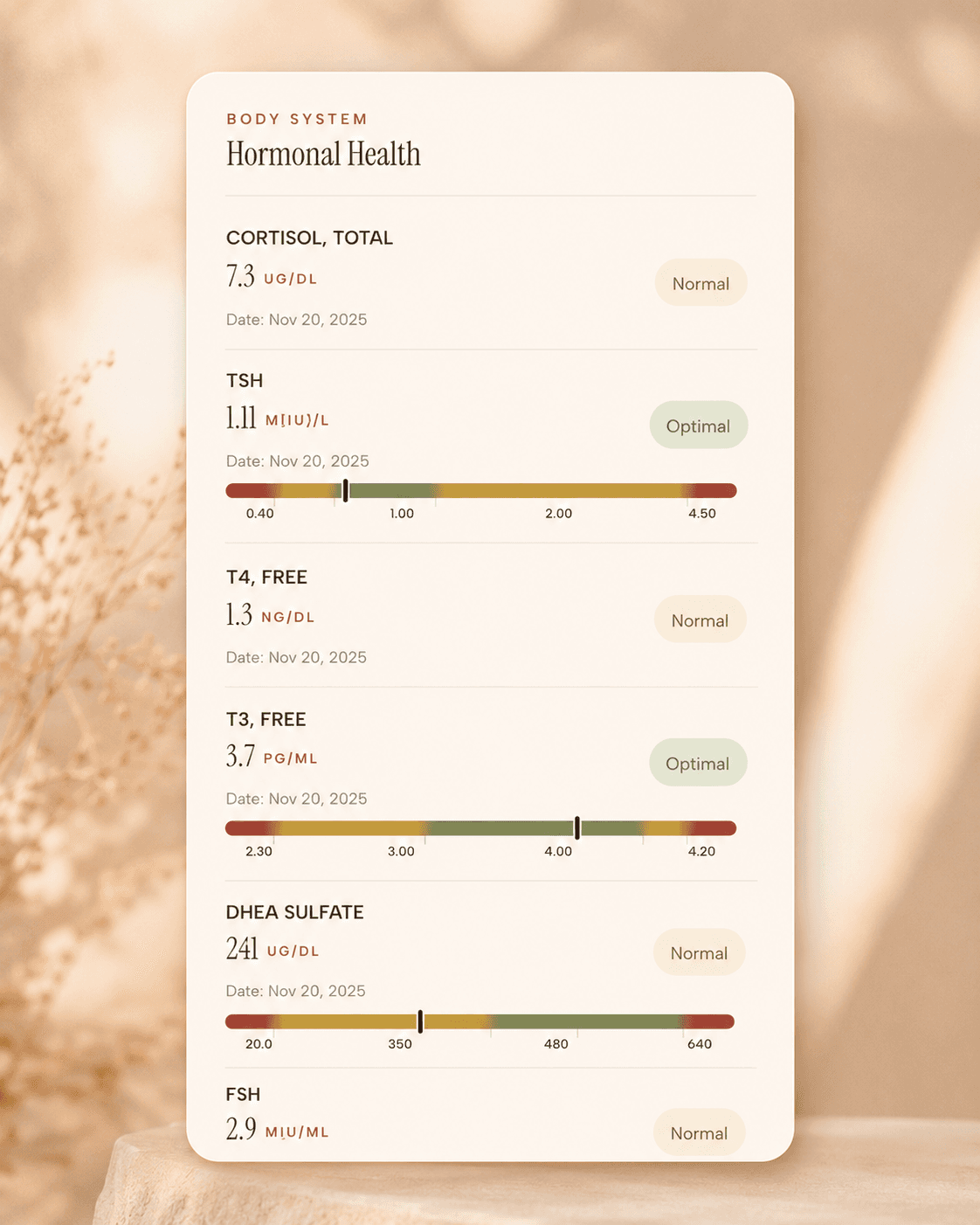
TSH
TSH is the master regulator of thyroid function, controlling the production of thyroid hormones T4 and T3. In functional medicine, we use narrower TSH ranges than conventional medicine to identify subclinical thyroid dysfunction early. Even mildly elevated TSH can indicate thyroid insufficiency, leading to fatigue, weight gain, depression, and metabolic dysfunction. TSH levels are influenced by stress, nutrient deficiencies, autoimmune conditions, and environmental toxins. Optimal TSH supports energy, metabolism…
Learn moreEstradiol
Estradiol in men is produced from testosterone via aromatase enzyme. In functional medicine, we recognize that men need optimal estradiol levels for bone health, cognitive function, and cardiovascular protection. However, excessive estradiol can suppress testosterone production and cause feminizing effects. The testosterone-to-estradiol ratio is crucial for male health, with optimal balance supporting vitality while preventing estrogen dominance. Balanced estradiol levels in men support bone health and cognitive…
Learn moreCortisol, Total
Cortisol is the primary stress hormone that regulates metabolism, immune function, and blood pressure. In functional medicine, cortisol assessment is crucial for understanding stress response and its impact on overall health. Chronic elevation suppresses testosterone production and immune function, while low cortisol indicates adrenal insufficiency. Optimal cortisol rhythm supports energy, mood stability, and hormone balance. Cortisol orchestrates the body's stress response and daily energy rhythms. Balanced cor…
Learn moreLab testing
Check thyroid, kidney, and potassium markers at Quest
starting from $99 panel with 100+ tests, one visit
No referral needed
About 1 week
Schedule online — results typically within a week
Clear next steps
Guidance included, with follow-up care available
HSA / FSA
Eligible for pre-tax health spending accounts
Pro Tips
Do a 14-day “spike diary” where you record the reading, your pulse, and what was happening in the 30 minutes before (hot flash, argument, coffee, rushing). Patterns show up faster than you think.
If you are checking at home, measure at the same two times for a week (for example, within an hour of waking and before dinner). Random spot checks can make normal variability feel like chaos.
When a spike scares you, check your pulse too. A high blood pressure with a pounding, fast pulse often points to a stress surge, while a high pressure with a normal pulse can behave more like baseline hypertension.
Try a “restaurant sodium test” once: eat your usual restaurant meal, then check your pressure the next morning and again the morning after. If the next-day number jumps, salt sensitivity is likely part of your story.
Bring your cuff to your next appointment and compare it with the clinic reading. A small calibration check can prevent months of anxiety from a device that reads high.
Frequently Asked Questions
Are blood pressure spikes normal in perimenopause?
They are common, because hormone swings can make your nervous system and blood vessels more reactive, especially when sleep is poor or hot flashes are frequent. That said, repeated spikes can still add up to real cardiovascular risk over time. Track a week of twice-daily readings and share the averages and the highest values with your clinician.
When is a blood pressure spike an emergency?
If you see 180/120 or higher and you have chest pain, severe shortness of breath, fainting, confusion, trouble speaking, weakness on one side, or vision changes, call emergency services. If you feel okay, sit quietly and repeat the reading in 10–15 minutes, because many stress-related spikes fall with rest. If it stays very high, contact urgent care the same day for guidance.
Can hot flashes cause high blood pressure readings?
Yes, a hot flash can briefly raise your heart rate and tighten blood vessels, which can bump your blood pressure for a short window. The key is timing: if you measure during the flush, you may catch the peak. Recheck after the episode passes and you have been seated quietly for five minutes.
What home blood pressure numbers should worry me?
As a general rule, consistent home averages around 135/85 or higher suggest hypertension, even if you sometimes get normal readings. Single spikes matter most when they are frequent, they do not come down with rest, or they come with symptoms like chest pain or neurologic changes. Aim to collect at least 12 readings over 7 days (morning and evening) to get a reliable picture.
What labs should I check for blood pressure spikes in perimenopause?
A practical starting trio is TSH to look for thyroid overactivity, creatinine with eGFR to assess kidney filtration, and potassium because low levels can worsen blood pressure control and hint at specific hormone-driven causes. “Optimal” is not just normal: you generally want TSH not suppressed, eGFR ideally above 90, and potassium in the upper half of the reference range. If anything is off, use that result to guide the next step rather than ordering everything at once.
What the research says
2017 ACC/AHA guideline for high blood pressure in adults (how to diagnose and treat hypertension)
2022 North American Menopause Society position statement on hormone therapy (benefits, risks, and who it fits)
AHA scientific statement on obstructive sleep apnea and cardiovascular disease (why apnea raises blood pressure)