Blood Pressure Spikes After Menopause: What’s Going On?
Blood pressure spikes after menopause often come from stiffer arteries, stress-hormone surges, or thyroid issues. Targeted labs at Quest—no referral needed.






Blood pressure spikes after menopause usually happen because your blood vessels get less flexible as estrogen falls, your stress-response system becomes easier to trigger, or a separate issue like thyroid imbalance is pushing your numbers up. The pattern matters: brief surges can have different causes than consistently high readings, and blood tests can help sort that out. If you’ve had a few scary home readings, you’re not overreacting. A sudden jump can feel like your body is “revving,” even if you don’t have obvious symptoms, and it’s hard to know whether it’s a one-off trigger or the start of true hypertension. This guide walks you through the most common reasons spikes show up after menopause, what you can do this week to reduce them, and which labs are most useful. If you want help interpreting your pattern, PocketMD can talk it through with you, and Vitals Vault labs can help you check for common medical drivers.
Why blood pressure can spike after menopause
Arteries get stiffer with age
After menopause, your arteries tend to lose some springiness, which means the same heartbeat can create a higher “top number” (systolic). That can show up as sudden-looking spikes, especially when you’re active, stressed, or in pain. The takeaway is that a high systolic with a normal-ish bottom number can be a clue that vessel stiffness is part of the story, and it’s worth tracking trends over weeks, not single readings.
Stress surges hit harder now
Your fight-or-flight hormones (adrenaline and cortisol) can raise blood pressure quickly by tightening blood vessels and speeding your heart. After menopause, sleep disruption and hot-flash physiology can make that system easier to set off, so a tense meeting or a poor night’s sleep can translate into a big number on the cuff. If your spikes come with a pounding heart, shakiness, or a “wired” feeling, treat stress and sleep as real medical triggers, not just lifestyle noise.
Salt sensitivity increases
Some people become more salt-sensitive with age, which means your kidneys hold onto sodium and water more readily and your pressure rises. The tricky part is that it often looks like random spikes until you notice the timing: restaurant meals, packaged soups, or salty snacks the night before. A practical move is to run a simple two-week experiment where you keep sodium steadier and see whether your morning readings settle.
Thyroid imbalance pushes pressure up
An overactive thyroid (hyperthyroidism) can make your heart beat faster and harder, which can feel like anxiety but shows up as higher blood pressure and a racing pulse. It’s more common than people think in midlife, and it can be missed if you assume every new symptom is “just menopause.” If your spikes come with heat intolerance, tremor, or unexplained weight loss, a thyroid test is one of the fastest ways to rule in or rule out a fixable cause.
Medication and supplement effects
Some common meds can cause blood pressure to jump, including NSAID pain relievers, decongestants, stimulant weight-loss products, and even some “natural” energy supplements. The spike can be dramatic if you take them on top of caffeine or when you’re dehydrated. A useful step is to review anything new you started in the last 1–3 months and check labels for ingredients like pseudoephedrine, high-dose licorice, or “thermogenic” blends.
What actually helps calm the spikes
Measure the right way at home
A lot of “spikes” are measurement artifacts, especially if you check right after walking, talking, or scrolling something stressful. Sit quietly for 5 minutes, keep your feet flat, support your arm at heart level, and take two readings a minute apart. If the first number is high and the second drops by 10–20 points, that tells you your nervous system is a big part of the picture.
Use a spike plan, not panic
When you see a high number, your body often responds with more adrenaline, which pushes it higher. Try a 10-minute reset: slow breathing with a longer exhale (for example, inhale 4 seconds and exhale 6–8 seconds), then recheck once. If you ever see readings around 180/120 or higher with chest pain, severe headache, weakness on one side, or trouble speaking, that’s an emergency—call for urgent help rather than trying to “breathe it down.”
Tame the evening salt effect
If your morning readings are the worst, the night before is often the culprit. Aim for a lower-sodium dinner for two weeks and keep restaurant meals to a minimum, because that’s where sodium hides. You’re not chasing perfection—you’re looking for whether your baseline shifts when sodium stops swinging wildly.
Prioritize sleep like a treatment
Poor sleep raises next-day blood pressure by increasing stress hormones and making your blood vessels less able to relax. If you snore, wake up gasping, or feel unrefreshed, ask about sleep apnea testing, because treating it can lower blood pressure meaningfully. Even before testing, keeping a consistent wake time and avoiding alcohol close to bedtime often reduces the “spike-y” pattern within a couple of weeks.
Match meds to your pattern
If you’re already on blood pressure medication, spikes can mean the dose is wearing off before the next pill, or the medication type isn’t the best fit for your physiology. If you’re not on meds, repeated spikes can be an early sign that you’re moving from “episodic” to sustained hypertension, which is worth addressing sooner rather than later. Bring a 1–2 week log (time, reading, pulse, and what was happening) to your clinician so adjustments are based on data, not guesswork.
Useful biomarkers to discuss with your clinician
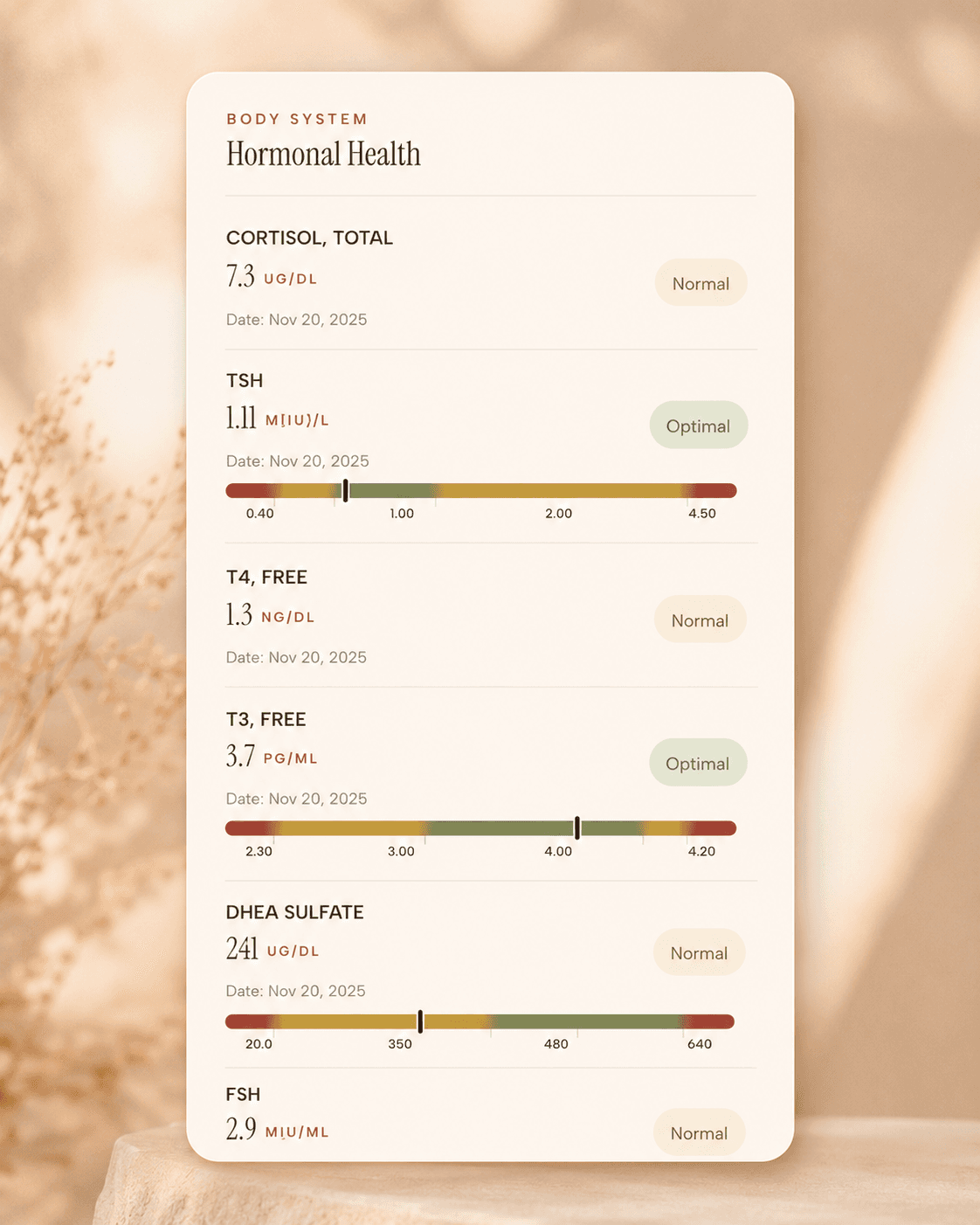
TSH
TSH is the master regulator of thyroid function, controlling the production of thyroid hormones T4 and T3. In functional medicine, we use narrower TSH ranges than conventional medicine to identify subclinical thyroid dysfunction early. Even mildly elevated TSH can indicate thyroid insufficiency, leading to fatigue, weight gain, depression, and metabolic dysfunction. TSH levels are influenced by stress, nutrient deficiencies, autoimmune conditions, and environmental toxins. Optimal TSH supports energy, metabolism…
Learn moreCortisol, Total
Cortisol is the primary stress hormone that regulates metabolism, immune function, and blood pressure. In functional medicine, cortisol assessment is crucial for understanding stress response and its impact on overall health. Chronic elevation suppresses testosterone production and immune function, while low cortisol indicates adrenal insufficiency. Optimal cortisol rhythm supports energy, mood stability, and hormone balance. Cortisol orchestrates the body's stress response and daily energy rhythms. Balanced cor…
Learn moreEstradiol
Estradiol in men is produced from testosterone via aromatase enzyme. In functional medicine, we recognize that men need optimal estradiol levels for bone health, cognitive function, and cardiovascular protection. However, excessive estradiol can suppress testosterone production and cause feminizing effects. The testosterone-to-estradiol ratio is crucial for male health, with optimal balance supporting vitality while preventing estrogen dominance. Balanced estradiol levels in men support bone health and cognitive…
Learn moreLab testing
Check thyroid, kidney strain, and potassium at Quest
starting from $99 panel with 100+ tests, one visit
No referral needed
About 1 week
Schedule online — results typically within a week
Clear next steps
Guidance included, with follow-up care available
HSA / FSA
Eligible for pre-tax health spending accounts
Pro Tips
Do a “3-2-1” log for two weeks: record three readings per day (morning, afternoon, evening), take two measurements each time, and write one sentence about what was happening right before the first reading. Patterns jump out fast.
If your pulse is high during spikes (for many people, over about 90–100 at rest), write that down too, because it points more toward stress hormones or thyroid than toward salt alone.
When a reading scares you, don’t keep rechecking every minute. Set a timer for 10 minutes, do slow breathing, then recheck once, because repeated checks can keep your adrenaline high.
If your spikes cluster after hot flashes or night sweats, treat temperature swings as a trigger and try a cooler bedroom, lighter bedding, and avoiding alcohol close to bedtime for a week as a real experiment.
Bring your cuff to your next appointment and compare it to the clinic reading. If your device runs 10–15 points high, you’ll stop chasing “spikes” that are partly equipment error.
Frequently Asked Questions
Is it normal to have blood pressure spikes after menopause?
It’s common for blood pressure to become more variable after menopause because arteries stiffen with age and your stress-response system can become more reactive. That said, repeated spikes are still a signal to take seriously, because variability can coexist with true hypertension. A two-week home log plus targeted labs like TSH and creatinine/eGFR can help clarify what’s driving your pattern.
What blood pressure number is considered a dangerous spike?
A single high reading is not automatically dangerous, but numbers around 180/120 mmHg or higher are concerning, especially if you also have chest pain, shortness of breath, severe headache, confusion, weakness, or trouble speaking. Those symptoms can signal an emergency, not “just a spike.” If you feel well but get a very high number, sit quietly and repeat it once after 5–10 minutes, then contact urgent care for guidance if it stays very high.
Can anxiety cause blood pressure spikes even if I’m calm most of the time?
Yes. Your body can release adrenaline even when your mind doesn’t label it as anxiety, and that can raise blood pressure quickly and temporarily. If spikes come with a racing heart, trembling, or a flushed “surge” feeling, it’s a clue your nervous system is involved. Tracking your pulse alongside blood pressure helps you and your clinician separate stress surges from steady hypertension.
Could thyroid problems cause sudden high blood pressure after menopause?
They can. An overactive thyroid often shows up as a low TSH and can cause a fast pulse, palpitations, heat intolerance, and higher systolic blood pressure. Because symptoms can overlap with menopause, checking TSH is a practical way to rule out a treatable driver. If TSH is abnormal, ask what follow-up tests (like free T4) make sense for you.
How long should I track my blood pressure before changing treatment?
For most people, 7–14 days of consistent home readings is enough to see whether you’re dealing with occasional triggers or a rising baseline. Aim for morning and evening checks, and take two readings each time after 5 minutes of quiet sitting. Bring the log to your clinician so any medication or lifestyle changes are based on your real pattern, not a single scary number.
What the research says about blood pressure after menopause
2017 ACC/AHA guideline for prevention, detection, evaluation, and management of high blood pressure in adults
2023 European Society of Hypertension guideline update on arterial hypertension management
USPSTF recommendation on screening for high blood pressure in adults (includes home and ambulatory monitoring)