Hot Flashes During Menopause: Why They Happen and What Helps
Hot flashes during menopause come from estrogen shifts, an oversensitive brain thermostat, and sleep disruption. Targeted labs available—no referral needed.





Hot flashes during menopause usually happen because your estrogen level is changing, which makes your brain’s temperature control center (hypothalamus) trigger “cooling” too easily. Sleep disruption and stress can lower your threshold even more, so a small trigger can suddenly feel like a wave of heat with sweating and a racing heart. A few targeted blood tests can help confirm where you are in the menopause transition and rule out look-alikes like thyroid overactivity. Hot flashes can be intensely personal: you might get them mostly at night, right after coffee or wine, or out of nowhere in a meeting. They are common, but that does not make them trivial—poor sleep and embarrassment can snowball into mood changes, fatigue, and feeling like you are not yourself. Below you will see the most common reasons hot flashes flare during menopause, what actually helps (including non-hormone options if you cannot or do not want hormone therapy), and the specific labs that can clarify what is driving your symptoms. If you want help matching your pattern to the most likely cause, PocketMD can walk through your story, and Vitals Vault labs can give you objective data to bring to your clinician.
Why Do You Get Hot Flashes During Menopause?
Your brain’s thermostat overreacts
As estrogen fluctuates and trends downward, your brain’s thermostat becomes jumpier, so tiny changes in temperature or emotion can trigger a full-body “cool down” response. That response is what you feel as sudden heat, flushing, sweating, and sometimes a pounding heartbeat. If your flashes seem to start within minutes of a warm room, spicy food, or stress, this oversensitivity is often the main driver. A short trigger log can help you find the few things that reliably push you over your threshold.
Estrogen drops affect blood vessels
Estrogen helps your blood vessels relax and tighten smoothly, and when levels fall, the system can become more erratic. During a hot flash, blood vessels near your skin open up quickly, which is why your face and chest can turn red and feel like they are radiating heat. This is also why you might feel chilled afterward—your body overshoots and then has to recover. If you are also getting vaginal dryness or new joint aches, that combination often points toward lower estrogen overall, not just random triggers.
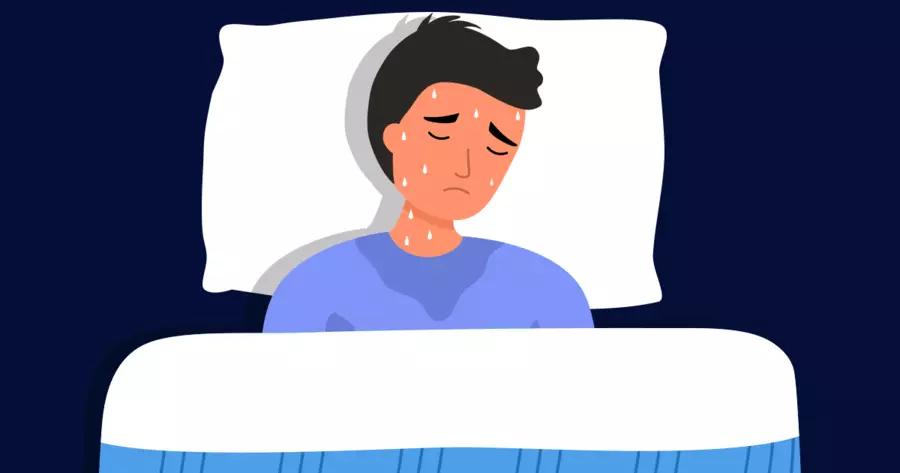
Night sweats start a feedback loop
When hot flashes wake you up, your sleep fragments, and your stress hormones rise the next day. That matters because poor sleep makes your nervous system more reactive, so the next flash is easier to trigger and can feel more intense. You can end up stuck in a loop where the symptom is both the cause and the consequence. If your worst flashes happen after a bad night, treating sleep as a first-class target can reduce daytime episodes too.
Thyroid overactivity can mimic flashes
An overactive thyroid speeds up your metabolism, which can make you feel hot, sweaty, shaky, and wired in a way that looks a lot like menopause. The clue is that thyroid-driven heat intolerance often comes with persistent fast heart rate, unexplained weight loss, frequent bowel movements, or new anxiety that does not track with your cycle stage. A simple TSH test (and free T4 if needed) can separate “menopause hot” from “thyroid hot.” If you have chest pain, fainting, or a heart rate that stays very high at rest, get urgent care.
Medications and alcohol lower threshold
Some medications change how your brain handles serotonin and norepinephrine, which can widen the swings in your temperature set point and trigger flushing. Alcohol can do something similar by widening blood vessels and disrupting deep sleep, so you may notice a delayed 2–4 a.m. sweat after an evening drink. This does not mean you did anything wrong—it means your system is more sensitive right now. If flashes started soon after a new antidepressant, steroid, opioid, or cancer therapy, ask your prescriber whether a dose change or alternative could help.
What Actually Helps With Hot Flashes
Build a personal trigger plan
Instead of trying to avoid everything, pick one week to gather data and one week to test changes. Rate each flash from 1–10 and write what happened in the 30 minutes before, because patterns often show up fast. Then choose your top one or two triggers—like hot drinks, wine, or a heated bedroom—and change only those first. You are aiming for fewer “big” flashes, not perfection.
Cool your sleep environment on purpose
Night sweats respond best when you treat the bedroom like a cooling tool, not just a place to sleep. Set the room cooler than you think you need, use breathable layers you can peel off quickly, and keep a cold pack or chilled water by the bed so you can shorten the episode and fall back asleep. If you wake up drenched, changing into dry clothes matters because damp fabric keeps your skin warm and can prolong the flush. Better nights often mean better days within a week.
Consider hormone therapy when appropriate
Menopausal hormone therapy can be the most effective option for frequent, disruptive hot flashes, especially when you are within about 10 years of your final period and otherwise healthy. The details matter: if you still have a uterus, you usually need progesterone with estrogen to protect the uterine lining, and transdermal estrogen (patch/gel) can be a better fit for some people. If you have a history of blood clots, stroke, or estrogen-sensitive cancer, your clinician may steer you toward non-hormone choices instead. Bring a symptom severity estimate (for example, “6 flashes a day, two wake-ups nightly”) to make the risk–benefit conversation concrete.
Use non-hormone prescriptions if needed
If hormones are not an option—or you just prefer not to use them—several non-hormone medicines can meaningfully reduce hot flashes. Low-dose SSRIs or SNRIs can raise your threshold, and gabapentin can be especially helpful for night sweats when taken in the evening because it also supports sleep. A newer option, fezolinetant, targets the brain pathway that triggers flashes and can be useful when other approaches fail. Ask your clinician which choice fits your other meds and side effects you want to avoid.
Try paced breathing for sudden surges
When a flash starts, your body often goes into a brief “alarm” state, which can intensify the heat and the racing-heart feeling. Slow, paced breathing—about 6 breaths per minute for 3–5 minutes—can dial down that surge and shorten the episode for some people. It is not a cure, but it is a tool you can use in a meeting, on a plane, or at 2 a.m. Practice once a day when you are calm so it is easier to access when you are not.
Lab tests that help explain hot flashes during menopause
Estradiol
Estradiol in men is produced from testosterone via aromatase enzyme. In functional medicine, we recognize that men need optimal estradiol levels for bone health, cognitive function, and cardiovascular protection. However, excessive estradiol can suppress testosterone production and cause feminizing effects. The testosterone-to-estradiol ratio is crucial for male health, with optimal balance supporting vitality while preventing estrogen dominance. Balanced estradiol levels in men support bone health and cognitive…
Learn moreProgesterone
While primarily known as a female hormone, progesterone plays important roles in men including neuroprotection, sleep quality, and as a precursor to other hormones. In functional medicine, male progesterone assessment helps evaluate overall hormone synthesis pathways and stress response. Low progesterone in men may indicate chronic stress or adrenal dysfunction, while optimal levels support brain health and sleep quality. Progesterone in men supports neurological health, sleep quality, and serves as a building b…
Learn moreTSH
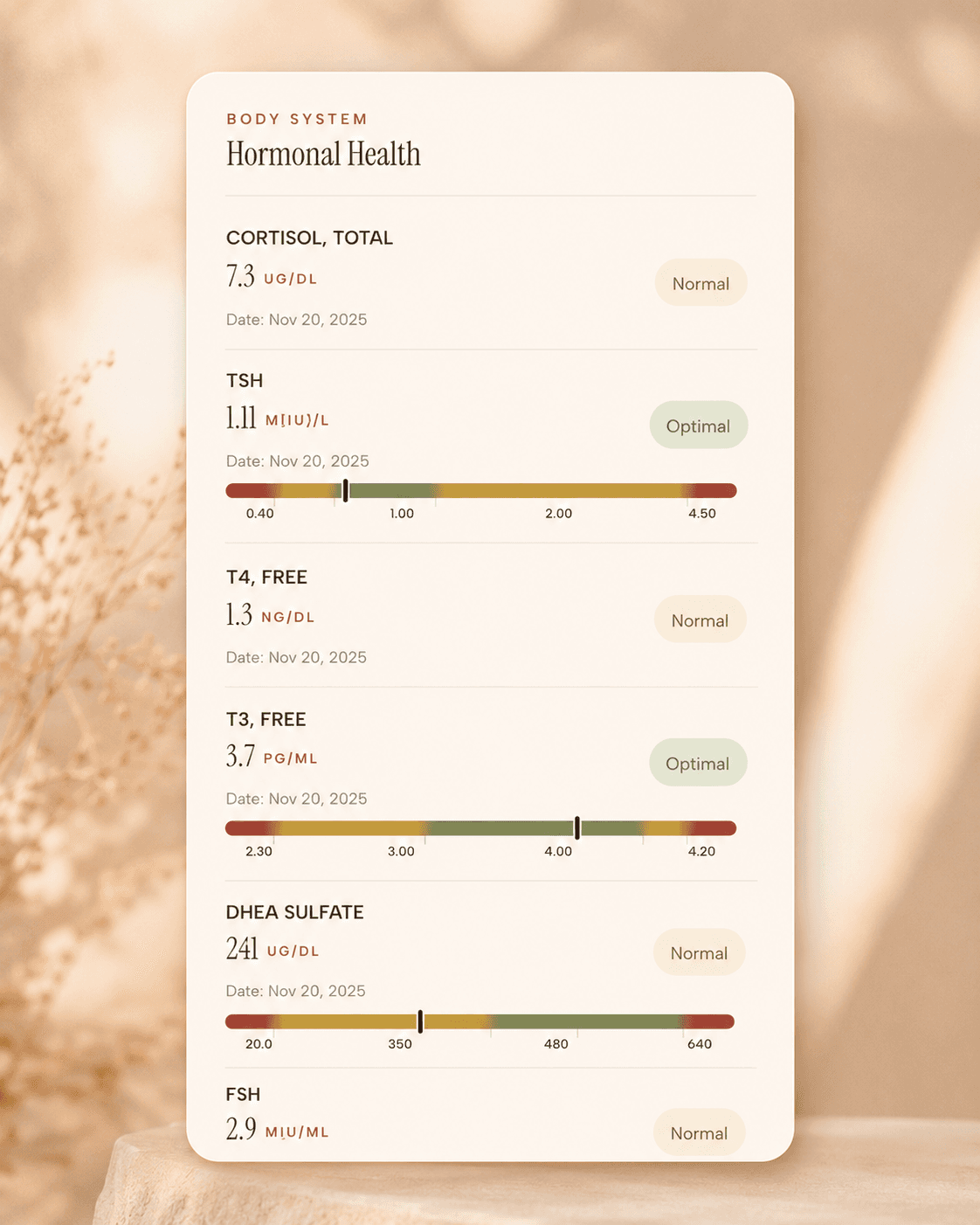
TSH is the master regulator of thyroid function, controlling the production of thyroid hormones T4 and T3. In functional medicine, we use narrower TSH ranges than conventional medicine to identify subclinical thyroid dysfunction early. Even mildly elevated TSH can indicate thyroid insufficiency, leading to fatigue, weight gain, depression, and metabolic dysfunction. TSH levels are influenced by stress, nutrient deficiencies, autoimmune conditions, and environmental toxins. Optimal TSH supports energy, metabolism…
Learn moreLab testing
Get TSH, free T4, and estradiol checked at Quest
starting from $99 panel with 100+ tests, one visit
No referral needed
About 1 week
Schedule online — results typically within a week
Clear next steps
Guidance included, with follow-up care available
HSA / FSA
Eligible for pre-tax health spending accounts
Pro Tips
Do a 14-day “flash map”: write the time, intensity (1–10), and what happened right before (food, drink, stress, warm room). Most people find their top two triggers faster this way than by guessing.
If nights are the worst, set a “sweat reset” kit by the bed: dry shirt, small towel, and a cold pack. The goal is to cool down and get back to sleep within 10 minutes instead of staying awake for an hour.
Try swapping your evening drink for a non-alcoholic option for one week and see what happens at 2–4 a.m. Alcohol often causes delayed night sweats even when it feels relaxing at bedtime.
If you use a fan, aim it at your upper chest and face, because that is where heat loss signals can calm the episode fastest. A fan across the whole room is less effective than targeted airflow.
Bring numbers to your appointment: average flashes per day, how many nights per week you wake up sweating, and what you have already tried. Clear metrics make it much easier to choose between hormone and non-hormone options.
Frequently Asked Questions
How long do hot flashes last during menopause?
For many people, hot flashes last several years, and it is not unusual for them to continue after your final period. The average duration is often cited around 7 years, but your pattern can be shorter or longer depending on genetics, smoking, body weight changes, and stress and sleep. If your flashes are still frequent years after menopause, it is worth checking TSH and reviewing medications to rule out look-alikes. Track your weekly frequency so you can tell whether things are improving over time.
What’s the fastest way to stop a hot flash in the moment?
Cooling your skin quickly helps your brain register “we’re safe,” so step into cooler air, loosen a layer, and use a cold pack or cool water on your neck and upper chest. Then slow your breathing to about 6 breaths per minute for a few minutes, because adrenaline can intensify the heat and the pounding heart feeling. If you can, sip cool water rather than a hot drink right afterward. The goal is to shorten the episode and prevent a second wave.
Are hot flashes always caused by low estrogen?
No. Estrogen shifts are the most common reason during the menopause transition, but thyroid overactivity, medication effects, and severe sleep disruption can create very similar heat-and-sweat episodes. That is why a basic lab check like TSH with free T4 can be so useful when symptoms feel “off” or unusually intense. If your flashes come with persistent tremor, ongoing rapid heart rate, or unexplained weight loss, prioritize thyroid testing and medical review.
What blood tests should I ask for with hot flashes?
A practical starting set is TSH with free T4 to rule out thyroid-driven heat intolerance, plus estradiol (E2) and FSH to help confirm where you are in the menopause transition. These results are most helpful when you interpret them alongside your cycle history and whether you are using hormones or contraception. If you are on hormone therapy, your clinician may adjust which tests matter and when to draw them. Bring your symptom log to connect the numbers to what you feel day to day.
Can I take hormone therapy if I had breast cancer?
It depends on the type of breast cancer and your current treatment, but many breast cancer survivors are advised to avoid systemic estrogen because it can raise risk in estrogen-sensitive cancers. The good news is that non-hormone options like SSRIs/SNRIs, gabapentin, and fezolinetant can reduce hot flashes without adding estrogen. Your oncology team can help you choose an option that fits your cancer history and medications. Go in with a clear goal, such as reducing night sweats from nightly to once a week.