Why You Seem to Gain Weight Overnight (and What to Do)
Weight gain in the morning is usually water retention, late-day carbs/salt, or hormone shifts like cortisol or thyroid changes. Targeted labs, no referral needed.






Weight gain in the morning is usually not fat gain overnight. It is most often water your body is holding onto because of late-day salt or carbs, poor sleep and higher stress hormone (cortisol) in the early morning, or a slower thyroid that makes you retain fluid and feel puffy. A few targeted labs can help you figure out which of those is driving your pattern. Still, it can feel awful to wake up and look “bigger” before you have even eaten, especially when you have not changed your diet. Morning weight changes are a mix of fluid shifts, digestion, and hormones, which means the fix depends on your specific trigger. This guide walks you through the most common reasons it happens, what you can try tonight to change tomorrow morning, and which tests are actually useful. If you want help connecting your symptoms, meds, sleep, and labs into one story, PocketMD can talk it through with you, and Vitals Vault labs can help you confirm what your body is doing.
Why you look heavier in the morning
You’re retaining water overnight
If dinner was salty, carb-heavy, or later than usual, your body can store extra water along with glycogen, which is your short-term carbohydrate fuel. That can make the scale jump by 1–5 pounds by morning and make your face, hands, or belly feel puffy even though you did not gain fat. A useful clue is how quickly it reverses: if you are back to baseline by afternoon after normal eating and bathroom trips, fluid is the main player.
Poor sleep raises morning cortisol
Your stress hormone (cortisol) naturally peaks in the early morning to help you wake up, but short sleep, late-night scrolling, alcohol, or sleep apnea can push that signal higher. Higher cortisol makes you hold onto sodium and water, and it can also make you hungrier and more craving-prone the next day. If your “overnight gain” is worse after a bad night and comes with a wired-but-tired feeling, sleep quality is a big lever.
Thyroid slowdown causes puffiness
When your thyroid is underactive, your metabolism slows, but the more immediate morning complaint is often fluid retention and constipation. You can wake up feeling swollen, heavier, and sluggish, and the scale may creep up even when your calories have not changed much. If you also have dry skin, feeling cold, hair shedding, or a slower heart rate, it is worth checking a thyroid-stimulating hormone test (TSH) rather than assuming it is “just aging.”
Insulin resistance after late eating
If your body has to make a lot of insulin to handle carbs, a late dinner or nighttime snacking can keep insulin elevated longer into the night. That tends to increase water retention and can leave you waking up hungry, foggy, or craving sugar even though you ate plenty. A pattern where morning weight is higher after dessert, takeout, or late snacks often points to blood sugar handling rather than willpower.
Gut slowdown and constipation
Sometimes the “weight gain” is simply more stool and gas sitting in your intestines when you wake up. Travel, dehydration, low fiber, iron supplements, and some antidepressants can slow gut movement, which makes your belly feel tight and your weight higher first thing. If you feel relief after a bowel movement and your morning belly changes more than your overall body, focusing on regularity can change the scale faster than dieting.
What actually helps by tomorrow morning
Run a 3-night dinner experiment
For three nights, keep dinner earlier and simpler, and aim for a normal portion of protein plus vegetables with a moderate amount of carbs. You are not doing this forever; you are testing whether your morning weight is mostly a fluid-and-glycogen swing. If your morning number drops quickly during the experiment, you have proof that timing and composition matter more than “mysterious fat gain.”
Cut the hidden sodium, not all food
Restaurant meals, sauces, deli meats, and packaged snacks can deliver a full day’s sodium in one sitting, and your kidneys often show you that decision the next morning. Try one week where you keep your usual calories but swap in lower-sodium versions at dinner, and notice whether rings feel looser and morning puffiness improves. This approach is especially helpful if your ankles or fingers look swollen when you wake up.
Protect your sleep like it’s treatment
If cortisol is part of your pattern, the most effective “supplement” is often a consistent wind-down. Set a hard stop for screens 60 minutes before bed, keep the room cool and dark, and avoid alcohol close to bedtime because it fragments sleep even if it makes you drowsy. If you snore loudly, wake with headaches, or feel unrefreshed after 7–8 hours, ask about sleep apnea testing because treating it can improve weight regulation and morning swelling.
Use a morning routine that lowers insulin
A short walk after dinner and a protein-forward breakfast can flatten blood sugar swings that drive cravings and water retention. You do not need to “go low-carb” overnight; you are aiming for steadier glucose so your body is not chasing quick energy all morning. If you track anything, track how hungry you feel at 10–11 a.m. after different breakfasts, because that is where insulin resistance often shows itself.
Fix constipation with a specific plan
If you are not having comfortable bowel movements most days, start with one change you can measure: add 5–10 grams of soluble fiber daily (like psyllium) and give it a full week while drinking enough water to keep urine pale yellow. If you are on iron, opioids, or a new medication and constipation started right after, bring that up because a simple switch or dose change can solve the problem. When your gut moves regularly, morning belly “weight” often improves even before any fat loss happens.
Useful biomarkers to discuss with your clinician
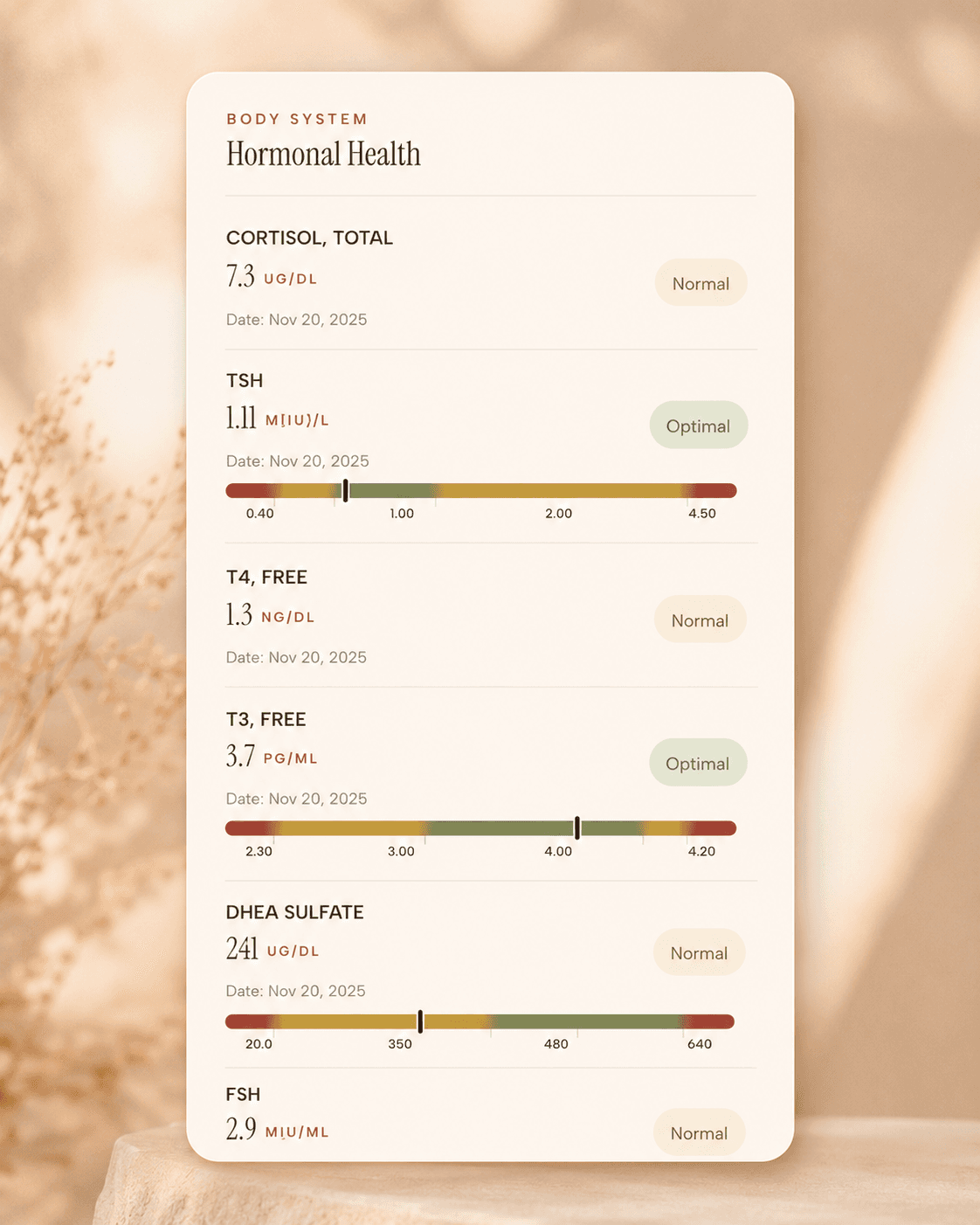
Cortisol, Total
Cortisol is the primary stress hormone that regulates metabolism, immune function, and blood pressure. In functional medicine, cortisol assessment is crucial for understanding stress response and its impact on overall health. Chronic elevation suppresses testosterone production and immune function, while low cortisol indicates adrenal insufficiency. Optimal cortisol rhythm supports energy, mood stability, and hormone balance. Cortisol orchestrates the body's stress response and daily energy rhythms. Balanced cor…
Learn moreTSH
TSH is the master regulator of thyroid function, controlling the production of thyroid hormones T4 and T3. In functional medicine, we use narrower TSH ranges than conventional medicine to identify subclinical thyroid dysfunction early. Even mildly elevated TSH can indicate thyroid insufficiency, leading to fatigue, weight gain, depression, and metabolic dysfunction. TSH levels are influenced by stress, nutrient deficiencies, autoimmune conditions, and environmental toxins. Optimal TSH supports energy, metabolism…
Learn moreInsulin
Insulin is a master metabolic hormone that regulates glucose uptake, fat storage, and numerous cellular processes. In functional medicine, fasting insulin levels are one of the earliest and most sensitive markers of metabolic dysfunction. Elevated insulin (hyperinsulinemia) often precedes diabetes by years or decades and is central to metabolic syndrome. High insulin levels promote fat storage, inflammation, and contribute to numerous chronic diseases including cardiovascular disease, PCOS, and certain cancers.…
Learn moreLab testing
Check TSH, fasting insulin, and morning cortisol at Quest
starting from $99 panel with 100+ tests, one visit
No referral needed
About 1 week
Schedule online — results typically within a week
Clear next steps
Guidance included, with follow-up care available
HSA / FSA
Eligible for pre-tax health spending accounts
Pro Tips
Weigh yourself the same way for a week: after you pee, before food or drink, and in similar clothing. If your “overnight gain” is mostly noise from timing, this removes the confusion fast.
Try a “salt check” dinner once: cook at home and keep sodium low, then compare next-morning puffiness to a takeout night. The contrast is often more convincing than any calorie math.
If you suspect late carbs are driving it, keep carbs at dinner but move them earlier in the day for four days. If mornings improve without reducing total carbs, timing is your lever.
Take a waist measurement at the navel in the morning and again at bedtime for a week. If your waist swings more than your weight, digestion and fluid shifts are likely bigger than fat gain.
If you wake up with a dry mouth, morning headaches, or your partner notices snoring or pauses in breathing, treat that as a real lead. Sleep apnea can quietly sabotage weight and water balance until you address it.
Frequently Asked Questions
Can you really gain fat overnight?
Not in any meaningful way. To gain one pound of body fat you generally need a sustained calorie surplus of roughly 3,500 calories, which is why big next-morning jumps are almost always water, glycogen, or constipation. If your weight is up 2–5 pounds after a salty or high-carb dinner and normalizes within 24–48 hours, that is classic fluid shift. Track the pattern for a week before you change your whole diet.
Why is my weight highest in the morning instead of at night?
Most people are heavier at night, so if you are heavier in the morning it often means you are retaining fluid overnight or you are waking up constipated and bloated. Poor sleep can also raise morning cortisol, which nudges your body to hold sodium and water. Try comparing a low-sodium home-cooked dinner night to a restaurant night and see how your morning weight responds.
What hormone causes morning weight gain?
Cortisol is the big one because it peaks in the morning and affects fluid balance and appetite, especially after poor sleep or chronic stress. Thyroid hormones also matter because low thyroid function can cause puffiness and constipation that show up most when you wake up. If this is persistent, checking morning cortisol and TSH can help you stop guessing.
What labs should I get for unexplained weight gain?
For a morning-weight pattern, start with TSH to screen for thyroid slowdown, fasting insulin to look for insulin resistance, and morning cortisol if stress and sleep issues are part of your story. These tests are not about “finding a magic number,” but about matching a pattern to a fix, like treating hypothyroidism or addressing sleep apnea. Bring your results along with a 1–2 week log of sleep, dinner timing, and morning weight to your clinician.
When should I worry about sudden overnight weight gain?
If you gain more than about 2–3 pounds in a day or two and it comes with shortness of breath, chest tightness, or new swelling in your legs, call a clinician urgently because fluid retention can sometimes signal heart, kidney, or liver issues. If the change is milder but persistent for weeks, especially with fatigue, constipation, or feeling cold, a thyroid check is a sensible next step. Either way, write down how fast it changed and whether you notice ankle swelling, because that detail helps triage.
Research behind the advice
AHA scientific statement on dietary sodium and cardiovascular health (useful context for fluid retention and salt sensitivity)
AASM clinical practice guideline for diagnostic testing for adult obstructive sleep apnea (sleep fragmentation can affect weight regulation)
Endocrine Society guideline on evaluation and treatment of adult obesity (covers metabolic and hormonal contributors, including screening for secondary causes)