Why Are Your Cravings So Strong in the Morning?
Cravings in the morning often come from overnight blood sugar dips, stress hormone spikes, or poor sleep. Targeted labs available at Quest—no referral needed.






Cravings in the morning usually mean your appetite signals are getting pushed around by biology, not “lack of willpower.” The most common drivers are an overnight blood sugar dip, a morning stress-hormone surge, and sleep loss that turns up hunger hormones and turns down fullness signals. A few targeted labs can help you figure out which pattern fits you so you can fix the cause instead of fighting yourself. Morning cravings are frustrating because they can feel urgent and emotional, like your brain is bargaining before you even have coffee. Sometimes it is as simple as what you ate and drank the night before, but sometimes it points to insulin resistance, thyroid issues, or chronic stress. This guide walks you through the most likely causes, what helps in real life, and which blood tests are actually useful. If you want help connecting your exact pattern to next steps, PocketMD can talk it through with you, and Vitals Vault labs can help you confirm what your body is doing.
Why your cravings hit in the morning
Overnight blood sugar dip
If your blood sugar drops too low while you sleep, your body treats it like an emergency and asks for fast fuel first thing. That can feel like a pull toward sweets, cereal, pastries, or anything quick. A common clue is waking up shaky, sweaty, or anxious, or feeling better within minutes of eating. The takeaway is to test a steadier evening routine for a week, because the right dinner and bedtime snack can stop the morning “panic hunger.”
Insulin resistance in the morning
When your cells are less responsive to insulin, your body often runs higher insulin levels to keep blood sugar controlled, and that can drive hunger and cravings even when you have plenty of stored energy. Many people notice they can eat breakfast and still feel snacky by mid-morning, especially after a carb-heavy meal. This matters because it is a fixable metabolic pattern, not a character flaw. If this sounds like you, fasting insulin and fasting glucose are more informative than guessing from symptoms alone.
Stress hormone surge (cortisol)
Your body naturally releases more of the “get going” hormone (cortisol) in the early morning, but chronic stress can make that surge bigger and sharper. Cortisol nudges your liver to release sugar and can also make your brain crave quick comfort foods, especially if you wake up already tense. You might notice cravings are worse on high-pressure days or after a restless night. A practical move is to build a 5-minute buffer before food decisions, because calming your nervous system can change what you want to eat.
Poor sleep scrambles appetite hormones
Short or fragmented sleep shifts hunger signals so you feel hungrier and less satisfied after eating, partly through changes in hunger and fullness hormones (ghrelin and leptin). That is why a “normal” breakfast can feel like it barely touches the craving. It also makes your brain more reward-seeking, so sugary foods look extra appealing. If you are sleeping under 7 hours or waking often, treating sleep like the first domino can reduce cravings without changing your personality.
Thyroid slowdown affects hunger
An underactive thyroid (hypothyroidism) can slow digestion and change how your body uses energy, and some people experience more cravings and weight gain along with fatigue and feeling cold. The cravings are not always dramatic, but they can be persistent and paired with low motivation in the morning. This matters because thyroid issues are common and measurable. If you also have constipation, dry skin, or heavy periods, a TSH test is a reasonable place to start.
What actually helps morning cravings
Build a protein-first breakfast
If you start your day with 25–35 grams of protein, you usually get a steadier appetite curve and fewer “hunt for sugar” signals later. Protein slows stomach emptying and supports the hormones that tell your brain you are satisfied. Think eggs with yogurt, tofu scramble, or a protein smoothie that includes fiber, not just fruit. Try it for five mornings in a row and notice whether the cravings move from urgent to optional.
Stop the bedtime sugar rollercoaster
A dessert-heavy or alcohol-heavy evening can set you up for a bigger overnight dip and a louder morning craving. Instead, aim for a dinner that includes protein and a high-fiber carb, and if you wake up ravenous, experiment with a small bedtime snack like Greek yogurt or nut butter on whole-grain toast. The goal is not perfection; it is preventing the “crash and compensate” cycle. If your morning cravings improve within a week, you have found a lever you can keep using.
Use a 10-minute craving delay
Cravings often peak and fade like a wave, especially when stress is the driver. Before you eat the first sugary thing you see, set a 10-minute timer and do something that downshifts your body, such as slow breathing with a longer exhale or a short walk in daylight. This is not about white-knuckling; it is about giving your brain time to switch from urgent to thoughtful. After the timer, you can still eat, but you will usually make a different choice.
Choose carbs that behave slowly
You do not have to fear carbs, but you do want carbs that release glucose gradually. Oats with chia, beans, or whole grains paired with protein tend to keep cravings quieter than juice, pastries, or sweetened coffee drinks. If you love something sweet in the morning, try moving it to after a balanced meal rather than as the meal. That simple sequencing often reduces the “need more” feeling.
Treat the root issue with support
If cravings are tied to insulin resistance, thyroid problems, or medication side effects, lifestyle tweaks alone can feel like pushing a boulder uphill. Bringing a short symptom log to a clinician helps, especially if you track wake time, sleep quality, what you ate at night, and when cravings hit. If you ever have morning cravings along with dizziness, confusion, or fainting, get medical help promptly because low blood sugar can be dangerous. For everything else, the fastest path is usually: identify the pattern, confirm with labs, then match the fix to the cause.
Useful biomarkers to discuss with your clinician
Glucose
Fasting glucose is a fundamental marker of glucose metabolism and insulin function. In functional medicine, we recognize that even 'normal' glucose levels in the upper range may indicate early insulin resistance. Optimal fasting glucose reflects efficient glucose regulation and insulin sensitivity. Elevated fasting glucose suggests the body's inability to maintain normal glucose levels overnight, indicating hepatic insulin resistance or insufficient insulin production. This marker is essential for early detectio…
Learn moreInsulin
Insulin is a master metabolic hormone that regulates glucose uptake, fat storage, and numerous cellular processes. In functional medicine, fasting insulin levels are one of the earliest and most sensitive markers of metabolic dysfunction. Elevated insulin (hyperinsulinemia) often precedes diabetes by years or decades and is central to metabolic syndrome. High insulin levels promote fat storage, inflammation, and contribute to numerous chronic diseases including cardiovascular disease, PCOS, and certain cancers.…
Learn moreCortisol, Total
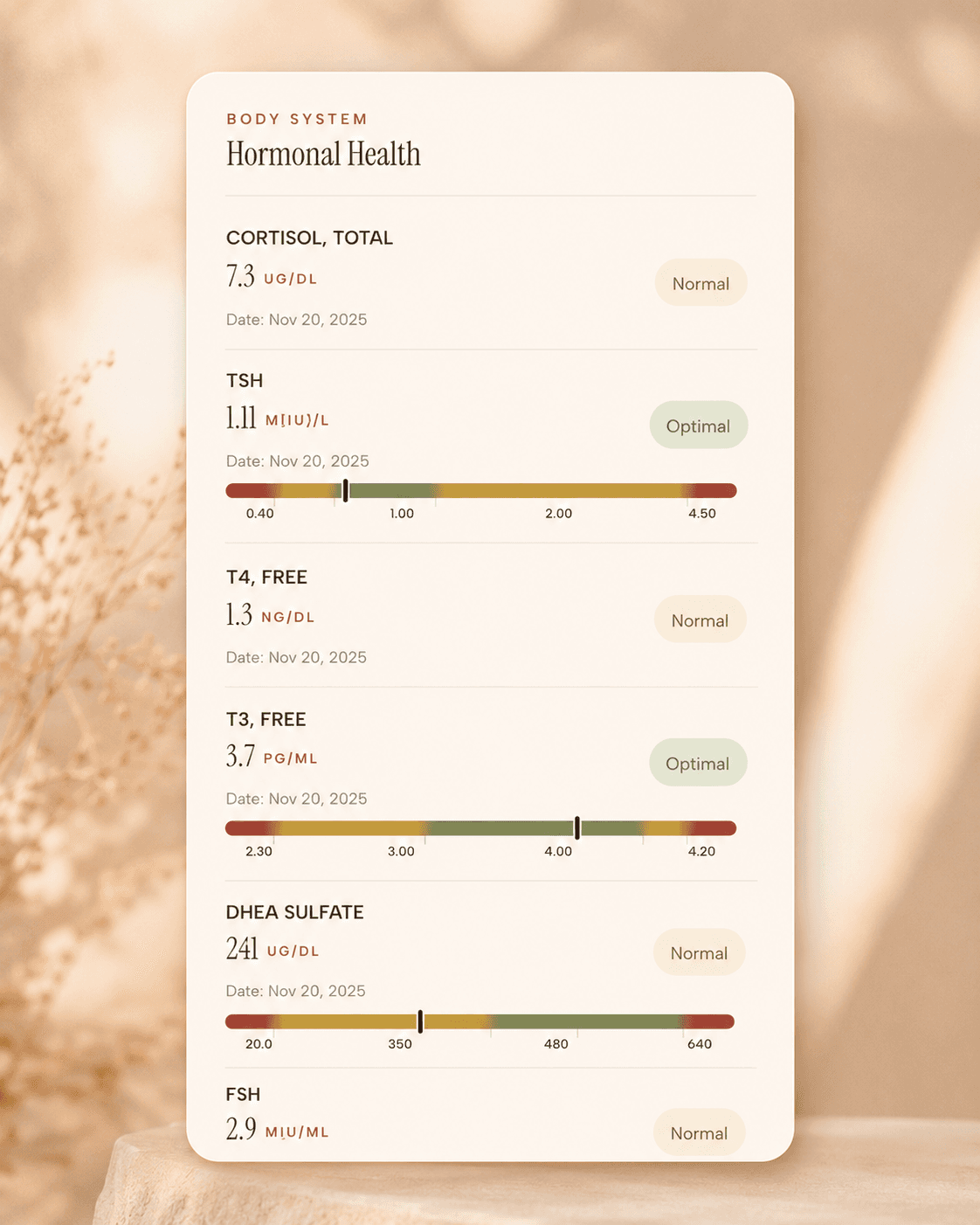
Cortisol is the primary stress hormone that regulates metabolism, immune function, and blood pressure. In functional medicine, cortisol assessment is crucial for understanding stress response and its impact on overall health. Chronic elevation suppresses testosterone production and immune function, while low cortisol indicates adrenal insufficiency. Optimal cortisol rhythm supports energy, mood stability, and hormone balance. Cortisol orchestrates the body's stress response and daily energy rhythms. Balanced cor…
Learn moreLab testing
Check fasting glucose, fasting insulin, and TSH at Quest
starting from $99 panel with 100+ tests, one visit
No referral needed
About 1 week
Schedule online — results typically within a week
Clear next steps
Guidance included, with follow-up care available
HSA / FSA
Eligible for pre-tax health spending accounts
Pro Tips
For two weeks, rate your morning cravings from 1–10 and write down what you ate after 6 pm, how you slept, and whether you woke up stressed. Patterns usually jump out faster than you expect.
If you drink sweetened coffee first thing, try eating a few bites of protein before your first sip for three mornings. That small change often prevents the “caffeine plus sugar” appetite spike.
If you wake up craving sugar, try a “bridge snack” that is mostly protein and fiber, then eat a full breakfast 30–60 minutes later. It can stop the binge-or-restrict pendulum.
If cravings are strongest right after you step on the scale or check your phone, delay both for 20 minutes. Your brain makes better food decisions when it is not already in threat mode.
If you suspect overnight lows, keep a quick option by your bed that is not candy, such as a small yogurt drink or glucose tablets, and talk with a clinician if symptoms include sweating, tremor, or confusion.
Frequently Asked Questions
Why do I crave sugar as soon as I wake up?
The most common reasons are an overnight blood sugar dip, a bigger-than-usual morning cortisol surge, or poor sleep that makes your brain chase quick reward. If you also feel shaky, sweaty, or anxious before eating, the “blood sugar dip” pattern is more likely. Try a protein-first breakfast for five days and consider checking fasting glucose and fasting insulin to see what your baseline looks like.
Is it normal to wake up starving every morning?
It can be normal if you ate lightly the day before or exercised hard, but “starving” every morning often means your appetite signals are dysregulated. Sleep loss and insulin resistance are two common drivers, and both can make you feel hungry soon after eating. Track sleep length and breakfast composition for a week, and if hunger is paired with dizziness or fainting, get medical advice promptly.
Can cortisol cause morning cravings?
Yes. Cortisol naturally rises in the morning, and when stress is chronic that rise can be sharper, which can increase appetite and pull you toward fast carbs. You will often notice cravings are worse on stressful mornings or after a night of poor sleep. A practical test is a 10-minute calming routine before breakfast and seeing whether the craving intensity drops.
What breakfast stops cravings the best?
A breakfast with 25–35 grams of protein plus fiber tends to reduce cravings the most because it steadies blood sugar and improves fullness signals. Examples include eggs with vegetables and toast, Greek yogurt with chia and berries, or tofu scramble with beans. If you want something sweet, eat it after the balanced meal rather than as the meal. Try the same protein-forward breakfast for five mornings so you can actually judge the effect.
Which blood tests help explain morning cravings?
Start with fasting glucose and fasting insulin to look for insulin resistance or an unstable overnight baseline, and add TSH to screen for thyroid slowdown when fatigue or weight gain is part of the story. Many people feel best with fasting insulin under about 8 µIU/mL and a steady fasting glucose without morning shakiness. If results are abnormal, ask your clinician what follow-up tests make sense, such as A1c or free T4. You will get better answers when you match labs to your symptom pattern.