Why You Wake Up Tired When You’re Stressed (Even After 8 Hours)
Waking up tired under stress is often from hyperarousal, sleep apnea, or low iron. Targeted blood tests available at Quest—no referral needed.






Waking up tired under stress usually means your sleep is being fragmented, even if you’re in bed for 7–8 hours. The most common drivers are a “wired” stress response that keeps your brain on alert, breathing disruptions like sleep apnea, and treatable body issues such as low iron or thyroid imbalance. A few targeted labs can help you sort out which one fits your situation instead of guessing. This symptom is frustrating because it can look like “just stress,” but your body doesn’t experience stress as a thought. It experiences it as hormones, breathing patterns, muscle tension, and lighter sleep. The good news is that you can often improve how you feel in the morning by fixing one or two specific bottlenecks. If you want help narrowing it down, PocketMD can walk through your sleep pattern and symptoms with you, and Vitals Vault labs can help you check the most common medical contributors.
Why you wake up tired when you’re stressed
Your brain stays on guard
When you’re under pressure, your stress system can keep your brain in a lighter, more vigilant sleep state (hyperarousal). You might not fully wake up, but you spend less time in deep and dream sleep, which is when you feel restored. A clue is that you fall asleep “fine” but wake up feeling like you never powered down, so a wind-down routine that lowers arousal matters more than adding extra time in bed.
Sleep apnea gets worse with stress
Stress doesn’t cause sleep apnea, but it can make it easier to notice because you’re already running on empty. With sleep apnea, your airway narrows during sleep, your oxygen dips, and your brain briefly jolts you awake to breathe, which shreds sleep quality. If you snore, wake with a dry mouth, or feel sleepy while driving, ask about a home sleep test because treating apnea can be life-changing.
Nighttime worry triggers awakenings
Anxiety can show up as early-morning awakenings with a racing mind, even if you don’t feel panicky during the day. Your body releases stress hormones toward morning naturally, and worry can amplify that surge so you pop awake too early and can’t drop back into deeper sleep. If this sounds like you, it helps to move “thinking time” earlier in the day so your bed stops being your planning office.
Low iron drains your stamina
Iron is how your body moves oxygen and supports energy production, so low iron stores can make sleep feel unrefreshing and mornings feel heavy. You can have low iron even with a “normal” hemoglobin, especially if you have heavy periods, donate blood, or eat little red meat. Ferritin is the test that usually reveals this, and many people feel better when ferritin is brought into a more optimal range rather than barely-normal.
Blood sugar swings disrupt sleep
If your blood sugar runs high or swings overnight, you can wake up tired because your body is doing extra work while you sleep. Some people wake at 2–4 a.m. sweaty, restless, or hungry, which can be a sign your glucose regulation is off. Checking HbA1c gives you a 2–3 month snapshot, and tightening up evening carbs or alcohol often improves sleep continuity when glucose is part of the problem.
What actually helps you wake up rested
Do a two-week sleep quality log
Instead of tracking only hours slept, track how you feel: rate morning energy from 1–10, note awakenings, and write down caffeine timing and alcohol with dinner. Patterns usually show up fast, like “I’m worse after late coffee” or “I’m always tired after nights I wake to pee.” Bring that log to a clinician or PocketMD so you can target the right fix instead of trying everything at once.
Screen yourself for sleep apnea
If you snore, have witnessed pauses in breathing, wake with headaches, or feel sleepy in meetings, treat sleep apnea as a real possibility, not an insult. A home sleep apnea test is often the quickest way to confirm it, and treatment can improve blood pressure, mood, and morning energy. Even before testing, sleeping on your side and avoiding alcohol close to bedtime can reduce airway collapse for some people.
Build a real “off switch”
Under stress, your nervous system needs a clear signal that the day is over, and scrolling in bed usually does the opposite. Try a 20–30 minute buffer where you dim lights, keep your phone out of reach, and do one calming activity that uses your body, like a warm shower or slow breathing. The goal is not perfect relaxation; it is lowering alertness enough that you spend more time in deeper stages of sleep.
Use caffeine like a medication
When you’re exhausted, it’s tempting to keep topping up, but caffeine late in the day can quietly reduce deep sleep even if you fall asleep easily. A practical rule is to keep caffeine to the morning and stop at least 8 hours before bedtime, then reassess your mornings after a week. If that feels impossible, it’s a sign you should look harder for an underlying driver like apnea, low iron, or thyroid issues.
Treat the medical bottleneck you find
If ferritin is low, replenishing iron (with guidance) can improve stamina and reduce that “dragging yourself awake” feeling. If TSH suggests an underactive thyroid, treating it can improve sleep quality, mood, and morning energy over weeks to months. If HbA1c is elevated, even modest changes like earlier dinner timing and a post-meal walk can reduce overnight restlessness and morning fog.
Useful biomarkers to discuss with your clinician
Ferritin
Ferritin is your body's iron storage protein, reflecting total iron stores in the body. In functional medicine, ferritin assessment is crucial for identifying both iron deficiency and iron overload, conditions that can significantly impact energy levels and overall health. Low ferritin is the earliest sign of iron deficiency, often occurring before anemia develops. This can cause fatigue, weakness, restless leg syndrome, and cognitive impairment. Conversely, elevated ferritin may indicate iron overload, inflamma…
Learn moreIron Binding Capacity
TIBC helps distinguish between different causes of abnormal iron levels. High TIBC indicates iron deficiency (the body increases transferrin to capture more iron), while low TIBC suggests iron overload or chronic disease. It's essential for accurate iron status assessment. Total Iron Binding Capacity (TIBC) measures the blood's capacity to bind iron with transferrin, the main iron transport protein. It indirectly reflects transferrin levels and iron status.
Learn moreCortisol, Total
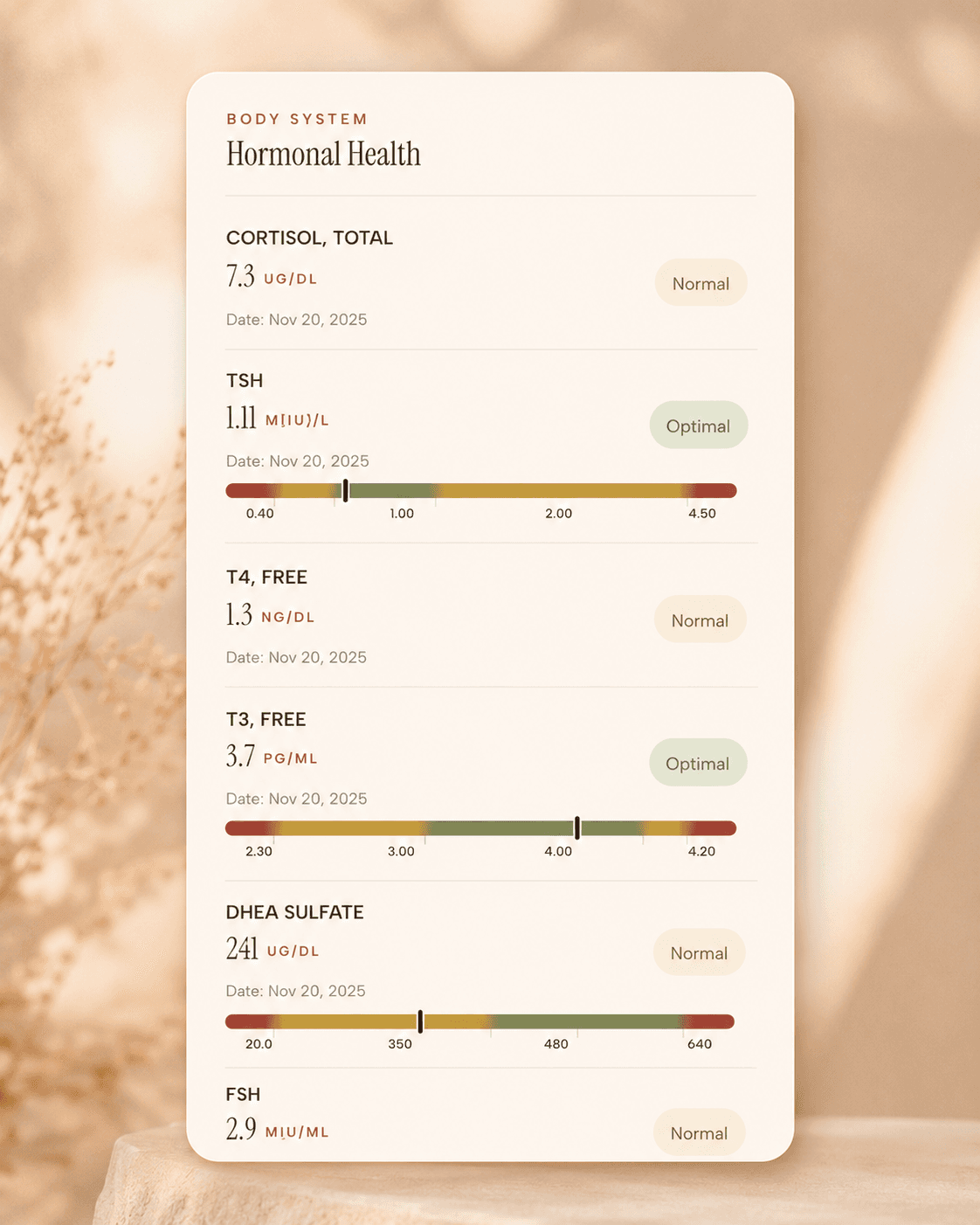
Cortisol is the primary stress hormone that regulates metabolism, immune function, and blood pressure. In functional medicine, cortisol assessment is crucial for understanding stress response and its impact on overall health. Chronic elevation suppresses testosterone production and immune function, while low cortisol indicates adrenal insufficiency. Optimal cortisol rhythm supports energy, mood stability, and hormone balance. Cortisol orchestrates the body's stress response and daily energy rhythms. Balanced cor…
Learn moreLab testing
Check ferritin, TSH, and HbA1c at Quest
starting from $99 panel with 100+ tests, one visit
No referral needed
About 1 week
Schedule online — results typically within a week
Clear next steps
Guidance included, with follow-up care available
HSA / FSA
Eligible for pre-tax health spending accounts
Pro Tips
Try a “caffeine curfew” for 7 days: set a hard stop time that is 8 hours before bed, and then compare your morning energy scores to the week before.
If you wake at the same time every morning, get outside light within 30 minutes of waking for 5–10 minutes. It anchors your body clock so you build stronger sleep pressure the next night.
If your mind turns on in bed, keep a notepad nearby and do a 3-minute brain dump, then write one next step for tomorrow. It tells your brain the problem is parked, which makes returning to sleep easier.
If you suspect apnea, record 1–2 nights of audio (snoring and gasps) and bring it to your clinician. It’s surprisingly persuasive when you’re deciding whether to test.
If you have heavy periods and you’re waking up exhausted, don’t wait for anemia to show up. Ask specifically for ferritin, because that is often where the story starts.
Frequently Asked Questions
Why do I wake up tired even after 8 hours of sleep?
Usually it’s because your sleep is fragmented, not because you lack time in bed. Stress can keep you in lighter sleep, and conditions like sleep apnea can cause dozens of tiny arousals you don’t remember. If this happens most days for more than 2–3 weeks, track awakenings and consider screening for apnea and checking ferritin and TSH.
Can stress alone cause unrefreshing sleep?
Yes, because stress can keep your nervous system in a “ready” state (hyperarousal) that reduces deep sleep even if you’re unconscious for hours. You often notice this as waking up tense, clenching your jaw, or feeling like you were half-awake all night. A consistent wind-down routine and CBT-I strategies are often more effective than adding extra sleep time.
How do I know if it’s sleep apnea or just stress?
Sleep apnea is more likely if you snore loudly, have witnessed pauses in breathing, wake with headaches or dry mouth, or feel sleepy while driving. Stress-related sleep problems are more likely if your main issue is racing thoughts, early awakenings, or feeling wired at bedtime. If you have any apnea clues, a home sleep test is a straightforward next step.
What labs should I check for waking up exhausted?
A practical starter set is ferritin for iron stores, TSH for thyroid signaling, and HbA1c for average blood sugar. Low ferritin (often below ~30 ng/mL) can cause fatigue even without anemia, and a TSH that is high or trending up can point to hypothyroidism. If any are abnormal, follow up with your clinician to interpret them in context and decide what to test next.
When is waking up tired a red flag?
Get medical help sooner if you have severe daytime sleepiness that makes driving unsafe, you wake up gasping or choking, or you have chest pain or fainting. Also take it seriously if fatigue comes with unexplained weight loss, fevers, or new weakness. If it’s “just” persistent and affecting your life, that still counts—bring a two-week sleep log and ask about apnea screening and targeted labs.