Why Your Metabolism Feels Slow After Having a Baby
Slow metabolism postpartum often comes from thyroid slowdown, sleep loss raising hunger hormones, or insulin resistance. Targeted labs at Quest—no referral needed.





A “slow metabolism” after having a baby is usually your body adapting to thyroid changes, sleep deprivation that shifts hunger and stress hormones, or insulin resistance that makes it easier to store fat and harder to access it. It can feel like you are doing “everything right” and still not losing weight, because your appetite, energy, and recovery signals are all pulling in the opposite direction. Simple labs can often show which driver is most likely in your case, so you can stop guessing. Postpartum life is a perfect storm: your hormones change quickly, your sleep gets fragmented, and your daily movement often drops even if you are constantly busy. On top of that, breastfeeding can either increase calorie needs or increase hunger enough to cancel that out, depending on your body. This page walks you through the most common reasons your metabolism feels stuck, what tends to help in the real world, and which blood tests are most useful. If you want help connecting your specific symptoms to a plan, PocketMD can talk it through with you, and targeted labs through Vitals Vault can help you confirm what is going on.
Why your metabolism feels slow postpartum
Postpartum thyroiditis slows your burn
After pregnancy, your immune system can rebound and irritate your thyroid, which sometimes causes a brief “speedy” phase and then a sluggish phase called postpartum thyroiditis. When thyroid output drops, your body uses energy more slowly, so you feel tired, cold, and mentally foggy, and weight loss can stall even with effort. The key takeaway is timing: if symptoms show up between about 2 and 12 months postpartum, it is worth checking thyroid labs rather than assuming it is just willpower.
Sleep loss shifts hunger hormones
Broken sleep changes the hormones that regulate appetite and fullness, so you can feel hungrier and less satisfied even after a normal meal. It also raises stress signaling, which makes your body more likely to conserve energy and crave quick fuel, especially late in the day. If your “slow metabolism” started when sleep became unpredictable, the most effective lever is often improving sleep quality in small, realistic ways rather than cutting more calories.
Insulin resistance after pregnancy
Some people stay more insulin resistant after pregnancy, especially if they had gestational diabetes or gained more weight than expected. Insulin is a storage signal, so when it runs high you can feel like you are gaining easily and losing painfully slowly, and you may notice stronger cravings after carbs. A practical clue is how you feel after meals: if you get sleepy, shaky, or hungry again within two hours, insulin resistance deserves attention.
Muscle loss and lower daily movement
Pregnancy and postpartum recovery can reduce muscle, and muscle is the tissue that burns the most calories at rest. At the same time, your “non-exercise” movement often drops because you are feeding, rocking, and sitting more, even if you are exhausted from being on duty all day. This combination can make your old routine stop working, which is frustrating but fixable with a strength-focused approach and a plan for gentle daily movement.
Undereating can backfire postpartum
When you cut calories hard while you are sleep-deprived and recovering, your body often responds by lowering spontaneous movement and increasing food preoccupation. If you are breastfeeding, aggressive restriction can also make you feel ravenous, which can lead to a cycle of “white-knuckling” and then overeating. The takeaway is not that weight loss is impossible, but that postpartum bodies usually do better with steady, adequate protein and a modest deficit than with crash dieting.
What actually helps postpartum metabolism
Check thyroid early if symptoms fit
If you have new cold intolerance, constipation, hair shedding that feels excessive, or a weight plateau that does not match your intake, thyroid testing is a high-yield first step. When postpartum thyroiditis or hypothyroidism is the driver, no amount of perfect meal prep will feel effective until thyroid levels are addressed. Bring your timeline to the conversation, because “I felt fine at 6 weeks and worse at 5 months” is a useful clinical clue.
Use protein as your appetite anchor
Postpartum hunger can be intense, and protein helps because it supports muscle repair and tends to keep you full longer than a carb-only snack. A simple target many people can implement is aiming for 25–35 grams of protein at breakfast, because that is when cravings often start. If you are breastfeeding, this approach can feel especially stabilizing because it reduces the “bottomless pit” feeling without extreme restriction.
Strength train for metabolism, not punishment
Two or three short strength sessions per week can rebuild muscle and improve insulin sensitivity, which makes your body more willing to use stored energy. The win is not burning calories during the workout; it is changing what your body is made of and how it handles food the other 165 hours of the week. Start small on purpose, because consistency beats intensity when you are healing and sleep-deprived.
Build a sleep-protection plan
You cannot always control how often your baby wakes, but you can often control how much your sleep gets fragmented beyond that. A “sleep protection” plan might mean a set handoff window, one protected nap on weekends, or a rule that you do not do chores after the first nighttime feed. When your sleep improves even a little, appetite and cravings often calm down within a week.
Choose carbs that don’t spike you
If you suspect insulin resistance, the goal is not “no carbs,” but carbs that come with fiber and a slower rise in blood sugar. Pairing carbs with protein and fat, like yogurt with berries and nuts, often prevents the crash that triggers more snacking. If you want a concrete experiment, try a two-week “balanced plate” approach and track whether your afternoon energy and hunger improve.
Useful biomarkers to discuss with your clinician
TSH
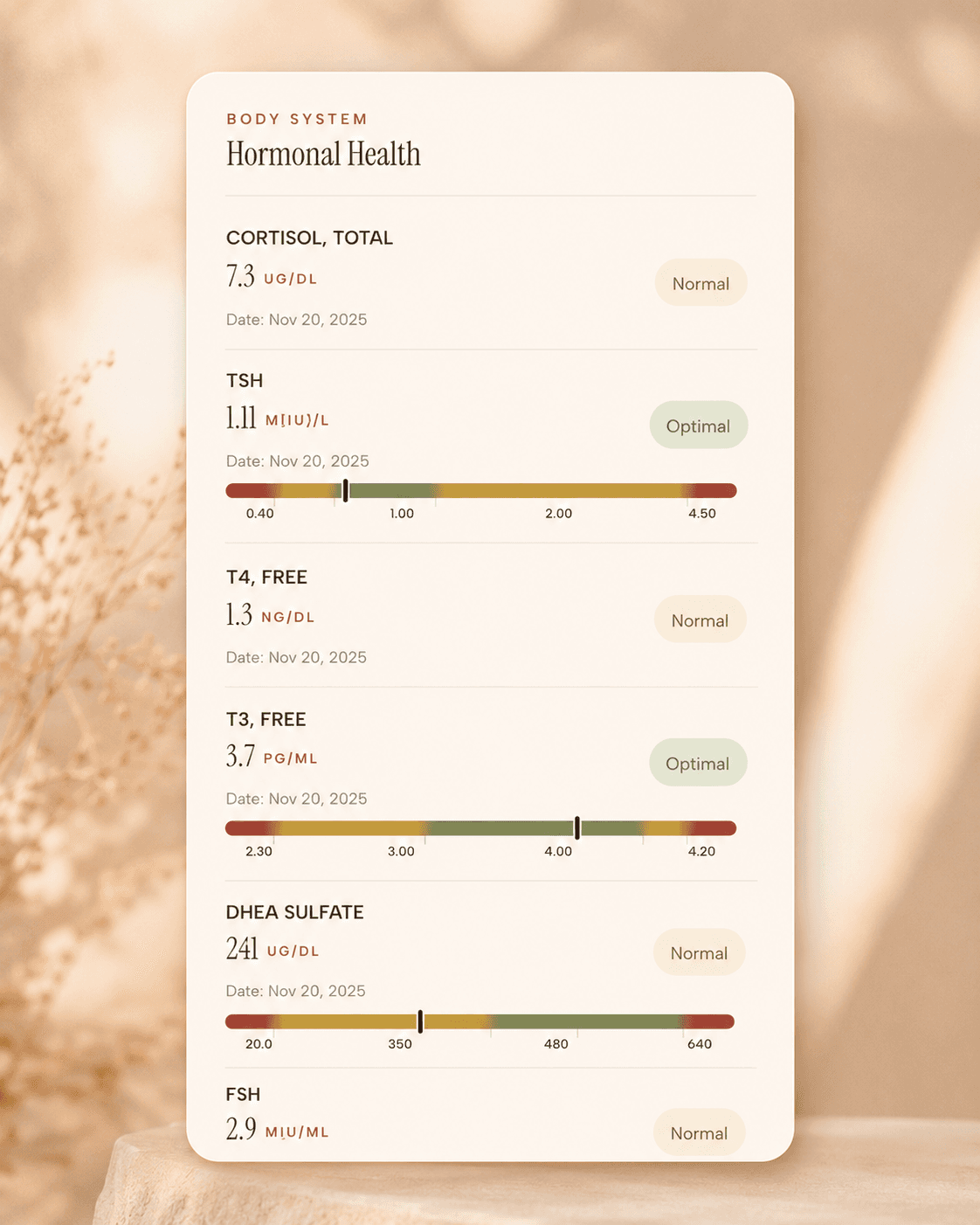
TSH is the master regulator of thyroid function, controlling the production of thyroid hormones T4 and T3. In functional medicine, we use narrower TSH ranges than conventional medicine to identify subclinical thyroid dysfunction early. Even mildly elevated TSH can indicate thyroid insufficiency, leading to fatigue, weight gain, depression, and metabolic dysfunction. TSH levels are influenced by stress, nutrient deficiencies, autoimmune conditions, and environmental toxins. Optimal TSH supports energy, metabolism…
Learn moreInsulin
Insulin is a master metabolic hormone that regulates glucose uptake, fat storage, and numerous cellular processes. In functional medicine, fasting insulin levels are one of the earliest and most sensitive markers of metabolic dysfunction. Elevated insulin (hyperinsulinemia) often precedes diabetes by years or decades and is central to metabolic syndrome. High insulin levels promote fat storage, inflammation, and contribute to numerous chronic diseases including cardiovascular disease, PCOS, and certain cancers.…
Learn moreHemoglobin A1C
Hemoglobin A1C (HbA1c) reflects average blood glucose levels over the past 2-3 months by measuring the percentage of hemoglobin proteins that have glucose attached. In functional medicine, HbA1c is a cornerstone marker for metabolic health, insulin sensitivity, and diabetes risk assessment. Optimal levels (4.6-5.3%) indicate excellent blood sugar regulation and reduced risk of metabolic disease. Levels above 5.4% but below 5.7% suggest early metabolic dysfunction and increased cardiovascular risk, even before pr…
Learn moreLab testing
Get TSH, free T4, and fasting insulin checked at Quest
starting from $99 panel with 100+ tests, one visit
No referral needed
About 1 week
Schedule online — results typically within a week
Clear next steps
Guidance included, with follow-up care available
HSA / FSA
Eligible for pre-tax health spending accounts
Pro Tips
Run a two-week “pattern check” before you change everything: write down your sleep length, your first meal protein estimate, and a 1–10 hunger score at 3 pm. If your hunger tracks with short sleep nights, you have a clear target that is not about willpower.
If you are breastfeeding and always starving, try adding one planned snack with protein and fiber right after a feed, not when you are already desperate. That timing often prevents the later “I ate everything” moment.
When you start strength training postpartum, keep the first month almost embarrassingly easy and focus on form. Your goal is to show up consistently, because soreness that wrecks sleep will slow progress more than light weights ever will.
If you suspect insulin resistance, do one simple experiment: take a 10–15 minute walk after your biggest carb meal for a week. Many people notice less sleepiness and fewer cravings by day three or four.
If you have thyroid symptoms, note your postpartum month and any earlier “wired and sweaty” phase, because that swing can point to postpartum thyroiditis. Bring that timeline to your clinician or PocketMD so your labs are interpreted in context.
Frequently Asked Questions
Is it normal to have a slow metabolism after pregnancy?
It is common to feel like your metabolism slowed because postpartum life changes your hormones, sleep, muscle mass, and daily movement all at once. For many people it improves as sleep and routine stabilize, but persistent fatigue, cold intolerance, or a long weight plateau can also signal thyroid issues or insulin resistance. If symptoms last beyond a few months or feel out of proportion, checking TSH, free T4, and fasting insulin can clarify what is driving it.
How do I know if postpartum thyroid problems are causing weight gain?
A thyroid-related slowdown often comes with fatigue that feels heavy, feeling colder than others, constipation, dry skin, or a low mood that is not just “new baby stress.” The most useful first labs are TSH and free T4, because a rising TSH with low or low-normal free T4 supports hypothyroidism as a contributor. If your symptoms started a few months after delivery, mention postpartum thyroiditis specifically and ask for thyroid testing.
Can breastfeeding slow weight loss even though it burns calories?
Breastfeeding increases calorie needs, but it can also increase hunger and make you hold onto weight for a while, especially if sleep is poor. Some people lose steadily while breastfeeding, and others do not see much change until feeds decrease, so your experience can still be normal. If you are stuck, focus on protein at breakfast and a modest, consistent calorie deficit rather than aggressive restriction.
What fasting insulin number suggests insulin resistance postpartum?
There is no single perfect cutoff, but fasting insulin that is persistently above about 8 µIU/mL often suggests your body needs extra insulin to stay steady, especially if you also have cravings or post-meal crashes. Many clinicians aiming for metabolic health prefer values closer to 2–6 µIU/mL when possible. If yours is elevated, pairing carbs with protein and adding short post-meal walks is a practical first step while you discuss a longer-term plan.
When should I worry about postpartum weight gain and fatigue?
If you have severe weakness, shortness of breath, chest pain, fainting, or swelling and headaches that feel alarming, you should get urgent care. For non-emergency concerns, it is reasonable to seek help if fatigue is worsening after the first month, if you cannot function during the day, or if weight is climbing despite consistent habits for 8–12 weeks. Bring a short symptom timeline and ask specifically about thyroid labs (TSH and free T4) and metabolic labs like fasting insulin.