Why You Feel So Tired After Having a Baby
Fatigue in postpartum women often comes from sleep fragmentation, iron deficiency, or thyroid shifts. Targeted blood tests available—no referral needed.






Fatigue after having a baby is usually a mix of broken sleep, recovery from pregnancy and birth, and big hormone shifts, but it can also be driven by iron depletion, thyroid changes, or postpartum depression. The “right” fix depends on which of those is actually happening in your body, and a few targeted labs can help you sort it out. If you feel like you should be coping better but you are running on fumes, you are not imagining it. Postpartum fatigue can be intense because your brain is trying to stay alert for a newborn while your body is still healing and rebuilding blood volume, iron stores, and muscle. Most of the time it improves month by month, but when it doesn’t, it helps to stop blaming yourself and start troubleshooting. PocketMD can help you think through your symptoms and timing, and VitalsVault labs can help confirm common, fixable drivers like low iron or thyroid imbalance.
Why postpartum fatigue can feel crushing
Sleep fragmentation drains your brain
Even if you technically get “enough hours,” waking every 1–3 hours keeps you from spending enough time in deep, restorative sleep. That leaves you feeling wired but exhausted, with slower thinking and a shorter fuse. The most useful takeaway is to protect one longer stretch of sleep whenever possible, because a single 4–5 hour block often helps more than two extra hours broken into tiny pieces.
Iron stores drop after birth
Pregnancy uses a lot of iron, and blood loss during delivery can push you into low iron stores even if your hemoglobin looks “fine.” Low iron can feel like heavy limbs, breathlessness on stairs, a racing heart, and a weird inability to recover after a normal day. If you are soaking pads quickly, had a C-section, or feel dizzy when you stand, it is especially worth checking ferritin (your iron storage marker) rather than guessing.
Postpartum thyroid shifts
Some people develop inflammation of the thyroid after pregnancy (postpartum thyroiditis), which can swing from a revved-up phase into a low-thyroid phase. When your thyroid runs low, your whole system slows down, so you can feel cold, constipated, puffy, and exhausted no matter how much coffee you drink. The timing matters: fatigue that ramps up around 2–6 months postpartum is a classic window to consider thyroid testing.
Mood changes that steal energy
Postpartum depression and anxiety are not just “sadness” or “worry”—they can show up as flatness, irritability, insomnia, and a body that feels like it is moving through mud. When your nervous system is stuck in threat mode, your energy gets spent on vigilance instead of recovery. If you have persistent hopelessness, scary intrusive thoughts, or you cannot sleep even when the baby sleeps, that is a medical problem, and getting help is a strong move, not a failure.
Low calories while breastfeeding
Making milk costs energy, and if you are unintentionally under-eating—often because you are too busy to sit down—your body starts rationing. That can look like shakiness, headaches, feeling “empty,” and a sudden crash in the late afternoon. A practical check is to add one reliable snack with protein and carbs right after the first morning feed and see if your midday slump improves within a few days.
What actually helps you get energy back
Build one protected sleep block
Instead of chasing perfect sleep, aim for one protected block most days of the week. If you have a partner or helper, trade shifts so you get 4–5 uninterrupted hours, and then you can do the lighter “on call” sleep after. If you are solo, try a daily “sleep appointment” right after the first morning feed, even if it is only 60–90 minutes, because consistency trains your body to downshift.
Treat low iron on purpose
If ferritin is low, iron replacement is one of the most straightforward ways to improve postpartum fatigue, but dosing and timing matter. Many people tolerate iron better when they take it every other day, and it absorbs best away from calcium and with a source of vitamin C. Recheck ferritin after about 6–8 weeks so you know you are actually rebuilding stores, not just hoping.
Address thyroid imbalance early
If your TSH suggests low thyroid function, treatment can be life-changing because it targets the “slow metabolism” feeling at the source. Postpartum thyroid problems can be temporary, so the plan is often to treat and then reassess rather than assume it is forever. Bring a symptom timeline to your clinician—when fatigue started, whether you had palpitations earlier, and any hair loss—because it helps interpret the labs correctly.
Screen and treat postpartum depression
When fatigue is tied to mood, the fix is not more willpower—it is support and treatment. Therapy, peer support groups, and medication can all be compatible with breastfeeding, and many people feel relief faster than they expect once they start. If you are not sure whether what you feel “counts,” take a validated screen like the Edinburgh Postnatal Depression Scale and share the score with your OB, midwife, or primary care clinician.
Make food automatic, not optional
Decision fatigue is real postpartum, so the goal is to remove decisions. Pick two “default” meals and two “default” snacks you can eat one-handed, and stock them for the week so you are not relying on motivation. A simple target that helps many breastfeeding parents is to include protein at breakfast and again mid-afternoon, because that is when blood sugar dips tend to hit hardest.
Useful biomarkers to discuss with your clinician
Ferritin
Ferritin is your body's iron storage protein, reflecting total iron stores in the body. In functional medicine, ferritin assessment is crucial for identifying both iron deficiency and iron overload, conditions that can significantly impact energy levels and overall health. Low ferritin is the earliest sign of iron deficiency, often occurring before anemia develops. This can cause fatigue, weakness, restless leg syndrome, and cognitive impairment. Conversely, elevated ferritin may indicate iron overload, inflamma…
Learn moreTSH
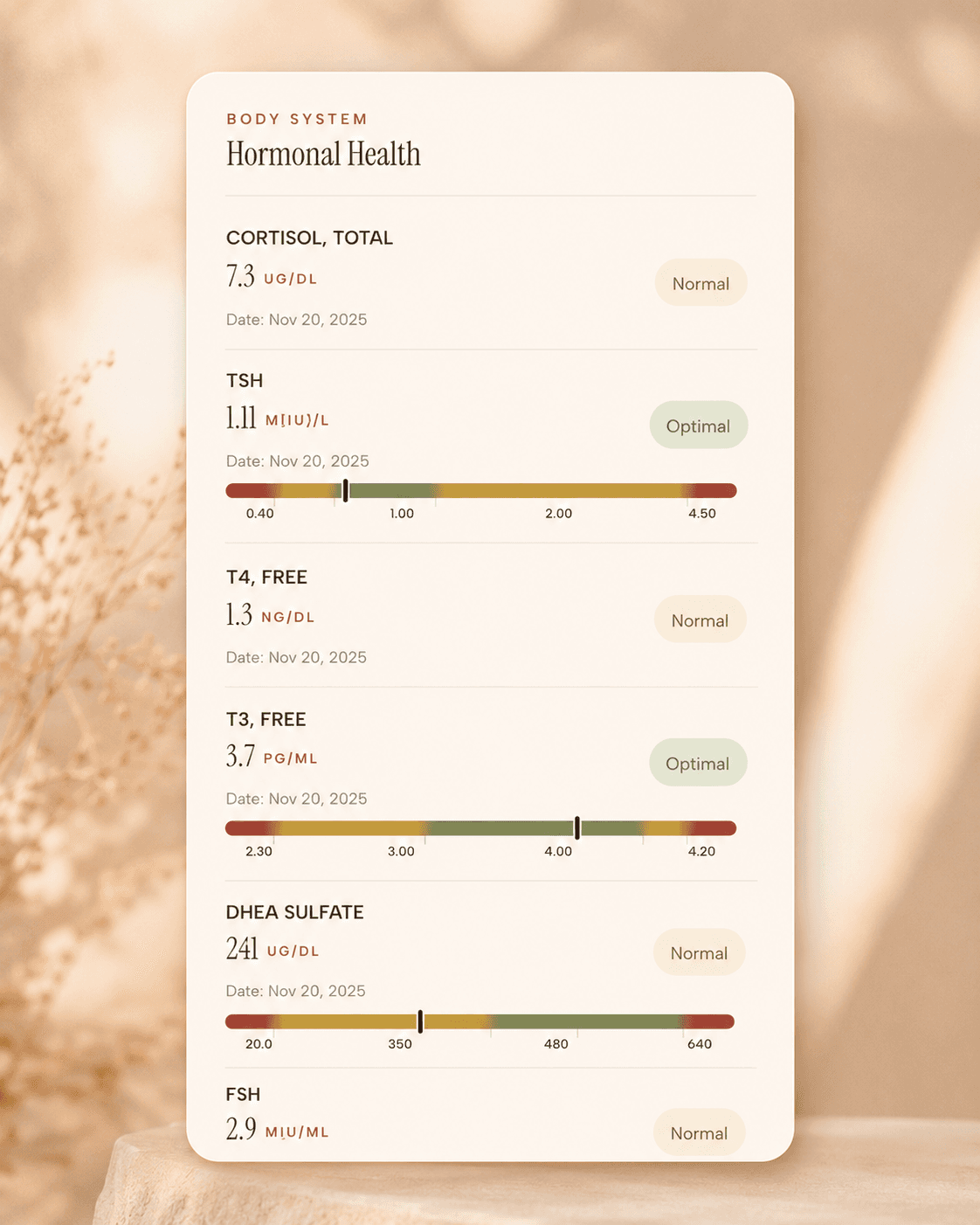
TSH is the master regulator of thyroid function, controlling the production of thyroid hormones T4 and T3. In functional medicine, we use narrower TSH ranges than conventional medicine to identify subclinical thyroid dysfunction early. Even mildly elevated TSH can indicate thyroid insufficiency, leading to fatigue, weight gain, depression, and metabolic dysfunction. TSH levels are influenced by stress, nutrient deficiencies, autoimmune conditions, and environmental toxins. Optimal TSH supports energy, metabolism…
Learn moreHemoglobin
Hemoglobin is the iron-containing protein in red blood cells that actually carries oxygen throughout your body. In functional medicine, hemoglobin is considered one of the most important markers of oxygen-carrying capacity and overall vitality. Low hemoglobin (anemia) significantly impacts energy levels, cognitive function, exercise tolerance, and quality of life. Even mild decreases can cause fatigue and reduced performance. Hemoglobin levels are influenced by iron status, vitamin B12, folate, protein intake, a…
Learn moreLab testing
Check ferritin, TSH, and a complete blood count at Quest
starting from $99 panel with 100+ tests, one visit
No referral needed
About 1 week
Schedule online — results typically within a week
Clear next steps
Guidance included, with follow-up care available
HSA / FSA
Eligible for pre-tax health spending accounts
Pro Tips
Try a 7-day “energy log” that takes 30 seconds: rate your fatigue from 1–10 at breakfast, mid-afternoon, and bedtime, and note whether you had a 4+ hour sleep block. Patterns show up fast, and they make it easier to ask for the specific help you need.
If you are taking iron, set it up for success by taking it away from coffee, tea, and calcium, because those block absorption. If it upsets your stomach, ask about every-other-day dosing, which often works better postpartum.
When you feel a crash coming, do a 10-minute “reset walk” outside with the stroller or on your porch. Bright light and gentle movement cue your brain’s alertness system without the adrenaline spike that comes from pushing through exhaustion.
If you cannot nap, do a 15-minute non-sleep deep rest session (a guided body scan) with your eyes closed. It is not magic, but it can lower stress hormones enough that your next sleep window is deeper.
If fatigue is paired with heavy bleeding, fainting, chest pain, or shortness of breath at rest, treat that as urgent rather than “part of postpartum.” Those symptoms can signal anemia or other complications, and you deserve a same-day medical check.
Frequently Asked Questions
How long does postpartum fatigue usually last?
Most people feel the worst fatigue in the first 6–8 weeks, and then it gradually improves as sleep consolidates and your body recovers. If you feel just as exhausted at 3–6 months postpartum, that is a common point where low ferritin, anemia on a CBC, or thyroid changes (TSH) start to explain why you are not bouncing back. If you are stuck, pick one next step—either a sleep plan for a protected block or a small lab check—so you are not guessing.
Can low ferritin make you tired even if hemoglobin is normal?
Yes. Ferritin is your iron storage marker, and it can be low before your hemoglobin drops enough to call it anemia, which still leaves you feeling weak and “out of gas.” For fatigue, many people feel better when ferritin is at least around 30–50 ng/mL, even if the lab’s lower limit is lower. Ask specifically for ferritin, not just “iron,” and recheck after 6–8 weeks if you treat it.
What are signs postpartum fatigue is from thyroid problems?
Thyroid-related fatigue often comes with other clues, like feeling unusually cold, constipation, dry skin, puffy face, or a mood slump that feels physical. Some people have an earlier phase with palpitations, heat intolerance, or anxiety before they swing into the exhausted phase, which is typical of postpartum thyroiditis. A TSH test is the usual starting point, and repeating it over time matters if symptoms are changing.
Is it normal to be exhausted while breastfeeding?
Breastfeeding can absolutely add to fatigue because milk production increases your calorie needs and can keep you up at night. The “normal” part is needing more rest, but it is not normal to feel dizzy, short of breath, or unable to function day after day, especially if you are also losing a lot of blood or not eating enough. If you are breastfeeding and dragging, ferritin and a CBC are practical tests that often reveal a fixable deficit.
When should I worry about postpartum fatigue and get help?
Get help sooner if fatigue comes with heavy bleeding, fainting, chest pain, shortness of breath at rest, or a heart rate that feels out of proportion to what you are doing. Also reach out if you have persistent hopelessness, scary intrusive thoughts, or you cannot sleep even when the baby sleeps, because postpartum depression and anxiety are treatable. If you are unsure, start by writing down your top three symptoms and when they started, and bring that to a clinician or PocketMD to plan next steps.