Why Your Metabolism Feels Slow After Exercise
Slow metabolism after exercise is often from under-fueling, thyroid slowdown, or poor recovery sleep. Targeted labs available—no referral needed.





Slow metabolism after exercise usually means your body is conserving energy because you are under-fueling, under-recovering, or dealing with a hormone bottleneck like low thyroid function. It can also happen when stress hormones stay high after hard training, which makes you feel puffy, hungry, and oddly “slower” even though you are working out more. A few targeted labs can help you figure out which pattern fits you instead of guessing. This symptom is frustrating because exercise can both boost metabolism in the short term and push your body into energy-saving mode when the overall load is too high. If you are also dealing with stubborn weight, cold intolerance, or low energy, it is worth thinking beyond “try harder.” In this guide, you will learn the most common reasons this happens, what tends to help in real life, and which blood tests can clarify the picture. If you want help connecting your symptoms to a plan, PocketMD can talk it through with you, and Vitals Vault labs can help you confirm what your body is actually doing.
Why your metabolism feels slow after exercise
You are under-fueling your training
If you consistently burn more than you replace, your body adapts by turning down “non-essential” energy use, which can look like stalled fat loss, low warmth, and a heavy, sluggish feeling. This is part of metabolic adaptation, where your resting burn drops and your appetite signals get louder to protect you. The takeaway is not “eat anything,” but to match fuel to training days, especially carbs around workouts, so your body does not interpret exercise as a famine.
Too much intensity, not enough recovery
Hard sessions stack stress on your nervous system, and if recovery is short, your stress response can stay switched on. When that happens, you can feel wired at night but tired in the day, hold onto water, and crave quick calories, which makes your metabolism feel “stuck.” A useful clue is performance that is flat or declining for two weeks despite effort, which is your body asking for a deload week rather than another push.
Low thyroid function slows output
Your thyroid hormones act like a volume knob for how many calories your cells use at rest, so when they run low, everything feels slower. You might notice cold hands, constipation, dry skin, or a heart rate that does not rise easily during training. If this sounds like you, checking thyroid-stimulating hormone (TSH) and free T4 can separate “training fatigue” from a true thyroid bottleneck.
Insulin resistance blunts fat burning
If your muscles do not respond well to insulin, your body has a harder time moving sugar out of the blood and into cells, which can leave you tired after workouts and hungry soon after. It also makes it easier to store energy and harder to access it, so you can feel like you are exercising but not getting the payoff. The practical takeaway is that strength training helps, but you may also need to adjust workout timing, sleep, and meal composition to improve insulin sensitivity.
Inflammation keeps you feeling “puffy”
After exercise, some inflammation is normal because it is part of muscle repair, but chronic inflammation can make recovery feel slow and your weight fluctuate upward from fluid retention. You might notice lingering soreness, poor sleep, or a general “inflamed” feeling that lasts days rather than hours. If this is your pattern, it is worth looking for drivers like inadequate sleep, too many high-impact days, or an untreated condition, and a marker like hs-CRP can help you gauge whether inflammation is part of the story.
What actually helps you feel “faster” again
Fuel the workout you already did
A common fix is to stop treating post-workout eating like a moral test and start treating it like recovery. Within 1–2 hours after training, aim for a real meal that includes protein and carbs, because that combination refills muscle fuel and lowers the stress response. If you train early and skip breakfast, try a simple option first, like yogurt and fruit or eggs and toast, and see whether your afternoon energy and cravings improve within a week.
Add a deload week on purpose
If you have been pushing hard for months, your body may need a planned reduction in volume or intensity to rebound. A deload can be as simple as cutting weights to about 60–70% of usual and keeping sessions short for 5–7 days, while prioritizing sleep. Many people are surprised that their scale and measurements improve after this, because stress water drops and training quality returns.
Use strength training to raise baseline burn
Cardio burns calories during the session, but muscle is what helps raise your daily energy use and improves how you handle carbs. If your routine is mostly high-intensity classes, adding two to three full-body strength sessions per week can shift you from “always tired” to “recovering well.” Keep it simple with progressive overload, and track strength gains as a success metric, not just the scale.
Protect sleep like it is training
Sleep is where your body decides whether exercise was a helpful signal or a threat, and poor sleep pushes hunger hormones and stress hormones in the wrong direction. If you wake up at 3 a.m. after evening workouts, move intense training earlier, and keep the last hour before bed dim and screen-light free. Even an extra 45–60 minutes of sleep for two weeks can noticeably change appetite, soreness, and morning temperature.
Treat the medical bottleneck, not willpower
If labs show hypothyroidism, iron deficiency, or another issue, the right treatment can make your workouts feel effective again because your cells finally have the signal and materials to produce energy. This is especially important if you have symptoms like cold intolerance, hair shedding, or constipation along with the “slow metabolism” feeling. Bring your results and symptom timeline to a clinician so the plan is based on your numbers, not generic advice.
Lab tests that help explain slow metabolism after exercise
TSH
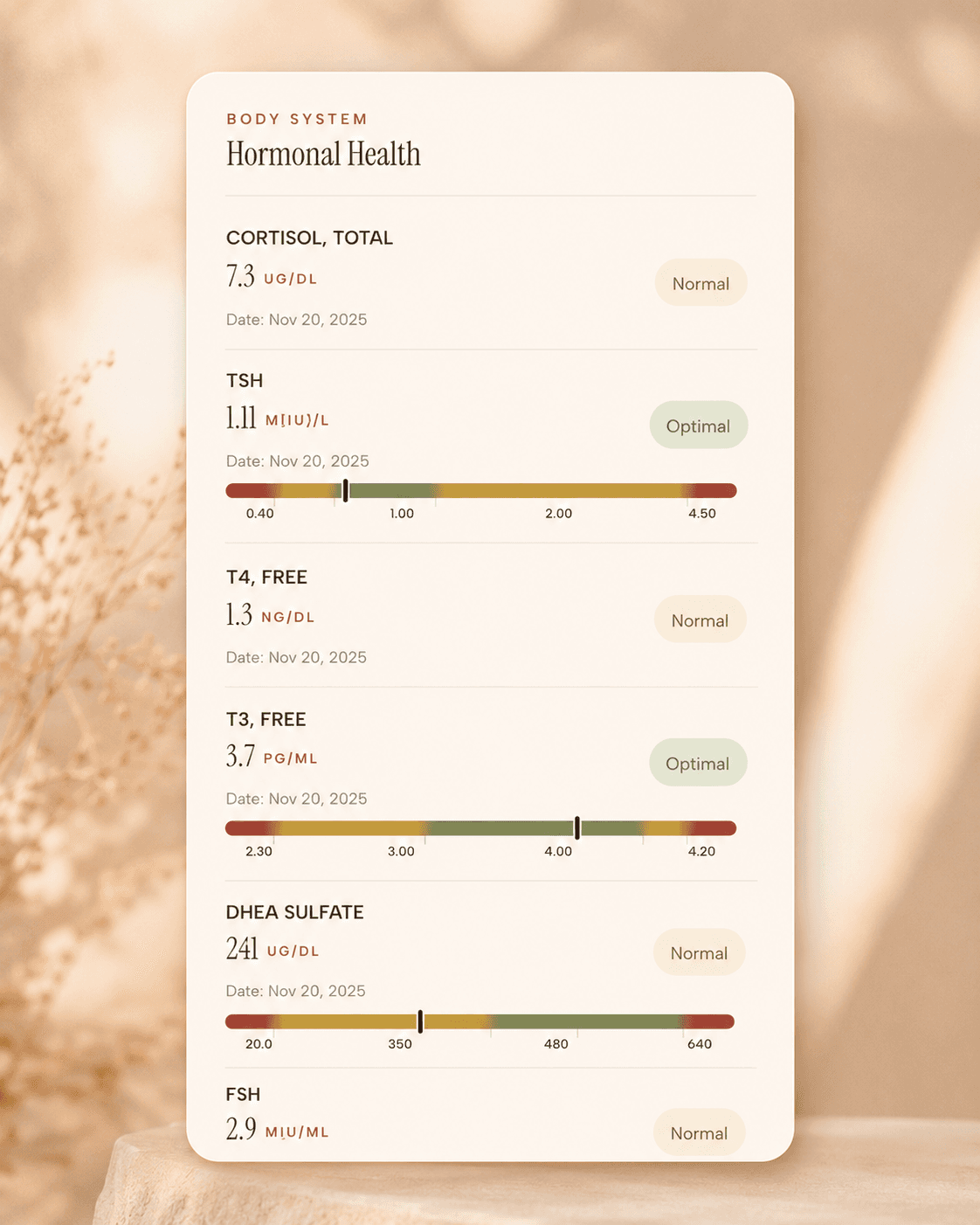
TSH is the master regulator of thyroid function, controlling the production of thyroid hormones T4 and T3. In functional medicine, we use narrower TSH ranges than conventional medicine to identify subclinical thyroid dysfunction early. Even mildly elevated TSH can indicate thyroid insufficiency, leading to fatigue, weight gain, depression, and metabolic dysfunction. TSH levels are influenced by stress, nutrient deficiencies, autoimmune conditions, and environmental toxins. Optimal TSH supports energy, metabolism…
Learn moreInsulin
Insulin is a master metabolic hormone that regulates glucose uptake, fat storage, and numerous cellular processes. In functional medicine, fasting insulin levels are one of the earliest and most sensitive markers of metabolic dysfunction. Elevated insulin (hyperinsulinemia) often precedes diabetes by years or decades and is central to metabolic syndrome. High insulin levels promote fat storage, inflammation, and contribute to numerous chronic diseases including cardiovascular disease, PCOS, and certain cancers.…
Learn moreHOMA2-IR
HOMA2-IR is widely used to assess insulin resistance in research and clinical practice. Values above 1.0-1.7 suggest insulin resistance. It helps identify pre-diabetes risk, guide metabolic interventions, and monitor treatment response. It's more accurate than the original HOMA-IR calculation. HOMA2-IR (Homeostatic Model Assessment 2 - Insulin Resistance) is an updated computer model estimating insulin resistance from fasting glucose and insulin levels.
Learn moreLab testing
Check TSH, free T4, fasting insulin, and hs-CRP at Quest
starting from $99 panel with 100+ tests, one visit
No referral needed
About 1 week
Schedule online — results typically within a week
Clear next steps
Guidance included, with follow-up care available
HSA / FSA
Eligible for pre-tax health spending accounts
Pro Tips
Run a 10-day experiment where you add 25–50 grams of carbs after workouts (like rice, potatoes, oats, or fruit) and watch your next-day energy, sleep, and cravings. If those improve, your “slow metabolism” may have been under-fueling more than anything else.
Take your morning resting heart rate for a week and compare it to your usual baseline. If it is consistently higher by 5–10 beats per minute along with worse sleep and flat performance, treat that as a recovery red flag and back off intensity for a week.
If you train fasted and feel cold or foggy afterward, try flipping just one variable: have 15–25 grams of protein before training and a full breakfast after. You are not “ruining fat loss” by doing this, and many people feel dramatically better within days.
Use waist measurement and how your rings fit as a stress-water check. When training stress is high, the scale can jump 2–5 pounds from fluid even if fat is not increasing, so you need a second metric to stay sane.
If you suspect thyroid issues, write down three non-exercise clues (like constipation, dry skin, hair shedding, or heavy periods) before you get labs. It helps you and your clinician interpret borderline results in the context of your actual body.
Frequently Asked Questions
Can exercise slow your metabolism?
Exercise itself usually raises calorie burn, but if you combine hard training with too little food or too little sleep, your body can downshift your resting burn to conserve energy. That can feel like stubborn weight, low warmth, and fatigue even though you are working out more. If this has been going on for more than 6–8 weeks, consider checking TSH and free T4 and adjusting recovery before you add more training.
Why am I gaining weight even though I’m exercising?
A quick gain after starting or increasing workouts is often water, not fat, because muscles store glycogen and water during recovery. Longer-term gain can happen if hunger rises more than you realize, or if stress and sleep disruption push you toward higher-calorie choices. Track waist size and take weekly averages, and if the trend persists for a month, look at fasting insulin and your recovery routine.
How do I know if it’s my thyroid or just overtraining?
Overtraining tends to come with performance dropping, higher resting heart rate, and sleep that feels unrefreshing, while thyroid issues often add cold intolerance, constipation, dry skin, and hair changes. Labs make this much clearer: start with TSH and free T4, and interpret them alongside your symptoms. If TSH is elevated or free T4 is low-normal and you feel awful, bring that pattern to a clinician rather than trying to “push through.”
What labs should I get for a slow metabolism feeling?
For this specific symptom, TSH and free T4 help screen for low thyroid function, and fasting insulin helps identify insulin resistance that can blunt fat loss and energy. If you also feel inflamed or sore for days, hs-CRP can add context, but it should be interpreted with your training load and any infections. Get the labs on a typical week, not right after an extreme event like a marathon.
How long does metabolic adaptation last?
Metabolic adaptation can show up within weeks of aggressive dieting and can persist for months, especially if you keep calories very low while training hard. The good news is that it often improves when you raise intake strategically, reduce stress, and rebuild muscle with strength training. If you have been stuck for 8–12 weeks, a planned deload plus a modest calorie increase is a practical first step to test.
What research says about metabolic slowdown
Metabolic adaptation can persist after weight loss, lowering energy expenditure beyond what body size predicts
Sleep restriction alters appetite regulation and can worsen insulin sensitivity, which affects weight and recovery
Exercise training improves insulin sensitivity, but the response depends on recovery, intensity, and baseline metabolic health