Slow Metabolism During Fasting: Causes, Fixes, and Lab Tests
Slow metabolism during fasting often comes from thyroid slowdown, under-eating stress hormones, or poor sleep. Targeted labs—no referral needed.





Slow metabolism during fasting usually means your body is conserving energy because your thyroid signaling is low, your overall calories have been too low for too long, or your sleep and stress hormones are pushing your appetite and energy down. That can feel like stubborn weight loss, cold hands and feet, and a “flat” tiredness that makes workouts harder. A few targeted labs can help you figure out which of those is driving your plateau. Fasting can be a useful tool, but it is not a magic override switch for biology. If your fasting window keeps getting longer while your energy keeps getting worse, your body often responds by moving less, burning fewer calories at rest, and making you hungrier later. This page walks you through the most common reasons this happens, what tends to help in real life, and which blood tests are most informative. If you want help matching your specific pattern to a likely cause, PocketMD can talk it through with you, and Vitals Vault labs can help confirm what your body is doing.
Why your metabolism feels slow while fasting
You are under-eating overall
Intermittent fasting can quietly turn into chronic low calories, especially if you skip breakfast and then still eat “light” later. When your body senses a prolonged energy gap, it trims energy use by lowering spontaneous movement and making you feel more tired, which can look like a “slow metabolism.” A useful check is to compare your average weekly intake (not your best day) to your body size and activity, because the weekly average is what your physiology responds to.
Thyroid signaling is running low
Your thyroid is your body’s “idle speed,” and when it runs low you tend to feel cold, sluggish, and puffy, while weight loss becomes frustratingly slow even with effort. Fasting does not cause true hypothyroidism for most people, but if you already have borderline thyroid function, aggressive dieting can make symptoms more noticeable. If you have constipation, dry skin, hair thinning, or a strong family history, thyroid labs are worth prioritizing.
Sleep loss is blunting fat loss
When you sleep poorly, your hunger hormones shift and your brain gets louder about quick energy, which makes fasting feel harder and overeating more likely when the window opens. At the same time, you often move less without realizing it, and that drop in daily movement can erase the calorie deficit you thought you created. If your plateau started after a stressful period or a new schedule, fixing sleep can change the outcome faster than tightening your fasting window.
Insulin resistance is slowing progress
If your muscles are resistant to insulin, your body has a harder time switching between fuel sources, which can make fasting feel like you are running on fumes rather than smoothly tapping into stored energy. You might notice strong cravings, a “wired but tired” feeling, or that you gain weight easily around your waist. Fasting can help some people with insulin resistance, but it often works best when you pair it with strength training and enough protein so you do not lose muscle.
You lost muscle during past diets
Muscle is metabolically active tissue, so if you have done repeated crash diets, you may have less muscle than someone at the same scale weight. That means your resting burn can be lower, and fasting can feel like it “does nothing” because the deficit you create is smaller than you think. The takeaway is hopeful: rebuilding muscle through progressive strength training is one of the most reliable ways to raise your baseline energy use over time.
What actually helps during a fasting plateau
Shorten the fasting window for now
If you are dragging through the day, a 12–14 hour overnight fast often works better than pushing to 18–20 hours. You still get structure, but you reduce the chance that your body responds with low energy and a rebound appetite later. Try this for two weeks and watch your energy, sleep, and weekly weight trend rather than judging day-to-day fluctuations.
Anchor meals with enough protein
During fasting, the biggest metabolic “leak” is losing muscle, and protein is your best defense. Aim for roughly 25–40 grams of protein in your first meal and again in your last meal, because spreading it out helps muscle repair more than saving it all for one sitting. If you are not sure what that looks like, think of a palm-and-a-half of lean meat, a large Greek yogurt, or a protein-forward tofu/tempeh bowl.
Add strength training, not more cardio
When weight loss stalls, adding more cardio often just makes you hungrier and more tired, which can backfire. Strength training tells your body that muscle is needed, so it is more willing to burn fat while keeping your “engine” intact. Two to four sessions per week with progressive overload is enough to move the needle, even if your steps stay the same.
Use a planned diet break
If you have been dieting hard for months, a 7–14 day period at maintenance calories can improve training performance, sleep, and adherence, which makes the next fat-loss phase more effective. This is not a “cheat week,” because the goal is steady, adequate food with the same protein target and mostly similar food choices. Many people find their scale trend improves after the break because stress eating and water retention calm down.
Treat the thyroid issue if present
If labs show hypothyroidism, the fix is not a more aggressive fasting schedule, because your body is already running in low gear. The right next step is to review results and symptoms with a clinician and treat the underlying thyroid problem, which can improve energy, temperature tolerance, and weight trajectory. If you are already on thyroid medication, it is also worth checking whether your dose and timing still match your current weight and routine.
Useful biomarkers to discuss with your clinician
TSH
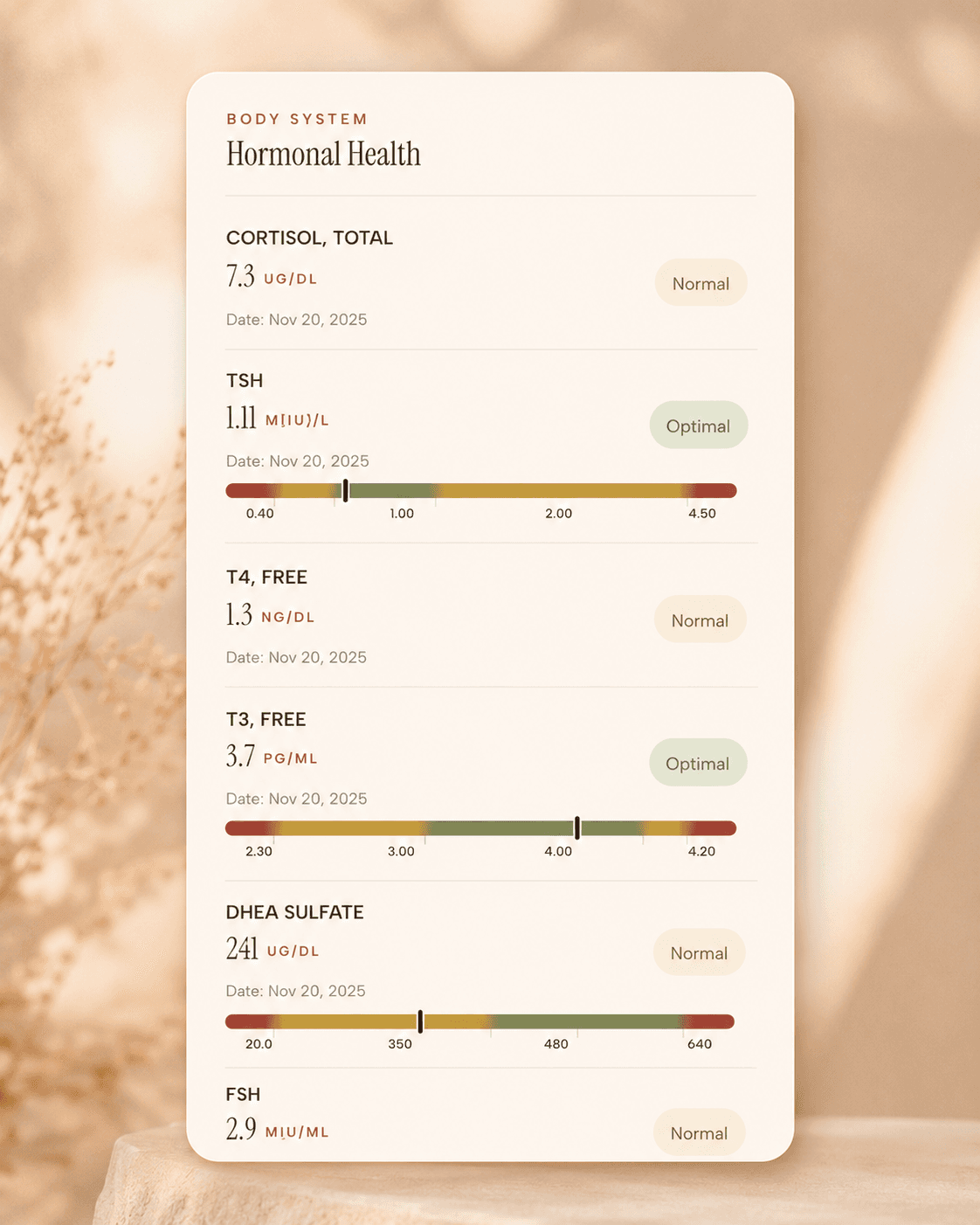
TSH is the master regulator of thyroid function, controlling the production of thyroid hormones T4 and T3. In functional medicine, we use narrower TSH ranges than conventional medicine to identify subclinical thyroid dysfunction early. Even mildly elevated TSH can indicate thyroid insufficiency, leading to fatigue, weight gain, depression, and metabolic dysfunction. TSH levels are influenced by stress, nutrient deficiencies, autoimmune conditions, and environmental toxins. Optimal TSH supports energy, metabolism…
Learn moreInsulin
Insulin is a master metabolic hormone that regulates glucose uptake, fat storage, and numerous cellular processes. In functional medicine, fasting insulin levels are one of the earliest and most sensitive markers of metabolic dysfunction. Elevated insulin (hyperinsulinemia) often precedes diabetes by years or decades and is central to metabolic syndrome. High insulin levels promote fat storage, inflammation, and contribute to numerous chronic diseases including cardiovascular disease, PCOS, and certain cancers.…
Learn moreHOMA2-IR
HOMA2-IR is widely used to assess insulin resistance in research and clinical practice. Values above 1.0-1.7 suggest insulin resistance. It helps identify pre-diabetes risk, guide metabolic interventions, and monitor treatment response. It's more accurate than the original HOMA-IR calculation. HOMA2-IR (Homeostatic Model Assessment 2 - Insulin Resistance) is an updated computer model estimating insulin resistance from fasting glucose and insulin levels.
Learn moreLab testing
Get TSH, free T4, and fasting insulin checked at Quest
starting from $99 panel with 100+ tests, one visit
No referral needed
About 1 week
Schedule online — results typically within a week
Clear next steps
Guidance included, with follow-up care available
HSA / FSA
Eligible for pre-tax health spending accounts
Pro Tips
Run a two-week “plateau audit” where you keep your fasting window the same, but you track steps and protein daily, because most plateaus are really a drop in movement or protein that happened quietly.
If you get cold and foggy late in a fast, try moving your last meal 1–2 hours later and making it protein-forward, because going to bed under-fueled often worsens sleep and makes the next day’s fast feel brutal.
Use the scale like a trend tool, not a verdict: weigh 3–4 mornings per week and look at the weekly average, because fasting can swing water weight enough to hide fat loss for 10–14 days.
If you are doing long fasts, schedule your hardest strength sessions within 3–6 hours after your first meal, because performance is usually better and you get a stronger muscle-preserving signal.
If you suspect thyroid issues, write down your top three symptoms (for example: cold intolerance, constipation, hair shedding) before you test, because it helps you and your clinician interpret borderline results in context.
Frequently Asked Questions
Does fasting slow your metabolism?
Short-term fasting usually does not “damage” your metabolism, but prolonged calorie restriction can make your body conserve energy by lowering spontaneous movement and making you feel tired. That can look like a slower metabolism even if your resting metabolic rate has not dramatically changed. If your energy and training performance are dropping, shorten the fasting window and make sure your weekly calories are not too low.
Why am I not losing weight on intermittent fasting?
The most common reason is that your weekly calorie deficit is smaller than you think, either because portions creep up in the eating window or because you move less when you are tired. Thyroid under-function and insulin resistance can also make progress slower and make fasting feel harder. If you are stuck for 3–4 weeks, check your average weekly intake, add strength training, and consider labs like TSH, free T4, and fasting insulin.
How do I know if it’s my thyroid or just a fasting plateau?
Thyroid-related slowdown usually comes with a cluster of symptoms such as feeling unusually cold, constipation, dry skin, hair thinning, and low mood, not just a stubborn scale. Blood tests help: a higher TSH with a low or low-normal free T4 points toward hypothyroidism. If you have those symptoms, get tested rather than pushing longer fasts.
What fasting insulin level suggests insulin resistance?
There is no single cutoff, but fasting insulin that stays in the double digits (often above about 10–12 µIU/mL) can suggest insulin resistance, especially if fasting glucose is also high-normal. Many metabolically healthy adults are under about 5–8 µIU/mL, although ranges vary by lab and context. If yours is elevated, pairing time-restricted eating with strength training and adequate protein is often more effective than simply extending the fast.
What is the best fasting schedule if you feel cold and tired?
A 12–14 hour overnight fast is often the sweet spot when you feel cold and low-energy, because it gives structure without pushing your body into a constant conservation mode. Make your first meal protein-forward and avoid stacking hard workouts deep into a fast until your energy is stable. If symptoms persist despite a gentler schedule, check thyroid labs like TSH and free T4.
What research says about fasting and metabolism
Time-restricted eating can reduce weight and improve metabolic markers in adults with obesity (systematic review and meta-analysis)
Alternate-day fasting vs daily calorie restriction shows similar weight loss and cardiometabolic outcomes in adults with obesity (randomized clinical trial)
AACE/ACE obesity clinical practice guidelines discuss metabolic adaptation and the role of resistance training during weight loss