Why Do You Feel Like Your Metabolism Slows Down After Eating?
Slow metabolism after eating is often from insulin spikes, low thyroid output, or under-eating stress. Targeted labs are available—no referral needed.





Slow metabolism after eating usually isn’t your body “shutting down” so much as your fuel-handling shifting in a way that feels heavy and sluggish. The most common drivers are big blood-sugar and insulin swings, low thyroid signal, or a stress/under-fueled state that makes your body conserve energy. A few targeted labs can help you figure out which one fits your pattern. It’s also a confusing symptom because you can be doing “everything right” and still feel like meals knock you out, your hands stay cold, and weight loss feels impossible. Sometimes the issue is what’s in the meal, sometimes it’s your hormones, and sometimes it’s the way your body adapted after dieting, aging, or a long stretch of poor sleep. Below, you’ll see the most likely causes, what tends to help in real life, and which tests are actually useful. If you want help connecting your specific symptoms to a plan, PocketMD can talk it through with you, and VitalsVault labs can help you confirm what’s happening rather than guessing.
Why Do You Feel Like Your Metabolism Slows After Eating?
Big blood sugar and insulin swings
If a meal spikes your blood sugar quickly, your body answers with a bigger insulin surge to push sugar into cells. For some people, that overshoots, and you end up with a “crash” that feels like sleepiness, brain fog, and a heavy body that does not want to move. A simple takeaway is to test the pattern by eating the same calories but changing the mix: add protein and fiber first, and see if the slump improves within a week.
Insulin resistance building over time
When your muscles and liver stop responding to insulin as well, your body has to make more insulin after meals to get the same job done. That higher insulin environment can make you feel puffy, hungry again too soon, and stuck with weight that will not budge even with effort. If you notice waist gain, cravings after carb-heavy meals, or sleepiness that hits 60–120 minutes after eating, it is worth checking fasting insulin and A1c rather than assuming it is “just aging.”
Low thyroid signal (hypothyroidism)
Your thyroid hormones act like a volume knob for how fast your cells use energy, so when the signal is low, everything feels slower. After meals, that can show up as pronounced fatigue, constipation, feeling cold, and weight gain that seems out of proportion to what you eat. The practical move is to look beyond a single TSH result if you have symptoms, because a “normal” number can still miss early or undertreated thyroid issues.
Dieting adaptation and low energy availability
If you have been yo-yo dieting or consistently under-eating, your body can respond by conserving energy, which is sometimes called adaptive thermogenesis. You might notice that you feel colder, your workouts feel harder than they should, and meals make you sleepy instead of energized because your system is trying to prioritize storage and recovery. A useful experiment is a two-week “maintenance” phase with consistent calories and protein, because many people see appetite and energy stabilize when the stop-start restriction ends.
Sleep debt and high stress hormones
Poor sleep and chronic stress raise your stress signal (cortisol), which makes your body less insulin-sensitive and more likely to store energy. That can make a normal meal feel like it hits you like a truck, especially in the afternoon or evening when you are already running on fumes. If your after-meal sluggishness tracks with late nights, shift work, or waking at 3 a.m., fixing sleep timing often improves the “slow metabolism” feeling faster than changing macros.
What Actually Helps You Feel “Metabolic” Again
Build meals to prevent the crash
Start with a protein anchor at each meal, and then add fiber-rich carbs and fats around it, because that slows glucose entry and smooths the insulin response. If breakfast is where you crash hardest, try a higher-protein option for seven days and keep everything else the same so you can actually see cause and effect. You are looking for fewer cravings at 2–3 hours and less post-meal sleepiness.
Take a 10–15 minute walk after meals
A short, easy walk after eating helps your muscles soak up glucose without needing as much insulin. It is one of the most reliable ways to reduce the “I need to lie down” feeling, even if you do not change the meal itself. Keep it gentle enough that you could hold a conversation, because the goal is blood-sugar control, not punishment.
Strength train to raise insulin sensitivity
More muscle gives your body a bigger place to store and use glucose, which means meals are less likely to trigger big insulin spikes. You do not need a complicated program to start; two or three full-body sessions per week with progressive resistance is enough to change how you handle carbs over time. If you are already exercising but still stuck, shifting some cardio time toward strength work often helps more than doing “extra” workouts.
Treat thyroid issues instead of guessing
If your labs and symptoms point toward low thyroid output, the solution is not a supplement stack or cutting more calories. It is getting the diagnosis right, checking for autoimmune thyroid disease, and then working with a clinician to adjust treatment until both your numbers and your day-to-day energy make sense. The win you are aiming for is steadier warmth, better bowel regularity, and less fatigue after meals over several weeks.
Stop the restrict-binge cycle on purpose
If your week alternates between strict dieting and “making up for it,” your body never gets a stable signal, and that instability can feel like a slow metabolism. Pick a realistic calorie target you can repeat daily, and keep protein consistent, because consistency is what lets your hunger hormones calm down. If you are afraid of weight gain, track waist and energy for two weeks rather than judging the plan after two days.
Useful biomarkers to discuss with your clinician
Insulin
Insulin is a master metabolic hormone that regulates glucose uptake, fat storage, and numerous cellular processes. In functional medicine, fasting insulin levels are one of the earliest and most sensitive markers of metabolic dysfunction. Elevated insulin (hyperinsulinemia) often precedes diabetes by years or decades and is central to metabolic syndrome. High insulin levels promote fat storage, inflammation, and contribute to numerous chronic diseases including cardiovascular disease, PCOS, and certain cancers.…
Learn moreGlucose
Fasting glucose is a fundamental marker of glucose metabolism and insulin function. In functional medicine, we recognize that even 'normal' glucose levels in the upper range may indicate early insulin resistance. Optimal fasting glucose reflects efficient glucose regulation and insulin sensitivity. Elevated fasting glucose suggests the body's inability to maintain normal glucose levels overnight, indicating hepatic insulin resistance or insufficient insulin production. This marker is essential for early detectio…
Learn moreTSH
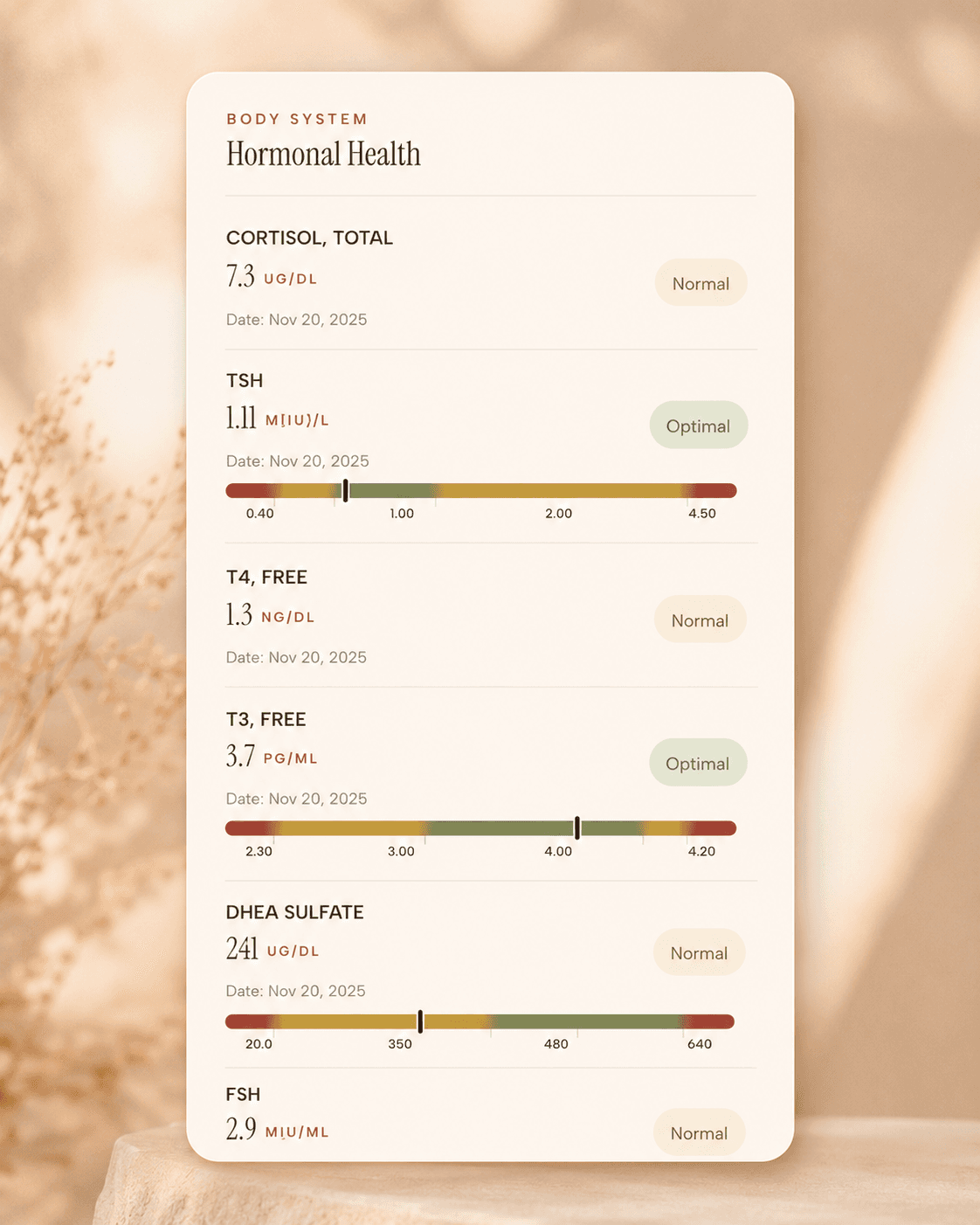
TSH is the master regulator of thyroid function, controlling the production of thyroid hormones T4 and T3. In functional medicine, we use narrower TSH ranges than conventional medicine to identify subclinical thyroid dysfunction early. Even mildly elevated TSH can indicate thyroid insufficiency, leading to fatigue, weight gain, depression, and metabolic dysfunction. TSH levels are influenced by stress, nutrient deficiencies, autoimmune conditions, and environmental toxins. Optimal TSH supports energy, metabolism…
Learn moreLab testing
Check thyroid and insulin patterns with targeted labs at Quest
starting from $99 panel with 100+ tests, one visit
No referral needed
About 1 week
Schedule online — results typically within a week
Clear next steps
Guidance included, with follow-up care available
HSA / FSA
Eligible for pre-tax health spending accounts
Pro Tips
Run a 7-day “same calories, different order” experiment: eat protein and vegetables first, then starch last, and notice whether your after-meal sleepiness drops within a few days.
If lunch is your worst meal, set a timer for 60–90 minutes after eating and rate your energy 1–10; that timing often separates a true glucose crash from simple overeating.
Try a “carb curfew” for just one meal: keep dinner lower in starch and higher in protein and non-starchy plants, because many people sleep better and wake up less hungry when nighttime glucose swings are smaller.
If you suspect thyroid issues, take your temperature and resting heart rate on waking for a week; consistently low-normal temps with a slow pulse can support the story you are feeling in your body and help a clinician take you seriously.
If you are coming off aggressive dieting, commit to two weeks of consistent intake and consistent training before you change anything again; your appetite and energy signals need stability to become readable.
Frequently Asked Questions
Is it normal to feel like your metabolism slows after eating?
It is common to feel a little relaxed after a meal, but feeling noticeably sluggish, cold, or “shut down” after most meals often points to blood-sugar swings, insulin resistance, or low thyroid signal. The pattern matters: a crash 60–120 minutes after a carb-heavy meal is a classic clue. If it is frequent, checking fasting insulin, HbA1c, and TSH with free T4 gives you a clearer answer than guessing.
Why do I get sleepy after eating carbs?
Carbs that digest quickly can raise blood sugar fast, and then insulin can drive it down quickly, which feels like sleepiness and brain fog. Some people also get a stronger “rest and digest” response when the meal is large or low in protein. Try pairing carbs with protein and fiber for a week, and take a 10–15 minute walk after the meal to see if the crash improves.
Can hypothyroidism make you gain weight even if you eat less?
Yes, low thyroid output can reduce daily energy use and also cause fluid retention, which can make the scale climb even when you are restricting. You usually see other clues too, like constipation, dry skin, hair shedding, and feeling cold. Ask for TSH with free T4, and if symptoms are strong, discuss whether thyroid antibodies are appropriate to check as well.
What labs should I get for “slow metabolism” and weight loss resistance?
The most useful starting trio is TSH with free T4 for thyroid signal, fasting insulin for how hard your pancreas is working, and HbA1c for your three-month glucose average. Those three tests map well to the most common reasons meals leave you sluggish and weight loss feels stuck. If one is abnormal, it guides what to do next instead of trying random diets.
When should I worry about fatigue after eating?
Get checked sooner if fatigue after eating comes with fainting, chest pain, shortness of breath, black or bloody stools, or unintentional weight loss, because those are not “metabolism” problems. Also take it seriously if you have intense thirst, frequent urination, or blurry vision, since those can be signs of high blood sugar. If the main issue is a predictable post-meal crash, start by tracking timing and meal composition for a week and consider fasting insulin and HbA1c.
What Research Says About Metabolism
ADA Standards of Care: how A1c and glucose are used to diagnose and monitor diabetes and prediabetes
Adaptive thermogenesis after weight loss: energy expenditure can stay suppressed beyond what body size predicts
Insulin resistance and cardiometabolic risk: consensus statement on assessment and clinical implications