Why You Feel Like Your Metabolism Is Slow Before Eating
Slow metabolism before eating is often from low thyroid output, insulin resistance, or under-fueling stress hormones. Targeted labs at Quest—no referral needed.





Slow metabolism before eating usually comes from one of three things: your thyroid isn’t signaling enough “energy burn,” your body is resisting insulin so you run low on usable fuel, or you have metabolic adaptation from dieting and stress hormones that keep you tired and cold. The good news is that a few targeted blood tests can often show which bucket you’re in. This symptom is frustrating because it’s partly a feeling (sluggish, cold, foggy, “my body won’t budge”) and partly biology that changes with sleep, age, muscle mass, and how aggressively you’ve been restricting food. If you’ve been stuck in a loop of fasting harder, cutting more calories, and still not losing weight, you’re not alone—and pushing harder can backfire. In this guide, you’ll learn the most common reasons you feel “slow” before meals, what actually helps, and which labs can clarify the picture. If you want help connecting your symptoms to your history and results, PocketMD can talk it through, and Vitals Vault labs can help you test the most relevant markers without a referral.
Why you feel like your metabolism is slow before eating
Low thyroid signal to your cells
If your thyroid is underactive, your cells get a weaker “turn up the burn” message, so you can feel cold, puffy, constipated, and mentally slow—especially in the morning or when you haven’t eaten yet. This can look like weight that won’t move even when you’re trying hard, because your baseline energy use is lower. A practical takeaway is to stop guessing and check thyroid labs, because symptoms alone can’t tell you whether thyroid is the driver.
Insulin resistance on an empty stomach
With insulin resistance, your body has trouble moving glucose into muscle, so you can feel low-energy and foggy even if you have plenty of stored fuel. Before eating, that can show up as a “flat” feeling rather than true hunger, and you might crave quick carbs because your brain wants easy energy. If this sounds like you, paying attention to waist changes, post-meal sleepiness, and fasting labs can be more informative than cutting calories again.
Metabolic adaptation from dieting
If you’ve been dieting hard, your body often responds by quietly spending less energy and increasing hunger signals, which is a survival feature—not a character flaw. You may notice you feel especially sluggish before meals, your workouts feel harder than they used to, and your weight loss stalls even with strict tracking. The key takeaway is that “eat even less” is rarely the fix; a structured diet break or a slower deficit can restore energy and make progress possible again.
Not enough muscle for your needs
Muscle is a major place your body burns fuel, and when you lose muscle from aging, inactivity, or repeated weight cycling, your resting energy use drops. That can make the pre-meal window feel like you’re running on low power, because you have less metabolic “engine” to draw on. The actionable piece here is that strength training and adequate protein can change the trajectory, even if the scale has been stubborn.
Poor sleep raises appetite hormones
When sleep is short or fragmented, your body shifts hormones that regulate hunger and stress, and you can wake up feeling drained rather than refreshed. That drained feeling before eating is easy to misread as “my metabolism is broken,” but it’s often your nervous system asking for recovery. If you’re also snoring, waking with headaches, or needing caffeine just to function, sleep apnea is worth considering because treating it can improve energy and insulin sensitivity.
What actually helps you feel “revved up” again
Build a steady breakfast experiment
For two weeks, try a consistent breakfast within 60–90 minutes of waking that includes 25–35 grams of protein and some fiber, because that combination tends to stabilize energy better than a carb-only start. This is not about “eating early to boost metabolism” as a myth—it’s about seeing whether your empty-stomach slump is really unstable blood sugar or stress hormones. If you feel noticeably warmer, clearer, and less snacky by late morning, you’ve learned something useful about your physiology.
Stop the aggressive calorie squeeze
If you’ve been in a steep deficit for months, consider a planned maintenance phase for 2–4 weeks where you keep protein high and bring calories up gradually. Many people notice their pre-meal fatigue eases when their body stops acting like it’s in a famine, and workouts feel less punishing. You can still aim for fat loss afterward, but you’ll often do better with a smaller deficit and a longer timeline.
Lift weights like it matters
Strength training 2–4 days per week is one of the most reliable ways to raise your “metabolic capacity,” because it preserves or adds muscle that uses energy all day. You do not need marathon sessions; you need progression, like adding a little weight or a few reps over time. If you’re new, start with full-body sessions and focus on big movements, because that’s the fastest way to feel stronger and less “slowed down” between meals.
Match carbs to activity, not cravings
If insulin resistance is part of your story, you’ll often feel better when most of your starchier carbs show up around the time you’re active, because your muscles can use them more efficiently then. That might mean a higher-protein, higher-fiber meal earlier, and saving rice, potatoes, or pasta for after a walk or workout. The point is not to fear carbs; it’s to place them where your body handles them best.
Treat the root cause you can measure
If your thyroid labs show true hypothyroidism, treatment can meaningfully improve cold intolerance, constipation, and that “everything is slow” sensation, but dosing should be guided by symptoms plus repeat labs. If your fasting insulin and A1c suggest insulin resistance, the most effective plan usually combines strength training, sleep repair, and nutrition changes you can sustain. Either way, your next step is clearer when you can point to numbers instead of guessing.
Useful biomarkers to discuss with your clinician
TSH
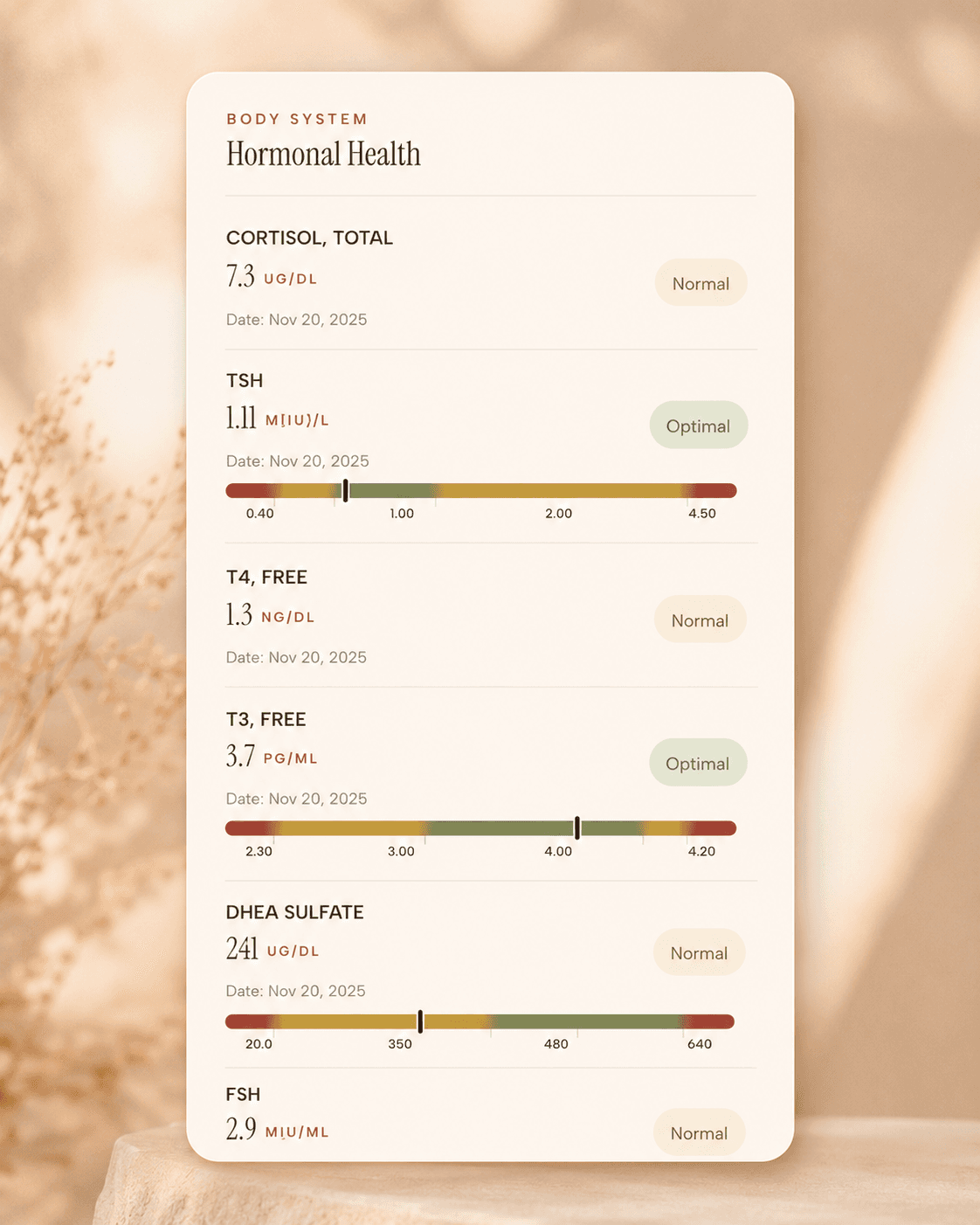
TSH is the master regulator of thyroid function, controlling the production of thyroid hormones T4 and T3. In functional medicine, we use narrower TSH ranges than conventional medicine to identify subclinical thyroid dysfunction early. Even mildly elevated TSH can indicate thyroid insufficiency, leading to fatigue, weight gain, depression, and metabolic dysfunction. TSH levels are influenced by stress, nutrient deficiencies, autoimmune conditions, and environmental toxins. Optimal TSH supports energy, metabolism…
Learn moreInsulin
Insulin is a master metabolic hormone that regulates glucose uptake, fat storage, and numerous cellular processes. In functional medicine, fasting insulin levels are one of the earliest and most sensitive markers of metabolic dysfunction. Elevated insulin (hyperinsulinemia) often precedes diabetes by years or decades and is central to metabolic syndrome. High insulin levels promote fat storage, inflammation, and contribute to numerous chronic diseases including cardiovascular disease, PCOS, and certain cancers.…
Learn moreGlucose
Fasting glucose is a fundamental marker of glucose metabolism and insulin function. In functional medicine, we recognize that even 'normal' glucose levels in the upper range may indicate early insulin resistance. Optimal fasting glucose reflects efficient glucose regulation and insulin sensitivity. Elevated fasting glucose suggests the body's inability to maintain normal glucose levels overnight, indicating hepatic insulin resistance or insufficient insulin production. This marker is essential for early detectio…
Learn moreLab testing
Check TSH, free T4, fasting insulin, and A1c at Quest
starting from $99 panel with 100+ tests, one visit
No referral needed
About 1 week
Schedule online — results typically within a week
Clear next steps
Guidance included, with follow-up care available
HSA / FSA
Eligible for pre-tax health spending accounts
Pro Tips
Run a 10-day “same breakfast” test and rate your late-morning energy from 1–10 each day. If your score improves when protein is consistent, your issue is often fuel stability rather than a mysterious broken metabolism.
If you’re always cold before meals, take your waking temperature for a week before getting out of bed. A consistently low reading does not diagnose thyroid disease, but it is a useful clue to bring to your lab review.
Try a 10–15 minute brisk walk after your largest carb meal for one week. If your pre-meal sluggishness improves the next day, that’s a strong sign your muscles respond well to activity-driven glucose uptake.
If you’ve been yo-yo dieting, track your weekly average weight and your waist measurement, not just daily scale changes. Metabolic adaptation often shows up as stable weight with shrinking strength and rising hunger, which you can catch early with better tracking.
When you order labs, do them after a normal week of eating and sleeping as best you can. Testing right after a crash diet, an all-nighter, or a marathon training week can make your results look worse than your baseline.
Frequently Asked Questions
Can your metabolism actually be slow before you eat?
Yes, your resting energy use can be lower from hypothyroidism, loss of muscle, or metabolic adaptation after prolonged dieting. You also might feel “slow” because insulin resistance makes fuel delivery to your brain and muscles less efficient. If this keeps happening, checking TSH, free T4, and fasting insulin can help you separate feelings from physiology.
Why do I feel cold and sluggish on an empty stomach?
Feeling cold and sluggish before eating often points to low thyroid signaling, under-fueling, or poor sleep that keeps stress hormones high. It can also happen when you have low iron, but thyroid and insulin issues are common starting points for this specific pattern. If you also have constipation, dry skin, or hair thinning, ask for TSH and free T4 and review the results with a clinician.
Does fasting slow your metabolism?
Short fasts do not usually “damage” metabolism, but repeated aggressive restriction can lead to metabolic adaptation where your body spends less energy and you feel more tired. If fasting makes you feel worse and your weight loss has stalled, you may do better with a smaller deficit and consistent protein. A practical next step is a 2–4 week maintenance phase and then reassess energy and hunger.
What fasting insulin number suggests insulin resistance?
There is no single cutoff, but fasting insulin that is persistently above about 8–10 µIU/mL often suggests insulin resistance, especially if your waist is increasing or your triglycerides are high. Many metabolically healthy people land closer to 2–6 µIU/mL. Pair fasting insulin with A1c and your symptoms to decide what to do next.
What should I test if I can’t lose weight no matter what?
If you feel “slow” before meals and weight loss is resistant, start with TSH and free T4 to screen for hypothyroidism and fasting insulin to assess insulin resistance. Those three tests cover two of the most common biological roadblocks that make dieting feel impossible. Once you have results, you can choose a plan that matches the cause instead of escalating restriction.