Why Your Metabolism Feels Slower After Menopause
Slow metabolism after menopause often comes from muscle loss, lower estrogen, and insulin resistance. Targeted blood tests available—no referral needed.





Slow metabolism after menopause is usually not one single “broken metabolism.” It is most often a mix of losing muscle (which quietly lowers your daily calorie burn), hormone shifts after estrogen drops, and a gradual rise in insulin resistance that makes your body store energy more easily. Basic labs can help you figure out whether thyroid function, blood sugar control, or inflammation is the main driver for you. If you feel like you are doing “all the right things” and the scale will not budge, you are not imagining it. After menopause, your body tends to defend its weight more aggressively, and dieting can backfire by lowering your resting burn even further. The good news is that the levers that work now are different, not nonexistent. This guide walks you through the most common causes, what actually helps, and which targeted tests can clarify your next step; if you want help connecting your symptoms to a plan, PocketMD and Vitals Vault labs can be practical tools.
Why your metabolism feels slower after menopause
You lose muscle more easily
After menopause, you tend to lose lean muscle faster unless you actively train to keep it. Muscle is metabolically “expensive,” which means less muscle often translates to fewer calories burned at rest, even if your habits feel unchanged. The takeaway is simple but powerful: if your plan is mostly cardio and calorie cutting, you may be shrinking the very tissue that keeps your metabolism higher.
Estrogen drop changes fat storage
When estrogen falls, your body becomes more likely to store fat around your abdomen, and it can also become less flexible at switching between burning carbs and burning fat. That can feel like you gain weight “in the middle” and feel puffy or heavier even with the same food. A useful context point is that this shift is partly hormonal, so you often need a strategy that targets strength, protein, and blood sugar stability rather than just eating less.
Insulin resistance creeps up
Insulin is the hormone that helps move sugar from your blood into your cells, but over time your cells can stop responding as well, which is called insulin resistance. When that happens, your body tends to run higher insulin levels, and high insulin makes fat storage easier and fat loss harder. If you notice more cravings, sleepiness after carbs, or belly weight gain, it is worth checking fasting insulin and HbA1c so you are not guessing.
Thyroid slowdown or undertreatment
A true thyroid problem can mimic “slow metabolism,” because low thyroid hormone makes your body run in a lower gear. You might also feel colder than others, more constipated, or mentally foggy, and those clues matter because the fix is different than a diet tweak. If you already take thyroid medication and still feel stuck, it is common to need a dose review or a deeper look rather than assuming you are failing at willpower.
Dieting lowers your resting burn
When you cut calories hard or yo-yo diet, your body adapts by becoming more efficient, which means you burn fewer calories for the same activities. This is sometimes called metabolic adaptation, and it can feel like your body is “fighting” your weight loss efforts. The practical takeaway is that a slower, protein-forward approach with strength training often preserves your resting burn better than repeated aggressive cuts.
What actually helps your metabolism after menopause
Prioritize strength training first
If you can only do one thing, make it progressive strength training two to four days per week, because it directly targets the muscle loss that drives a lower resting burn. You do not need fancy equipment, but you do need progression, meaning the weight or difficulty increases over time. Track a few key lifts or movements so you can see that you are getting stronger, not just “staying active.”
Eat enough protein at meals
Protein helps you keep and rebuild muscle, and it also tends to reduce hunger compared with the same calories from carbs or fat. A practical target many postmenopausal women do well with is roughly 25–35 grams of protein per meal, adjusted for body size and kidney health. If breakfast is usually light, shifting protein earlier in the day is often the easiest change that improves cravings by afternoon.
Use carbs strategically, not constantly
You do not have to fear carbs, but spreading refined carbs across the day can keep insulin higher and make fat loss feel impossible. Many people do better when most carbs come from high-fiber sources and are paired with protein, and when the biggest carb portion is timed around activity. If you want a simple experiment, try a two-week “protein and fiber first” rule at meals and watch what happens to hunger and waist measurements.
Fix sleep because it drives appetite
Poor sleep pushes hunger hormones in the wrong direction and makes your brain more sensitive to high-calorie foods, which can look like a “slow metabolism” problem. After menopause, hot flashes, nighttime waking, and sleep apnea become more common, and they can quietly sabotage progress even with a great plan. If you snore, wake with headaches, or feel unrefreshed after seven to eight hours in bed, ask about sleep apnea testing because treating it can change everything.
Treat the medical driver you find
If labs show hypothyroidism, prediabetes, or diabetes, you deserve a targeted plan rather than generic advice. Thyroid treatment is about getting symptoms and labs aligned, while insulin resistance often responds to a combination of strength training, nutrition changes, and sometimes medication such as metformin or GLP-1 therapy when appropriate. Bring your results and your symptom timeline to a clinician so the plan fits your body, not a template.
Useful biomarkers to discuss with your clinician
Insulin
Insulin is a master metabolic hormone that regulates glucose uptake, fat storage, and numerous cellular processes. In functional medicine, fasting insulin levels are one of the earliest and most sensitive markers of metabolic dysfunction. Elevated insulin (hyperinsulinemia) often precedes diabetes by years or decades and is central to metabolic syndrome. High insulin levels promote fat storage, inflammation, and contribute to numerous chronic diseases including cardiovascular disease, PCOS, and certain cancers.…
Learn moreEstradiol
Estradiol in men is produced from testosterone via aromatase enzyme. In functional medicine, we recognize that men need optimal estradiol levels for bone health, cognitive function, and cardiovascular protection. However, excessive estradiol can suppress testosterone production and cause feminizing effects. The testosterone-to-estradiol ratio is crucial for male health, with optimal balance supporting vitality while preventing estrogen dominance. Balanced estradiol levels in men support bone health and cognitive…
Learn moreTSH
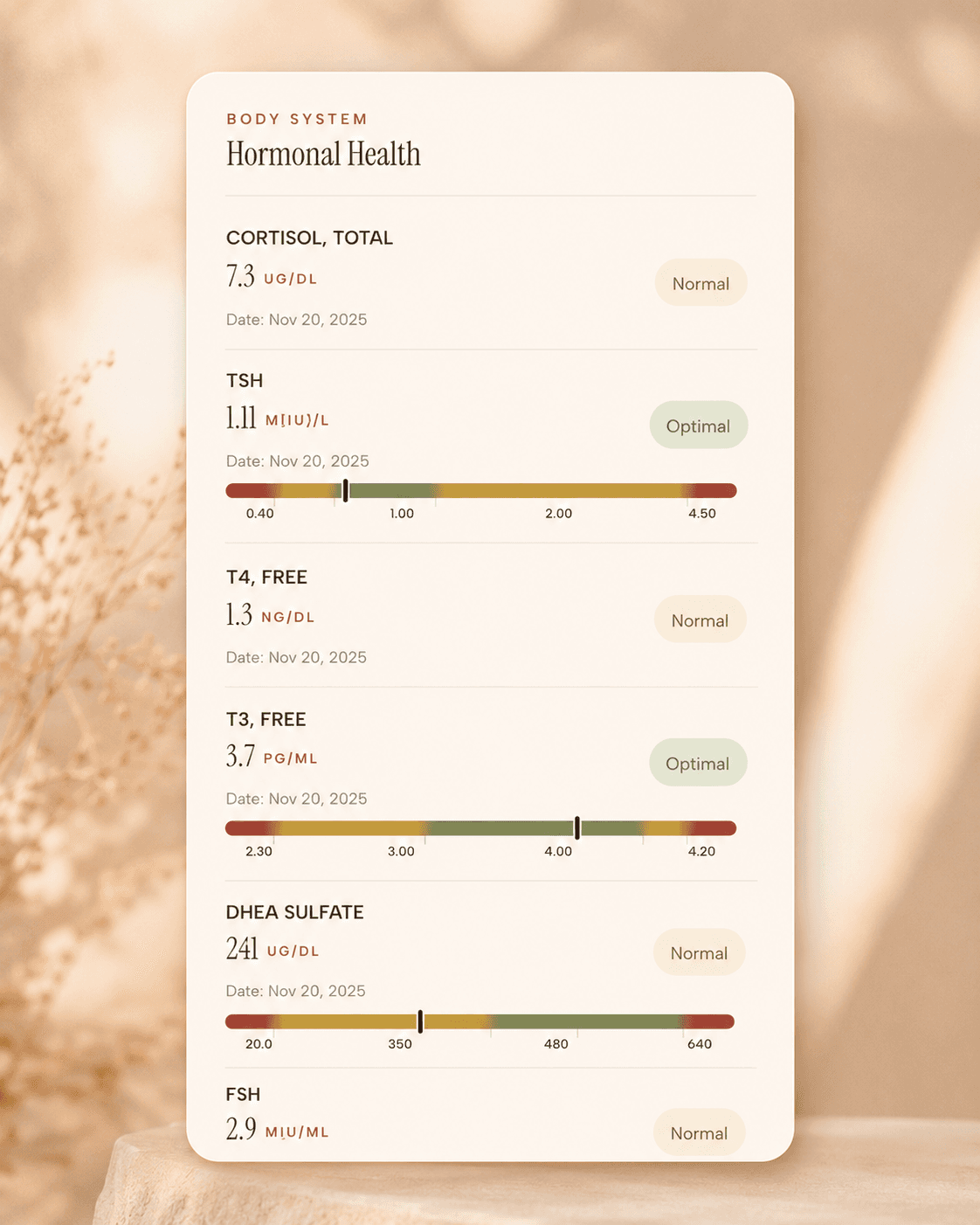
TSH is the master regulator of thyroid function, controlling the production of thyroid hormones T4 and T3. In functional medicine, we use narrower TSH ranges than conventional medicine to identify subclinical thyroid dysfunction early. Even mildly elevated TSH can indicate thyroid insufficiency, leading to fatigue, weight gain, depression, and metabolic dysfunction. TSH levels are influenced by stress, nutrient deficiencies, autoimmune conditions, and environmental toxins. Optimal TSH supports energy, metabolism…
Learn moreLab testing
Get TSH, fasting insulin, and HbA1c checked at Quest
starting from $99 panel with 100+ tests, one visit
No referral needed
About 1 week
Schedule online — results typically within a week
Clear next steps
Guidance included, with follow-up care available
HSA / FSA
Eligible for pre-tax health spending accounts
Pro Tips
Run a two-week “maintenance check” before you cut more calories: keep your weight steady, hit protein at each meal, and lift consistently. If your energy improves and cravings drop, your earlier deficit may have been too aggressive for your current physiology.
Measure your waist at the level of your belly button once per week, not daily. After menopause, waist size often tracks metabolic health and insulin resistance better than the scale does, especially if you are rebuilding muscle.
If you are lifting but not progressing, pick just two lower-body and two upper-body movements and add a tiny amount of weight or reps each week. Your metabolism responds to the signal of “we need this muscle,” not to random workouts.
Try a “carb quality swap” experiment for 14 days: keep total calories similar, but replace refined snacks with a high-fiber carb plus protein, such as Greek yogurt with berries or beans with a meal. This often reduces hunger without you feeling deprived.
If you suspect thyroid issues, bring a short symptom list to your appointment that includes cold intolerance, constipation, hair shedding, and voice changes. Those details help your clinician interpret TSH in context instead of treating the number alone.
Frequently Asked Questions
Is it normal for metabolism to slow down after menopause?
Yes, it is common, but it is usually driven by specific changes you can address. After menopause you tend to lose muscle more easily and store more fat centrally, and insulin resistance can rise with age and lower activity. The most helpful next step is to focus on strength training and consider checking fasting insulin, HbA1c, and TSH so you know what is driving your “slow metabolism.”
Why can’t I lose weight after menopause even with diet and exercise?
Often your body is adapting to repeated calorie cuts by lowering your resting burn, while hormone changes and insulin resistance make fat loss harder at the same calorie level. If your exercise is mostly cardio, you may also be losing muscle, which makes the problem worse. Shift your plan toward progressive strength training and protein at meals, and use fasting insulin and HbA1c to see whether blood sugar control is part of the block.
What thyroid levels suggest hypothyroidism when you feel sluggish?
A clearly elevated TSH (often above about 4–5 mIU/L, depending on the lab) raises suspicion for hypothyroidism, especially if free T4 is low. Even with a “normal” TSH, a rise over time into the 2.5–3.0+ range can match symptoms for some people, which is why trends and symptoms matter. If you feel cold, constipated, and unusually tired, ask for TSH with free T4 and review the results with a clinician.
What is a good fasting insulin level for weight loss?
There is no single perfect number, but many metabolic clinicians aim for fasting insulin in the low single digits, and values above about 10–12 µIU/mL often suggest meaningful insulin resistance. The key is pairing the number with HbA1c and your symptoms, because you can have normal glucose while insulin is high. If your fasting insulin is elevated, a focused plan around strength training, fiber-forward carbs, and sometimes medication can make weight loss feel possible again.
Can hormone therapy speed up metabolism after menopause?
Hormone therapy can improve body fat distribution and may help some women feel better and sleep better, which indirectly supports weight management, but it is not a guaranteed “metabolism booster.” The decision depends on your symptoms, age, time since menopause, and personal risk factors. If you are considering it, bring your goals and your health history to a menopause-informed clinician and ask how it fits alongside strength training and blood sugar work.