Mood Swings After Having a Baby: What’s Normal and What Helps
Mood swings in postpartum women often come from hormone drops, sleep loss, or thyroid shifts. Targeted labs and support—no referral needed.






Mood swings after having a baby are usually driven by a fast drop in pregnancy hormones, severe sleep disruption, and sometimes a thyroid shift that can happen postpartum. The feelings can be intense because your brain is trying to regulate stress, bonding, and recovery while you are running on empty. A few targeted labs can help sort out whether this is “just” the normal postpartum transition or whether something like postpartum thyroiditis is adding fuel to the fire. If you feel like you can go from teary to irritable to oddly numb in the same day, you are not imagining it, and you are not failing. Postpartum mood changes are common, but they are not all the same thing, and the timeline matters. “Baby blues” often peaks around days 3–5 and improves within about 2 weeks, while postpartum depression or anxiety can start anytime in the first year and tends to stick around without support. If you ever have thoughts of harming yourself or your baby, or you feel detached from reality, that is an emergency and you deserve immediate help. This guide walks you through the most common causes, what tends to help in real life, and how tools like PocketMD and VitalsVault labs can help you decide on a next step when you are too tired to untangle it alone.
Why mood swings hit after birth
A sudden hormone drop
After delivery, estrogen and progesterone fall fast, and your brain has to recalibrate the chemicals that steady mood and stress response. That shift can feel like you are emotionally “raw,” so small frustrations hit harder and tears come out of nowhere. The most helpful takeaway is timing: if symptoms started in the first week and are easing by week two, that pattern fits baby blues and usually improves with rest and support.
Sleep loss rewires your emotions
Broken sleep is not just “being tired.” When you are waking every 1–3 hours, your brain has less capacity to filter worry, regulate anger, and recover from stress, which can make you snap and then feel guilty minutes later. If your mood is worst after a night of frequent wake-ups, treat sleep as a medical priority by arranging at least one protected 4–5 hour block a few nights per week.
Postpartum thyroiditis (thyroid inflammation)
In the months after birth, your immune system can rebound and temporarily inflame your thyroid, which can swing from “too fast” to “too slow.” When your thyroid runs fast, you may feel wired, anxious, and unable to relax even when the baby sleeps; when it runs slow, you may feel flat, foggy, and unusually hopeless. The key takeaway is that this is measurable and treatable, so if mood swings come with palpitations, heat intolerance, constipation, or unexplained weight changes, thyroid labs are worth checking.
Iron depletion and low ferritin
Pregnancy and delivery can drain iron stores, and you can have low iron reserves even if your hemoglobin looks “fine.” Low ferritin can show up as irritability, low motivation, brain fog, and a sense that you cannot cope, especially if you also feel short of breath on stairs or your heart races easily. If you had heavy bleeding, a C-section, or you are feeling unusually wiped out, ask for ferritin specifically and not just a basic blood count.
Postpartum depression or anxiety
Sometimes the mood swings are not mainly hormonal, but a true mood disorder that starts postpartum, often mixed with anxiety and intrusive thoughts. It can feel like you are constantly on edge, convinced something bad will happen, or unable to enjoy your baby even when things are “going well.” The takeaway is that you do not have to wait it out: if symptoms last longer than two weeks, are getting worse, or interfere with bonding and daily function, treatment and support can make a real difference quickly.
What actually helps you stabilize
Use the two-week timeline wisely
If you are within the first two weeks postpartum, focus on support and recovery while you watch the trend, because baby blues usually improves rather than escalates. If you are past two weeks or you feel yourself sliding, treat that as a signal to get help rather than proof you should “try harder.” A simple rule is: worsening symptoms deserve a plan, not more self-criticism.
Protect one solid sleep block
Mood regulation improves when you get at least one longer stretch of sleep, even if the rest of the night is broken. Pick a realistic window, like 9 pm–2 am, and hand off feeding and soothing during that time if you can, using pumped milk or formula if that is what makes it possible. After three to five nights, many people notice fewer emotional “spikes,” even if life is still hard.
Lower the daily stress load on purpose
Your nervous system is already running hot postpartum, so even small tasks can push you into overwhelm. Choose one non-baby task to drop completely for two weeks, and make it explicit, like “no cooking beyond sandwiches” or “no visitors unless they bring food.” This is not laziness; it is reducing triggers while your brain and hormones stabilize.
Treat thyroid or iron issues directly
If labs show thyroid dysfunction or low ferritin, addressing the biology can take the edge off mood swings in a way that willpower cannot. Thyroid treatment depends on whether you are in a hyperthyroid or hypothyroid phase, and iron repletion is usually measured in months, not days, so you want a clear plan and follow-up testing. Bring your symptoms and results to a clinician so the treatment matches your phase and your breastfeeding goals.
Get targeted mental health support
Therapy that focuses on postpartum stress, anxiety, and identity shifts can be surprisingly practical, because it helps you respond differently to triggers you cannot remove. Medication can also be appropriate and is often compatible with breastfeeding, especially when symptoms are persistent or severe. If you are unsure where you fit, start with a screening like the EPDS and share the score with your OB-GYN, midwife, or primary care clinician.
Useful biomarkers to discuss with your clinician
Ferritin
Ferritin is your body's iron storage protein, reflecting total iron stores in the body. In functional medicine, ferritin assessment is crucial for identifying both iron deficiency and iron overload, conditions that can significantly impact energy levels and overall health. Low ferritin is the earliest sign of iron deficiency, often occurring before anemia develops. This can cause fatigue, weakness, restless leg syndrome, and cognitive impairment. Conversely, elevated ferritin may indicate iron overload, inflamma…
Learn moreTSH
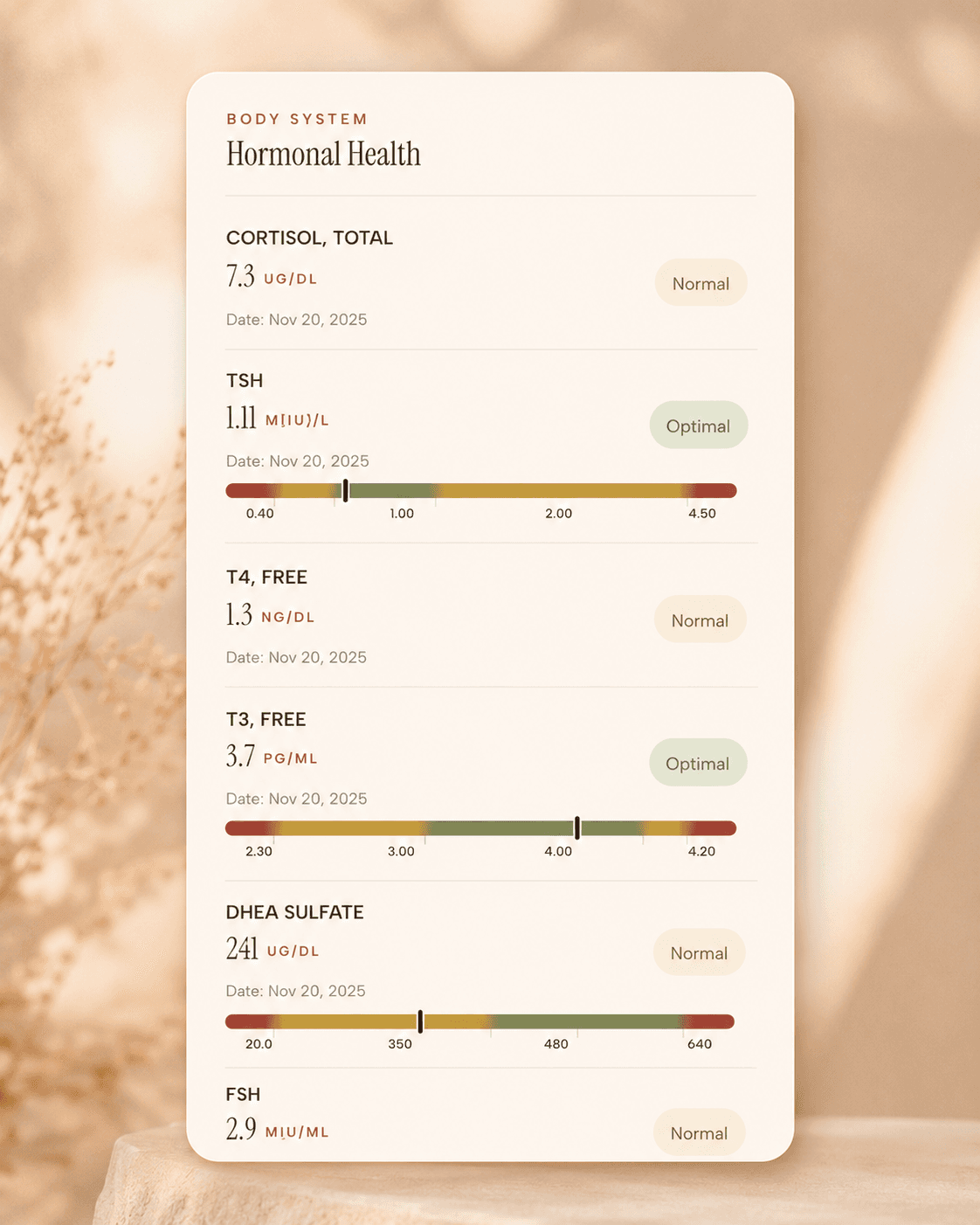
TSH is the master regulator of thyroid function, controlling the production of thyroid hormones T4 and T3. In functional medicine, we use narrower TSH ranges than conventional medicine to identify subclinical thyroid dysfunction early. Even mildly elevated TSH can indicate thyroid insufficiency, leading to fatigue, weight gain, depression, and metabolic dysfunction. TSH levels are influenced by stress, nutrient deficiencies, autoimmune conditions, and environmental toxins. Optimal TSH supports energy, metabolism…
Learn moreEstradiol
Estradiol in men is produced from testosterone via aromatase enzyme. In functional medicine, we recognize that men need optimal estradiol levels for bone health, cognitive function, and cardiovascular protection. However, excessive estradiol can suppress testosterone production and cause feminizing effects. The testosterone-to-estradiol ratio is crucial for male health, with optimal balance supporting vitality while preventing estrogen dominance. Balanced estradiol levels in men support bone health and cognitive…
Learn moreLab testing
Check TSH, free T4, thyroid antibodies, and ferritin at Quest
starting from $99 panel with 100+ tests, one visit
No referral needed
About 1 week
Schedule online — results typically within a week
Clear next steps
Guidance included, with follow-up care available
HSA / FSA
Eligible for pre-tax health spending accounts
Pro Tips
Try a 7-day mood-and-sleep log that takes under two minutes: rate mood from 1–10, write how many total hours you slept, and note the longest uninterrupted stretch. Patterns show up fast, and they make it easier to ask for the specific help you need.
If you are crying more around day 3–5 postpartum, plan extra support for that window ahead of time, because that is when the hormone drop and milk coming in often collide. Even one extra nap and one warm meal can blunt the emotional crash.
When you feel a surge of anger or panic, do a 60-second “body reset” before you decide what it means: put one hand on your chest, slow your exhale, and unclench your jaw. It sounds small, but it interrupts the stress loop that turns a hard moment into a spiral.
If intrusive thoughts scare you, write down exactly what they are and whether you feel compelled to act on them. Unwanted, distressing thoughts are common in postpartum anxiety, but urges, plans, or feeling out of control is a different category and deserves urgent professional help.
If you are considering labs, time them to your symptoms: if you feel suddenly wired with palpitations, check thyroid labs soon rather than waiting months. Postpartum thyroiditis can change phases, so a single test is a snapshot and follow-up is often the part that clarifies the story.
Frequently Asked Questions
Are mood swings normal after giving birth?
Yes, mood swings are common in the first days after delivery because estrogen and progesterone drop quickly and sleep is disrupted. Baby blues often peaks around days 3–5 and improves within about 2 weeks. If symptoms last longer than two weeks, are worsening, or interfere with bonding and daily function, treat that as a reason to get screened and supported.
How do I know if it’s baby blues or postpartum depression?
Baby blues tends to come and go, and you still have moments of feeling like yourself, even if you cry easily. Postpartum depression is more persistent and can include numbness, hopelessness, guilt, or losing interest in things you normally care about, and it often lasts beyond two weeks. A practical next step is to take an EPDS screening and share the score with your OB-GYN or primary care clinician.
Can thyroid problems cause postpartum mood swings?
Yes. Postpartum thyroiditis can make you feel anxious, irritable, and unable to sleep when thyroid hormone is high, and it can make you feel depressed and foggy when thyroid hormone is low. Testing TSH and free T4 can show whether your thyroid is likely contributing, and repeating labs over time can matter because the condition can shift phases.
What blood tests are worth checking for postpartum mood swings?
If your mood swings feel out of proportion or are not improving, TSH and free T4 can help identify postpartum thyroiditis, and ferritin can uncover low iron stores that worsen fatigue and irritability. These tests do not diagnose postpartum depression, but they can reveal fixable contributors that make everything harder. If you get results, bring them to a clinician so they are interpreted in the context of your postpartum timeline.
When should I seek urgent help for postpartum mood changes?
Get urgent help right away if you have thoughts of harming yourself or your baby, you feel detached from reality, you are hearing or seeing things others do not, or you cannot sleep for nights in a row and feel increasingly agitated. Those can be signs of a psychiatric emergency, including postpartum psychosis, and fast treatment is protective. If you are in the U.S., you can call or text 988, and you can also contact your OB-GYN’s on-call line the same day.