Why You Feel Mentally Exhausted During Your Period
Mental fatigue during period often comes from hormone shifts, low iron from bleeding, or poor sleep from cramps. Targeted labs at Quest—no referral needed.





Mental fatigue during your period usually comes from a mix of hormone shifts that change how your brain uses serotonin and GABA, blood loss that can quietly lower iron stores, and sleep disruption from cramps or heavy bleeding. It can feel like your thoughts are moving through mud, even if you are “doing everything right.” A few targeted labs can help you figure out which driver is most likely in your case. This symptom is common, but it is not “all in your head.” Your cycle changes inflammation, body temperature, pain sensitivity, and even how steady your blood sugar feels, and any one of those can translate into decision fatigue and low motivation. The good news is that you can often make it noticeably better within one or two cycles once you identify your pattern. If you want help sorting your symptoms into the most likely bucket, PocketMD can walk through your timeline with you, and Vitals Vault lab options can help confirm things like low iron or thyroid issues.
Why your period drains your brain
Hormone drop affects brain signaling
Right before and during bleeding, estrogen and progesterone fall, and that shift changes how your brain handles calming and “feel-good” messengers like serotonin and GABA. The result can feel like mental static: you are more distractible, less creative, and small tasks take more effort than usual. If your fatigue is paired with irritability or feeling emotionally flat, tracking symptoms by cycle day often reveals a consistent pattern you can plan around.
Low iron stores from bleeding
Even if your hemoglobin is “normal,” heavy or frequent periods can drain iron storage (ferritin), and your brain is one of the first places you feel it. This tends to show up as low stamina for thinking, trouble finding words, and a need to lie down after normal work. If you soak through pads or tampons quickly, pass large clots, or have periods that last more than a week, it is worth checking ferritin and a CBC rather than assuming it is just stress.
Sleep gets fragmented by cramps
Pain wakes you up more than you realize, and your brain pays for it the next day with slower processing speed and a shorter fuse. Even one or two nights of broken sleep can create the “I can’t think” feeling, especially if you are also juggling work or caregiving. If your mental fatigue is worst after nights with cramps, treating pain earlier in the evening (not after you are already awake) often makes a bigger difference than caffeine the next morning.
Blood sugar feels less steady
During the late luteal phase and early period days, some people become more insulin resistant, which means your usual breakfast can lead to a faster rise and then a sharper drop in energy. That swing can feel like brain fog, shaky focus, and a sudden need for snacks to keep going. If you notice you crash mid-morning or mid-afternoon during your period, a protein-forward breakfast and a planned snack can smooth the curve without turning your day into constant grazing.
PMDD-level mood and fatigue
For some people, the issue is not the amount of hormones but the brain’s sensitivity to normal cycle changes, which is part of severe PMS called premenstrual dysphoric disorder (PMDD). Mental fatigue here often comes with intense irritability, anxiety, or hopelessness that reliably improves within a few days of bleeding starting. If you ever have thoughts of self-harm, or your symptoms are disrupting work or relationships every month, that is a strong signal to talk to a clinician because PMDD has effective treatments.
What actually helps when your brain is tired
Treat cramps before they peak
If cramps are stealing your sleep, the goal is to prevent the pain spike, not chase it. Many people do better taking an anti-inflammatory like ibuprofen or naproxen with food at the first hint of cramps, then staying on schedule for the first 24–48 hours (as long as it is safe for you). Pairing that with a heating pad for 20 minutes before bed can reduce nighttime wake-ups, which is often where the “mental fatigue” is really coming from.
Use a “low-cognition” work plan
On your heaviest brain-fog days, your brain is not broken, it is just running with less bandwidth. Move deep-focus work to earlier cycle days when you can, and reserve period days for tasks with built-in structure, like replying to emails with templates or doing admin work in timed sprints. A simple rule helps: if a task requires lots of decisions, batch it for a day when you are not bleeding.
Stabilize energy with protein timing
When your period makes you crash, eating “normally” can still be the wrong fuel pattern for that week. Try 25–35 grams of protein at breakfast and add a fiber-rich carb, because that combination tends to prevent the fast up-and-down that feels like fog. If you need caffeine, have it after you eat, since coffee on an empty stomach can amplify jitters and make the crash feel worse.
Address iron if ferritin is low
If your ferritin is low, you usually will not think your way out of fatigue with better habits alone. Iron repletion can take weeks, but many people notice steadier focus within a month once stores start rising. Talk with a clinician about the right dose and form for you, and make sure the plan includes finding the reason for heavy bleeding rather than just replacing what you lose.
Consider cycle-targeted treatment
If your symptoms are severe and predictable, you may benefit from treatments that target the cycle itself, such as certain birth control regimens or an SSRI used only in the luteal phase for PMDD. This is especially relevant if your fatigue is tied to mood symptoms more than bleeding volume. Bring a two-cycle symptom log to the appointment, because a clear timeline often speeds up the right choice.
Lab tests that help explain mental fatigue during your period
Ferritin
Ferritin is your body's iron storage protein, reflecting total iron stores in the body. In functional medicine, ferritin assessment is crucial for identifying both iron deficiency and iron overload, conditions that can significantly impact energy levels and overall health. Low ferritin is the earliest sign of iron deficiency, often occurring before anemia develops. This can cause fatigue, weakness, restless leg syndrome, and cognitive impairment. Conversely, elevated ferritin may indicate iron overload, inflamma…
Learn moreIron, Total
Serum iron measures the amount of iron circulating in your blood at the time of testing. In functional medicine, we recognize that serum iron alone provides limited information about iron status, as it fluctuates throughout the day and is affected by recent iron intake, inflammation, and diurnal variation. However, when combined with other iron studies, it helps assess iron metabolism and transport. Iron is essential for oxygen transport, energy production, DNA synthesis, and immune function. Optimal serum iron…
Learn moreGlucose
Fasting glucose is a fundamental marker of glucose metabolism and insulin function. In functional medicine, we recognize that even 'normal' glucose levels in the upper range may indicate early insulin resistance. Optimal fasting glucose reflects efficient glucose regulation and insulin sensitivity. Elevated fasting glucose suggests the body's inability to maintain normal glucose levels overnight, indicating hepatic insulin resistance or insufficient insulin production. This marker is essential for early detectio…
Learn moreLab testing
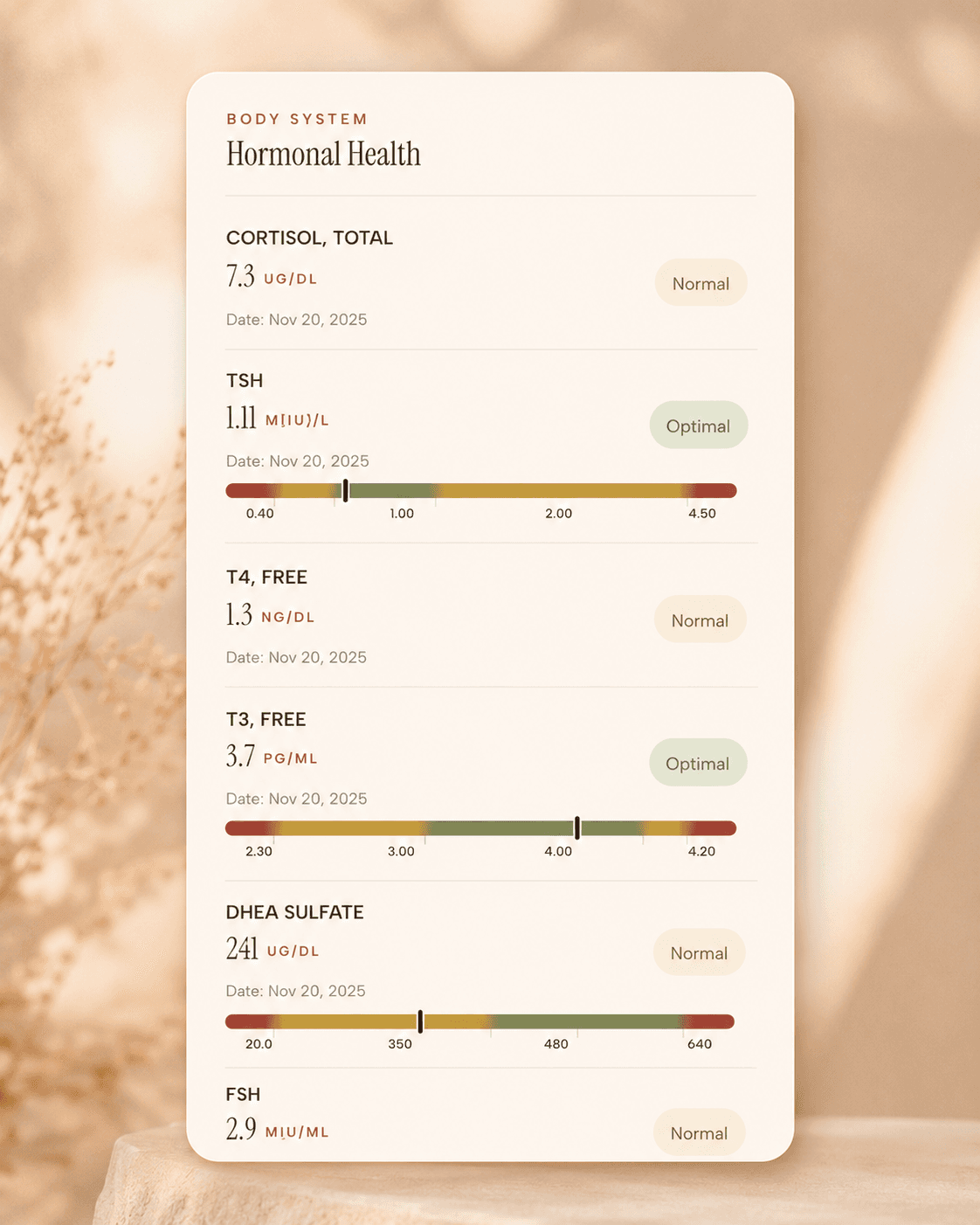
Check ferritin, CBC, and TSH at Quest
starting from $99 panel with 100+ tests, one visit
No referral needed
About 1 week
Schedule online — results typically within a week
Clear next steps
Guidance included, with follow-up care available
HSA / FSA
Eligible for pre-tax health spending accounts
Pro Tips
Run a two-cycle “mental energy audit”: each day rate focus from 1–10, note bleeding heaviness, cramps, and sleep quality, and you will usually see whether the driver is pain, blood loss, or the pre-period hormone drop.
If you suspect heavy bleeding, quantify it for one cycle by counting how often you fully soak a pad or tampon and how many nights you wake to change protection; that detail is surprisingly useful when you ask for ferritin testing or treatment.
Try a 90-minute focus block on your best time of day during your period, and protect it like an appointment; then schedule low-stakes tasks for the rest of the day so you are not fighting your brain for eight straight hours.
If caffeine helps but also makes you anxious or scattered, cap it at one serving before noon during your period week and pair it with food; the goal is steadier attention, not a brief spike followed by a crash.
If your fatigue reliably lifts within 24–72 hours after bleeding starts, flag that pattern as a clue for PMDD or luteal-phase sensitivity; bring that timeline to a clinician because it changes which treatments are most likely to work.
Frequently Asked Questions
Is mental fatigue during my period normal?
It is common, especially on days with cramps, heavy bleeding, or poor sleep, because hormone shifts and pain both reduce your brain’s “spare capacity.” That said, it should not feel disabling every month. If you are missing work or school, or you feel depressed or panicky in a predictable cycle pattern, track it for two cycles and bring the log to a clinician.
Can low iron cause brain fog even if my hemoglobin is normal?
Yes. Low iron stores show up first in ferritin, and you can feel mentally tired before you meet criteria for anemia on a CBC. If your ferritin is below about 30 ng/mL, and especially if it is below 15–20 ng/mL, it is a strong explanation for fatigue during your period. Ask for ferritin plus a CBC, and make sure heavy bleeding is addressed too.
Why do I feel mentally exhausted on day 1 of my period?
Day 1 often combines the steepest hormone change with the start of cramps and the first night of disrupted sleep, which is a perfect setup for brain fog. If you also have heavy bleeding, the “day 1 crash” can be worse because your body is already running low on iron stores. Treating cramps early and checking ferritin if bleeding is heavy are two high-yield next steps.
How do I know if it’s PMDD or just PMS tiredness?
PMDD is more about severity and impairment than a specific symptom, and it usually includes strong mood symptoms along with fatigue and brain fog. A classic clue is that symptoms build in the week before your period and then improve quickly within a few days of bleeding starting. If you track symptoms daily for two cycles and the pattern is consistent and disruptive, ask specifically about PMDD because targeted treatments can help.
What labs are most useful for period-related mental fatigue?
Start with ferritin to assess iron stores, a CBC to check for anemia patterns, and TSH to rule out thyroid underactivity that can amplify cycle fatigue. These tests are especially useful if your fatigue is new, worsening, or not limited to your period. If results are abnormal, use them to guide a plan rather than guessing with supplements.
What research says
ACOG guidance on premenstrual disorders and treatment options (including SSRIs and hormonal strategies)
Cochrane review: SSRIs are effective for severe PMS/PMDD when taken continuously or only in the luteal phase
Iron deficiency without anemia can impair fatigue and cognition, and treatment can improve symptoms