Why You Forget Things When You’re Stressed (And What Helps)
Memory loss under stress often comes from cortisol-driven attention lapses, poor sleep, or anxiety. Targeted blood tests are available—no referral needed.





Memory loss under stress is usually a “capture problem,” not a “storage problem.” When your stress hormones stay high, your attention narrows, your sleep gets lighter, and your brain files fewer details in the first place, so later it feels like your memory is failing. Simple labs can help rule out look-alikes such as thyroid imbalance or low vitamin B12 that can make stress-related forgetfulness feel much worse. This symptom is scary because it can look like something progressive, especially if you have a family history of dementia or you’re noticing changes after COVID. The good news is that stress-related memory issues are often reversible when you target the right lever: sleep depth, anxiety load, medication side effects, or an underlying deficiency. Below, you’ll see the most common reasons stress messes with your memory, what tends to help fastest, and which blood tests are actually worth considering. If you want help matching your pattern to a likely cause, PocketMD can talk it through with you, and Vitals Vault labs can help you check the basics without a long wait.
Why you forget things when you’re stressed
Your attention is overloaded
Stress makes your brain prioritize threat and urgency, which means fewer mental “resources” are left for noticing details like names, where you put your keys, or what you just read. If information never gets encoded clearly, you can’t retrieve it later, so it feels like memory loss even though the storage system is fine. A useful clue is that you can remember things when you’re calm, but you blank when you’re rushed or multitasking. Try treating it like an attention problem first by reducing task-switching for a week and seeing if recall improves.
Cortisol disrupts recall and learning
Your main stress hormone (cortisol) is helpful in short bursts, but when it stays elevated it can interfere with the brain circuits that support learning and recall, especially in the hippocampus, which is your “memory index.” In real life, this shows up as word-finding trouble, forgetting why you walked into a room, or needing more repetition to learn something new. The takeaway is not to chase cortisol supplements, but to notice what keeps your stress response “on” all day, like constant notifications or skipping meals, and then deliberately build recovery breaks into your schedule.
Sleep gets lighter and fragmented
Stress often steals deep sleep and REM sleep, which are the stages your brain uses to consolidate memories and clear mental clutter. You can still log eight hours and wake up feeling unrefreshed, then spend the next day feeling foggy and forgetful. If your memory is noticeably worse after a few nights of poor sleep, that pattern strongly points here. A practical next step is to track sleep for two weeks and look for triggers like late caffeine, alcohol, or nighttime rumination.
Anxiety or depression is driving it
Anxiety keeps your mind scanning and rehearsing “what if” scenarios, while depression slows processing speed and motivation, and both can make memory feel unreliable. You might notice you can’t concentrate long enough to form a memory, or you reread the same paragraph and still can’t recall it. This matters because treating the mood piece often improves memory more than any brain supplement. If you’re also losing interest, feeling hopeless, or having panic symptoms, it’s worth addressing that directly rather than assuming the problem is dementia.
A medical “look-alike” is present
Stress can be the loudest symptom, but sometimes the real amplifier is something fixable like low vitamin B12, thyroid imbalance, or inflammation after an infection. These issues can cause brain fog, slowed thinking, and forgetfulness that you then experience as “I’m falling apart under stress.” If your memory change is new, persistent for more than a month, or paired with numbness and tingling, unexpected weight change, or unusual fatigue, blood tests are a sensible next step. If you ever develop sudden confusion, one-sided weakness, trouble speaking, or the “worst headache,” treat that as urgent.
What actually helps your memory under stress
Use a capture system, not willpower
When your brain is overloaded, relying on “I’ll remember” is a setup for failure. Pick one trusted place to capture tasks and appointments, like a single notes app or a paper notebook, and review it at the same time each day so your brain stops trying to hold everything. This reduces the constant background stress that worsens forgetfulness. The win is that you free attention for the moment you’re in, which is where memory starts.
Protect deep sleep like a treatment
If stress is fragmenting your sleep, aim for a consistent wake time and a 30–60 minute wind-down that is boring on purpose. Keep screens out of the last half hour, and if your mind races, do a quick “brain dump” list so you’re not rehearsing tomorrow in bed. If you snore, wake up gasping, or feel unrefreshed despite enough time in bed, ask about sleep apnea because treating it can dramatically improve memory and mood. Sleep is not optional for memory consolidation.
Do one thing at a time, on purpose
Multitasking feels efficient, but it forces your brain to switch contexts, and each switch costs attention and memory encoding. Try a simple rule for one week: set a 25-minute timer, do one task, and only then check messages. You’ll often notice fewer “where did I put that?” moments because you were actually present when you set things down. This is a behavior change that can work even if your stress level is not immediately fixable.
Move in a way that lowers arousal
You don’t need intense workouts to help memory under stress, and sometimes intense training backfires when you’re already wired. A brisk 10–20 minute walk, especially outdoors, can lower stress arousal and improve working memory for the next few hours. If you can, pair it with nasal breathing and a pace where you can still talk in full sentences. Think of it as a reset button you can press between meetings or caregiving tasks.
Treat the driver, not the fear
If anxiety or depression is part of the picture, targeted treatment often improves memory because your brain stops spending so much energy on threat scanning or emotional heaviness. That might mean therapy, medication, or structured skills like cognitive behavioral strategies, depending on your situation. If you’re worried about dementia, a clinician can do a brief cognitive screen and look for reversible causes, which is usually more reassuring than endless self-testing online. The goal is to replace vague fear with a concrete plan.
Useful biomarkers to discuss with your clinician
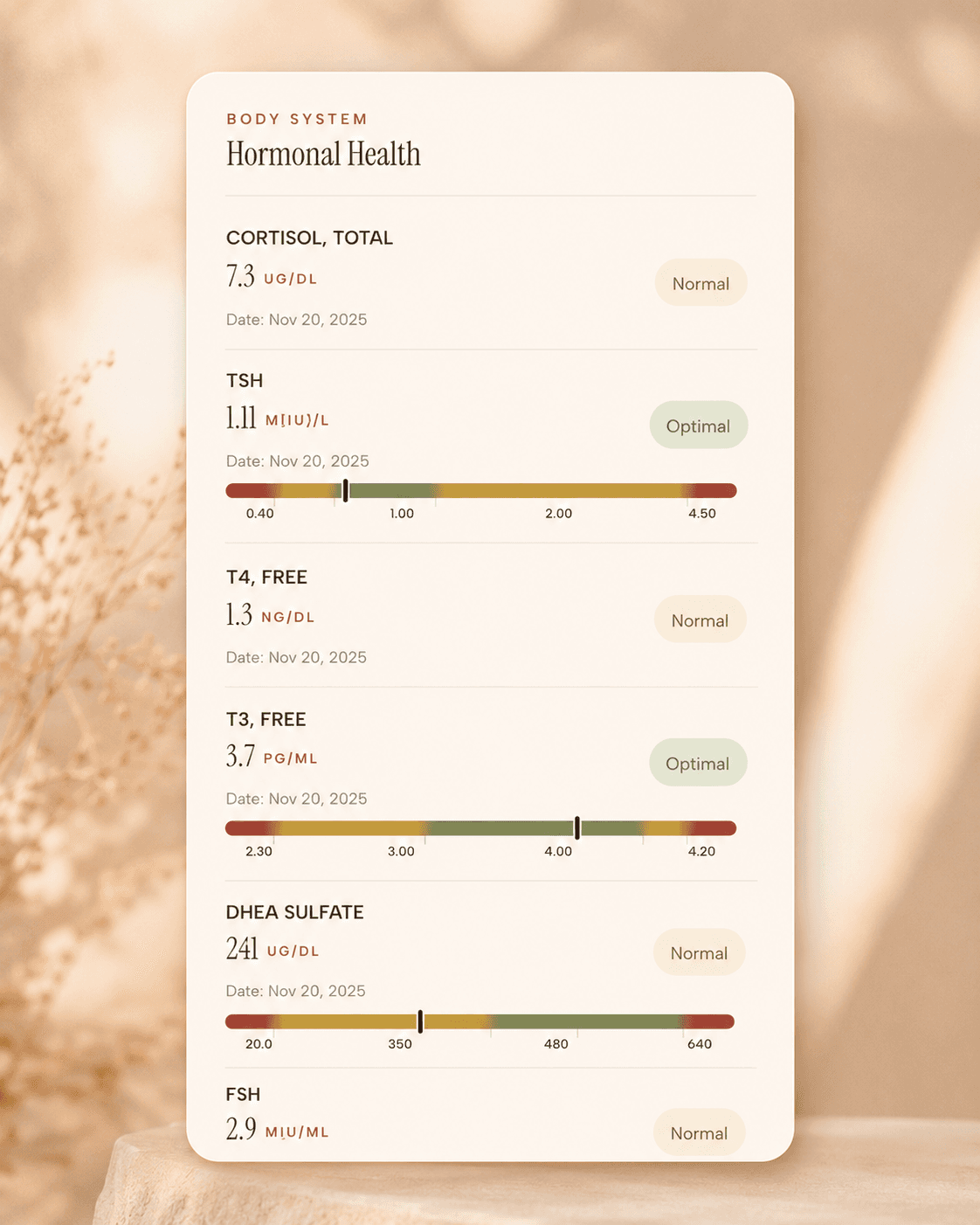
Cortisol, Total
Cortisol is the primary stress hormone that regulates metabolism, immune function, and blood pressure. In functional medicine, cortisol assessment is crucial for understanding stress response and its impact on overall health. Chronic elevation suppresses testosterone production and immune function, while low cortisol indicates adrenal insufficiency. Optimal cortisol rhythm supports energy, mood stability, and hormone balance. Cortisol orchestrates the body's stress response and daily energy rhythms. Balanced cor…
Learn moreHomocysteine
Homocysteine is an amino acid metabolite that serves as an independent risk factor for cardiovascular disease, stroke, and cognitive decline. In functional medicine, elevated homocysteine indicates methylation dysfunction and B-vitamin deficiencies. High homocysteine promotes endothelial dysfunction, oxidative stress, and thrombosis. It's particularly important because it's easily modifiable through B-vitamin supplementation (B6, B12, folate). Homocysteine levels are also associated with Alzheimer's disease risk…
Learn moreVitamin B12
Vitamin B12 (cobalamin) is essential for DNA synthesis, red blood cell formation, neurological function, and energy metabolism. In functional medicine, we recognize that B12 deficiency is surprisingly common, especially in older adults, vegetarians, vegans, and those with digestive issues. B12 deficiency can cause irreversible neurological damage if left untreated. The vitamin is crucial for methylation reactions, which affect cardiovascular health, detoxification, and gene expression. Even subclinical deficienc…
Learn moreLab testing
Check thyroid, B12, and inflammation markers at Quest
starting from $99 panel with 100+ tests, one visit
No referral needed
About 1 week
Schedule online — results typically within a week
Clear next steps
Guidance included, with follow-up care available
HSA / FSA
Eligible for pre-tax health spending accounts
Pro Tips
Do a two-week “forgetting log” that takes 30 seconds: write what you forgot, what you were doing right before, and whether you were rushed, hungry, or sleep-deprived. Patterns show up fast, and they usually point to attention and sleep rather than true memory storage loss.
If you keep losing items, create a single “landing pad” at home for keys, wallet, and glasses, and practice putting them there even when you feel silly. The repetition trains your brain when stress is high and autopilot takes over.
When you need to remember something in the moment, say it out loud and connect it to a visual cue, like “I’m putting the passport in the top drawer next to the socks.” That extra sensory step helps encoding when your mind is racing.
If you suspect sleep is the culprit, try a one-week experiment with caffeine: no caffeine after 12 pm, and none at all on two days. If your recall noticeably improves, you’ve found a lever you can control.
If you’re post-COVID or post-viral, pace your mental workload the way you would pace a physical injury: shorter focused blocks with real breaks. Pushing through brain fog often makes the next day worse, which can look like “my memory is declining” when it is actually overexertion.
Frequently Asked Questions
Can stress really cause memory loss, or is it dementia?
Stress can absolutely cause memory problems because it narrows attention, disrupts sleep, and keeps cortisol elevated, which makes recall unreliable. Dementia usually shows a steady decline over time and affects daily function in broader ways, not just “I’m forgetful when I’m overwhelmed.” If your memory is worse specifically during stressful periods and improves on calmer weeks, that pattern strongly favors stress. If you’re unsure, ask for a brief cognitive screen and consider labs like TSH and vitamin B12 to rule out reversible causes.
How long does stress-related memory loss last?
It often improves within days to a few weeks once sleep and stress load improve, although burnout or depression can take longer. If you’ve had persistent issues for more than 4–6 weeks despite better sleep and fewer stressors, it’s reasonable to check for medical contributors such as thyroid imbalance or B12 deficiency. A simple symptom log can help you see whether you’re trending better even when it feels slow. If things are getting rapidly worse, get evaluated sooner.
What are the red flags with memory loss that need urgent care?
Get urgent help if memory problems come with sudden confusion, trouble speaking, facial droop, one-sided weakness, fainting, or a severe sudden headache, because those can signal a stroke or other emergency. Also take new hallucinations, severe agitation, or getting lost in familiar places seriously. These are not typical “stress forgetfulness.” If any of these happen, do not wait for a routine appointment.
Which blood tests are best for brain fog and forgetfulness?
For stress-related memory complaints, the most useful basics are TSH for thyroid function, vitamin B12 (and sometimes MMA) for deficiency, and hs-CRP to look for an inflammatory signal that can worsen fatigue and cognition. Optimal targets vary, but many people feel best with TSH roughly 0.5–2.5 mIU/L, B12 above about 300–400 pg/mL, and hs-CRP under 1.0 mg/L. Abnormal results do not automatically explain everything, but they can reveal fixable amplifiers. Bring results to a clinician if you have symptoms like numbness, weight change, or persistent exhaustion.
What’s the fastest way to improve memory when you’re overwhelmed?
The fastest wins usually come from reducing task-switching and protecting sleep, because both directly improve attention and memory encoding. Try a 25-minute single-task timer and a nightly wind-down routine for one week, and use one capture system for tasks so your brain stops juggling reminders. Many people notice fewer “blank moments” within days when they stop multitasking. If you’re still struggling after two weeks, consider screening for anxiety or depression and checking labs like TSH and B12.